
Kelis‘s net worth is estimated at $2 million to $4 million as of November 2026. The singer behind “Milkshake” built that fortune from a gold-selling music catalog, a Le Cordon Bleu culinary career, her Bounty & Full sauce brand, and a 25-acre farm in Temecula, California — a fortune that looks small next to her fame because, by her own account, she was cut out of the publishing money on her biggest hit.
Kelis: Quick Facts
| Estimated net worth | $2 million to $4 million (range: $2 million to $4 million) |
|---|---|
| Profession | Singer-songwriter, chef, farmer |
| Nationality | American |
| Born | August 21, 1979 (age 47) |
| Height | 5 ft 9 in (1.75 m) |
| Primary income sources | Music royalties and streaming, touring and festival fees, Bounty & Full sauces, cookbook and television, farm produce |
| Active years | 1997–present |
| Last reviewed | November 2026 |

- Early Life and Background
- Education
- Career Journey
- Rise to Fame
- Main Sources of Income
- Salary and Earnings
- Businesses and Investments
- Brand Deals and Sponsorships
- Houses, Cars and Other Assets
- Awards and Achievements
- Net Worth Growth Over the Years
- Social Media Presence
- Personal Life
- Sources & Reporting
- Frequently Asked Questions
Early Life and Background
Kelis Rogers was born on August 21, 1979, in Harlem, Manhattan, New York City, and grew up in the Frederick Douglass Houses, a public housing complex on the Upper West Side. Her first name is a portmanteau of her parents’ names — Kenneth and Eveliss — a small detail that says a lot about the household she came from: her father, Kenneth Rogers, was an African American jazz musician and Pentecostal minister who had also taught at Wesleyan University, and her mother, Eveliss Rogers, was a Chinese-Puerto Rican fashion designer. Music and making things with your hands were the family trades, and Kelis picked up both.
As a child she sang in church choirs and learned violin, piano, and saxophone, attending the private Manhattan Country School before winning admission at 14 to Fiorello H. LaGuardia High School of Music & Art and Performing Arts, the New York school that has produced a long line of working musicians and actors. At LaGuardia she played saxophone, won a place in the Girls Choir of Harlem, and formed the R&B trio BLU (Black Ladies United) with classmates. The path was not smooth. She has said she was kicked out of her parents’ house at 16 after repeated clashes with her mother, and she worked as a bartender and as a sales associate at a clothing store while she finished school. Those teenage jobs matter to the money story that follows: Kelis has spent her adult life building income streams she controls — food, farming, a sauce line — after an early music career in which, by her own account, she controlled very little of the money.
Harlem in the late 1990s was also the right place at the right time for a singer with her sound. Hip-hop and R&B were crossing over into pop, and producers were hunting for voices that could carry a hook over a beat built for the clubs. Kelis sang guest vocals on tracks by Ol’ Dirty Bastard and Noreaga before she had a record deal of her own, and those early features put her in the room with the Neptunes — Pharrell Williams and Chad Hugo — the production duo who would shape her first three albums and, later, become the center of the most expensive argument of her career.
Education
Kelis’s formal education came in two halves, a decade apart, and the second half explains her second career. The first half was LaGuardia, where she trained as a saxophonist and singer from age 14 and graduated with a working musician’s grounding in theory, performance, and the discipline of daily rehearsal. The second half began after her fourth album, when she stepped away from recording and enrolled at Le Cordon Bleu. Between 2006 and 2010 she trained part-time as a saucier — the station in a professional kitchen responsible for sauces — and eventually graduated from the culinary school. A saucier’s training is precise, repetitive work: stocks, reductions, emulsions, seasoning by taste rather than by recipe. It is also the exact skill set behind Bounty & Full, the sauce line she later built into a business. Few pop stars can claim a professional kitchen credential; Kelis holds one, and it changed the shape of her income. Music paid in advances and royalties that other people administered. Food paid through a product she made, bottled, and sold herself.
That culinary education also gave her a second professional identity that has outlasted the chart career. She has cooked at festivals, run a food truck at SXSW in 2014, hosted television cooking shows, and published a cookbook. When the touring calendar thinned, the kitchen work kept paying, and when she bought a farm in 2019, the training told her what to grow and how to turn it into something sellable.
Career Journey
Kelis began recording her debut album in mid-1998 and finished it within a year. Kaleidoscope, released by Virgin Records on December 7, 1999, was produced by the Neptunes and built on the jazz and disco records of the 1970s that her father had played at home. Critics liked it. American buyers mostly did not: the album peaked at No. 144 on the Billboard 200, though it reached the top five of the Top Heatseekers chart and did better overseas, where its lead single “Caught Out There” became a top-ten hit in the UK. The album’s modest US sales set a pattern that would follow her for years — critical respect and international audiences, with American commercial success arriving late and all at once.
Her second album, Wanderland (2001), fared worse in commercial terms. Virgin gave it little backing, it received no US release at all until 2019, and Kelis left the label. She signed with the Neptunes’ own Star Trak Entertainment, and the move produced the record that changed everything. Her fourth album, Kelis Was Here (2006), released on Jive Records, debuted at No. 10 on the Billboard 200 — her highest-charting album in the US — and earned her a second Grammy nomination. The lead single “Bossy,” featuring Bay Area rapper Too Short, reached the US top 20 and was later certified double platinum by the RIAA, with more than 2 million copies sold. The album itself sold 249,000 copies in the US, according to Nielsen SoundScan figures cited by Wikipedia. Then came the hiatus, the culinary school years, and a fifth album, Flesh Tone (May 14, 2010), a house and dance record made with will.i.am that debuted at No. 48 on the Billboard 200 with 7,800 first-week copies — a sharp comedown in pure sales terms, but a record that kept her touring in European clubs, where dance music paid better than it did at home. Her sixth and most recent studio album, Food (2014), released on the British independent label Ninja Tune, leaned into soul and funk, drew warm reviews, and reached the UK top 20. Across six albums she has sold six million records worldwide, according to Wikipedia, and placed ten singles inside the UK top ten — a UK career far bigger than her American chart record suggests.
The journey since 2014 has been less about albums and more about everything around them: festival sets, DJ dates, television, cookbooks, sauces, and the farm. She has not released a seventh studio album, and in interviews she has been candid that the economics of the old record business gave her little reason to rush back. In 2023 she marked the 20th anniversary of “Milkshake” with a new version of the song, a reminder that the catalog — rather than new recordings — is now the engine of her music income.
Rise to Fame
The breakthrough arrived on August 25, 2003, when “Milkshake” was released as the lead single from Tasty. The song was written and produced by the Neptunes, and it had first been offered to Britney Spears for her album In the Zone before Spears passed and the track came back to Kelis. It was a near-miss that became a career: “Milkshake” debuted at No. 95 on the Billboard Hot 100 in October 2003, climbed for 13 weeks, and peaked at No. 3 in December, spending 22 weeks on the chart. It reached No. 2 in the UK, topped the chart in Ireland, and went top ten in Australia, Denmark, the Netherlands, New Zealand, Norway, and Sweden. The RIAA certified it gold on October 25, 2004, and Nielsen SoundScan put its US paid downloads at 883,000. The song earned Kelis a Grammy nomination in 2004 for Best Urban/Alternative Performance, and the Observer named it the best single of 2004.
The album around it did the business, too. Tasty, released December 5, 2003, on Star Trak and Arista, debuted at No. 27 on the Billboard 200 with first-week sales of 93,600 copies — the best sales week of her career in the US — and peaked at No. 11 on the UK Albums Chart. It was certified gold by the RIAA on February 6, 2004, and had sold 535,000 copies in the US by December 2009, per Nielsen SoundScan. Critics scored it 80 out of 100 on Metacritic, and its follow-up single “Trick Me” also reached No. 2 in the UK. For a singer whose first two albums had barely registered in America, it was a genuine commercial arrival — and it came with a catch that would take nearly twenty years to surface in public. Kelis has said in interviews that she made no money from her first two albums and was, in her words, “blatantly lied to and tricked” over the publishing on her early work. The Neptunes wrote and produced “Milkshake,” and the publishing — the ownership share that pays every time a song is played, licensed, or sampled — sat with them, not with her. That split is the single most important fact in her net worth story: the most famous song of her career made other people rich first.
The proof arrived in July 2022, when Beyoncé’s album Renaissance was about to drop and a fan page revealed that its song “Energy” sampled “Milkshake.” Kelis said she first learned of the sample from that fan post, and she posted two videos to her Instagram business account calling the lack of notice “disrespect and utter ignorance” — and, more pointedly, saying her real grievance was with Pharrell Williams and Chad Hugo, who she said had taken her publishing two decades earlier and continued to license her music without asking her. “Milkshake alone is one of the most licensed records of our generation,” she wrote, adding that “publishing was stolen, people were swindled out of rights.” Beyoncé removed the interpolation from “Energy” on streaming services shortly after, a rare public win for Kelis — but a win that changed no ownership paperwork. The episode put a number on the problem in the public mind even though no dollar figure was ever published: the most licensed record of her generation, and the singer who made it famous owned the smallest piece of it.
Main Sources of Income
Kelis earns from five distinct streams, and the balance between them has flipped since her chart peak. In 2003, nearly all of it was music. In 2026, music is one stream among several, and the farm and food businesses are the ones she controls outright.
Music royalties and streaming. Six studio albums, a catalog of singles, and a song — “Milkshake” — that has been licensed for films, adverts, television, and samples for two decades. Streaming pays per play at fractions of a cent, but a catalog track with the staying power of “Milkshake” accumulates: 883,000 paid US downloads before streaming took over, gold certifications on the single and the Tasty album, and a double-platinum “Bossy.” The catch, documented above, is that the publishing share on her early Neptunes-produced work sits with the producers, so her royalty checks reflect a performer’s share rather than a writer-owner’s share. That is why the catalog alone has never made her wealthy on the scale of peers who owned their publishing.
Touring and live performance. Festival slots, club dates, DJ sets, and one-off performances, concentrated in the UK and Europe, where her chart record is strongest and her dance-leaning later albums play best. Live fees for a legacy act with one era-defining hit are solid without being spectacular, and they arrive as lump sums rather than the slow drip of royalties — useful for a household that runs a working farm.
Bounty & Full and food products. Her sauce line, the commercial form of her Le Cordon Bleu training, is the business she has talked about most consistently since 2013, when she debuted a sauce line called Feast at the Beverly Hills Food & Wine Festival. The brand later became Bounty & Full, selling sauces and seasonings built around the flavors she cooks with at home. Sauce is a low-margin, high-volume business, and no revenue figure has ever been published for it — but it is hers, end to end, from recipe to bottle, which is exactly the point after the publishing experience.
Cookbook, television, and media. Her cookbook My Life on a Plate (2015) is a culinary autobiography built around the places she lived while touring — Harlem, London, Los Angeles — with recipes drawn from her Puerto Rican heritage, including prawn alcapurrias and slow-cooked pork shoulder. She hosted Saucy & Sweet on the Cooking Channel, hosted Netflix’s Cooked with Cannabis in 2020, and has cooked at festivals in London and the US. Book advances and television fees are one-off payments rather than recurring income, but they keep the food brand visible, and visibility is what sells sauce.
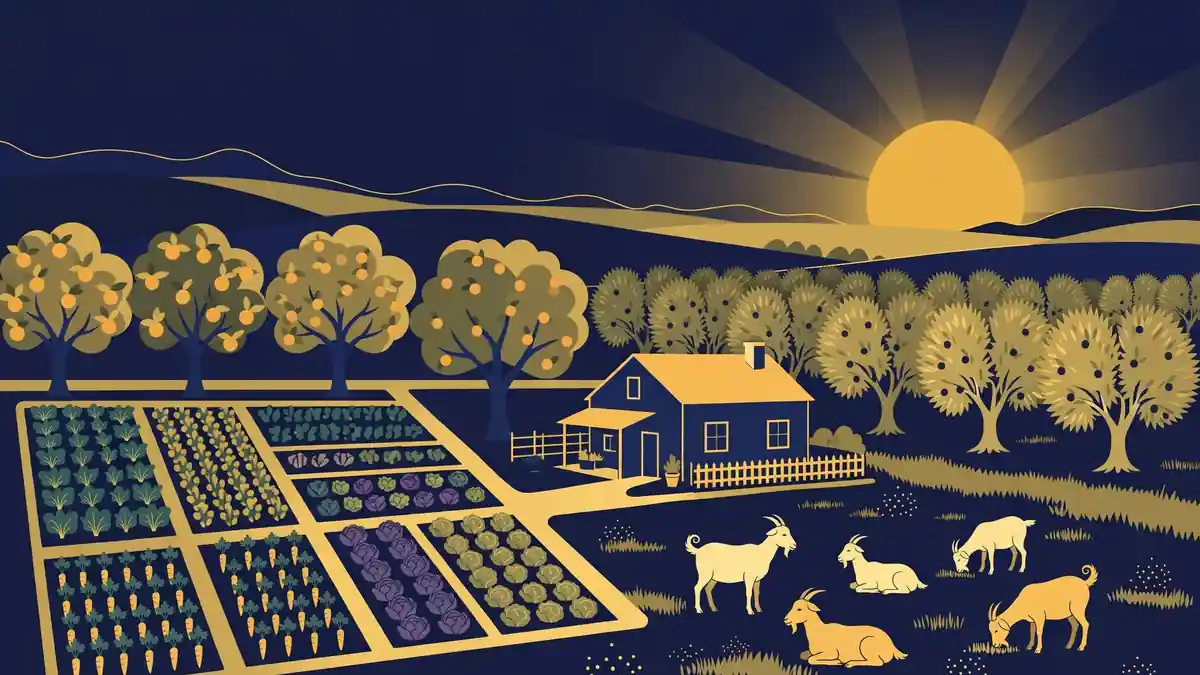
The farm. The 25-acre Temecula property is a working farm — vegetables, citrus, olives pressed into her own oil, livestock including goats, sheep, and cows — and it feeds the family first and the brand second. Farm produce has a direct commercial path into the Bounty & Full story, and the farm itself is an appreciating land asset in Riverside County, California. It is the only item on this list that is both a home and a balance-sheet asset.

Salary and Earnings
There is no public record of a salary for Kelis, because singers of her era were not paid salaries — they were paid advances, royalties, and performance fees, all of it under contracts that stayed private. What the public record does hold is unusually specific about the money that moved around her divorce, and that court record is the best-documented set of dollar figures attached to her name.
When Kelis filed for divorce from Nas in April 2009, seven months pregnant with their son Knight, the support fight that followed produced numbers that TMZ and HotNewHipHop reported from court filings. In December 2009, Los Angeles Superior Court Judge David Cunningham III raised Nas’s monthly support payments to $51,101 after a two-day hearing — a combined spousal and child support figure. In April 2010, the judge ruled in Kelis’s favor on back support: Nas was ordered to pay more than $47,000 in back child support and more than $40,000 in back spousal support, plus $10,000 a month in spousal support until he cleared the $299,015.50 he owed her, and more than $155,000 toward 90 percent of her legal fees plus more than $48,000 for her accounting expenses. A contempt charge over $200,000 in back child support was dropped after Nas paid $50,000. Those are court-ordered transfers, not income from work, and they ended when the spousal support term ran out — but they are the largest verified dollar figures in her financial history, and they explain why the divorce years were also her most cash-liquid years.
The support story did not end in 2010. In April 2018, Kelis said publicly that until 2012 she had not seen “a single cent” from Nas in child support, and she described him as an absent parent who “shows up when it’s fun, shows up when there’s a good photo-op.” Nas denied the abuse and neglect claims she made in the same interviews. In 2020, British newspaper The Sun reported that a judge had ruled Nas owed $240,000 in back payments — a figure that has not been confirmed in US court reporting we could verify, so we carry it as reported by The Sun rather than as fact. The honest summary is that court-ordered support was substantial on paper and contested in practice, and it should not be counted as ongoing income in 2026.
Her music earnings are easier to bound than to pin down. Tasty’s 535,000 US album sales and “Milkshake”‘s 883,000 paid downloads are Nielsen SoundScan figures, and a gold album in 2004 typically generated several hundred thousand dollars in artist royalties after the label recouped its advance — but Kelis’s own account is that she saw none of the money from her first two albums, and her publishing share on the Neptunes material was minimal. That is why the range in this article is wide and the anchor is low: a catalog that sold six million records worldwide can still leave its singer with a modest fortune when the ownership was signed away at 19. Any outlet that prints a single confident figure for Kelis — $2 million or $4 million or $18 million — is guessing at the same incomplete record. The $18 million figure that appears on a handful of low-quality sites has no sourcing behind it at all and we discard it. The defensible figures are $2 million from Celebrity Net Worth, updated January 2026, and $4 million from a cluster of entertainment outlets including Creebhills and DailyCrazeLife. Our range covers both.
Annual income is similarly unreported. One outlet, Creebhills, lists her annual income at $400,000, and DailyCrazeLife lists $1.1 million a year — both without sourcing. We do not repeat either as fact. What can be said is that her income today is lumpy: a festival summer pays well, a quiet winter pays little, and the farm and sauce business smooth the gaps in a way a royalty check never did.
Businesses and Investments
Bounty & Full is the business Kelis returns to in every interview, and it is the one she built on her own terms. The origin story, which she told HOKA in a profile of her farm life, is disarmingly small: a neighbor in Los Angeles kept finding sauces on her doorstep with a little note, told Kelis she should sell them, and found her a manufacturer. The line began as Feast, debuted at the Beverly Hills Food & Wine Festival in 2013, and grew into Bounty & Full — sauces and seasonings that carry the flavors of her cooking: heat, acid, and the Puerto Rican pantry she grew up with. The brand has appeared at food festivals, in pop-up kitchens, and through her own channels rather than through a national grocery rollout, which keeps it small and keeps it hers. No revenue, valuation, or distribution figure has been published, and we do not invent one.
The cookbook is the brand’s printed companion. My Life on a Plate, published in 2015, is organized as a travelogue: each chapter is a place she lived while touring, each recipe a dish from that place. It is also a statement of identity — the book leans hard on her Chinese-Puerto Rican heritage through her mother, with recipes like prawn alcapurrias with shredded yautía. A cookbook by a pop star is usually a vanity project; this one reads as a chef’s book, and it has stayed in print for a decade, which is its own quiet commercial signal.
The farm is the investment that ties the businesses together. Kelis and her late husband Mike Mora bought the Temecula property in July 2019 for $600,000, according to Celebrity Net Worth, on 25 acres — some outlets, including The Sun, describe it as 24 acres, a one-acre discrepancy that likely reflects different measurements of the same parcel rather than two different properties. The plan, which she explained to Architectural Digest, was to grow everything the family eats and build toward a farm-to-table restaurant on the land. She grows kale, broccoli, herbs, carrots, tomatoes, strawberries, blueberries, eggplant, lettuce, and peppers, keeps a citrus grove and olive trees for her own oil, and tends livestock she has said she learned to care for partly through YouTube videos — around 30 animals, named after idols like Marvin Gaye, Whitney Houston, and Huey P. Newton. The farm is both the most tangible asset she owns and the most personal: she has said she wants to leave something tangible for her children and show them where food comes from, “connecting us back to the land.”
Beyond the farm and the sauce line, there is no public record of stock portfolios, startup stakes, or property beyond the Temecula land and the Los Angeles home she sold to buy it. That absence is itself informative. Kelis’s wealth is concentrated in two things — a music catalog she partly owns and a piece of California farmland — rather than spread across the investment portfolios that richer peers report. It is a narrow base, and it explains the modest estimate.
Brand Deals and Sponsorships
Brand work has been a secondary income stream for Kelis rather than a headline one, and the record is thinner than for pop stars who built their fortunes on endorsements. Entertainment outlets have reported partnerships with MAC Cosmetics, Swarovski, and the Los Angeles boutique Kitson, all of them dating from her mid-2000s fashion visibility, when her colorful hair and fearless styling made her a favorite of magazine editors. None of those deals carried a published fee, and none was a long-term ambassadorship of the kind that pays seven figures. The HOKA profile of her farm life — in which she appears wearing the brand’s performance clothing and hiking boots — is a more recent example of the same pattern: a brand aligning with the farmer-chef chapter of her story rather than the pop-star chapter.
The honest comparison is with peers who turned endorsements into fortunes. Kelis never had a fragrance line, a cosmetics empire, or a sneaker deal. Her brand value was always the music and the look, and the look was licensed in short bursts rather than built into an empire. That is a choice as much as a missed opportunity: the food business, which she owns, pays her in a way a one-off campaign never could. Sponsorship income in 2026 is best described as occasional and opportunistic — festival partnerships, food-brand appearances, and the kind of profile-driven features that pay in product and exposure as much as in cash.
Houses, Cars and Other Assets
The Temecula farm is the asset that matters. Bought in July 2019 for a reported $600,000, the 25-acre property in Riverside County wine country is where Kelis has lived since 2020 with her three children. It is a working farm rather than a showpiece: vegetable beds, a citrus grove, an olive orchard, and livestock, with a farmhouse at its center. Riverside County farmland has appreciated since 2019, so the purchase price understates its current value, but no appraisal or resale figure has been published and we do not estimate one. What matters for the net worth figure is that the farm is owned, occupied, and productive — a home, a business input, and a land asset in a single parcel.
Before the farm, Kelis lived in a 1920s Spanish-style mansion in Los Angeles, which she sold as part of the move. She told Architectural Digest the decision was practical: with two young sons at the time, she wanted to control what the family ate, and the farm was the way to do it. “I hate LA,” she said in a later interview, explaining she had only ever lived there for work. The mansion’s sale price was not widely reported, and we do not guess at it.
On cars, the record is silent. No publication has documented a car collection, a luxury purchase, or a vehicle endorsement for Kelis, and this article will not invent one. Farm life runs on pickup trucks and utility vehicles, not the supercar garages that fill other net worth profiles. Other assets are the catalog itself — six albums, with “Milkshake” and “Bossy” as the most valuable individual tracks — and the Bounty & Full brand, both of which are hard to value without a sale and are therefore carried in this estimate at their income value rather than as appraised assets.
Awards and Achievements
Kelis’s trophy record is modest next to her influence, and the gap between the two is part of her story. She has been nominated for two Grammy Awards: Best Urban/Alternative Performance for “Milkshake” in 2004, and Best Contemporary R&B Album for Kelis Was Here in 2007, when the award went to Beyoncé. She has also been recognized at the Brit Awards, the Q Awards, and the NME Awards, according to Wikipedia. She has not won a Grammy, and she has never had a No. 1 single on the Billboard Hot 100 — “Milkshake” stopped at No. 3.
The achievements that matter more are the ones without a ceremony. Ten singles inside the UK top ten. Six million records sold worldwide. A gold album and a gold single in the US, plus a double-platinum “Bossy.” A culinary degree from Le Cordon Bleu and a cookbook that has stayed in print for a decade. A farm built from scratch in her forties. And a song that, twenty years after release, still starts arguments about who owns Black women’s work in pop music — an argument Kelis started in public in 2022 and that ended with the biggest star in the world removing her sample. Few artists get to say their catalog changed the conversation about publishing. Kelis can.
Net Worth Growth Over the Years
The table below tracks published estimates, not audited wealth. Kelis has never disclosed her finances, so each year’s figure is what a named outlet printed — useful for showing how the public estimate has moved, not for proving what she held in the bank.
| Year | Published estimate | What drove it |
|---|---|---|
| 2019 | $2 million | Catalog royalties; farm purchase for $600,000 |
| 2021 | $2 million | Streaming catalog; food brand and farm life |
| 2023 | $4 million | Higher-end entertainment outlets; “Milkshake” 20th anniversary |
| 2024 | $2 million to $4 million | Outlets split between the two anchor figures |
| 2026 | $2 million to $4 million | Our range: Celebrity Net Worth at $2M, second tier at $4M |
The flat line is the story. Kelis’s estimated net worth has not grown the way a pop star’s usually does, because the growth engine — ownership of her biggest hit — was never hers. What grew instead was the asset base: a farm, a brand, a culinary career. The fortune is small for a singer of her fame, but it is also more self-owned than it was in 2003, and that is the direction she has chosen.
For scale, peers from her era who kept their publishing or built product empires sit far above this range — a gap this site documents in profiles like Mary J. Blige, whose catalog and acting work built a far larger fortune, and Janet Jackson, whose decades of touring and ownership put her in a different bracket entirely. Kelis’s number is not a verdict on her talent. It is a verdict on who owned the paperwork.
Social Media Presence
Kelis is active on Instagram as @kelis, where her feed has become a window onto the farm — harvests, livestock, cooking, and her children — rather than a pop star’s promotional channel. It was also, notably, the place she chose to make her case in the Beyoncé sampling dispute, posting two videos to her business account in July 2022 that were picked up by every major outlet. That choice says something about how she uses social media now: not as a broadcast channel for new music, but as a direct line to the public when she has something to say, with no label or publicist in between. She also posts farm and food content to YouTube, including long-form videos about life on the Temecula property, and maintains a presence on X. Follower counts shift too fast to print as fact, and we do not anchor any income claim to them; the commercial value of her accounts is the food and farm audience they reach, not a per-post sponsorship rate.
In 2023, tabloid reports linked her romantically to actor Bill Murray, then 72 to her 43, after he was seen watching her perform in London. Neither confirmed a relationship, and the story faded without either of them commenting on the record. We note it only because readers ask; it has no bearing on her finances, and we do not treat gossip as biography.
Personal Life
Kelis met rapper Nas at an MTV Video Music Awards afterparty in 2002. They dated for a year, got engaged in 2004, and married in January 2005, a union the press briefly billed as hip-hop royalty. Their son, Knight Jones, was born in July 2009. Kelis filed for divorce in April 2009, seven months pregnant, citing irreconcilable differences, and the divorce was finalized in May 2010. The marriage’s end produced the court record detailed above — and, in 2018, a public reckoning. Kelis said in interviews that the marriage had been physically abusive and that Nas had cheated on her; Nas denied the abuse allegations, calling them slander driven by a custody fight over Knight. The two have co-parented their son since, and the custody dispute has continued in the background of both their public lives. Readers looking for the music-business side of Nas’s career will find it in the biography his own profile covers on our sister site, but the financial facts that belong here are the court-ordered figures, and they are stated in the salary section above.
After the divorce, Kelis found a quieter life with photographer Mike Mora. They married in 2014, welcomed a son, Shepherd, in November 2015, and a daughter, Galilee, in September 2020. In September 2020, Mora was diagnosed with stage four stomach cancer — gastric adenocarcinoma — and given eighteen months to live. He documented the illness on Instagram, and Kelis moved the family to the Temecula farm in the middle of it, seeking space and clean air and a life the couple could control. Mora died on March 14, 2022, at 37. Kelis’s management confirmed the death in a statement asking for privacy for the family, and Kelis marked the first anniversary by writing about grief in the open, calling herself “a very private person” and saying the year had been “insane.” She has raised three children on the farm since — Knight, now a teenager, Shepherd, and Galilee — and the farm, which she bought to feed her family, became the place that held it together after Mora’s death.
That loss is the reason the farm dominates the second half of her story. It was a business plan first, a home second, and after March 2022, a refuge. Kelis has said she wants her children to know where food comes from and to have something tangible to inherit. For a woman whose first career taught her how little of her own work she owned, the farm is the opposite: land, animals, and recipes that belong to her outright.
Sources & Reporting
Reporting window: November 2026. Chart and sales figures cover 1999–2014 releases; the farm purchase is July 2019; the Nas support rulings are December 2009 and April 2010; the Beyoncé sampling dispute is July 2022; Mike Mora’s death is March 2022.
Celebrity Net Worth — the $2 million net worth anchor, updated January 2026, and the July 2019 farm purchase price of $600,000 for 25 acres in Temecula.
Wikipedia — biography backbone: birth date and Harlem upbringing, LaGuardia and Le Cordon Bleu education, six-album discography, chart peaks, RIAA certifications, Nielsen SoundScan sales figures for Tasty and “Milkshake,” six million records sold worldwide, and Grammy nomination history.
Billboard — chart context for “Milkshake” (No. 3 Hot 100, 22 weeks), Tasty (No. 27 Billboard 200), and Kelis Was Here (No. 10 Billboard 200).
The Recording Academy (Grammy.com) — Grammy nominations: Best Urban/Alternative Performance (2004) and Best Contemporary R&B Album (2007).
TMZ — reporting on the Nas support rulings, including the $51,101 monthly figure and the back-support orders, as cited in court coverage.
HotNewHipHop — the April 2010 settlement report: $47,000-plus back child support, $40,000-plus back spousal support, $299,015.50 owed, $155,000 in legal fees, and $48,000 in accounting costs.
i-D — the sale of the 1920s Los Angeles Spanish mansion, the farm move, and the My Life on a Plate cookbook.
Architectural Digest — Kelis on buying the farm to grow the family’s food and build toward a farm-to-table restaurant.
Us Weekly — confirmation of Mike Mora’s death on March 14, 2022, at 37, after stage four stomach cancer.
The Guardian — Kelis’s 2016 comments on wanting a farm and control over her ingredients, and the wider record of her interviews on the Neptunes publishing dispute.
Creebhills — the $4 million second-tier estimate and the biographical details (age, children, annual-income claim, which we do not repeat as fact).
Where sources disagree — the $2 million versus $4 million estimate, 24 versus 25 acres for the farm, and the 2020 back-payments figure reported by The Sun — the disagreement is stated in the text rather than smoothed over. Figures with no sourcing, including an $18 million estimate found on low-quality sites, were discarded.
Frequently Asked Questions
What is Kelis’s net worth in 2026?
Kelis’s net worth is estimated at $2 million to $4 million as of November 2026. Celebrity Net Worth, updated in January 2026, puts her at $2 million, while a second tier of entertainment outlets clusters around $4 million. With no public filing to settle the gap, the honest figure is the range.
How much money did Kelis make from “Milkshake”?
Less than most people assume. “Milkshake” peaked at No. 3 on the Billboard Hot 100, went gold, and has sold 883,000 paid downloads in the US — but the song was written and produced by the Neptunes, who hold the publishing. Kelis has said she made no money from her first two albums and was misled over the publishing on her early work, so her share of “Milkshake” reflects a performer’s royalty, not a writer-owner’s share.
Why is Kelis not richer after such a famous song?
Ownership. She signed her early publishing away as a teenager working with the Neptunes, and she has said she was “blatantly lied to and tricked” over the terms. The 2022 Beyoncé sampling dispute made the point publicly: “Milkshake” is one of the most licensed records of its generation, and Kelis owned the smallest piece of it. Her later income — sauces, the farm, touring — is money she controls outright.
What is Bounty & Full?
Bounty & Full is Kelis’s sauce and seasoning brand, built on the Le Cordon Bleu training she completed between 2006 and 2010. It began as a line called Feast, debuted at the Beverly Hills Food & Wine Festival in 2013, and grew out of sauces she used to leave on a neighbor’s doorstep in Los Angeles. No revenue figure has ever been published for the brand.
Where is Kelis’s farm and how much did it cost?
Kelis bought a 25-acre farm in Temecula, California, in July 2019 for a reported $600,000, according to Celebrity Net Worth. Some outlets describe the property as 24 acres. She moved there in 2020 with her late husband Mike Mora and her three children, and runs it as a working farm growing vegetables, citrus, and olives and raising livestock.
How much did Nas pay Kelis in child support?
In December 2009 a Los Angeles judge set Nas’s combined spousal and child support at $51,101 a month. In April 2010 the court ordered more than $47,000 in back child support, more than $40,000 in back spousal support, $10,000 a month until the $299,015.50 he owed was cleared, plus more than $155,000 toward her legal fees. Kelis later said payments were inconsistent, and a 2020 report put further back payments at $240,000.
How old is Kelis and how tall is she?
Kelis was born on August 21, 1979, in Harlem, New York City, which makes her 47 in November 2026. She is listed at 5 ft 9 in (1.75 m) tall.
Is Kelis still making music?
She has not released a studio album since Food in 2014, but she still performs at festivals and club dates, mainly in the UK and Europe, and in 2023 she released a 20th-anniversary version of “Milkshake.” Her recent public work has centered on food, farming, and television, including hosting Netflix’s Cooked with Cannabis in 2020.
Final Thoughts
Kelis’s net worth — $2 million to $4 million — is the smallest number in this article and the least interesting thing about it. The interesting thing is the gap between the fame and the fortune, and what she did about it. She made one of the most recognizable songs of the 2000s and watched the publishing money flow to other people. She answered by building a second career she owns outright: a culinary degree, a sauce line, a cookbook, and 25 acres of California farmland that feeds her children and pays its own way. The farm is not a celebrity hobby. It is the asset she bought with the money she could control, after a career spent learning how little of the rest she controlled. That is why the estimate is modest and why the story behind it is worth more than the number. Kelis did not get rich from “Milkshake.” She got free from it — and the farm, the food, and the family she built on it are what the fortune actually looks like now.
Published on November 20, 2026. Last reviewed November 2026. Found an error? See our corrections policy.