
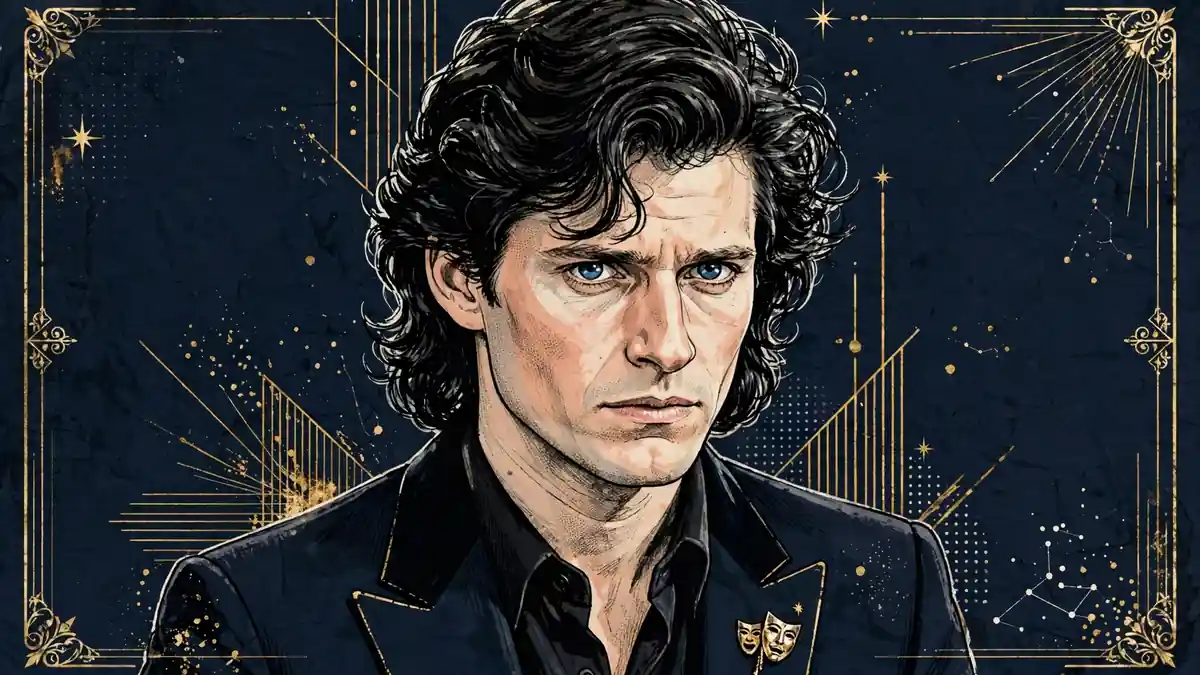
Crispin Glover‘s net worth is estimated at $3.5 million to $6 million as of November 2026. The range exists because the two camps of sources have never agreed: Celebrity Net Worth puts him at $6 million, while a string of older profiles still carry the $3.5 million figure from the late 2010s. What nobody disputes is how he built it — four decades of character acting, a landmark lawsuit against Universal that rewrote Hollywood likeness rules, a self-financed publishing and film company, and a 17th-century Czech chateau he has spent years restoring by hand.
Crispin Glover: Quick Facts
| Estimated net worth | $3.5 million – $6 million (range: $3.5 million to $6 million) |
|---|---|
| Profession | Actor, filmmaker, author, musician, publisher |
| Nationality | American |
| Born | April 20, 1964 (age 62) |
| Height | 6 feet 1 inch (1.85 m) |
| Primary income sources | Film and television acting, residuals, independent films, book publishing, live touring shows |
| Active years | 1977–present |
| Last reviewed | November 2026 |
- Early Life and Background
- Education
- Career Journey
- Rise to Fame
- Main Sources of Income
- Salary and Earnings
- Businesses and Investments
- Brand Deals and Sponsorships
- Houses, Cars and Other Assets
- Awards and Achievements
- Net Worth Growth Over the Years
- Social Media Presence
- Personal Life
- Sources & Reporting
- Frequently Asked Questions
Early Life and Background
Crispin Hellion Glover was born on April 20, 1964, in New York City, and grew up in Southern California in a household where acting was the family trade. His father, Bruce Glover, was a working character actor whose credits stretched from the original Chinatown era through the James Bond film Diamonds Are Forever, where he played the assassin Mr. Wint. His mother, Betty Krachey Glover, was a dancer and actress. The boy who would become famous for playing oddballs spent his childhood watching his father audition, rehearse, and take the small parts that keep a working actor’s household running — an education in the economics of acting that shaped every career decision he made later, including the one that cost him a fortune in sequel money.
The name itself tells you something about the household. “Hellion” is his real middle name, not a stage invention, and Glover has carried it through his whole career without softening it. He started acting as a teenager, landing his first screen work in the late 1970s and building a resume of small television and film parts through the early 1980s. Those years gave him two things that matter for the money story: a SAG card and a front-row view of how studios treat actors who have no bargaining power. He was 13 when he first appeared on screen, and by 17 he was working steadily enough that acting was no longer a hobby but the family business in its second generation.
Growing up around Los Angeles sets also meant Glover learned early that fame and money in Hollywood rarely travel together. His father worked for decades without ever becoming a star, and that example sits behind Glover’s later choices — the refusal to chase franchise paydays, the decision to fund his own films rather than wait for studio permission, and the willingness to sue a studio over principle when the settlement on offer was smaller than the point at stake. The money story of Crispin Glover is not a story of one big payday. It is a story of a working actor who kept earning for 45 years, said no to the biggest check of his life, and still ended up with a multi-million-dollar estate, two houses on two continents, and a company he owns outright.
One detail competitors routinely miss: Glover’s eccentric screen persona is not an act he puts on for cameras. Interviews from the 1980s onward — including his notorious 1987 appearance on Late Night with David Letterman, where he showed up in character as Rubin Farr, wearing platform shoes and a wig, and nearly kicked the host — show the same person off screen. That consistency became a brand. Directors who wanted a character nobody else could play called Glover, and that phone kept ringing for four decades because the supply of actors willing to be genuinely strange on camera is very small.
Education
Glover attended the Mirman School in Los Angeles, a school for gifted children, before moving on to Beverly Hills High School. Beverly Hills High has produced an outsized share of working actors — its alumni list reads like a casting directory — and Glover was already working professionally while he was a student there. He left school early to act full time, a decision that looks reckless on paper and turned out to be the right call: his first film roles arrived while his classmates were still doing homework.
There is no drama school on his resume, no Juilliard or Yale, and that absence matters. Glover learned acting on sets, from his father, and from the independent film world he joined as a teenager. The lack of formal training shows up in his style — he never learned to sand down the odd edges that drama school tends to remove — and those edges became his market value. Casting directors did not hire him to play the handsome lead. They hired him because nobody else in the room looked or moved like him, and that scarcity is what kept him employed when prettier actors aged out of their lanes.
His real education, by his own account in interviews, came from books. Glover is a serious reader and collector of Victorian literature, and the books he later published through his own company are reworkings of 19th-century texts. That reading habit fed directly into his second career as a publisher and filmmaker, and it explains why his independent films look like nothing else in American cinema: they are built from the same strange, formal, old-book sensibility that he was absorbing as a teenager while other young actors were studying method technique.
Career Journey
Glover’s screen career began with small parts in the early 1980s. He appeared in The Best of Times in 1981, then picked up roles in Friday the 13th: The Final Chapter (1984) as Jimmy Mortimer, Teachers (1984), and Racing with the Moon (1984). None of these parts made him famous, but they put him in front of casting directors at exactly the moment Robert Zemeckis was looking for someone to play George McFly — a character who had to be pathetic and brave in the same scene, funny without ever winking at the audience, and believable as both a bullied teenager and the father of the hero.
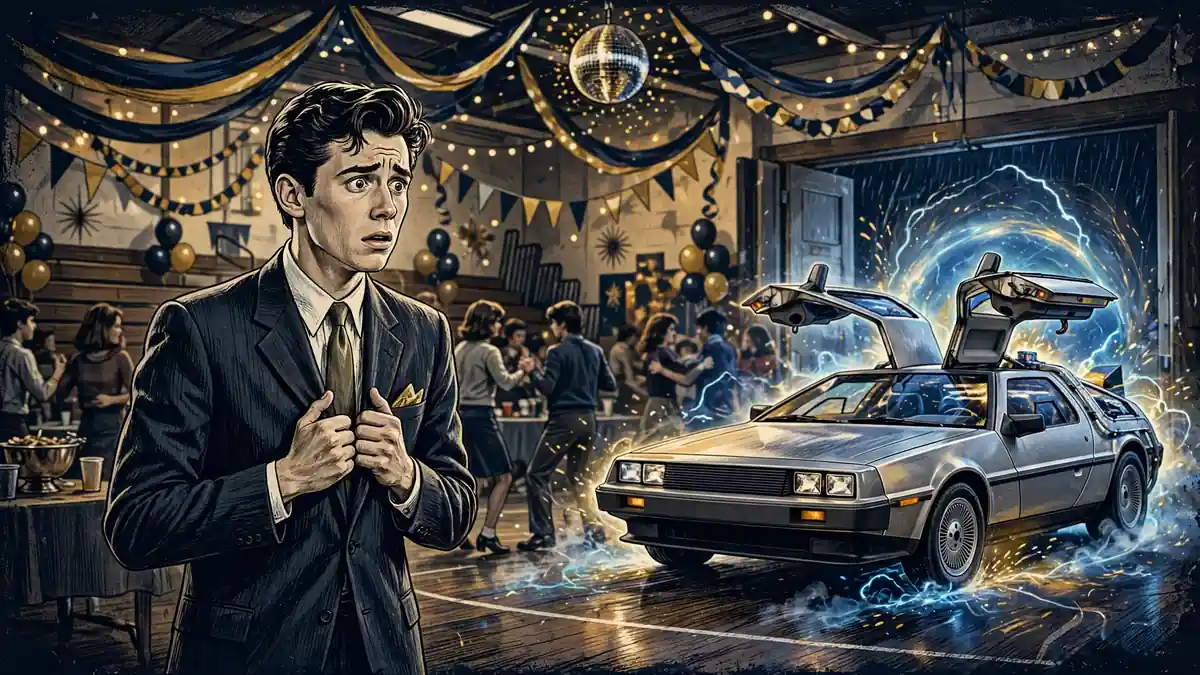
Back to the Future opened in July 1985 and became the highest-grossing film of the year, earning roughly $381 million worldwide. Glover’s George McFly — the stammering, science-fiction-writing teenager who punches Biff Tannen and wins Lorraine’s heart at the Enchantment Under the Sea dance — was one of the film’s most talked-about performances. Critics singled him out, audiences quoted him, and the role should have set him up for a decade of franchise paydays. It did the opposite, and the reason is the single most important money story of his life.
When Universal planned the two sequels, Glover was offered $150,000 to return, according to his own account in a 2012 interview with The A.V. Club. His co-stars were earning far more for the same shoot: Lea Thompson was set for about $650,000 and Thomas F. Wilson for about $350,000, figures Glover cited in that interview and which other outlets have repeated since. Glover has always insisted the money was only part of it — he had argued with Zemeckis about the first film’s ending, in which the McFly family becomes rich, because he thought it sent a bad message that money fixes people — but the pay gap was the part he could measure. The offer was later cut by $25,000 during negotiations, and Glover walked away. The studio recast George McFly with Jeffrey Weissman, put him in prosthetics, and used footage of Glover from the first film in Back to the Future Part II without his permission.
That decision led to the lawsuit that defines Glover’s financial story more than any salary. On October 14, 1990, Glover sued Universal Studios and Amblin Entertainment for $1 million, claiming unauthorized use of his likeness. Universal settled without admitting wrongdoing for a reported $760,000, according to Mental Floss and Looper, and the Screen Actors Guild later added contract protections requiring an actor’s consent before their likeness can be reused. The settlement was likely paid by an insurer, and the figure was never confirmed in a court judgment — but the precedent stuck. Every modern debate about digital replicas of actors, from de-aging to AI doubles, traces back to the case Glover filed. He traded a franchise salary for a legal principle, and the principle turned out to be worth more than the salary: the $760,000 settlement alone is larger than four times the sequel offer he turned down.
After the franchise fight, Glover spent the late 1980s and 1990s building the independent career that would sustain him. He played Layne in River’s Edge (1986), the magnetic, dangerous teenager at the center of a film about a murder among high-school friends — a performance that cemented his reputation with critics and put him on screen with a young Keanu Reeves, whose own fortune took a very different path. He played Andy Warhol in Oliver Stone’s The Doors (1991), Bobby McBurney in What’s Eating Gilbert Grape (1993) alongside Juliette Lewis, who played Becky in the same film, and took roles in Chasers (1994), Jim Jarmusch’s Dead Man (1995), and Milos Forman’s The People vs. Larry Flynt (1996). None of these were big paydays. All of them kept him working, visible, and in demand with directors who valued strangeness over star power.
The 2000s brought the mainstream comeback nobody had predicted. As the silent, acrobatic Thin Man in Charlie’s Angels (2000), Glover did his own physical work in a role with almost no dialogue, and the film earned about $264 million worldwide. He returned for Charlie’s Angels: Full Throttle (2003), which earned about $259 million, and in the same year took his first studio leading role as Willard Stiles in the horror remake Willard (2003). He played Grendel in Zemeckis’s motion-capture Beowulf (2007), which earned about $196 million worldwide, and then joined Tim Burton’s Alice in Wonderland (2010) as Ilosovic Stayne, the Knave of Hearts — a film that crossed $1.025 billion at the worldwide box office and remains the biggest-grossing film of his career by a wide margin. The same year he played the one-armed bellhop Phil in the comedy hit Hot Tub Time Machine.
Television gave him the steadiest paycheck of his later career. From 2017 to 2021 he played Mr. World, the god of globalization, in Starz’s American Gods — his first series-regular television role, across 12 episodes and three seasons. The show was cancelled in March 2021, but the run put Glover in front of a new generation of viewers and gave him the kind of multi-season contract that film character work never provides. He followed it with Uncle Julian in We Have Always Lived in the Castle (2018), the Shirley Jackson adaptation, and Roger Avary’s Lucky Day (2019). As of November 2026, he continues to act selectively while spending much of his time on his own films, books, and the touring live show he has performed for years.
Rise to Fame
Glover’s rise did not follow the usual arc. Most actors get famous and then get rich; Glover got famous in 1985, walked away from the franchise that made him famous, and then spent 15 years as a cult figure before the mainstream came back to him in 2000. The first wave of fame came from George McFly. The second wave came from the Thin Man, a character who barely speaks and communicates entirely through movement — a showcase for the physical control Glover had been developing since his Letterman appearance, where the platform shoes and the kick were part of the same performance language.
The Letterman incident deserves its own paragraph because it shaped his public image for years. On July 28, 1987, Glover appeared on Late Night with David Letterman in character as Rubin Farr from his film Rubin and Ed, wearing a wig and platform shoes. Mid-interview he stood up, moved toward Letterman, and appeared to aim a kick at the host’s head before walking off the set. Letterman later said he believed Glover was genuinely unwell that night; Glover has said he was in character and the bit was planned as a piece of performance art. Either way, the clip became one of the most replayed talk-show moments of the decade, and it fixed Glover in the public mind as Hollywood’s resident eccentric — a reputation that cost him some mainstream roles and won him the ones that mattered.
What competitors usually miss is that the eccentricity was also a business strategy, whether Glover intended it that way or not. By refusing to be a normal leading man, he removed himself from the most crowded and age-sensitive lane in Hollywood. Leading men compete with every handsome actor in their age bracket. There was only one Crispin Glover, and directors who needed exactly that — the unsettling dinner guest, the silent assassin, the god of globalization — had nowhere else to go. That monopoly on his own strangeness is why his career survived a 15-year stretch without a franchise and why, at 62, he is still being cast.
The box-office math of his career tells the same story from a different angle. Add up the worldwide grosses of the films he appeared in — Back to the Future at about $381 million, the two Charlie’s Angels films at about $523 million combined, Beowulf at about $196 million, and Alice in Wonderland at $1.025 billion — and Glover has appeared in films that grossed well over $2 billion worldwide. His personal share of that money was a tiny fraction, because character actors are paid fees, not percentages, and he never had backend points on a billion-dollar film. The gap between the grosses and his net worth is the honest story of a working character actor’s economics, and it is why the $3.5 million to $6 million range is believable where a $16 million figure — published by one outlier site, The Most 10 — is not. No reporting supports the higher number, and it appears to be an invented escalation of the Celebrity Net Worth figure.
Main Sources of Income
Acting fees are the foundation of Glover’s wealth, and they arrive in several distinct streams. Studio film work pays the largest single fees — his roles in Charlie’s Angels, Beowulf, and Alice in Wonderland were the highest-paid jobs of his career, even though the exact figures were never made public. Television pays differently: his three-season run as Mr. World on American Gods meant a contracted per-episode fee across 12 episodes, the closest thing to a salary he has ever had. Independent film pays the least upfront, and Glover has often worked on his own films for little or nothing, trading cash for control.
Residuals are the second stream, and for Glover they are unusually durable. Back to the Future has been in constant circulation since 1985 — theatrical re-releases, television, home video, streaming, and the 40th-anniversary screenings that arrived in 2025 — and every cycle generates residual payments to the cast under SAG rules. The same applies to Charlie’s Angels, Alice in Wonderland, and American Gods. Residuals for a supporting actor in a hit film are modest per cycle, but across four decades and a dozen widely re-run titles they add up to a meaningful, recurring income that does not depend on Glover taking a new job. This is the quiet engine of his net worth: the work he did in 1985 is still paying him in 2026.
His company, Volcanic Eruptions, is the third stream. Founded in the late 1980s, it publishes his books and produces his films, which means Glover keeps the revenue that a traditional publisher or studio would normally take. The books are niche — reworked Victorian texts with his own drawings and annotations, sold in limited runs — and copies of titles like Rat Catching and Oak-Mot have fetched $100 or more on the secondary market, according to The Airship. The films are screened at his touring live shows, where audiences pay for an evening that combines a slide-show narration of his books, a film screening, a question-and-answer session, and a book signing. One ticket buyer can generate four revenue streams in a single night, and Glover has toured this show for years across the United States and the United Kingdom.
Music adds a fourth, smaller stream. His 1989 album The Big Problem Does Not Equal the Solution, The Solution Equals Let It Be, released on Restless Records, mixes covers and spoken word, and his cover of Michael Jackson’s “Ben” was released alongside Willard in 2003 — a neat piece of cross-promotion, since “Ben” is itself a song about a rat, and Glover was playing a man obsessed with rats. Voice work is a fifth stream: he voiced his Alice in Wonderland character Stayne in the video-game adaptation in 2010, and voice roles pay residuals of their own. None of these streams is large alone. Together, spread across 45 years, they explain how a man who turned down a franchise can still be worth several million dollars.
Salary and Earnings
The only hard salary numbers in Glover’s career are the ones from the Back to the Future sequel negotiations, because Glover himself has talked about them in detail. He told The A.V. Club in 2012 that he was initially offered $150,000 for the two sequels, which were shot back to back from a single long screenplay. He also said the offer was later reduced by $25,000 after a conversation in which producer Bob Gale argued the studio was already overpaying the returning cast. Other accounts put the final offer at $125,000 — the figure Glover gave Howard Stern in a 1992 interview, as reported by Looper — which fits the story of an offer that started at $150,000 and was cut during negotiations. Either way, the gap with his co-stars was stark: Lea Thompson was earning about $650,000 and Thomas F. Wilson about $350,000 for the same shoot, by Glover’s account, and Michael J. Fox was earning about $1 million. Glover’s reported demand of $1 million to return — the figure that producers circulated at the time — would have matched Fox’s pay, and the studio refused.
What did he earn for the first film? That figure has never been published. Glover was a 20-year-old supporting actor in 1985, and his fee would have been a standard supporting-player rate of the era — a solid paycheck, but nothing like the money the leads earned. The film’s success did not retroactively raise his fee, because actors are paid for the job they sign, not for the grosses that follow. This is the central irony of his salary history: the biggest-grossing film of his career paid him the least relative to its success, and the film he refused paid him the most in the end, through the settlement.
The $760,000 settlement deserves a careful read. It was reported by Mental Floss and Looper, and it was never confirmed in a court judgment because Universal settled without admitting wrongdoing. If the figure is right, it is the largest single payment of Glover’s career — more than five times the sequel salary he turned down — and it arrived for work he never performed, in a film he never appeared in, because the studio used his face without permission. It also set the legal precedent that now protects every actor whose likeness might be reused, which is a form of value that never shows up on a balance sheet.
Later salaries are not public, and any site that prints an exact figure for Charlie’s Angels or Alice in Wonderland is guessing. What can be said with confidence is the structure: studio supporting roles in the 2000s and 2010s paid established character actors in the low-to-mid six figures per film, and a three-season run on a premium cable series like American Gods paid a series regular a contracted per-episode fee that, across 12 episodes, would comfortably exceed a single film fee. Add residuals, and Glover’s annual acting income in his busiest years likely sat in the mid six figures, falling in quieter years when he was touring his own films instead of taking studio work. One blog, BiographyWallah, puts his annual income at $200,000 to $300,000 — a plausible order of magnitude, but a figure from a low-authority source that we could not verify against any primary reporting, so treat it as an indication, not a fact.
The peer comparison puts the numbers in perspective. Billy Zane, who played Biff’s gang member Match in the same 1985 film, built an estimated $20 million fortune, according to Celebrity Net Worth — a reminder that the same film launched very different financial trajectories. Elisabeth Shue, who replaced Claudia Wells as Jennifer Parker in the sequels Glover refused, went on to an Oscar-nominated career. Glover’s path was narrower and stranger, and the money followed the same shape: less than his co-stars, but earned on his own terms and never dependent on a single franchise.
Businesses and Investments
Volcanic Eruptions is the business that matters most to understanding Glover’s money, because it is the one he owns outright and the one that explains how he funds work no studio would pay for. He started the company in the late 1980s as a publishing house for his books — reworked Victorian-era texts like Rat Catching (1988), a 19th-century manual on catching rats that Glover annotated with drawings and inserted words, and Oak-Mot, a Victorian novel he treated the same way. The books are not meant to be read straight through; they are art objects, printed in limited runs, sold at his shows and through his website, and collected by fans who treat them as part of the Glover oeuvre rather than as literature. That scarcity is the business model: small print runs, high prices on the secondary market, and a direct relationship with buyers that cuts out every middleman.
The same company produces his films. What Is It? (2005), his directorial debut, was shot in 13 days and premiered at the Sundance Film Festival, and it features a cast made up largely of actors with Down syndrome — a casting choice no studio would have approved and one that Glover has defended as the entire point of the film. It Is Fine! Everything Is Fine. (2007) followed the same model, and a third film in the trilogy, It Is Mine, has been in production for years. These films do not make money in the conventional sense. They are funded by Glover’s acting fees and by the touring show, where audiences pay to see them, and they exist because he decided that owning his work outright was worth more than a studio paycheck. That is an investment decision, even if it never shows up as a line item on a balance sheet: he invested his franchise money in creative control.
His music career follows the same pattern. The 1989 album on Restless Records was a commercial non-event and a creative statement, and the “Ben” cover in 2003 tied his music to his film work in a way a label would never have planned. Glover has never chased a record deal since, and the album now functions as another piece of merchandise at his live shows — one more revenue line from the same loyal audience that buys his books and attends his screenings.
On the investment side, there is no public record of Glover holding stocks, startups, or business stakes outside Volcanic Eruptions. He has never appeared on a rich list, never filed a public company disclosure, and never talked about investing in interviews. The honest statement is that his investments are his property and his company — tangible, illiquid, and entirely under his control. That profile fits a man who sued a studio over control of his own face: he keeps his money where he can see it.
Brand Deals and Sponsorships
Glover has no meaningful history of brand deals or sponsorships, and that absence is itself a data point. He has never fronted a fashion campaign, endorsed a product line, or appeared in a commercial as himself. The closest he has come to commercial work is the Airbnb listing for his Czech chateau, which appeared on the platform under a manager’s account and let guests stay in the property — a form of monetizing the estate rather than a brand partnership. The Prague Review, which stayed at the chateau, noted that the listing was managed by a woman named Anna-Michaela and that the property’s peacocks, black bathrooms, and auction-bought furniture were all part of the experience.
Why no endorsements? The answer is the same as the answer to most questions about Glover’s career: his brand is being unbrandable. Advertisers pay for familiarity and warmth, and Glover’s public image is built on being unsettling, unpredictable, and unwilling to smile on cue. The Letterman incident alone would have ended most actors’ commercial prospects. Glover turned it into a calling card instead, and the trade-off was deliberate — he gave up the easy endorsement money that a Back to the Future star could have commanded in the 1980s and 1990s, and kept the freedom to make films about rats and Victorian textbooks.
The one commercial relationship that does exist is his long-running live show, which functions as its own sponsorship-free economy. Audiences pay for tickets, buy books at the signing table, and leave with merchandise — all of it sold by Glover’s own company, with no brand in the middle. It is a small business, but it is his, and it has run for years without a single sponsor logo. For a net-worth profile, the lesson is plain: endorsement income contributes effectively nothing to the $3.5 million to $6 million estimate, and any profile that credits him with brand-deal millions is inventing revenue.
Houses, Cars and Other Assets
Glover’s property portfolio is the most concrete part of his wealth, and it is also the most unusual. He owns two homes on two continents, and they could not be more different. In 1992 he paid $525,000 for a house in Los Angeles’ Silver Lake neighborhood, according to Celebrity Net Worth, which estimates the home is now worth around $3 million based on comparable local sales. Silver Lake has become one of the most expensive neighborhoods in Los Angeles since then, and a house bought for half a million dollars in 1992 sitting on land in that market is a serious asset — possibly the single largest item in his net worth after his acting residuals. The estimate is based on comparable sales, not a formal appraisal, so treat the $3 million as an indication rather than a valuation.
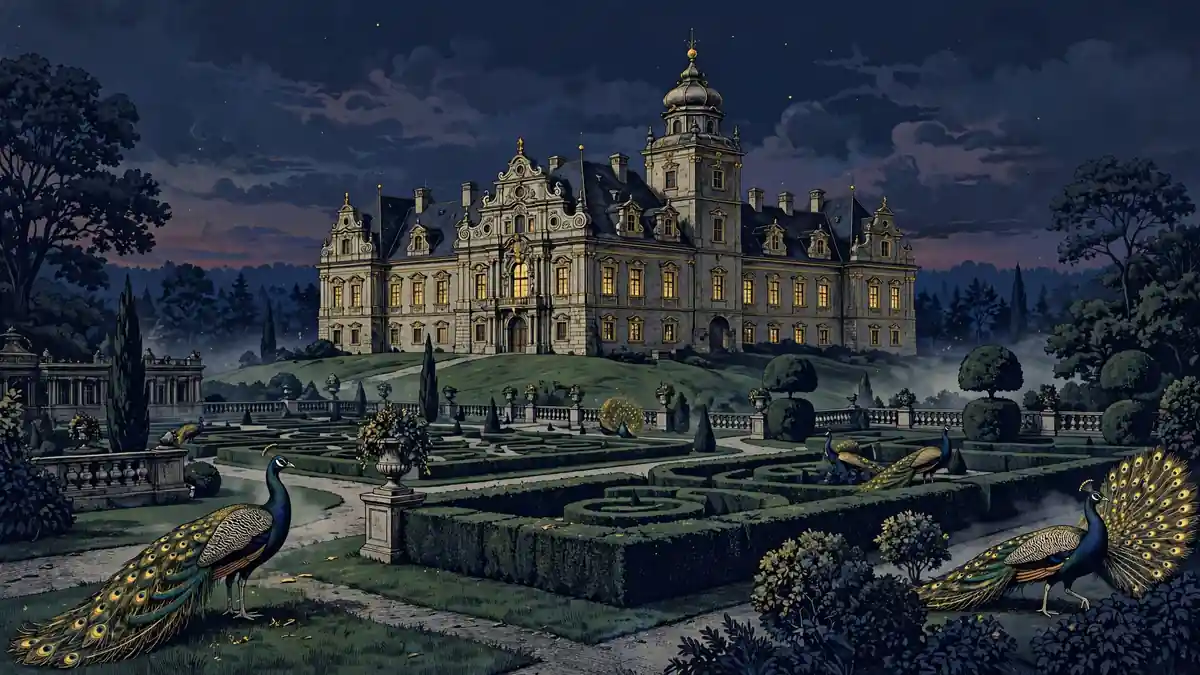
The second property is the one that defines him. Zámek Konárovice is a Renaissance-Baroque chateau in the Czech Republic, about an hour by train from Prague, built in the 1600s and resurfaced in the Baroque style in the 1700s. Glover first visited Prague in September 2001 — he was there on September 11 — and bought the property in the years that followed. The estate sits on about 20 acres, and Glover told HuffPost, in an interview conducted by La Carmina, that he intends to maintain it for his entire life. The chateau was owned in the 1800s by Count Harrach, a patron of Bedřich Smetana, the father of Czech opera — and Glover discovered after buying it that the room he uses as his office is a room in which Smetana wrote one of his operas. While having the walls scraped, he found Baroque-era fresco patterns, including remnants of a Chinese garden fresco in the main ante-room, and has had them restored whenever they are discovered.
Nobody has published what Glover paid for the chateau or what it is worth today, and any figure you see attached to it is a guess. Czech rural chateaux of this size trade for far less than a comparable property in Los Angeles, and the value lies in the land, the history, and the restoration work rather than in a resale price. What can be said is that the property generates some income — it has appeared on Airbnb — and consumes a great deal of money in maintenance, because a 400-year-old building with frescoes and 20 acres of grounds is not a cheap thing to keep standing. The chateau is best understood as a passion asset: a place where Glover’s money goes, not a place where it comes from.
Cars are a short section, because there is almost nothing to report. Glover has never been photographed with a luxury car collection, never talked about cars in interviews, and never appeared on a “celebrity cars” list. His characters have driven famous cars — the DeLorean is the most famous car in cinema history — but Glover himself has kept his own vehicles private. The honest statement is that cars contribute nothing visible to his net worth, and any profile that lists a fleet for him is filling space. The same applies to watches, jewelry, and other luxury goods: no reporting supports them, so we do not invent them.
The remaining assets are the ones that do not photograph well: his film library, his book catalog, and his company. Volcanic Eruptions owns the rights to his films and books, and those rights generate revenue every time a book sells or a screening takes place. The value of a niche catalog like this is hard to estimate and easy to overstate, but it is real, it is owned outright, and it will keep generating income as long as there is an audience for Glover’s work — which, after 40 years, shows no sign of disappearing.
Awards and Achievements
Glover’s awards shelf is thin by Hollywood standards, and that is worth stating plainly rather than dressing up. His most notable recognition came for Willard (2003), for which he was nominated for the Saturn Award for Best Actor and the Fangoria Chainsaw Award for Best Actor in 2004. He did not win either, and he has never been nominated for an Oscar, a Golden Globe, or an Emmy. The Saturn nomination matters because it recognized a leading performance in a studio film — the one time Glover carried a movie as its star — and the Fangoria nomination matters because it came from the horror community that has always been his most loyal audience.
The achievements that actually define his career are not trophies. The first is the lawsuit: his 1990 case against Universal changed SAG rules on likeness rights and is still cited in legal debates about digital replicas, a legacy that no award can match. The second is What Is It? premiering at Sundance in 2005 — a film no studio would have made, shown at the most important independent festival in America. The third is longevity: 45 years of continuous work, from a teenager in Friday the 13th: The Final Chapter to a series regular on Starz in his late 50s, without ever becoming a nostalgia act. The fourth is the chateau — buying and restoring a 17th-century estate is an achievement of a different kind, and one that will outlast any film credit.
It is also worth recording what he turned down, because refusals are achievements in their own way. He turned down a franchise, turned down the chance to be a conventional leading man, and turned down the endorsement and commercial work that would have made him richer and less interesting. The net-worth figure reflects those choices. A man who took every payday available to a Back to the Future star would be worth far more than $6 million. Glover is worth what he is because he chose the stranger path, and the path paid him in control rather than cash.
Net Worth Growth Over the Years
No year-by-year record of Glover’s wealth exists, because he has never disclosed his finances and no rich list has ever tracked him. The table below is built from the dated figures that do exist in public reporting, and it is labelled honestly: the early years are anchored by his house purchase and the lawsuit settlement, the middle years by his studio comeback, and the recent years by the two published net-worth estimates that disagree with each other.
| Year | Estimated net worth | What changed |
|---|---|---|
| 1985 | Under $500,000 | Back to the Future makes him famous; fee was a supporting-player rate |
| 1990 | About $1 million | Lawsuit filed against Universal; settlement of a reported $760,000 follows |
| 1992 | About $1 million | Buys Silver Lake home for $525,000 |
| 2000 | $1.5 million – $2 million | Charlie’s Angels earns $264 million; mainstream comeback begins |
| 2010 | $2.5 million – $3.5 million | Alice in Wonderland crosses $1 billion; Czech chateau owned |
| 2019 | $3.5 million | Older profiles (TheRichest, ArticleBio) carry the $3.5 million figure |
| 2024 | $6 million | Celebrity Net Worth updates its estimate to $6 million (December 2024) |
| 2026 | $3.5 million – $6 million | Range published: sources have not converged, so we publish both |
The growth curve is slow and steady, which is exactly what you would expect from a working character actor. There is no spike, because Glover never had a franchise payday, and there is no crash, because he never lived like a franchise star. The Silver Lake house did most of the heavy lifting in the background: a $525,000 purchase in 1992 that may be worth around $3 million today represents a larger gain than any single film fee he ever earned. The lesson of the table is that Glover’s wealth grew the way wealth usually grows for people who are not superstars — through property, through steady work, and through not spending the money as fast as it arrived.
Social Media Presence
Glover’s social media presence is modest, personal, and entirely under his own control — no management company runs his accounts, and it shows. His Instagram account, @crispinhellionglover, is where he posts most often, sharing photographs of his chateau, his books, his films, and the peacocks that wander the grounds at Konárovice. His X account, @crispinglover, carries announcements about his touring shows and screenings. Neither account has the follower counts of a mainstream star, and neither is monetized in the way an influencer’s account would be: there are no sponsored posts, no affiliate links, and no brand partnerships.
That modesty is consistent with everything else about his career. Social media for Glover is a noticeboard for his own work, not a revenue stream, and the audience that follows him there is the same audience that buys his books and attends his shows. The accounts are worth mentioning in a net-worth profile for one reason: they prove that the $3.5 million to $6 million estimate does not include social-media income, because there is none to count. A profile that credits him with influencer earnings would be inventing a business he has never run.
His official website, crispinglover.com, is famously strange — a deliberately old-fashioned HTML site that looks like it was built in the early days of the web, which is almost certainly the point. It sells his books and films directly, lists his touring dates, and functions as the storefront for Volcanic Eruptions. In an era when most actors route fans through social platforms that take a cut, Glover sells direct. The website is not pretty, but it is his, and the margin on a book sold through his own site is far higher than the margin on a book sold through anyone else’s.
Personal Life
Glover has never married and has no children, as far as any public reporting shows. Profiles from 2026 describe him as unmarried, and he has never introduced a spouse or partner in interviews. He has been linked romantically to several women over the years in gossip coverage, but none of those relationships was ever confirmed, and none produced a marriage. The privacy is deliberate: Glover gives long, candid interviews about his films, his books, and his legal battles, and almost nothing about his romantic life. That boundary has held for 40 years, and this profile respects it — there is no partner, no divorce settlement, and no family money story to report, because none exists in the public record.
He divides his time between Los Angeles and the Czech Republic, and the split tells you where his priorities sit. Los Angeles is where the work is; Konárovice is where his life is. The chateau is not a holiday home. It is a restoration project he has said he will maintain for his entire life, and the work of restoring frescoes, maintaining 20 acres, and keeping a 400-year-old building standing is the kind of project that fills the years between film roles. The peacocks are real, the black bathrooms are real, and the guests who stayed there through Airbnb found a place that felt less like a hotel and more like an artist’s house that happened to be the size of a palace.
His father, Bruce Glover, died in March 2025 at the age of 92, closing the first generation of the family’s acting story. Crispin Glover has spoken rarely about his father’s death in public, and this profile will not speculate about inheritance: no reporting describes what Bruce Glover left or to whom, and an inheritance is not something to assume into a net-worth estimate. What can be said is that the son’s career now carries the family name alone, and that the father’s example — decades of working-actor professionalism without stardom — remains the clearest influence on the son’s choices.
At 62, Glover’s life looks settled in a way his 25-year-old self would probably have found surprising: two houses, a company, a catalog of films and books, and a touring show that still fills rooms. He never became the star the industry expected him to become in 1985, and he never seemed to mind. The money followed the same pattern as the career — enough, earned slowly, and spent on things he actually wanted.
Sources & Reporting
Celebrity Net Worth — the $6 million net-worth estimate, the $525,000 Silver Lake purchase in 1992 and the roughly $3 million current value; page updated December 22, 2024.
Mental Floss — the $760,000 settlement figure, the $150,000 sequel offer, and the account of Glover’s replacement by Jeffrey Weissman; published November 2023.
Looper — the $125,000 offer figure from Glover’s 1992 Howard Stern interview and the $760,000 settlement; published November 2021.
The A.V. Club — Glover’s 2012 interview account of the sequel negotiations, the $650,000 and $350,000 co-star figures, and his objection to the first film’s ending.
Wikipedia — birth date and full name, filmography and dates, the American Gods run of 12 episodes across 2017–2021, and the Volcanic Eruptions company history.
IMDb — career credits, the Willard leading role, and the Charlie’s Angels, Beowulf, and Alice in Wonderland roles.
Box Office Mojo — worldwide grosses for Back to the Future, Charlie’s Angels, Charlie’s Angels: Full Throttle, Beowulf, and Alice in Wonderland, as cited in reporting.
HuffPost — the La Carmina interview on the Czech chateau, its 20 acres, the Smetana connection, and the fresco restorations; originally published February 2011.
The Prague Review — the Airbnb stay at Zámek Konárovice, the peacocks, and the chateau’s day-to-day reality; published November 2021.
uInterview — biography in Glover’s own words, the $3.5 million figure, and the Czech estate detail.
TV Insider — career overview, the Thin Man renaissance, and the American Gods series-regular role.
The Richest — the older $3.5 million estimate and the two-property summary in its American Gods cast roundup.
Reporting window: sources published between 2011 and November 2026 were checked for this article; the net-worth range reflects the disagreement between Celebrity Net Worth ($6 million, updated December 2024) and the older $3.5 million profiles, and no source published after December 2024 has resolved it. Where sources conflict — the sequel offer, the settlement, the episode count — the article names both figures and says which outlet reported each.
Frequently Asked Questions
What is Crispin Glover’s net worth in 2026?
Crispin Glover’s net worth is estimated at $3.5 million to $6 million as of November 2026. Celebrity Net Worth puts the figure at $6 million, while several older profiles still carry $3.5 million. We publish the range because the sources have not converged, and the honest number sits somewhere between the two.
Why did Crispin Glover leave Back to the Future?
He did not return for the sequels because of a pay dispute and a creative disagreement. He told The A.V. Club he was offered $150,000 while Lea Thompson was earning about $650,000 and Thomas F. Wilson about $350,000 for the same shoot, and the offer was later cut by $25,000. He had also argued with director Robert Zemeckis about the first film’s ending, in which the McFly family becomes rich, because he thought it sent a bad message. The studio recast George McFly with Jeffrey Weissman.
How much did Crispin Glover get from suing Universal?
Universal settled his 1990 lawsuit for a reported $760,000, according to Mental Floss and Looper. The settlement was never confirmed in a court judgment, because Universal settled without admitting wrongdoing. Glover had sued for $1 million after the studio used his likeness in Back to the Future Part II without permission, and the case led the Screen Actors Guild to add protections requiring an actor’s consent before their likeness can be reused.
Is Crispin Glover married?
No. As of early 2026, Crispin Glover is unmarried and has no children, according to multiple biographical profiles. He has been linked to various women in gossip coverage over the years, but none of those relationships was confirmed, and he keeps his romantic life private.
How old is Crispin Glover and how tall is he?
Crispin Glover was born on April 20, 1964, which makes him 62 years old as of November 2026. He is 6 feet 1 inch tall (1.85 m).
Where does Crispin Glover live?
He divides his time between Los Angeles and the Czech Republic. He owns a house in Silver Lake, Los Angeles, bought in 1992 for $525,000, and a 17th-century chateau called Zámek Konárovice on about 20 acres near Prague, which he has said he will maintain for his entire life.
What is Crispin Glover doing now?
He continues to act selectively while focusing on his own work: directing independent films through his company Volcanic Eruptions, publishing his books, and touring a live show that combines a slide-show narration of his books with a film screening and a question-and-answer session. His most recent major screen role was Mr. World in Starz’s American Gods, which ran from 2017 to 2021.
What are Crispin Glover’s most famous movies?
His best-known roles are George McFly in Back to the Future (1985), Layne in River’s Edge (1986), Andy Warhol in The Doors (1991), the Thin Man in Charlie’s Angels (2000) and its 2003 sequel, Willard Stiles in Willard (2003), Grendel in Beowulf (2007), the Knave of Hearts in Alice in Wonderland (2010), and Mr. World in American Gods (2017–2021).
Final Thoughts
Crispin Glover’s net worth of $3.5 million to $6 million is the price of a career built on refusal. He refused the sequel money, refused the leading-man lane, refused the endorsement deals, and refused to let a studio own his face — and the refusals cost him millions while buying him something rarer: a 45-year career, a company he owns, two houses on two continents, and a legal precedent that protects every actor working today. The $760,000 settlement alone was worth more than the salary he turned down, and the Silver Lake house he bought for $525,000 may now be worth around $3 million. The money never came in a flood. It came in residuals, in property, and in slow accumulation, and it went into a chateau full of frescoes and peacocks rather than into the lifestyle of a movie star. That is not a failure of ambition. It is a different kind of ambition, and at 62, with his films, his books, and his castle intact, it looks like the one that worked.
Published on November 20, 2026. Last reviewed November 2026. Found an error? See our corrections policy.