
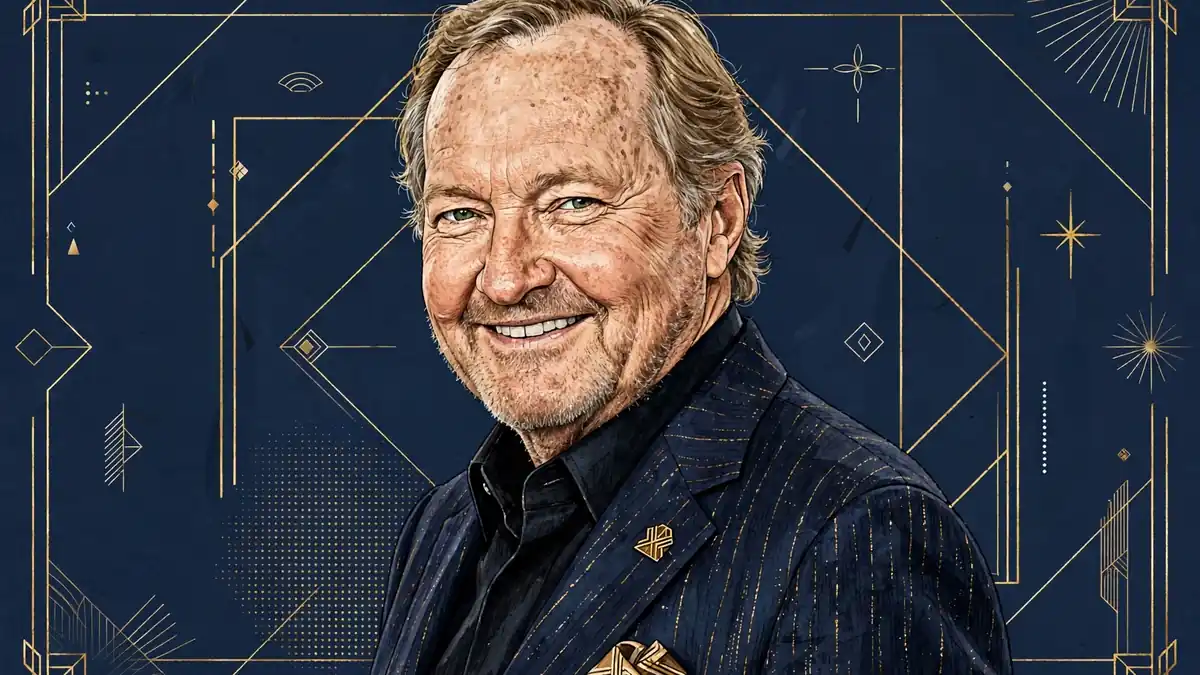
Randy Quaid‘s net worth is estimated at -$2 million to -$1 million as of November 2026. The Oscar-nominated character actor once commanded seven-figure paychecks and a share of the gross on studio comedies, earned $2.3 million for a single role in Kingpin, and played one of the most quoted characters in American film history — then a 2000 bankruptcy, years of tax debt, and a $3.5 million California court judgment upheld in July 2026 pushed his balance sheet underwater. He still works: after a six-year absence from screens, he returned in the 2024 holiday comedy The Christmas Letter, reuniting with Chevy Chase 35 years after Christmas Vacation.
Randy Quaid: Quick Facts
| Estimated net worth | -$2 million to -$1 million (range: -$2 million to -$1 million) |
|---|---|
| Profession | Actor (film, television, voice, stage) |
| Nationality | American |
| Born | October 1, 1950 (age 76) |
| Height | 6 ft 5 in (1.96 m) |
| Primary income sources | Film and television acting, residuals, voice work |
| Active years | 1971–present |
| Last reviewed | November 2026 |
- Early Life and Background
- Education
- Career Journey
- Rise to Fame
- Main Sources of Income
- Salary and Earnings
- Businesses and Investments
- Brand Deals and Sponsorships
- Houses, Cars and Other Assets
- Awards and Achievements
- Net Worth Growth Over the Years
- Social Media Presence
- Personal Life
- Sources & Reporting
- Frequently Asked Questions
- Final Thoughts
Early Life and Background
Randall Rudy Quaid was born on October 1, 1950, in Houston, Texas, and grew up in the suburb of Bellaire. His mother, Juanita Bonniedale “Nita” Quaid, worked in real estate. His father, William Rudy Quaid, was an electrician. Money in the Quaid household came from ordinary work, and nothing in his upbringing pointed toward Hollywood — except that the family produced not one but two professional actors. Randy’s younger brother, Dennis Quaid, born in 1954, went on to a long leading-man career and a fortune estimated between $20 million and $40 million depending on the outlet. The brothers took opposite paths through the same business: Dennis became a movie star, Randy became the character actor directors called when they needed someone unforgettable in a supporting part.
Houston in the 1950s and 1960s gave Randy Quaid two things that shaped his screen persona. The first was size. At 6 ft 5 in (1.96 m), he towered over most of his co-stars, and casting directors used that frame for everything from gentle giants to menacing eccentrics. The second was a Texas drawl and an ease with oddball characters that he never had to manufacture. He was, by every account of people who worked with him early on, a natural: funny without trying to be, able to turn a small part into the scene audiences remembered on the drive home.
The Quaid family story also includes a lesser-known sibling thread. Randy is the stepbrother of actress Brandy Quaid, a figure who stays out of the public eye and about whom little verified information exists. His daughter, Amanda Marie Quaid, born in 1983, later worked as an actress, author, and voice coach. The family connections matter to the money story in one specific way: while Dennis Quaid kept earning steadily through the 2010s and 2020s — court filings from his divorce showed annual income in the low seven figures, often $1 million to $4 million a year — Randy’s earning years effectively stopped for long stretches, and his liabilities kept growing. Same starting point, same town, same profession, and a gap of tens of millions of dollars between the brothers by 2026.
Quaid has spoken rarely about his childhood in interviews, and no verified reporting describes a wealthy or connected family background. The Bellaire years read as a standard middle-class Texas upbringing, which makes the scale of his later financial swing more striking: this was not an heir who burned through an inheritance. He earned his money one role at a time, in an industry where a supporting actor’s pay can jump from five figures to seven figures in a single contract — and where the money stops the moment the phone stops ringing.
Education
Quaid studied drama at the University of Houston, a public university in his home city. The decision was practical as much as artistic: Houston had a working theater scene, the university had a drama program, and staying close to home cost far less than moving to New York or Los Angeles with no credits. At Houston, one of his teachers saw something in the tall, funny student and encouraged him to audition for director Peter Bogdanovich, who was casting The Last Picture Show.
That audition changed everything. Bogdanovich cast Quaid as Lester Marlow in the 1971 film, a black-and-white drama about small-town Texas life that became a critical landmark and earned eight Academy Award nominations. Quaid was 20 years old, still a student, and suddenly sharing scenes in a movie that film schools still teach. The role paid little by later standards — a first film part for an unknown — but it gave him the one asset no acting class can provide: a screen credit in a prestige picture, and a director willing to vouch for him.
There is no verified record of Quaid completing a degree at Houston, and his biography is usually written as if the film set replaced the classroom. That is not unusual for actors of his generation, and it is worth stating plainly rather than dressing up: his education was the University of Houston drama program, cut short by a professional break that most drama students would trade a diploma for. The training shows in his work anyway. Quaid’s performances, from the wounded young sailor in The Last Detail to the sly rancher in Brokeback Mountain, carry a stage actor’s patience — he lets a scene breathe instead of chasing the laugh.
For readers weighing the education angle of a net worth story, the honest point is this: Quaid’s schooling cost him little and returned a career. The expensive mistakes came later, and they were not made in a classroom. They were made in lawyers’ offices, in independent film financing, and in a property dispute that ran for more than a decade.
Career Journey
Quaid’s career falls into four clear chapters, and the money follows the same shape: a slow climb, a long peak, a collapse, and a small, late return.
Chapter one ran from 1971 to 1982. After The Last Picture Show, he worked steadily in films that now read like a syllabus of 1970s American cinema: What’s Up, Doc? (1972) with Barbra Streisand and Ryan O’Neal, Paper Moon (1973) with Ryan O’Neal and Tatum O’Neal, The Apprenticeship of Duddy Kravitz (1974), Breakout (1975), Bound for Glory (1976), The Missouri Breaks (1976) with Marlon Brando and Jack Nicholson, and Midnight Express (1978). None of these parts made him rich on its own. Together they made him something more durable: a working actor directors trusted, with a reputation for showing up prepared and making thin material better. By the end of the 1970s he had more than a dozen film credits and a name that casting directors recognized.
Chapter two, 1983 to 1999, was the peak. Cousin Eddie arrived in 1983, and the 1990s brought the two biggest commercial years of his life: Kingpin and Independence Day in the same summer of 1996. He joined the cast of Saturday Night Live for the 1985–86 season, won a Golden Globe for playing President Lyndon B. Johnson in LBJ: The Early Years (1987), and collected Emmy nominations in 1988 and again in 2005 for playing Elvis Presley’s manager, Colonel Tom Parker, in the CBS miniseries Elvis. He appeared opposite Tom Cruise in Days of Thunder (1990), and worked constantly — Quick Change, Freaked, Major League II, The Paper, Bye Bye Love. This was the period when his per-film fee crossed into seven figures, and when his contract for Christmas Vacation included 5% of the gross, a term that only bankable names get.
Chapter three, 2000 to 2015, was the unraveling. The bankruptcy filing came in January 2000, while he was still earning real money. Brokeback Mountain in 2005 should have been a late-career prestige win; instead it produced a $10 million lawsuit against the studio. A stage production, Lone Star Love, ended in 2007 with Actors’ Equity banning him and ordering him to pay more than $81,000. Arrests followed in 2009 and 2010, then the flight to Canada, the “Star Whackers” claims, and five years largely outside the United States. His screen credits in this period shrank to a trickle, and his last credited film appearance before the long silence was the 2018 independent movie All You Can Eat.
Chapter four began in 2024. The Christmas Letter, a low-budget holiday comedy filmed in the Mohawk Valley of New York, reunited Quaid with Chevy Chase and Brian Doyle-Murray. Quaid played a deliveryman named Rich. The film was a nostalgia project, not a studio comeback, and there is no sign it paid anything close to his old seven-figure fees. Still, it put him back on a set in the United States for the first time in years, and it gave audiences a reminder of what made him a star in the first place. In late 2025 he was booked to host a live Q&A at the Akron Civic Theatre after a screening of Christmas Vacation; the event was canceled in October 2025 over what organizers called unforeseen scheduling conflicts.
Across more than 90 film and television credits, Quaid’s career tells a simple story about how character actors get paid. The money is lumpy. A supporting player can earn $2.3 million on one film and $50,000 on the next, and the gap between jobs can last years. Stars with franchise deals and endorsement portfolios have cushions. Quaid’s cushion was residuals from a catalog of well-loved films — real money, but not enough to cover a bankruptcy, a tax bill, and a decade of litigation at the same time.
Rise to Fame
The role that made Randy Quaid famous arrived in 1973, two years after his debut, and it was not a comedy. In The Last Detail, directed by Hal Ashby, Quaid played Larry Meadows, a young Navy sailor being escorted to prison by two petty officers, one of them played by Jack Nicholson. Meadows is a quiet, naive kid facing eight years in the brig for stealing $40 from a charity box, and Quaid played him with a rawness that made the film’s final act land. The performance earned him nominations for the Academy Award, the Golden Globe, and the BAFTA for Best Supporting Actor — all before his 24th birthday.
That kind of debut sets a trap. An Oscar nomination at 23 tells the industry you are a serious actor, and for the next decade Quaid worked the serious side of the business: dramas, literary adaptations, ensemble pieces. He was good at it, and the work kept coming. But serious supporting parts in the 1970s paid working-actor money, not star money. The fame that pays arrived a decade later, wearing a white sweater and a bathrobe.
Cousin Eddie Johnson first appeared in National Lampoon’s Vacation in 1983, opposite Chevy Chase as Clark Griswold. Eddie is Clark’s cousin by marriage: a shambling, good-hearted, deeply uncouth relative who shows up uninvited with his family in a battered RV, empties his chemical toilet into a storm drain, and asks Clark for money. Quaid played him without a trace of condescension, which is why the character worked. Eddie is not a joke told at the audience’s expense; he is a man who genuinely does not see why anyone would be embarrassed, and Quaid’s total commitment made him the funniest person in every scene he entered.
He returned as Eddie in National Lampoon’s Christmas Vacation (1989), the film that turned the character into a holiday institution. The movie’s afterlife is the key to Quaid’s earning power: a Christmas film that airs every December for decades generates residuals long after the opening weekend is forgotten. Eddie’s moments in the film — the RV parked in the driveway, the dog in the sweater, the kidnapping of Clark’s boss — are quoted every year by people who were not born when the film came out. Quaid later played Eddie again in Vegas Vacation (1997) and headlined the made-for-television spin-off Christmas Vacation 2: Cousin Eddie’s Island Adventure (2003), his final appearance in the franchise to date.
Between the Vacation films, Quaid built the other half of his fame: the dramatic character actor. LBJ: The Early Years won him the Golden Globe in 1988. Independence Day in 1996 gave him his biggest audience ever — the film grossed more than $800 million worldwide, and his character, alcoholic crop-duster pilot Russell Casse, sacrifices himself by flying into an alien spacecraft, a scene audiences still name when they talk about the movie. The same year he starred opposite Woody Harrelson in the Farrelly brothers comedy Kingpin, playing Ishmael Boorg, an Amish bowling prodigy. Two films in one summer, one a blockbuster and one a cult comedy, both still quoted: that was the high-water mark.
Quaid also lent his voice to animation, playing the villain Alameda Slim in Disney’s Home on the Range (2004), and kept a hand in television with the Elvis miniseries in 2005. His final prestige moment was Brokeback Mountain the same year, as rancher Joe Aguirre — a small, hard part in a film that won three Academy Awards and grossed roughly $178 million worldwide. The role should have been a graceful late-career credit. The lawsuit that followed it became one of the most expensive disputes of his life.
Main Sources of Income
Quaid’s money came from four streams, and understanding their proportions explains why his net worth went negative despite career earnings in the millions.
Film acting salaries. This was the main stream, and the only one with hard numbers attached. Celebrity Net Worth has tracked four disclosed paychecks: $2.3 million for Kingpin, $1.3 million for The Adventures of Pluto Nash, $1 million for Goya’s Ghosts, and $1 million plus 5% of gross for Christmas Vacation. Those four alone total $5.6 million before backend. His earlier Vacation work paid far less — one report puts his fee for the first Vacation in 1983 at about $50,000, and his Vegas Vacation fee at about $500,000 — which shows the pay curve of a supporting actor across a franchise: small at the start, serious money once the character proved itself.
Television. Quaid’s TV work included a season on Saturday Night Live (1985–86), the Golden Globe-winning LBJ: The Early Years, the Emmy-nominated Elvis miniseries, and dozens of guest spots and TV movies. Network and cable fees for a name supporting actor in the 1980s and 1990s were solid — five and six figures per project — but no single TV paycheck of his has been publicly disclosed, and television was always the second stream behind film.
Residuals and royalties. This is the stream that kept paying after the work stopped. Every rebroadcast of Christmas Vacation in December, every streaming license for Independence Day, every cable rerun of a Vacation sequel generates residual payments under guild rules. Quaid’s catalog is unusually well suited to residuals: two of his films are annual holiday fixtures, and Independence Day remains one of the most re-aired blockbusters of the 1990s. The amounts have never been publicly disclosed, and they plainly were not enough to cover his liabilities — but they are the reason he still has income of any kind in 2026, years after his last studio film.
Voice work and stage. Quaid voiced Alameda Slim in Home on the Range and did other voice and commercial work across his career. Voice sessions pay well per hour but rarely produce the big paydays of on-camera work. Stage work paid least of all — and in the case of Lone Star Love, it cost him money, in the form of the $81,000-plus ordered by Actors’ Equity.
What Quaid never had, and what separates his balance sheet from his brother’s, was a fifth stream: ownership. There is no verified record of Quaid holding backend points on a franchise, owning a production company with real assets, or building an endorsement portfolio. His one move into producing — the independently financed film The Debtors, directed by his wife Evi — became entangled in financing and ownership disputes that fed directly into the bankruptcy. He earned his living as a hired gun, and hired guns only get paid while they are hired.

Salary and Earnings
The salary record is the strongest part of Quaid’s money story, because four of his paychecks are documented well enough to name, and one of them reveals how Hollywood really pays its supporting players.
The headline number is $2.3 million for Kingpin (1996). Celebrity Net Worth reports the figure, and it fits the moment: Quaid was co-starring in a Farrelly brothers comedy at the peak of his market value, the same year he appeared in the biggest film of the decade. The other disclosed figures from the same tracker are $1.3 million for The Adventures of Pluto Nash (2002), $1 million for Goya’s Ghosts (2006), and $1 million plus 5% of gross for Christmas Vacation (1989).
The Christmas Vacation deal deserves a closer look, because it is the most interesting contract of his career. A flat $1 million fee plus five percent of the gross was a star-level term, and it says something about how valuable Cousin Eddie had become by 1989: the studio was willing to share revenue with a supporting player because the character sold tickets. How much the backend ultimately paid is not public. The exact contractual definition of “gross” was never disclosed, and if the percentage applied broadly to theatrical and later revenues, the deal could have been worth far more than the upfront $1 million. If it applied only to a narrow definition of theatrical gross after deductions, it may have paid little extra. Either way, the negotiation itself is evidence of his peak market value: by the late 1980s, Randy Quaid could ask for points and get them.
The franchise pay curve tells the other half of the story. For the first Vacation in 1983, Quaid was reportedly paid about $50,000 — a working actor’s fee for a supporting part in a modest comedy. By Vegas Vacation in 1997, one report puts his fee at about $500,000. Another report puts his Christmas Vacation fee at around $400,000, which conflicts with Celebrity Net Worth’s $1 million-plus-gross figure; where the sources disagree we go with the tracker that has followed his salaries longest, and we flag the conflict rather than hiding it. The shape is clear in any version: a tenfold increase across the franchise, and a peak fee in the low seven figures.
Then there is the paycheck he never got, or at least never got in full. For Brokeback Mountain (2005), Quaid’s lawsuit against Focus Features and the producers alleged that he was talked into working cheap by being told the film was a small, low-budget art-house project with no commercial prospects. His suit said he had waived his usual seven-figure fee plus a share of gross profits. The film’s budget was about $15 million — above the $500,000 to $7 million range the guilds used to define low-budget at the time — and it went on to gross roughly $178 million worldwide. Quaid sought at least $10 million in damages. He later withdrew the suit, with his representatives saying the studio had agreed to pay him a bonus; Focus Features disputed that a settlement had been negotiated, and the amount he ultimately received was never disclosed. The lawsuit is the clearest public evidence of his normal rate in the mid-2000s: his own filing described a seven-figure fee plus gross participation as his “usual” terms.
| Film | Year | Reported pay | Source |
|---|---|---|---|
| National Lampoon’s Vacation | 1983 | ~$50,000 | Reported by Luxury Travel Diva |
| Christmas Vacation | 1989 | $1 million + 5% of gross | Celebrity Net Worth |
| Kingpin | 1996 | $2.3 million | Celebrity Net Worth |
| Vegas Vacation | 1997 | ~$500,000 | Reported by Luxury Travel Diva |
| The Adventures of Pluto Nash | 2002 | $1.3 million | Celebrity Net Worth |
| Goya’s Ghosts | 2006 | $1 million | Celebrity Net Worth |
| Brokeback Mountain | 2005 | Fee disputed; sued for $10M+ | Chicago Tribune / Rotten Tomatoes |
Add the four disclosed upfront fees and the total is $5.6 million — and that covers only four films out of more than 90 credits. The real career total was far higher. The point of the table is not that $5.6 million is all he earned; it is that even a fraction of his career earnings, on paper, should have left him comfortable. The rest of this article explains where it went.
Businesses and Investments
Quaid’s record as a businessman is short, and it is mostly a cautionary tale. There is no verified evidence that he owned a production company with real assets, held equity in a business, or built an investment portfolio of any size. What exists in the record is one venture into independent film production, and it went badly.
The Debtors was an independently produced film starring Randy Quaid and directed by his wife, Evi. Independent financing means raising money outside the studio system, usually from private investors, and it means the producers carry the risk personally when the money runs short. The production became engulfed in disputes over its financing and ownership, and Celebrity Net Worth identifies those disputes as a significant contributor to the couple’s financial collapse. The bankruptcy filing followed in January 2000.
The lesson is one that shows up repeatedly in actors’ finances: the skills that make someone good on camera do not transfer to film financing, and a single independent production can create liabilities that dwarf an acting salary. Quaid was still earning seven-figure fees when the bankruptcy hit. The problem was never that he stopped being employable. It was that the debts and obligations around him grew faster than the fees.
Beyond The Debtors, no verified business venture attaches to Quaid’s name. He has no known restaurant, clothing line, production shingle, or endorsement portfolio. His brother Dennis, by contrast, has worked steadily in commercials and television into the 2020s, including a role as Ronald Reagan in the 2024 biopic Reagan. The comparison is instructive: Dennis treated acting as a business with many revenue lines; Randy treated it as a craft, and when the craft stopped paying, there was nothing else.
One other financial thread deserves mention because it is often misread: the bail bonds. During the Santa Barbara legal battles, bail bonds as high as $500,000 apiece were set for Randy and Evi. ABC News reported in 2010 that the couple forfeited $1 million in bail. Bail through a surety bond does not necessarily mean the couple deposited the full amount in cash — a bondsman typically charges a percentage — so it would be wrong to count the full $1 million as cash lost. What is fair to say is that the legal years carried enormous costs in bonds, lawyers, and missed work, and those costs compounded the debts already on the books.
Brand Deals and Sponsorships
There is no verified record of Randy Quaid holding a major brand endorsement deal, and that absence is itself part of the money story. Character actors of his generation rarely carried the kind of clean, family-friendly image that advertisers pay for, and Quaid’s image was the opposite of polished: Cousin Eddie is the character advertisers do not build campaigns around. He did commercial and voice work across his career — the kind of session work that pays a day rate and a residual — but no national campaign, no spokesperson contract, and no licensing deal has ever been publicly tied to his name.
This matters because endorsements are the cushion that keeps many actors solvent between films. A single national commercial campaign in the 1990s could pay a recognizable actor more than a supporting film role. Quaid’s income was almost entirely fee-for-service acting, which meant every dollar had to be earned on a set, and every gap between jobs was a gap in income. When the jobs stopped after 2010, there was no endorsement income to fall back on.
His later public image made new deals even less likely. By the 2010s, Quaid was known as much for his legal troubles and his “Star Whackers” conspiracy claims as for his filmography, and his social media posts — political, confrontational, often filmed against a green screen — kept him in the news for reasons no brand wants to be near. None of this is moral judgment; it is a plain statement about how endorsement money works. Advertisers pay for association with a public image, and Quaid’s public image after 2010 was not one advertisers buy.
The one commercial-adjacent exception worth noting is the nostalgia economy. Christmas Vacation merchandise, streaming bundles, and holiday screenings keep the Cousin Eddie character commercially alive, and Quaid benefits from that through residuals rather than through a deal he signed. His appearance at Christmas Con 2023 alongside his Christmas Vacation co-stars, and the booked (then canceled) Akron Q&A in 2025, show that there is still a paying audience for his presence. It is small-scale, event-based income — a long way from a national endorsement contract, but real money for a man in his mid-70s with a negative net worth.

Houses, Cars and Other Assets
Quaid’s property history is a story of a house that became a lawsuit, and a modest house that became a home.
The Santa Barbara property sits at the center of the largest liability of his life. Randy and Evi sold the house in 1992. Years later they claimed the transfer had never been valid — that Randy’s signature on the ownership documents had been forged — and kept asserting ownership. The later owners, R. Scott and Lannette Turicchi, sued, arguing that the claims clouded the property’s title and cost them money. The case, Turicchi v. Quaid, ran for years in the Superior Court of California, County of Santa Barbara (case number 19CV06268). In September 2023 the court found Randy and Evi to be vexatious litigants and barred them from filing new litigation in California courts without a judge’s permission. A California court then entered a judgment against the couple totaling $3,502,347, broken down in the judgment as $655,778 in property taxes, $310,998 in homeowners insurance, $368,569 in mortgage interest, $392,757 in maintenance and utilities, $140,877 in security expenses, and $1,633,368 in attorneys’ fees and costs. The court also permanently barred the Quaids from claiming ownership of the property. In July 2026 the California Court of Appeal upheld the judgment, and the Quaids’ request for a rehearing was denied the following month, according to Law360’s July 28, 2026 report. Related federal litigation ended against them as well, adding roughly another $68,000 in attorneys’ fees and costs.
The Vermont property is the opposite end of the scale. In 2022, Randy and Evi bought a modest home in Burlington, Vermont — coincidentally located on Randy Lane. Public property records showed a 30-year mortgage of $280,725 on the purchase. The house was an approximately 864-square-foot ranch built in the 1970s, and the couple undertook renovation work after buying it. An 864-square-foot house with a $280,725 mortgage is a working-class asset, and it is one of the only assets on the public record from Quaid’s recent life. It is also, in a quiet way, the most encouraging detail in his financial story: after everything, the couple still holds a home, and they are paying a mortgage on it.
What about cars and other assets? No verified reporting describes a car collection, a watch collection, or any luxury asset owned by Quaid. The bankruptcy filing from January 2000 listed roughly $3.4 million in assets against $3.5 million in debts — a snapshot of a man who owned things (including, presumably, vehicles and household property) but owed slightly more than he owned. The filing also described hundreds of thousands of dollars in court sanctions and disputes over whether all assets had been properly disclosed. Beyond that filing, the public record is thin: no property portfolio, no fleet, no art collection. The honest summary is that Quaid’s assets in 2026 appear to consist of the Vermont house, his residual income stream, and whatever personal property the couple holds — set against a $3.5 million judgment and the tax debts that preceded it.
That is why the estimate is negative. A negative net worth does not mean a person has nothing. It means the documented debts exceed the documented assets. In Quaid’s case the math is unusually clear: a $3.5 million judgment alone outweighs the equity in an 864-square-foot house with a $280,725 mortgage, and that is before the older tax liabilities are counted.
Awards and Achievements
Quaid’s trophy record is stronger than his bank balance, and it is the part of his career that no court judgment can touch.
The peak came early. For The Last Detail (1973), he was nominated for the Academy Award for Best Supporting Actor, the Golden Globe for Best Supporting Actor, and the BAFTA for Best Supporting Actor. Three nominations from the three major bodies, for his second film role, at age 23. He did not win any of the three — the Oscar went to John Houseman for The Paper Chase — but the nominations put him on every casting director’s list for the next decade.
The win came in 1988, for television. Quaid won the Golden Globe for Best Actor in a Miniseries or Television Film for playing President Lyndon B. Johnson in LBJ: The Early Years, and earned an Emmy nomination for the same performance. It was a transformation role: Quaid, then 37, carried a prosthetic-heavy portrayal of a president, and the win proved he could anchor a production rather than only support one.
He earned a second Emmy nomination in 2005 for playing Colonel Tom Parker, Elvis Presley’s manager, in the CBS miniseries Elvis. Between the two Emmy nominations sit 17 years of steady work, and the second one matters because it shows his dramatic range had not faded: Parker is a cold, calculating figure, the opposite of Cousin Eddie, and Quaid played him without a wink.
Later recognition was smaller but real. His performance in the 2018 independent film All You Can Eat earned him a nomination for Best Supporting Actor at the Northeast Film Festival. The film itself was a minor independent comedy, and the nomination did not come with money or a studio deal — but it was his last credited film role before the six-year gap, and it showed that festival programmers still thought his work was worth honoring.
The filmography is the achievement that outlasts the awards list. More than 90 screen credits across five decades, including The Last Picture Show, The Last Detail, National Lampoon’s Vacation, Christmas Vacation, Days of Thunder, Kingpin, Independence Day, Home on the Range, and Brokeback Mountain. Two of those films are annual holiday fixtures. One grossed more than $800 million. One won three Academy Awards. That is a body of work most actors would trade their own for, and it is the reason his name still draws a search volume of 1,300 a month in 2026.
| Honor | Year | Work | Result |
|---|---|---|---|
| Academy Award, Best Supporting Actor | 1974 | The Last Detail | Nominated |
| Golden Globe, Best Supporting Actor | 1974 | The Last Detail | Nominated |
| BAFTA, Best Supporting Actor | 1974 | The Last Detail | Nominated |
| Golden Globe, Best Actor (Miniseries/TV Film) | 1988 | LBJ: The Early Years | Won |
| Primetime Emmy, Outstanding Lead Actor (Miniseries/Movie) | 1988 | LBJ: The Early Years | Nominated |
| Primetime Emmy, Outstanding Supporting Actor (Miniseries/Movie) | 2005 | Elvis | Nominated |
| Northeast Film Festival, Best Supporting Actor | 2018 | All You Can Eat | Nominated |
Net Worth Growth Over the Years
Quaid’s net worth did not decline in a straight line. It rose fast, stayed high while he worked, and then fell in steps — each step tied to a specific, documented event. The figures below are estimates drawn from the reporting cited in this article; the early years are reconstructions from his known salaries, and the later years rest on the bankruptcy filing and the court judgment.
| Period | Estimated net worth | What drove it |
|---|---|---|
| 1971–1973 | Under $100,000 | Debut in The Last Picture Show; Oscar nomination for The Last Detail at 23 |
| 1974–1982 | $500,000–$1 million | Steady supporting roles in prestige 1970s films |
| 1983–1989 | $1 million–$3 million | Cousin Eddie debut; Christmas Vacation deal at $1M + 5% of gross |
| 1990–1996 | $3 million–$5 million | Peak years; Kingpin $2.3M; Independence Day, a $800M+ grosser |
| 1997–1999 | $2 million–$4 million | Fees continued, but The Debtors disputes and debts were building |
| 2000–2005 | About $0 (underwater) | January 2000 bankruptcy: $3.4M assets vs $3.5M debts; IRS ~$412,000; California liens $207,000+ |
| 2006–2010 | -$500,000 to -$1 million | Brokeback lawsuit; Lone Star Love penalties; arrests and legal costs |
| 2011–2015 | About -$1 million | Canada years; little or no acting income; legal exposure unresolved |
| 2016–2021 | -$1 million to -$2 million | Return to the US; Santa Barbara litigation grinding on; no studio work |
| 2022–2024 | -$1 million to -$2 million | Vermont home bought with $280,725 mortgage; The Christmas Letter return |
| 2025–2026 | -$2 million to -$1 million | $3,502,347 judgment entered 2025; upheld on appeal July 2026 |
The shape of the table is the story in miniature: a working actor who earned his way to a multi-million-dollar peak, then lost it not to a single disaster but to a chain of them — an independent film that went wrong, a bankruptcy, a tax bill, a stage dispute, a property fight that ran for more than a decade. Any one of those, on its own, a man earning $1 million a film could absorb. Together, with the work drying up at the same time, they pushed him below zero.
Peer comparison sharpens the picture. His brother Dennis Quaid is estimated at $20 million by Celebrity Net Worth, with other outlets putting him at $30 million to $40 million — a range that reflects steady work and commercial income into the 2020s. Woody Harrelson, Quaid’s Kingpin co-star, is estimated at $70 million to $80 million across recent reporting. Chevy Chase, his Vacation co-star, is widely reported at around $50 million. Quaid earned comparable per-film fees to all three men at his peak. The difference is what happened after the peak: they kept working, kept the residuals flowing, and stayed out of decade-long litigation. He did not.
Social Media Presence
Quaid is active on X, formerly Twitter, where he posts frequently — political commentary, videos of himself speaking to camera, often against a green screen, and reposts of supporters. It is his main public platform in 2026, and it is also his main source of unforced publicity. He does not run a polished celebrity account with a manager’s touch; the posts read like they come directly from him, and that directness is part of their appeal to his audience.
There is no verified public Instagram or TikTok presence of comparable size, and no official Facebook page that functions as a working channel. His X account is where news about him breaks: the Akron Q&A booking, the Christmas Letter promotion, and his political posts all surfaced there first. Follower counts shift, and we do not publish a number that will be stale within days — the point that matters for a net worth story is that his social media earns him attention, not income. There is no verified record of paid partnerships, sponsored posts, or monetization of his accounts.
The contrast with his brother is again instructive. Dennis Quaid uses social media the way a working actor does: to promote projects, including his band and his 2024 film Reagan. Randy Quaid uses it as a personal broadcast channel. Both approaches are legitimate. Only one of them pays.
Personal Life
Quaid has been married twice. His first marriage was to Ella Marie Jolly, a former model. They married on May 11, 1980, and had a daughter, Amanda Marie, born May 29, 1983. The couple separated in September 1986, and the divorce was finalized on August 24, 1989. Amanda later worked as an actress, author, and voice coach.
He met his second wife, Evi Motolanez, in December 1987 on the set of Bloodhounds of Broadway, a film in which Madonna starred. They married on October 5, 1989, at the San Ysidro Ranch in Montecito, California — the same ranch that would later sit at the center of their 2009 arrest. His brother Dennis, Dennis’s then-wife-to-be Meg Ryan, and his six-year-old daughter Amanda were in attendance. Evi, who is Canadian-American, later became a Canadian citizen through her family background, a fact that mattered when the couple crossed into Canada in 2010.
Evi has been the central figure in Quaid’s life for more than 35 years, and in his legal life too. She directed The Debtors, the film at the heart of the bankruptcy. She was arrested alongside him in 2009 and 2010. She pleaded no contest to a misdemeanor after the San Ysidro Ranch incident, while the felony case against Randy was dismissed for lack of evidence. The $3.5 million judgment names them both. Any honest account of his finances has to treat them as a unit: the bankruptcy was joint, the judgment is joint, and the Vermont house is theirs together.
The Canada years deserve a plain telling, because they are often sensationalized. In 2010, Randy and Evi traveled to Canada and sought protection, claiming that a conspiracy — which they called the “Star Whackers” — was targeting Hollywood celebrities, and that the deaths of friends including Heath Ledger and David Carradine were connected to it. Evi obtained Canadian citizenship; Randy’s attempt to get permanent residency ran into trouble because of his unresolved legal situation in California. They spent years largely outside mainstream Hollywood and returned to the United States in 2015, crossing into Vermont, where they were arrested soon after entering the country. A Vermont judge later rejected California’s attempt to extradite them. No verified reporting has ever substantiated the conspiracy claims, and we do not repeat them as fact. What is documented is the cost: five years away from the industry, five years of legal bills, and a reputation that made studios reluctant to hire him even after he came home.
Quaid has also spoken publicly about running for California governor — an idea that surfaced in interviews and social media posts and never advanced to a candidacy. There is no verified record of a campaign filing. In 2026 he lives in Burlington, Vermont, with Evi, in the house on Randy Lane, and his most visible recent work is the 2024 film and the occasional live appearance tied to Christmas Vacation.
Sources & Reporting
Celebrity Net Worth — the primary source for the estimate (-$2 million), the four disclosed salaries ($2.3M Kingpin, $1.3M Pluto Nash, $1M Goya’s Ghosts, $1M + 5% gross Christmas Vacation), the bankruptcy figures ($3.4M assets, $3.5M debts), the tax debts, the itemized $3,502,347 judgment, the Vermont home purchase and mortgage, and the 2024 return in The Christmas Letter. Reporting window: page updated within the last 66 days as of November 2026, with the appeals-court update from July 2026.
Law360 — confirmed the California Court of Appeal upheld the $3.5 million judgment on July 28, 2026, and that the Quaids’ rehearing request was denied the following month. Reporting window: July–August 2026.
Wikipedia — biography backbone: birth date and place, parents, University of Houston, The Last Picture Show debut, marriage dates, daughter Amanda’s birth, the San Ysidro Ranch wedding, and the Canada timeline. Cross-checked against Celebrity Net Worth and court records where money is involved.
Superior Court of California, County of Santa Barbara — case 19CV06268 (Turicchi v. Quaid): the September 2023 vexatious-litigant ruling and the case history of the Santa Barbara property dispute.
Rotten Tomatoes — the Brokeback Mountain lawsuit reporting, drawn from the Chicago Tribune: the $10 million claim, the waived seven-figure fee and gross share, and the $15 million budget figure. Reporting window: March 2006.
ThisIsCNY — The Christmas Letter reunion reporting: filming in Central New York in January 2024, the Chevy Chase and Brian Doyle-Murray reunion, and the note that it was Quaid’s first project since 2018. Reporting window: January 2024.
MovieWeb — The Christmas Letter coverage, May 2024: the reunion framing, the film’s premise, and the context of Quaid’s two projects in 14 years.
ABC News — the 2010 report that the Quaids forfeited $1 million in bail, cited in the Wikipedia biography.
Parade — Woody Harrelson net worth reporting used for the peer comparison ($70 million, citing Celebrity Net Worth). Reporting window: 2026.
Where sources disagree — the -$2 million vs -$1 million net worth estimates, the $20 million vs $30–40 million range for Dennis Quaid, the $70 million vs $80 million range for Woody Harrelson, and the conflicting Christmas Vacation salary reports — this article publishes the range and names who says what, rather than picking the friendlier number. Figures labeled “reported by” come from a single outlet and should be read as reported, not confirmed.
Frequently Asked Questions
What is Randy Quaid’s net worth in 2026?
Randy Quaid’s net worth is estimated at -$2 million to -$1 million as of November 2026. Celebrity Net Worth, the most current tracker, puts him at -$2 million, while several other outlets report -$1 million. The negative figure reflects documented debts — above all a $3,502,347 California court judgment — that exceed his documented assets.
Why is Randy Quaid’s net worth negative?
Three things pushed him below zero. First, a January 2000 bankruptcy listed about $3.4 million in assets against $3.5 million in debts, plus roughly $412,000 owed to the IRS and more than $207,000 in California tax liens. Second, years of legal costs from arrests, bail, and litigation. Third, a $3,502,347 judgment entered in 2025 over a Santa Barbara property dispute, upheld on appeal in July 2026. His acting income largely stopped after 2010, so the debts were never replaced by new earnings.
What happened to Randy Quaid?
After a successful career that included an Oscar nomination and the Cousin Eddie role, Quaid filed for bankruptcy in 2000, sued the makers of Brokeback Mountain in 2006, was banned by Actors’ Equity in 2007, was arrested in 2009 and 2010, and fled to Canada in 2010 claiming a conspiracy targeted him. He returned to the United States in 2015 and now lives in Burlington, Vermont, with his wife Evi. He returned to acting in the 2024 film The Christmas Letter.
Is Randy Quaid still acting?
Yes, on a small scale. His most recent film is The Christmas Letter (2024), a low-budget holiday comedy that reunited him with Chevy Chase and Brian Doyle-Murray — his first film since the 2018 independent movie All You Can Eat. He also appears at fan events tied to Christmas Vacation, though a live Q&A booked for Akron in late 2025 was canceled. He is not currently attached to any studio film.
How much did Randy Quaid make for Christmas Vacation?
Celebrity Net Worth reports he was paid $1 million plus 5% of the gross for National Lampoon’s Christmas Vacation (1989). How much the backend ultimately paid is not public, because the contract’s definition of “gross” was never disclosed. One other report puts his fee at around $400,000, which conflicts with the $1 million-plus-gross figure; we go with the tracker that has followed his salaries longest and flag the disagreement.
Who is Randy Quaid’s wife?
Randy Quaid has been married to Evi Quaid (née Motolanez) since October 5, 1989. They met in December 1987 on the set of Bloodhounds of Broadway. Evi is a Canadian-American actress and film director who directed The Debtors. His first wife was Ella Marie Jolly, a former model, whom he married in 1980 and divorced in 1989; they have a daughter, Amanda Marie, born in 1983.
How tall is Randy Quaid?
Randy Quaid is 6 ft 5 in (1.96 m) tall. His height was one of his most distinctive physical traits on screen, making him tower over most of his co-stars, including Chevy Chase in the Vacation films. Some sources list him at 6 ft 4 in; the most commonly cited figure is 6 ft 5 in.
Where does Randy Quaid live now?
Randy Quaid lives in Burlington, Vermont, with his wife Evi. In 2022 the couple bought a modest 864-square-foot ranch house — coincidentally located on Randy Lane — with a 30-year mortgage of $280,725, according to public property records cited by Celebrity Net Worth. He is active on X (formerly Twitter), where he posts political commentary and videos.
Final Thoughts
Randy Quaid’s net worth — negative $2 million to negative $1 million — is the most honest number in this article, because it is the one with a paper trail: a bankruptcy filing, a tax bill, and a court judgment with an itemized total. The man who once earned $2.3 million for a single film and negotiated a share of the gross on a Christmas classic did not lose his fortune to bad luck alone. He lost it to a chain of decisions and disputes that compounded over 25 years, while the work that could have replaced the money quietly stopped.
The hopeful note is smaller than the cautionary one, and it is worth stating plainly. He is alive, he is home in Vermont, he is married to the same woman he married in 1989, and he is acting again — even if the stage is a low-budget holiday film in upstate New York rather than a studio lot. The residuals from Christmas Vacation and Independence Day still arrive every year. The house on Randy Lane still has a mortgage being paid. For a man whose balance sheet went below zero, that counts as a floor, not a comeback — and a floor is where any recovery starts.
Published on November 6, 2026. Last reviewed November 2026. Found an error? See our corrections policy.