
Tekashi 69‘s net worth is estimated at $1 million to $3 million as of October 2026. The Brooklyn rapper who once signed a deal reportedly worth more than ten million dollars while sitting in federal prison now keeps a fraction of what his most viral moments generated — and his own 2022 court filings tell you why: in a sworn declaration he told a judge he was “struggling to make ends meet,” that his royalty accounts were unrecouped, and that a civil judgment would “surely bankrupt me.” Since then, the math of his fortune has been rewritten twice: a $9.8 million default judgment to a Miami woman was vacated in late 2023, a new October 2024 deal with Kartel Music promised up to $6 million, and a three-month prison sentence handed down in December 2025 for probation violations reminded everyone why promoters keep their distance. This is the full ledger — record deals, Gooba-era streaming money, seized cars, IRS raids, and the 90-percent label claim he made on a livestream in November 2025.
Tekashi 69: Quick Facts
| Estimated net worth | $1.5 million (range: $1 million – $3 million) |
|---|---|
| Profession | Rapper, songwriter, social media personality |
| Nationality | American |
| Born | May 8, 1996 (age 30) |
| Height | 5 ft 6 in (1.68 m) |
| Primary income sources | Music streaming royalties, record deals and advances, touring, YouTube revenue, merchandise |
| Active years | 2012–present |
| Last reviewed | October 2026 |
- Early Life and Background
- Education
- Career Journey
- Rise to Fame
- Main Sources of Income
- Salary and Earnings
- Businesses and Investments
- Brand Deals and Sponsorships
- Houses, Cars and Other Assets
- Legal Battles and Financial Fallout
- Net Worth Growth Over the Years
- Awards and Achievements
- Social Media Presence
- Personal Life
- What’s Next in 2026 and Beyond
- Sources & Reporting
- Frequently Asked Questions
Early Life and Background
Daniel Hernandez was born on May 8, 1996, in Bushwick, Brooklyn — the son of a Mexican mother and a Puerto Rican father, per Celebrity Net Worth. He never met his biological father until he was nine years old; the man had struggled with heroin addiction and spent time in prison, and Daniel grew up believing he was dead. Money was short for most of his childhood. In 2010, when Daniel was 13, his stepfather was shot and killed near the family’s home. The murder hit him hard — he later received treatment for depression and post-traumatic stress, and his behavior at school fell apart.
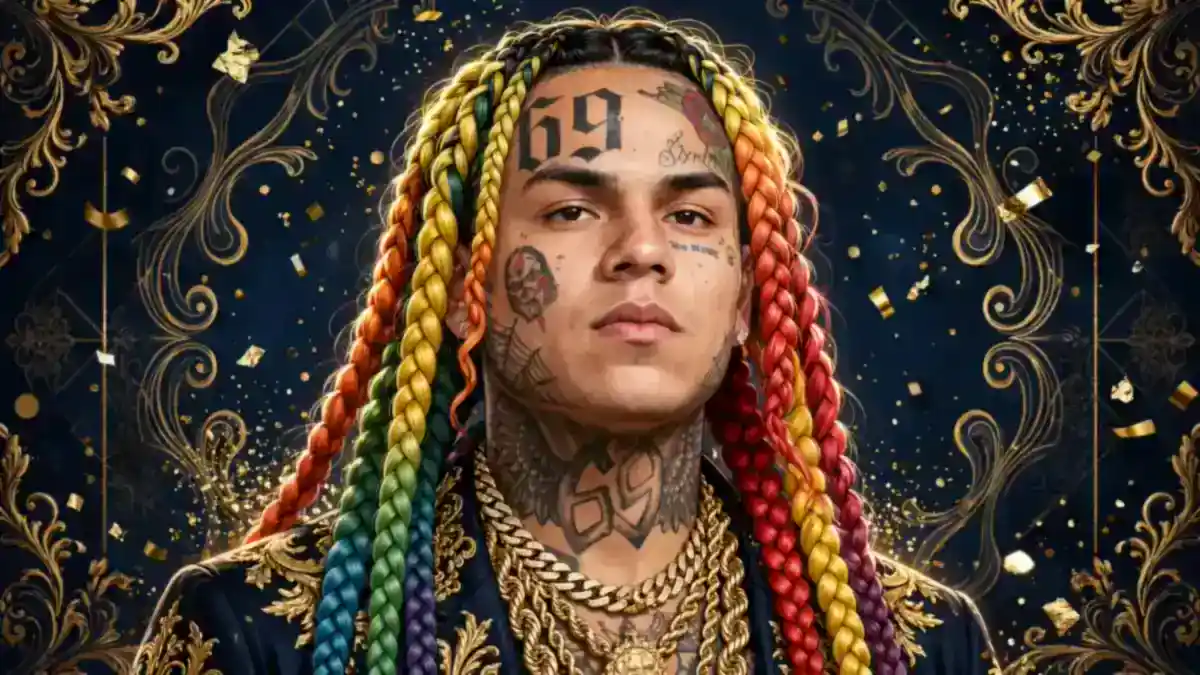
The stage name came from two places: the Japanese anime aesthetic he loved as a teenager, and the number 69, which he has said stands for “turn the tables” — his personal motto that the same people who mock you can end up looking up to you. The rainbow hair, the spiderweb tattoos, and the giant “69” inked across his forehead weren’t accidents. From the start, Hernandez treated provocation as a business model. It made him famous in 2017. It also made him a target for the next decade.
Education
There isn’t much of a schooling record to recount, and that’s honest rather than evasive. Hernandez was expelled in the eighth grade as his behavior deteriorated after his stepfather’s death, per Celebrity Net Worth. He never finished high school and never attended college. He worked odd jobs to help support his family — shifts at a Brooklyn grocery store and a bodega — before music took over. Every credential he carries was earned on YouTube and Instagram instead.
Career Journey
The early years were grinding obscurity. Hernandez began releasing tracks on SoundCloud in 2012, working with underground New York artists including ZillaKami, with whom he cut songs like “Yokai” and “Hellsing Station.” Those records circulated in a tiny circle. Nothing paid. What changed the equation was his decision, around 2016–2017, to fuse aggressive, screamed rap vocals with an outrageously visual brand — rainbow-colored hair, gaudy chains, and deliberate beef with established artists online.
The bet paid off in October 2017 with “Gummo”, a snarling drill track that went viral and climbed to No. 12 on the Billboard Hot 100. A record deal with 10K Projects, the Los Angeles label founded by Elliot Grainge, followed. In February 2018 he released the mixtape Day69: Graduation Day, which debuted at No. 4 on the Billboard 200 — proof that the trolling translated into actual sales. For the next ten months he was one of the most streamed new rappers in America, stacking singles (“Kooda,” “Keke,” “Stoopid”) while feeding tabloids a steady diet of fights, feuds, and stunts.
Then the whole operation detonated. Hernandez had been running with members of the Nine Trey Gangsta Bloods, a violent New York gang — using gang members as his entourage and security, and getting pulled into their conflicts. On November 18, 2018, federal agents arrested him alongside alleged gang members on racketeering, firearms, and narcotics-trafficking charges. He was facing a mandatory minimum of 47 years in prison. His debut album Dummy Boy, released from jail on November 27, 2018, still debuted at No. 2 on the Billboard 200 — the industry’s strangest possible launch for a debut: locked up, watching it chart.
The case resolved the way no one in hip-hop had expected. The day after his arrest, Hernandez began cooperating with federal prosecutors. In September 2019 he testified in open court against Anthony “Harv” Ellison and Aljermiah “Nuke” Mack, two former Nine Trey associates, helping land convictions on racketeering charges and a kidnapping conviction against Ellison for 6ix9ine’s own 2018 abduction. In December 2019 he received a two-year sentence — a fraction of the 37-years-to-life he had faced — and in April 2020 he was released to home confinement early during the COVID-19 pandemic, then freed outright that August with five years of supervised release ahead of him.
The comeback was instant and enormous. On May 8, 2020 — his 24th birthday — he released “GOOBA”, filmed in his own backyard with special permission from a judge (he got two hours a week for “employment purposes,” per SongSense’s account of the case). The video set the biggest 24-hour debut for a hip-hop video in YouTube history at roughly 43 million views, per Chart Data, breaking the record Eminem’s “Killshot” had set at 38.1 million. His Instagram Live session that day pulled 2 million simultaneous viewers — another platform record. The follow-ups, “TROLLZ” with Nicki Minaj (debuted at No. 1 on the Hot 100 in June 2020) and “Yaya,” fed the album TattleTales, released September 4, 2020, which debuted at No. 4 — but sold only about 50,000 units in its first week against early projections near 150,000, per industry reporting. The culture had decided: the numbers could be enormous, but the industry wanted distance.
From 2021 on, Hernandez quietly pivoted. He spent long stretches off the English-language radar, appeared on Alofoke FM — a Spanish-language Dominican radio station — and built a base in the Dominican Republic, per HipHopHero’s 2024 reporting. He released Spanish-language singles aimed at the Latin market, including the “Repuesta” diss track in September 2024 aimed at his ex, Yailin La Mas Viral. In October 2024 he signed the Kartel Music deal. In October and November 2024 he was arrested and sentenced again over probation violations, and on December 5, 2025 — via the Associated Press — a Manhattan federal judge sent him back to prison for three more months for violating his supervised release. He was released from that stint in the spring of 2026.
Rise to Fame
The rise deserves a closer look because it explains both the money and why so little of it stuck. Between October 2017 and November 2018, Hernandez compressed a career’s worth of hits into about thirteen months. “Gummo” hit No. 12 on the Hot 100 and went double platinum. “Kooda” and “Keke” kept him on the charts. And “FEFE” — the 2018 single with Nicki Minaj produced by Murda Beatz — became his defining commercial record: a No. 3 peak on the Hot 100 and an 8× platinum RIAA certification, meaning more than eight million equivalent units in the United States alone.
Two debut projects bookended the run. Day69: Graduation Day opened at No. 4 on the Billboard 200 in February 2018. Dummy Boy opened at No. 2 in November 2018, with features from Kanye West and Nicki Minaj — recorded before the arrest, released while he was in custody. At his peak, aggregator sites pegged his fortune between $8 million and $10 million, and the industry was offering him generational money: in October 2019, while he was still awaiting sentencing, TMZ reported — via The FADER — that 10K Projects had re-signed him to a deal worth more than $10 million covering two albums, one in English and one in Spanish. His lawyer Dawn Florio told NME in April 2020 that the advance had already been paid and that he would record both albums from home confinement. In July 2020, he announced a separate $5 million deal with GlobalStreamNow for a single virtual performance — a number that was never independently confirmed, so treat it as his claim, not a receipt.
Here’s the uncomfortable part that most net-worth pages skip: Hernandez later told a judge, under oath, that he never saw royalties from those advances because his royalty accounts remained unrecouped. An advance isn’t a gift — it’s a loan against future earnings, and when the label recoups it from your royalties, the “ten million” headlines quietly become label money. His fortune was always more fragile than the announcements made it look.
Main Sources of Income
Strip away the noise and five income streams have carried Tekashi 69’s finances, in rough order of importance:
1. Record deals and advances. The largest checks of his career were label advances, not royalties: the reported $10 million-plus 10K Projects deal (October 2019, per TMZ/The FADER) and the 2024 Kartel Music arrangement (reported by TMZ at a potential $6 million-plus, structured as $1 million for a ten-song regional Mexican album plus $250,000 per tour show across the US, Mexico, and Central and South America). Celebrity Net Worth cautions that the Kartel figure was headline value, not money in hand — payout depended on delivering the album and performing the shows.
2. Streaming royalties. His catalog — “FEFE,” “Gummo,” “GOOBA,” “TROLLZ,” “Keke” — has racked up billions of streams. One aggregator, CelebWorthHub, estimates his current monthly take from YouTube and Spotify at roughly $130,000–$240,000 combined; treat that as an educated guess rather than a filing. In November 2025, on a livestream with Adin Ross and Neon, he claimed the label owns 90 percent of his music and he keeps just 10 percent — a startling admission that, if accurate, would explain why billions of streams convert into so little personal wealth.
3. Touring and live performances. At his peak he commanded top-tier hip-hop fees, and overseas demand has held up better than domestic. In July 2022 he told Instagram followers he’d been paid $500,000 for a 40-minute set in Istanbul — his own claim, but consistent with the $250,000-per-show floor in the Kartel contract and his claim of a $500,000 Texas appearance. HotNewHipHop reported in 2024 that he headlined a festival in Romania alongside Wiz Khalifa and Rick Ross, and he has toured Mexico and the Dominican Republic in recent years.
4. YouTube and social media monetization. With more than 20 million YouTube subscribers and roughly five billion cumulative views (per Captionikk’s 2026 aggregation), ad revenue has been a steady, if modest, income line. His Instagram account has carried tens of millions of followers at various points and remains his main promotional channel.
5. Merchandise. He ran merchandising deals during the 10K Projects era, but the contract ended in early 2022 along with his label deal — another income line that quietly went to zero.

Salary and Earnings
Because his biggest paydays were reported as deal values rather than audited payouts, the honest way to present them is as a timeline — with the reporting attached to each line:
| Year | Deal / Earning Event | Reported Value | Source |
|---|---|---|---|
| 2017–2018 | 10K Projects deal; “Gummo”/”FEFE” era advances and royalties | Multi-million-dollar advances | Industry reporting |
| Oct 2019 | Two-album deal with 10K Projects, signed from prison (English + Spanish) | Over $10 million | TMZ, via The FADER |
| Jul 2020 | GlobalStreamNow virtual performance (announced by the artist) | $5 million (announced, unconfirmed) | Artist announcement, via TheNextHint |
| 2020 | “GOOBA” / “TROLLZ” era — streaming, YouTube, IG monetization at peak attention | Est. several million in gross revenue | Chart Data, NME |
| 2024 | Kartel Music deal: $1M for 10-song regional Mexican album + $250K/show tour | Potential $6M+ if all terms met | TMZ, via The Source & Sportskeeda |
| 2025–2026 | Catalog streaming, YouTube ad revenue, sporadic live shows | Est. $1–2M annually (aggregator estimates) | NetWorthRoom, NetWorthGeeks |
Two caveats matter more than any number on that table. First, per his own 2022 court declaration, the pre-arrest advances left his royalty accounts unrecouped — meaning royalties that should have flowed to him went to the label instead. Second, the Kartel deal came with a poison pill for a man with his habits: the contract reportedly required him to avoid arrests and legal trouble, per HipHopHero’s October 2024 reporting. Within weeks of signing it, he was arrested for violating his supervised release (The Source, October 2024). Whether the full $6 million-plus ever materialized is an open question — and nobody who covered the deal claims to know.
Businesses and Investments
This section is short because his business portfolio is thin — a fact worth stating plainly in an era when rappers are expected to own equity. Hernandez launched a short-lived energy drink, “6ix9ine Energy,” and a merch/clothing line branded around the “69” identity. Both generated revenue during the hype years and both fizzled, per aggregator reporting. There are no reported stakes in startups, no restaurant chains, no liquor brand, no real estate empire — nothing resembling the business vehicles that carry modern hip-hop fortunes.
His one true asset is his music catalog, and he doesn’t fully control it. As noted above, his November 2025 livestream admission — that the label owns 90 percent and he keeps 10 percent — describes one of the worst artist splits in modern major-label history, worse than even the old 360-deal model where labels at least took percentages of touring and merch. He also told the judge in 2022 that he received “large advances” but no royalties because the accounts stayed unrecouped. The through-line: for all the viral genius of his marketing, Tekashi 69 never secured the ownership side of the business.
Brand Deals and Sponsorships
Unlike peers who parlayed fame into partnerships, Hernandez has almost no major brand endorsements on record — and the reason is straightforward. After the 2019 racketeering case and his cooperation with federal prosecutors, mainstream brands wanted nothing to do with him; the “snitch” stigma and endless controversies made him radioactive to corporate marketing departments. One notable early exception: in September 2018, just before his arrest, he performed at the Philipp Plein runway show during Milan Fashion Week (AP’s Luca Bruno photographed it) — a cultural moment, not a contract. His monetization has lived on social platforms and stage fees instead, where controversy converts directly into attention without a brand-safety committee in the middle.
Houses, Cars and Other Assets
At his peak, Hernandez spent like a man who believed the money would never stop. Reports from the period describe a home purchased for around $1.5 million in 2018 (accounts differ on the location — New Jersey versus Bayside, Queens — so treat the figure as approximate, not the address) and a fleet that included a Rolls-Royce Wraith, a Lamborghini Aventador, a custom Bentley, and — the one that shows up in court records — a 2022 Rolls-Royce Cullinan.
Then the asset column started shrinking. In April 2024, the IRS raided his Florida home and seized several vehicles; TMZ reporting (via Hot97) says a custom Bentley and a Lamborghini were auctioned off for more than $260,000 to satisfy tax debts. A Florida mansion in Palm Beach County appeared on a court-appointed receiver’s seizure list in November 2023 in connection with the Alexis Salaberrios civil judgment — the receiver was appointed on November 29, 2023, to seize and sell assets including the Cullinan and the mansion (goldmarkvinyl, citing court filings). After that judgment was vacated in December 2023, the receiver was discharged and the seizure order died. What’s left in his name today is unclear — and that opacity is itself part of why estimates vary so wildly.
The jewelry deserves a sentence because it’s the part of his fortune that never left his body. His collection — custom diamond chains, the famous “shark” pendant era, oversized watches — has been valued in the hundreds of thousands across various reports. Unlike cars and houses, jewelry rarely shows up in seizure filings with itemized values, so it stays estimated rather than documented.
Legal Battles and Financial Fallout
No section of this article does more to explain the estimate. Tekashi 69’s legal history is a direct tax on his wealth, and it comes in layers:
The federal racketeering case (2018–2020). Arrested November 18, 2018, with Nine Trey Gangsta Bloods members on racketeering, firearms, and drug charges carrying a 47-year mandatory minimum. He cooperated with prosecutors, testified against Anthony “Harv” Ellison and Aljermiah “Nuke” Mack in September 2019, and received a two-year sentence that December. He served it partly on home confinement from April 2020 and was released that August into five years of supervised release. The case cost him two prime career years and — per his own 2022 declaration — his royalty income: with his career stalled, no new advances came in, and the old ones never recouped.
The 2022 bankruptcy warning. In March 2022, HipHopHero reported on court filings in which Hernandez told a judge overseeing a civil case that he was “struggling to make ends meet,” that he did “not know if I will ever command the kind of advances I was paid before my arrest,” and that a judgment would “surely bankrupt me in a way from which I will never recover.” This is a primary-source anchor for the low estimate — the man’s own sworn words, in a filing, not a gossip item.
The $9.8 million Salaberrios judgment (2021–2023). Exotic dancer Alexis Salaberrios sued in February 2021, alleging Hernandez hit her in the head with a champagne bottle at Miami’s Gold Rush Cabaret on February 20, 2021 (she said she wasn’t the intended target — the bottle was aimed at detractors who called him a “rat”). After he failed to appear, Judge Robert T. Watson signed a default judgment for $9,825,000 in November 2023 (AllHipHop/HotNewHipHop), and a receiver was appointed to seize assets. Then, in a twist most net-worth pages miss: on December 15, 2023, his attorneys moved to undo the judgment on due-process grounds, and a Miami-Dade judge vacated it and discharged the receiver — per court documents obtained by XXL and reported by goldmarkvinyl. The case continued in litigation. So the number that once anchored “he’s broke” stories is no longer an active judgment, but the legal fees didn’t vanish.
The $5.3 million canceled-concert suits. Entertainment companies Hits Before Fame LLC and After Hours LLC sued over concerts he was allegedly paid for but never performed, seeking $5.3 million; promoters Jaime Dominguez and JJD Entertainment claimed they paid upwards of $170,000 for a show that never happened (HotNewHipHop, 2022, citing VladTV and Digital Music News). Both pushed for default judgments after he failed to respond.
The “Stoopid” copyright case. In a default judgment over an unauthorized nine-second sample of Seth Gordon’s “Yung Gordon Intro” at the start of “Stoopid,” he was ordered to surrender 1/13th of the profits from the Dummy Boy album — $61,538.46 — plus about $12,000 in legal fees (HotNewHipHop, Hot97).
The IRS raid (April 2024). IRS agents raided his Florida home with assistance from the Palm Beach Sheriff’s Office; vehicles were taken, and a custom Bentley and Lamborghini were auctioned for over $260,000 toward tax debts (TMZ via Hot97).
Probation violations (2024–2026). Arrested October 29, 2024, for violating supervised release (The Source) — weeks after the Kartel deal that required him to stay out of trouble. In November 2024, Judge Paul Engelmayer sentenced him to 45 days in prison for violations including unapproved travel to Las Vegas and Sarasota and failed drug tests (AP). Then on December 5, 2025, the AP reported that Engelmayer sentenced him to three more months after he admitted to assaulting a man who taunted him at a Florida mall in August 2025 and to cocaine and ecstasy found in his Miami home during a March 2025 raid. Engelmayer also added a year of supervised release. He was released in the spring of 2026 — roughly April, per secondary reporting — and his November 2025 home had already been hit by an armed home invasion in which his mother was held at gunpoint (reported via the AP’s December 2025 coverage).
Total it up: this is an artist whose headline career earnings were enormous but whose take-home was devoured by unrecouped advances, a 90/10 label split by his own admission, judgments in the millions, IRS seizures, and the most expensive habit of all — his own conduct.
Net Worth Growth Over the Years
| Year | Estimated Net Worth | What Happened |
|---|---|---|
| 2017 | Under $1 million | “Gummo” goes viral; 10K Projects deal |
| 2018 | ~$4 million | “FEFE,” Dummy Boy (#2); arrested November |
| 2019 | ~$8 million | Reported $10M+ 10K Projects deal from prison |
| 2020 | ~$10 million (peak) | “GOOBA” records; “TROLLZ” hits No. 1; TattleTales |
| 2021 | ~$8 million | Catalog royalties; Salaberrios suit filed |
| 2022 | ~$2 million | Sworn “struggling to make ends meet” filing; label deal ends |
| 2023 | ~$1 million | $9.8M default judgment; receiver appointed, then vacated |
| 2024 | ~$1 million | IRS raid; Kartel deal signed; 45-day sentence |
| 2025 | $1–2 million | Overseas shows; December 3-month sentence |
| 2026 | $1–3 million | Released spring; streaming + Latin-market activity |
Two things jump out. First, the collapse from 2020 to 2022 wasn’t a market correction — it was a legal and structural one: stalled career, unrecouped advances, and lawsuits arriving faster than income. Second, the range widens at both ends because so little is documented. The $1 million–$3 million band for 2026 reflects the honest middle: Celebrity Net Worth’s $1.5 million, Successtitan’s $1–3 million, Captionikk’s $1.5–2 million. The older $8–12 million figures (NetWorthRoom, NetWorthGeeks, PowerNetWorth, NetWorthUniverse) describe his 2020-era peak far better than his current position — and most of those pages were last meaningfully updated years ago.
Awards and Achievements
Tekashi 69’s trophy shelf is thinner than his chart history — the industry’s award bodies largely kept their distance even at his peak. The achievements that matter here are commercial, and they’re real:
- Billboard Hot 100 No. 1: “TROLLZ” with Nicki Minaj debuted at No. 1 in June 2020 — his first and only chart-topper. It then fell to No. 34 in its second week, the largest drop from No. 1 in chart history, per industry reporting.
- Top 3 single: “FEFE” (with Nicki Minaj, produced by Murda Beatz) peaked at No. 3 in 2018.
- RIAA certifications: “FEFE” is certified 8× platinum; “Gummo” is 2× platinum. Those certifications translate into the eight-figure streaming counts that still generate royalty income today.
- Top 5 albums: Dummy Boy debuted at No. 2 (2018), Day69: Graduation Day at No. 4 (2018), and TattleTales at No. 4 (2020).
- Platform records: the 43-million-view 24-hour YouTube hip-hop debut for “GOOBA” (Chart Data) and the 2-million-viewer Instagram Live session (May 2020) remain among the most-watched moments in both platforms’ music history.
No Grammy nominations, no BET Awards on record — the absence tells its own story about how the industry treated him. His accolades were measured in views and streams, not statuettes.
Social Media Presence
Social media was never just promotion for Hernandez — it was the product. At his peak, his Instagram account carried more than 20 million followers and his posts functioned as breaking-news events: beefs, stunts, cash flexes, and surprise releases. The May 8, 2020 Instagram Live — 2 million simultaneous viewers — still stands as one of the most-watched broadcasts in the platform’s history. His YouTube channel has more than 20 million subscribers and roughly five billion cumulative views, per Captionikk’s 2026 aggregation, making it one of hip-hop’s largest artist channels and a durable royalty engine.
The engagement comes with a cost. His accounts have been suspended, restricted, and meme’d into oblivion at various points, and the same comment sections that drive millions of views drive the taunts that have landed him in physical confrontations — including the August 2025 Florida mall incident that contributed to his three-month sentence. He remains one of the few artists whose social following is simultaneously his biggest asset and his most documented liability.
Personal Life
Hernandez is unmarried and has two daughters: Saraiyah, with ex-partner Sara Molina, and Briella, with a woman identified in reporting as Marlayna. His most publicly known partner in recent years has been Jade, who has appeared in his social media posts for years — and whose own run-ins with controversy (including a 2023 arrest after a video showed an altercation between them) have fed the tabloids.
His most newsworthy recent relationship was with Dominican rapper and singer Yailin La Mas Viral, the ex of Anuel AA. The relationship played out across 2023–2024 in a blur of joint appearances and feuds, ending with his September 2024 diss track “Repuesta.” Hernandez has spent significant time based in the Dominican Republic in recent years — part lifestyle, part business strategy, as he pivots toward Spanish-language audiences. In November 2025, his South Florida home was invaded by four masked men who held his 60-year-old mother at gunpoint while searching for cash and car keys, per reporting tied to the AP’s December 2025 sentencing coverage — a grim reminder of the security costs that come with his particular fame.
What’s Next in 2026 and Beyond
Three questions will decide whether the $1.5 million estimate holds, rises, or collapses:
1. Does the Kartel Music album actually come out? The October 2024 deal — $1 million for a ten-song regional Mexican album, plus $250,000 per show on a Latin American and US tour — was structured around delivery. His arrests weeks after signing jeopardized it, but he has continued performing in Mexico, the Dominican Republic, and Eastern Europe. If the album lands and the tour runs, it’s the single biggest lever on his 2026–2027 income.
2. Can the Latin pivot become a career? English-language hip-hop has largely closed its doors — few major artists will collaborate, and domestic festival bookers stay wary. But his Spanish-language material and appearances on outlets like Alofoke FM suggest a genuine second act in the Latin market, where the controversies carry less weight. Overseas demand (Romania, Istanbul, Mexico, the Dominican Republic) is verifiably real and pays in the mid-six figures per show by his own accounting.
3. Does he stay out of trouble? The December 2025 sentence came from small amounts of drugs found in his home and a mall punch-up — the kind of low-level conduct that keeps torpedoing high-value contracts. The Kartel contract’s no-arrest clause, Engelmayer’s added year of supervised release, and his own November 2025 admission about the 90/10 label split all point the same direction: his future earnings depend less on finding new money than on stopping the bleeding of the money he already makes.
A peer comparison puts the trajectory in context:
| Artist | Estimated Net Worth | Career Situation |
|---|---|---|
| Tekashi 69 | $1–3 million | Streaming catalog, Latin pivot, repeated probation violations |
| Bobby Shmurda | ~$400,000 | Seven years in prison; career never reignited |
| YNW Melly | ~$4 million | Awaiting trial; catalog continues to stream |
| Tay-K | ~$100,000 | 55-year sentence; one viral hit, no career |
(Peer figures via CelebWorthHub’s 2026 comparison; treat as rough estimates.) Among rappers whose careers collided with the criminal justice system, Hernandez sits in the middle: he kept more of his earning power than Shmurda or Tay-K, but the legal overhead consumed the fortune that a $10 million deal and billion-stream singles should have built.
Sources & Reporting
- Celebrity Net Worth — $1.5 million anchor figure (refreshed ~September 2026); summary of the 2022 bankruptcy-warning court filing and the 2024 Kartel Music agreement.
- TMZ — reported the $10M+ 10K Projects deal (October 2019) and the Kartel Music terms: $1 million for a ten-song album, $250,000 per show, potential $6M+ total (October 2024).
- The FADER — carried TMZ’s $10 million prison-deal reporting with context on the sentencing timeline (October 2019).
- NME / Chart Data — “GOOBA” 43-million-view 24-hour YouTube hip-hop debut record and the 2-million-viewer Instagram Live record (May 2020); lawyer Dawn Florio’s account of the 10K Projects advance.
- Associated Press — 45-day sentence (November 2024) and three-month sentence for supervised-release violations (December 5, 2025); home-invasion details involving his mother.
- HipHopHero — March 2022 court-filing reporting (“struggling to make ends meet,” unrecouped royalties, bankruptcy warning); October 2024 Kartel deal analysis including the no-arrest clause.
- XXL — court documents showing the $9.8M Salaberrios default judgment was vacated and the receiver discharged (December 2023).
- AllHipHop / HotNewHipHop / Hot97 — $9.8M default judgment details; $5.3M canceled-concert suits; “Stoopid” copyright judgment ($61,538.46 + fees); IRS raid and vehicle auctions ($260,000+); Digital Music News — $5.3M promoter suit and social-media summons reporting (2020–2022).
- Sportskeeda — November 18, 2025 Adin Ross/N livestream coverage of the 90/10 label-split claim.
- Successtitan, Captionikk, CelebWorthHub — aggregator cross-checks: $1–3M, $1.5–2M, and monthly-income estimate ranges; peer comparison table (Bobby Shmurda, YNW Melly, Tay-K).
Reporting window: facts verified against sources published 2018–2026; estimates reflect reporting available through October 2026.
Frequently Asked Questions
What is Tekashi 69’s net worth in 2026?
Tekashi 69’s net worth is estimated at $1.5 million, within a range of $1 million to $3 million, as of October 2026. Celebrity Net Worth — refreshed in late 2026 — puts the figure at $1.5 million, citing his own 2022 court filing in which he told a judge he was struggling to make ends meet and warned that a civil judgment could bankrupt him. Older pages still show $8–12 million, but those figures describe his 2020-era peak and are badly out of date.
Why is 6ix9ine’s net worth so low compared to his fame?
Three structural reasons. First, his biggest checks were label advances, not keepable income — and he told a judge in 2022 that his royalty accounts were unrecouped, meaning royalties went to the label instead of him. Second, he claimed on a November 2025 livestream that his label owns 90 percent of his music, leaving him 10 percent. Third, legal costs consumed the rest: multi-million-dollar judgments and lawsuits, an IRS seizure of cars auctioned for over $260,000, and repeated probation-violation jail stints that killed touring income.
What record deal did 6ix9ine sign while in prison?
In October 2019, while awaiting sentencing on racketeering charges, TMZ reported (via The FADER) that 10K Projects re-signed him to a deal worth more than $10 million covering two albums — one in English, one in Spanish. His lawyer Dawn Florio later told NME the advance had already been paid. The deal never translated into lasting wealth: he told a judge in 2022 the royalty accounts stayed unrecouped, and the label relationship ended that year.
What is Tekashi 6ix9ine’s real name?
His real name is Daniel Hernandez. He was born May 8, 1996, in Bushwick, Brooklyn, to a Mexican mother and a Puerto Rican father. He adopted the Tekashi 6ix9ine name from anime influences and the number 69, which he has said represents “turn the tables” — a motto about critics ending up looking up to him.
How tall is 6ix9ine?
6ix9ine is 5 feet 6 inches (1.68 m) tall. His compact build, combined with the rainbow-colored hair and extensive face tattoos — including the large “69” on his forehead — made him instantly recognizable at his 2017–2018 commercial peak.
Why did 6ix9ine go back to jail in 2025?
On December 5, 2025, Judge Paul Engelmayer sentenced him to three months in prison for violating his supervised release, per the Associated Press. He admitted to small amounts of cocaine and ecstasy found in his Miami home during a March 2025 raid and to punching a man who taunted him at a Florida mall in August 2025. Engelmayer also added a year of supervised release. It followed a 45-day sentence in November 2024 for earlier violations. He was released in the spring of 2026.
What happened to the $9.8 million judgment against 6ix9ine?
In November 2023, Judge Robert T. Watson signed a $9.8 million default judgment against him for exotic dancer Alexis Salaberrios, who alleged he hit her with a champagne bottle at a Miami club in 2021. A receiver was appointed on November 29, 2023, to seize assets including his 2022 Rolls-Royce Cullinan and a Florida mansion. But per court documents obtained by XXL, a Miami-Dade judge vacated the judgment in December 2023 and discharged the receiver, leaving the case in litigation. The seizure order died; the legal fees didn’t.
Does 6ix9ine still make money from music?
Yes — catalog streaming is his most durable income. Songs like “FEFE” (8× platinum) and “GOOBA” generate ongoing royalties, and aggregators estimate roughly $1–2 million in annual income from streaming, YouTube, and sporadic shows. In October 2024 he signed a Kartel Music deal potentially worth over $6 million ($1M for a regional Mexican album plus $250,000 per tour show), though payout depended on delivering the album and performing — and his subsequent arrests put it in doubt. Overseas shows, particularly in Latin America and Europe, remain his strongest live market.
Final Thoughts
Tekashi 69’s money story is the clearest cautionary tale in modern hip-hop about the difference between gross and net. By every headline measure, Daniel Hernandez was a rich man: a reported ten-million-dollar label deal, a Billboard No. 1, an eight-times-platinum single, a YouTube record that stood for years, half-million-dollar show fees. By his own sworn account, almost none of it became wealth. Unrecouped advances, a label split he now describes as 90/10, millions in judgments and legal fees, IRS seizures, and a self-sabotage loop of probation violations turned a $10 million peak into a $1.5 million estimate.
That doesn’t make him finished. The catalog still streams by the billions. The Latin pivot is a genuine strategy, not a gimmick — the Dominican Republic base, the Spanish-language releases, and the Kartel Music deal all point toward a market where he can work. And the $9.8 million judgment that once anchored every “he’s broke” story was vacated. But every one of those paths requires the same thing, and it’s the thing he’s failed at repeatedly: staying out of a courtroom. Until he does, the range on his net worth will keep describing the distance between what he earns and what he keeps.
Published on 2026-10-07. Last reviewed October 2026. Found an error? See our corrections policy.