
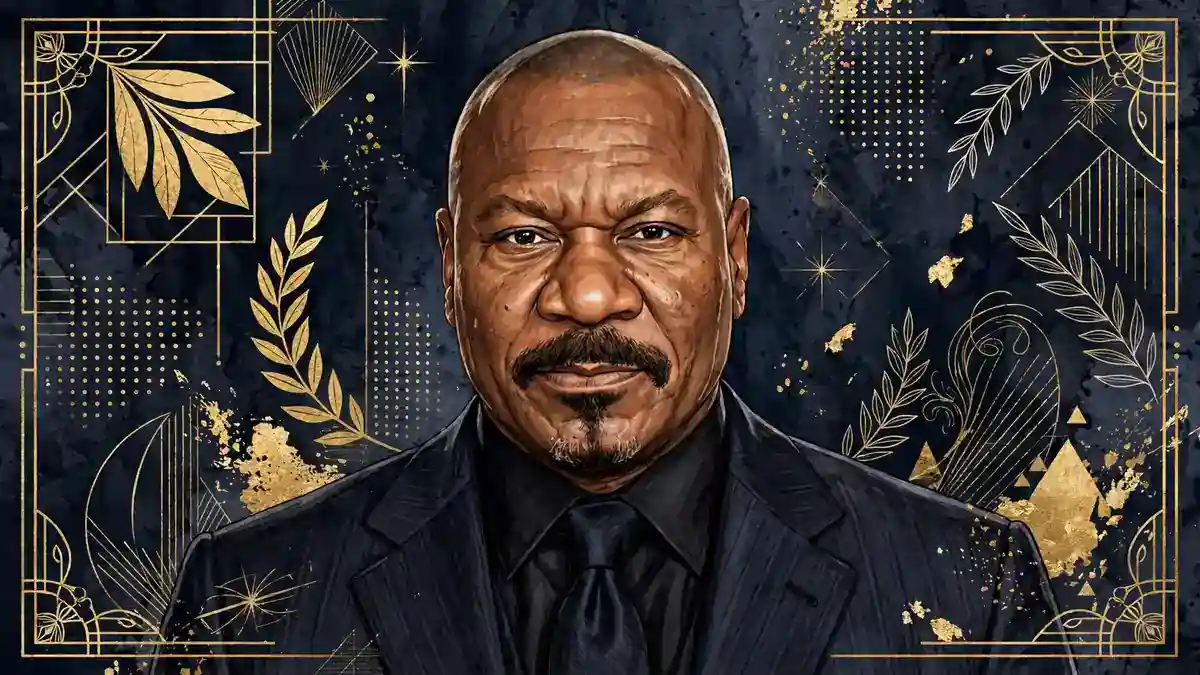
Ving Rhames‘s net worth is estimated at $22 million to $25 million as of November 2026. The Harlem-born actor built that fortune across four decades of screen work: eight Mission: Impossible films as Luther Stickell, the career-making turn as Marsellus Wallace in Pulp Fiction, a Golden Globe for playing Don King, and a voice — the Arby’s “We have the meats!” voice — that has paid him since 2014. The single most famous payday in his career is also one of the strangest in Hollywood history: a reported $7.7 million for about 39 seconds of screen time in Mission: Impossible – Ghost Protocol.
Ving Rhames: Quick Facts
| Estimated net worth | $25 million (range: $22 million–$25 million) |
|---|---|
| Profession | Actor, voice actor, producer |
| Nationality | American |
| Born | May 12, 1959 (age 67) |
| Height | 6 feet (1.83 m) |
| Primary income sources | Film salaries, Mission: Impossible franchise fees, television, voice work and commercials |
| Active years | 1984–present |
| Last reviewed | November 2026 |
- Early Life and Background
- Education
- Career Journey
- Rise to Fame
- Main Sources of Income
- Salary and Earnings
- Businesses and Investments
- Brand Deals and Sponsorships
- Houses, Cars and Other Assets
- Awards and Achievements
- Net Worth Growth Over the Years
- Social Media Presence
- Personal Life
- Sources & Reporting
- Frequently Asked Questions
Early Life and Background
Irving Rameses Rhames was born on May 12, 1959, in Harlem, New York City, and grew up there with his older brother, Junior. His father, Ernest Rhames, worked as an auto mechanic; his mother, Reather Rhames, kept house. His parents named him after Irving R. Levine, the NBC News journalist — a small detail that says something about the household he grew up in, one where the evening news mattered. Ernest Rhames’s own parents had been sharecroppers in South Carolina, so the family’s move north was one generation removed from the rural South, and Rhames has spoken in interviews about a childhood that was working-class, church-going, and strict.
Harlem in the 1960s and 1970s was not an easy place to grow up, and Rhames has been open about the fact that acting found him before he went looking for it. A teacher at the High School of Performing Arts — the school behind the film Fame — spotted something in the teenager and steered him toward drama. The nickname came later and by accident: at the State University of New York at Purchase, his classmate and roommate Stanley Tucci started shortening “Irving” to “Ving,” and the name stuck for the rest of his life. Tucci went on to his own long screen career, and the two have stayed friends for more than four decades — one of those show-business friendships that started in a dorm room and never cooled.
What set Rhames apart from the start was size paired with control. He stands 6 feet tall and has carried well over 200 pounds for most of his adult life, yet the training he was about to receive taught him to use that physical presence with precision rather than noise. Directors who worked with him in the 1990s kept returning to the same observation: Rhames could fill a room without raising his voice, and the menace in Marsellus Wallace came from stillness, not shouting. That quality was not an accident of casting. It was drilled into him at the most demanding drama school in America.
Rhames is a Christian, and faith has been a steady thread in his public remarks about his life and career. He has also been candid about the discipline his parents imposed — homework before play, church on Sundays, respect for teachers — and about the fact that his mother lived to see his success. Reather Rhames’s name turns up in profiles of her son precisely because he credits her, again and again, with the stubbornness that carried him through Juilliard and the lean early years in New York theatre.
Education
Rhames’s formal training ran through three institutions, each one harder to get into than the last. He attended New York’s High School of Performing Arts, where he first studied acting seriously. From there he went to the State University of New York at Purchase, a school with a strong conservatory reputation, where he studied drama and roomed with Tucci. Then came the transfer that changed everything: the Juilliard School’s Drama Division, Group 12, from 1979 to 1983, where he earned a Bachelor of Fine Arts in 1983.
Juilliard’s Group 12 was a strong class, and the training was classical — Shakespeare, Chekhov, voice, movement, the full conservatory grind. Rhames has said that by the Monday after his Friday graduation he was already working, doing Shakespeare in the Park in New York. That is the detail that separates his story from the usual overnight-success tale: there was no overnight. There was a BFA, a summer of Shakespeare outdoors, and then years of stage work before Hollywood knew his name at all.
The Juilliard credential matters to his money story in a concrete way. It is why directors trusted him with dialogue-heavy, technically demanding roles — Don King, with pages of fast-talking monologue, and Luther Stickell, who has to sell lines about encryption and satellite feeds while making them sound like plain English. It is also why his career has lasted forty years while flashier contemporaries faded: classical training gives an actor range, and range gives a career second and third acts. When the action-hero roles thinned out in the 2010s, Rhames still had voice work, television, and character parts to fall back on, because he could do all of them.
For readers weighing the education angle: Rhames did not come up through child acting or a lucky break. He came up through the most expensive, most selective acting education in the country, and he paid for it with four years of work before he earned a dollar from a film set. That background explains both the quality of his performances and the steadiness of his income — he was built for a long career, not a short one.
Career Journey
Rhames’s screen career began in the mid-1980s with small film parts after his stage work in New York. His film debut came in Go Tell It on the Mountain (1985), followed by roles in Native Son (1986) and Jacob’s Ladder (1990), the unsettling Tim Robbins drama in which Rhames played George, a fellow veteran who anchors the film’s most human scenes. He worked steadily through the early 1990s — Flight of the Intruder (1991), Stop! Or My Mom Will Shoot (1992), Dave (1993), where he played a Secret Service agent opposite Kevin Kline — building a reputation as a reliable, imposing supporting player who elevated every scene he entered.
The year 1994 changed his standing in the business. Quentin Tarantino cast him as Marsellus Wallace, the crime boss at the centre of Pulp Fiction, and the film became a cultural event: it won the Palme d’Or at Cannes, earned seven Academy Award nominations, and grossed $213.9 million worldwide on a budget of about $8.5 million. Rhames’s Marsellus is on screen for a relatively small share of the film’s running time, yet he dominates it — the scene in which he tells Bruce Willis’s Butch that he is going to get medieval, and the scene in which he forgives him, are two of the most quoted passages in 1990s cinema. The role made Rhames a name, and it set his price for the next decade.
Two years later came the part that would pay him for the next thirty years. Brian De Palma cast Rhames as Luther Stickell, the IMF computer specialist, in Mission: Impossible (1996), opposite Tom Cruise. The film grossed $457.7 million worldwide, and Luther became the franchise’s conscience — the one team member who tells Ethan Hunt the truth, the one who stays loyal when everyone else turns. Rhames returned for Mission: Impossible II (2000), Mission: Impossible III (2006), the cameo in Ghost Protocol (2011), Rogue Nation (2015), Fallout (2018), Dead Reckoning Part One (2023), and The Final Reckoning (2025). He is the only actor besides Cruise to appear in all eight films, a run of 29 years with the same character.
Between the franchise entries, Rhames filled his calendar with the kind of varied work that keeps a character actor employed for decades. He played Don King in HBO’s Don King: Only in America (1997) and won the Golden Globe. He played Diamond Dog in Con Air (1997), the year’s big action hit. He played the gangster-turned-informant in Out of Sight (1998) opposite George Clooney and Jennifer Lopez, a film critics now rank among the best crime films of its decade. He played a paramedic in Martin Scorsese’s Bringing Out the Dead (1999), a cop in Zack Snyder’s Dawn of the Dead (2004), and a detective in Rosewood (1997), John Singleton’s dramatisation of the 1923 massacre. He also worked in television throughout, including the title role in the Kojak revival (2005) and the medical drama Monday Mornings (2013).
Voice work became a second career in its own right. Rhames voiced Cobra Bubbles, the social worker, in Disney’s Lilo & Stitch (2002) and returned for the sequels and the television series. He voiced Tobias Jones in the video game Driver 3 (2004), narrated the BET documentary series American Gangster, and became one of the narrators for the UFC. In 2014 he took the job that made his voice famous to people who had never seen his face: the Arby’s commercials, where his delivery of “We have the meats!” became one of the most recognisable slogans in American advertising. He also narrated the team introductions for the New England Patriots and the Atlanta Falcons at Super Bowl LI in February 2017.
The 2020s have kept him busy. He appeared in The Instigators (2024) as Frank Toomey, voiced Otto in The Garfield Movie (2024) and Thunderbolt in The Wild Robot (2024), played Elliott Duffond in the boxing drama Uppercut (2025), and took the role of Bart Driscoll in the Apple TV+ crime miniseries Dope Thief (2025), appearing in all eight episodes. Mission: Impossible – The Final Reckoning (2025) closed the Ethan Hunt saga with a reported production budget of $300 million to $400 million and a worldwide gross of about $591 million, according to The Numbers. In 2026 he is hosting and narrating History’s Deadliest with Ving Rhames, a television series built around his voice and presence.
Rise to Fame
Rhames’s rise did not follow the usual pattern of a breakout followed by a slump. It followed the pattern of a stage-trained actor who got two perfect roles in three years and then spent the next three decades making sure nobody forgot him. Pulp Fiction made him famous in 1994. Mission: Impossible made him permanent in 1996. The difference matters: fame from a single film fades, but a franchise role renews itself every few years with a new instalment, a new press tour, and a new paycheck.
The Don King role in 1997 proved he could carry a film on his own. Playing the boxing promoter required a physical transformation, a mastery of King’s rapid-fire patter, and the confidence to hold the screen for two hours without a co-star to lean on. The Golden Globe that followed was the industry’s acknowledgement that Rhames was not a supporting player who had gotten lucky twice — he was a leading man who had chosen to work as a supporting player. His decision at the 1998 ceremony to hand the award to fellow nominee Jack Lemmon, saying that being an artist was about giving, became one of the most remembered moments in Golden Globes history and cemented his reputation as a man of unusual character in a business not famous for it.
What followed was a long, deliberate middle act. Rhames never chased the leading-man roles that his Pulp Fiction fame could have bought him, and he never took the kind of franchise paydays that would have typecast him. Instead he mixed studio films, independent films, television, and voice work, so that when one stream dried up another was flowing. That is the financial logic of his career in one sentence: he diversified before diversification was a buzzword. The Arby’s deal, signed in 2014, is the clearest example — a voice contract that pays year after year with no filming schedule, no travel, and no risk of a film flopping.
By the time The Final Reckoning arrived in 2025, Rhames had spent 29 years as Luther Stickell, and the franchise had grossed more than $4.6 billion worldwide across its eight films, according to box-office data compiled by The Numbers and Box Office Mojo. His own share of that total was never the star’s share — Tom Cruise’s deals were in a different league — but it was steady, it grew with each instalment, and it came with residuals, press, and a permanent place in one of the most durable brands in Hollywood. Few actors of his generation can say the same, and that durability is the core of his net worth.
Main Sources of Income
Rhames’s money comes from five streams, and the balance between them has shifted over time. Film salaries were the largest stream in the 1990s and 2000s, when he was working constantly in studio pictures. Franchise fees from Mission: Impossible took over as the most reliable stream from 1996 onward, paying out in eight instalments across 29 years. Television work — series regular roles, miniseries, and hosting — has provided steady mid-career income, most recently with Dope Thief in 2025. Voice work and commercials, led by Arby’s since 2014, provide the kind of long-tail income that film salaries do not: a single recording session can pay for years of airtime. And residuals — the payments actors receive when films and shows are re-aired, streamed, or sold — keep flowing from a filmography of more than 100 credits.
The franchise stream deserves a closer look, because it is the spine of his wealth. Eight films over 29 years means Rhames was paid for the same character in 1996, 2000, 2006, 2011, 2015, 2018, 2023, and 2025, and each time his fee reflected the franchise’s growth. The first film grossed $457.7 million; Fallout (2018) grossed $791.1 million and became the highest-grossing entry in the series; The Final Reckoning (2025) grossed about $591 million. An actor who stays with a franchise that long is part of the brand itself, and his pay negotiations reflect that. The $7.7 million Ghost Protocol episode, covered in detail below, is the proof: when the studio tried to shrink his role to save money, Rhames held his price, and the studio paid it.
Voice work is the stream most profiles of Rhames underplay, and it is probably the most profitable per hour he has ever earned. A commercial voice session takes hours, not weeks. The Arby’s campaign has run since 2014 — more than a decade of national airtime for a single voice. Add the UFC narration, the Super Bowl LI introductions, the American Gangster narration, and the animation work in Lilo & Stitch, The Garfield Movie, and The Wild Robot, and the voice stream alone accounts for a meaningful share of his annual income. Exact commercial rates are private, but a national campaign voice of his stature commands six-figure annual fees, and a decade of them adds up.
Television has been the quiet third stream. The Kojak revival in 2005 put him in the title role of a network series. Monday Mornings (2013) gave him a regular role on a David E. Kelley medical drama. Dope Thief (2025) put him in eight episodes of a prestige Apple TV+ miniseries, the kind of work that pays well and keeps an actor visible to casting directors. And History’s Deadliest with Ving Rhames (2026) turns his voice and authority into a hosting job — a role that suits a 67-year-old actor who no longer needs to run across rooftops to earn a living.
Producing credits round out the picture. Rhames has producer credits on several of his later films, which means a share of backend participation rather than a flat fee alone. The amounts are private, and we do not guess at them here, but the pattern is consistent with an actor who learned, over forty years, to take a piece of the project rather than just a paycheck for showing up.

Salary and Earnings
The best-documented salary in Rhames’s career is the one that became a Hollywood legend. For Mission: Impossible – Ghost Protocol (2011), Rhames had been paid a reported $3.5 million for Mission: Impossible III (2006). When the fourth film was put together, budget cuts meant Luther was barely in the script, and the studio reportedly offered him $3 million for a two-day cameo — less than he had earned for the previous film. Rhames refused. He told interviewers while promoting Death Race 2 that his price was $7.7 million, in his words: “There’s no misunderstanding — it’s $7.7 million or no!” The studio, after a long standoff, paid it. Collider, Far Out Magazine, and The Guardian all report the $7.7 million figure, and the scene that resulted — Luther meeting Ethan Hunt in Seattle for a beer at the end of the film — runs about 39 seconds.
Do the arithmetic and the story gets even more striking. $7.7 million for two days of work is $3.85 million per day. Spread across 39 seconds of screen time, it works out to roughly $197,000 per second — the highest per-second rate ever reported for an actor in a single film, and a figure that has been cited in that context ever since. That is a calculation from the reported figures, not a separate claim, and it is worth stating plainly because it explains why the story still circulates fifteen years later. Rhames understood his value to the franchise: Luther was the only character besides Ethan Hunt who connected the audience to the first film, and a Mission: Impossible film without him would have felt like a different series.
One caution is in order. CBR, in its 2021 account of the same episode, notes that it is unclear whether Rhames received the full $7.7 million he asked for, since the final deal was never made public. Collider and Far Out report it as the amount earned, and The Guardian’s reporting agrees. We report it as the widely reported figure with that caveat attached, because the honest version of this story is that Rhames demanded $7.7 million, the studio met him, and the exact final number sits behind a private contract. The demand itself is on the record from Rhames’s own mouth, and that is the part that matters for his reputation as a negotiator.
For the later franchise films, the numbers thin out. One salary tracker, Stars Earning, cited by FandomWire, puts his fee for Dead Reckoning Part One (2023) at $3 million, but that figure comes from a single secondary source and we treat it as unconfirmed. No reliable outlet has published his fees for Rogue Nation, Fallout, or The Final Reckoning, and we do not invent them. What is safe to say is that his franchise fees rose with the series: the films grew from a $457.7 million grosser in 1996 to a $791.1 million grosser in 2018, and an actor who appears in every instalment negotiates from strength each time.
Outside the franchise, his per-film pay in the 1990s and 2000s was that of a well-paid supporting star rather than a leading man. He was never the actor whose name sold the poster, so he was never paid the poster price — but he worked constantly, which is how supporting actors build wealth. A working actor who earns a solid fee on three or four films a year, for thirty years, ends up ahead of the leading man who earns a fortune on one film and then disappears. Rhames’s filmography, with more than 100 credits, is the evidence. The year-by-year table below is built from published estimates rather than audited accounts, and it should be read that way.
His annual income in recent years is harder to pin down. One profile, Biography Wallah, puts his annual income at roughly $2 million to $3 million a year, a plausible figure for an actor of his standing with franchise residuals, a long-running commercial voice deal, and regular television work. We carry that as a reported estimate from a single outlet, not as a verified fact, because no primary source has published his tax returns or his contracts. The range is consistent with the net worth estimate: an actor earning $2 million to $3 million a year, with decades of savings and property behind him, lands in the $22 million to $25 million range.
How does he compare with the action stars of his generation? The honest answer is that he sits below the top tier and above almost everyone else. Dwayne Johnson’s fortune runs into the hundreds of millions, built on leading-man fees, a tequila brand, and producing — a different business from Rhames’s. Keanu Reeves’s wealth, built on the Matrix and John Wick franchises, is also far larger. Rhames’s achievement is different: he built $25 million without ever carrying a franchise on his own name, without a product brand, and without a social media empire. He did it by being the actor directors called first when they needed the scene to work, and by staying in the same franchise for 29 years.
Businesses and Investments
Rhames has never been a celebrity entrepreneur in the modern sense. There is no Rhames tequila, no Rhames clothing line, no Rhames fitness app, and no venture-capital portfolio that he talks about in interviews. His business life has been his acting life, and his investments have been the quiet kind: property, held for decades, in the city where he works.
The clearest investment on the public record is his Brentwood real estate. According to Echo Fine Properties, which profiled his home in 2016, Rhames and his wife Deborah bought the estate at 12935 Vicente Boulevard in Los Angeles for $4.75 million in 2000 — a 10,613-square-foot house with seven bedrooms and eight bathrooms. Five years later, in 2005, they bought the property next door for $6.5 million, a second house of 12,947 square feet. Together the two adjoining estates gave the family more than 23,000 square feet on one block, room for their children, extended family, and, at the time of the profile, two bull mastiffs weighing about 200 pounds each and two English bulldogs.
That purchase history is the most revealing financial document in Rhames’s public life. He bought the first house in the same year he married Deborah Reed, and he bought the second one five years later, when his franchise income was at its peak. He did not flip them. He did not borrow against them to build a property empire. He bought a home, then bought the house next door so his family could spread out, and he stayed. Other property reporting, including a roundup of his earlier homes, records smaller Los Angeles properties bought and sold over the years — a Brentwood house bought for $2.5 million and sold for $1.95 million, a Mar Vista house bought for $425,000 and sold for $475,000, a La Canada Flintridge house bought for $629,000 and sold for $775,000 — the normal churn of a working actor buying and selling homes as his life changed. The Brentwood double estate is the one that stayed.
Producing is the other investment stream, and it is the one that could matter most in the long run. Rhames holds producer credits on several of his later films, which typically means a share of the film’s backend — the profits after the studio recoups its costs — rather than a flat acting fee alone. The details are private, and the amounts for his projects are not public, so we do not put a number on them. What matters is the direction of travel: late in his career, Rhames moved from being paid to show up toward being paid as a participant in the project, which is how actors protect their income when the big studio fees slow down.
What he has not done is equally informative. He has no reported startup investments, no crypto holdings, no restaurant chain, and no endorsement portfolio beyond the Arby’s voice work. In an era when celebrities are expected to turn fame into a portfolio of businesses, Rhames’s portfolio is his filmography and his house. That conservatism is part of why his wealth has held up: he never lost money on a business he did not understand, and he never had to sell assets in a hurry.
Brand Deals and Sponsorships
Rhames’s brand work is dominated by a single deal, and it is one of the longest-running voice contracts in American advertising. In 2014, Arby’s hired him to voice its commercials, and his delivery of the slogan “We have the meats!” became the centrepiece of the chain’s marketing for more than a decade. The campaign has run continuously since then, across television, radio, and digital, and Rhames’s voice is now inseparable from the brand in the minds of American viewers. The financial terms are private, as commercial voice contracts almost always are, but a national campaign of that length and prominence pays its voice a substantial annual fee, and a decade of renewals compounds into serious money.
The Arby’s deal works for Rhames because it asks nothing of him that he cannot give easily. There is no filming schedule, no travel, no wardrobe, no risk of a bad review. He records the lines, the chain runs them, and the fee arrives. It is the closest thing in his career to passive income, and it is why his voice is arguably his most valuable asset: it earns while he sleeps, and it will keep earning as long as the campaign runs. Other voice deals have filled the gaps — the UFC narration, the Super Bowl LI team introductions in 2017, the American Gangster narration for BET — but Arby’s is the anchor.
Beyond Arby’s, Rhames has kept his endorsement profile deliberately thin. He does not front fashion campaigns, he does not sell watches or cars, and he does not appear in the kind of celebrity endorsement deals that fill the Instagram feeds of younger actors. That restraint fits the rest of his public life: he is a private man who has never tried to monetise his personal life, and his brand value comes from his voice and his screen presence rather than his lifestyle. For a net worth profile, the lesson is that his brand income is narrow but deep — one deal, held for over a decade, rather than a dozen deals held for a season.

Houses, Cars and Other Assets
The Brentwood double estate is the centrepiece of Rhames’s asset list, and it is worth describing in full because the numbers are unusually well documented. The first purchase, in 2000, was $4.75 million for 10,613 square feet at 12935 Vicente Boulevard. The second, in 2005, was $6.5 million for 12,947 square feet next door. The combined purchase price was $11.25 million, and the combined space exceeds 23,000 square feet — a compound rather than a house, built for a family that includes children, a stepdaughter, and extended family. Los Angeles property values have risen sharply since 2005, and a pair of adjoining Brentwood estates bought for $11.25 million would be worth considerably more today, though no current valuation has been published and we do not estimate one here.
One profile, Aiyifan, describes the Brentwood purchase slightly differently — a 10,000-square-foot mansion bought in 2000 for about $6.5 million — but the Echo Fine Properties account, with its street address, square footage, and bedroom counts for both houses, is the more detailed record, and we follow it. The discrepancy is a reminder that property reporting on celebrities is often second-hand, and that the safest figures are the ones with addresses attached.
On cars, the public record is thin, and that thinness is itself a fact about Rhames. He does not post cars on social media, he does not appear in car commercials, and no profile has catalogued his garage. The absence of a car collection in the coverage of a man worth $25 million is notable: where other actors of his generation collect Ferraris and Bentleys as a public hobby, Rhames’s spending has gone into his home and his family. We do not invent a car list to fill the gap. What can be said is that his visible lifestyle is low-key for his wealth — no yacht stories, no private-jet stories, no watch-collection profiles — and that the money has gone where it shows least: into property and into a private family life in Brentwood.
Other assets are the ones any working actor accumulates: residuals from more than 100 film and television credits, a share of backend participation from his producer credits, and the Arby’s voice contract, which is an asset in its own right — a renewable income stream with a decade of history. None of these can be valued precisely from public information, and we do not try. The honest summary is that his wealth sits in three places: a Brentwood property compound, a filmography that keeps paying residuals, and a voice that keeps paying commercial fees.
Awards and Achievements
The award that defines Rhames’s career is the Golden Globe he won in 1998 for Best Actor in a Miniseries or Television Film, for his portrayal of Don King in HBO’s Don King: Only in America (1997). The same performance earned him an Emmy nomination for Outstanding Lead Actor in a Miniseries or Movie. The Golden Globe ceremony produced the moment that outlived the award itself: Rhames called fellow nominee Jack Lemmon to the stage and gave him the trophy, telling the audience, “I feel that being an artist is about giving, and I want to give this to you.” He also quoted Stanislavski that night — “Love the art in yourself, not yourself in the art” — and the gesture has been replayed at every Golden Globes retrospective since.
The rest of his awards record is thinner than his filmography would suggest, and that is worth stating honestly. Rhames has never been nominated for an Academy Award, and he has never won an Emmy. His recognition has come in the form of the roles themselves: the Palme d’Or for Pulp Fiction, the box-office records of the Mission: Impossible series, and the fact that he is the only actor besides Tom Cruise to appear in all eight films of that franchise. Those are achievements that do not come with trophies, but they are the achievements that pay.
Other milestones fill out the picture. He played the title role in the Kojak revival, a part once owned by Telly Savalas. He voiced a central character in a Disney animated classic, Lilo & Stitch, that has now spanned more than two decades of sequels, series, and a 2025 live-action remake in which he returned to the role of Cobra Bubbles. He narrated team introductions at a Super Bowl. He hosted a television series at 67. And he holds a Juilliard BFA, a credential that fewer than one in a hundred working film actors can claim. Taken together, the record is that of an actor who was never the most decorated of his generation but was among the most durable — and durability, over forty years, is its own kind of achievement.
Net Worth Growth Over the Years
Rhames’s wealth grew slowly, then steadily, then held its level — the pattern of a career actor rather than a lottery winner. The table below uses published estimates from the outlets named, not audited accounts. The figures are not comparable to the penny, because different outlets use different methods, but the direction is consistent: growth through the 1990s and 2000s, a plateau in the 2010s, and a firm $25 million anchor in the 2026 reporting.
| Year | Published estimate | What was driving it |
|---|---|---|
| 1996 | Under $5 million (reported range) | Pulp Fiction fame fresh; first Mission: Impossible fee; early franchise years |
| 2005 | About $10 million (reported range) | Three Mission: Impossible films; Con Air, Dawn of the Dead; Brentwood second house bought |
| 2015 | About $16 million (reported range) | Arby’s voice deal begins 2014; Rogue Nation; steady television and voice work |
| 2021 | Over $25 million (Net Worth Post) | Seven franchise films; Fallout residuals; decade of Arby’s fees |
| 2025 | $22 million–$25 million (The Most 10; Celebrity Net Worth) | The Final Reckoning, Dope Thief, Uppercut; animation voice roles |
| 2026 | $25 million (Celebrity Net Worth, April 2026 update) | History’s Deadliest hosting; franchise residuals; Arby’s campaign ongoing |
Two things stand out in that table. First, the $16 million figure that still circulates on some sites is stale: it dates from the early 2020s and predates the 2024–2025 run of The Instigators, The Wild Robot, Uppercut, Dope Thief, and The Final Reckoning. Second, the range has narrowed over time. Where older reporting scattered between $16 million and $35 million — one 2025 tracker, The Most 10, briefly listed $35 million on one of its pages — the 2026 reporting has converged on $25 million, with $22 million as the low end. That convergence is why we anchor at $25 million and carry a $22 million to $25 million range: the market of estimators has settled, and the outliers are the ones that have not been updated.
The growth story also explains why Rhames’s wealth is likely to hold rather than fall. His income no longer depends on landing the next big film role. It depends on residuals from a filmography of more than 100 credits, on a voice contract that has renewed for over a decade, and on property bought in Brentwood in 2000 and 2005. Those are slow, durable assets. At 67, with a hosting job in 2026 and a franchise that ended on a high note, he is in the position every working actor wants: the money keeps arriving whether or not he takes the next role.
Social Media Presence
Rhames is one of the few actors of his stature who has stayed largely off social media, and that absence shapes how his wealth is covered. He runs no verified public Instagram or X account that he uses to promote his work, and he does not post about his homes, his cars, or his daily life. Coverage of his family comes largely through his son Freedom, who is active on social media and has shared glimpses of family life, and through the occasional profile rather than through Rhames himself.
That privacy has a financial consequence. Actors who monetise their social following can add endorsement income on top of their acting fees; Rhames has chosen not to, and his net worth is built without that stream. It also means there is no public feed to mine for lifestyle details, which is why this profile leans on property records, box-office data, and contract reporting rather than on posts. For readers looking for his official accounts: there is no verified account in his name to follow, and accounts that claim to be him should be treated with caution. The reliable way to follow his work is through his filmography — Dope Thief on Apple TV+, The Final Reckoning on streaming, and History’s Deadliest on television in 2026.
Personal Life
Rhames has been married twice. His first marriage was to Valerie Scott, a former movie publicist, on July 4, 1994; the couple divorced on February 9, 1999. He married Deborah Reed, an actress, on December 25, 2000, and they have been together since. Together they have two biological children: daughter Reign Beau Rhames, born in 2000, and son Freedom Rhames, born in February 2002. Rhames is also stepfather to Tiffany Reed, Deborah’s daughter from a previous relationship, who is counted among the family’s three children in most profiles. Reports in 2011 and 2013 that the couple had separated were followed by no divorce, and they remain married.
The family lives in the Brentwood compound described above, and Rhames has kept his children out of the spotlight for most of their lives. Freedom has become the most public of the three, with an active social media presence, while Reign Beau and Tiffany have stayed private. Rhames’s brother Junior, with whom he grew up in Harlem, has also stayed out of public life; Rhames has said in interviews that he helped his brother find work and a home in Los Angeles, a detail that fits the family-first pattern of his spending.
Two episodes from his personal life have entered the public record and are worth noting because they show the man behind the roles. The first is the Golden Globe gesture in 1998, when he gave his award to Jack Lemmon — an act of generosity that no publicist could have scripted and that still defines his reputation. The second is quieter: Rhames has spoken about his Christian faith and about the discipline his parents taught him, and he has carried both into a career that has avoided the scandals that ended the careers of several of his contemporaries. At 67, he is still working, still married to the same woman he married in 2000, and still living in the house he bought that same year. For a Hollywood career of forty years, that stability is the real achievement.
Sources & Reporting
Celebrity Net Worth — the $25 million net worth figure, updated April 30, 2026; the anchor for this article’s estimate. Netflix Junkie — the 2026 profile confirming the $25 million figure, the $7.7 million Ghost Protocol payday, the $3 million to $3.5 million Mission: Impossible III fee, and the family details including the December 25, 2000 wedding date and the 2011–2013 separation reports. Collider — the Ghost Protocol salary account, including Rhames’s “it’s $7.7 million or no” quote and the 39-second screen time. Far Out Magazine — corroboration of the $7.7 million demand, the $3.5 million Mission: Impossible III fee, and the $3 million studio offer. The Guardian — reporting that Rhames was rewarded handsomely for the Ghost Protocol cameo, cited in the 2025 coverage of the story. Wikipedia — biographical facts: birth name and date, Harlem upbringing, parents’ names and occupations, SUNY Purchase and Juilliard Group 12 (1979–1983), the 1998 Golden Globe win and Emmy nomination, the Jack Lemmon gesture, the marriages and divorce dates, and the eight-film Mission: Impossible run. IMDb — height of 6 feet (1.83 m) and the 2025 credits for The Final Reckoning, Dope Thief, and Uppercut. The Numbers — franchise box-office data, including The Final Reckoning at about $591 million worldwide and Fallout at $791.1 million. Echo Fine Properties — the Brentwood double-mansion property record: $4.75 million in 2000 and $6.5 million in 2005, with square footage and bedroom counts. Net Worth Post — the November 2021 estimate of over $25 million and the children’s birth details. The Most 10 — the $22 million 2025 estimate used for the low end of the range. CBR — the caution that the final Ghost Protocol fee was never made public. Reporting window: April–November 2026, with historical records reaching back to the 1998 Golden Globes and the 2011 Ghost Protocol negotiations.
Frequently Asked Questions
What is Ving Rhames’ net worth in 2026?
Ving Rhames’ net worth is estimated at $25 million in 2026, with a range of $22 million to $25 million reflecting the spread in current reporting. Celebrity Net Worth lists him at $25 million in its April 2026 update, and 2026 profiles from Netflix Junkie and Cleb Magazine agree. Older estimates of $16 million date from 2021–2023 and predate his recent run of work.
How much did Ving Rhames make for Mission: Impossible – Ghost Protocol?
Rhames reportedly earned $7.7 million for his cameo in Mission: Impossible – Ghost Protocol (2011), for about 39 seconds of screen time across two days of filming. He had been paid a reported $3.5 million for Mission: Impossible III, and when the studio offered $3 million for the smaller fourth-film role, he refused, telling interviewers “it’s $7.7 million or no!” The studio paid it. One outlet, CBR, notes the final contract figure was never made public, so $7.7 million is the widely reported figure rather than a confirmed contract.
Who is Ving Rhames’ wife?
Ving Rhames has been married to Deborah Reed, an actress, since December 25, 2000. They have two biological children together, daughter Reign Beau Rhames (born 2000) and son Freedom Rhames (born February 2002), and Rhames is stepfather to Reed’s daughter Tiffany from a previous relationship. His first marriage, to former movie publicist Valerie Scott, ran from July 4, 1994 to their divorce on February 9, 1999.
How old is Ving Rhames?
Ving Rhames is 67 years old in 2026. He was born Irving Rameses Rhames on May 12, 1959, in Harlem, New York City, and turned 67 in May 2026. He has been acting professionally since 1984, giving him a career of more than forty years.
How tall is Ving Rhames?
Ving Rhames is 6 feet tall (1.83 m), according to IMDb. His imposing screen presence makes him look taller, especially standing next to Tom Cruise, who is listed at 5 feet 7 inches, but the official figure is a flat 6 feet.
Is Ving Rhames the voice of the Arby’s commercials?
Yes. Ving Rhames has voiced Arby’s commercials since 2014, delivering the slogan “We have the meats!” His deep voice has fronted the chain’s advertising for more than a decade, making it one of the longest-running commercial voice deals in American advertising. He has also narrated for the UFC and introduced teams at Super Bowl LI.
What movies is Ving Rhames best known for?
Rhames is best known for playing Marsellus Wallace in Pulp Fiction (1994) and Luther Stickell in the Mission: Impossible series (1996–2025), appearing in all eight films — the only actor besides Tom Cruise to do so. Other career highlights include Don King: Only in America (1997), Con Air (1997), Out of Sight (1998), Dawn of the Dead (2004), and voicing Cobra Bubbles in Lilo & Stitch (2002). His recent work includes The Final Reckoning, Dope Thief, and Uppercut, all in 2025.
Is Ving Rhames still alive and acting?
Yes. Ving Rhames is alive and still working at 67. In 2025 he appeared in Mission: Impossible – The Final Reckoning, the Apple TV+ miniseries Dope Thief, and the boxing drama Uppercut, and in 2026 he is hosting and narrating the television series History’s Deadliest with Ving Rhames.
Final Thoughts
Ving Rhames’s $25 million is not the fortune of a star who had one big year. It is the fortune of an actor who had two perfect roles in the 1990s and then spent thirty years making sure they kept paying. The $7.7 million Ghost Protocol cameo is the story everyone repeats, and it deserves repeating — but the real story is quieter: eight franchise films over 29 years, a voice contract that has run since 2014, a house bought in 2000 and a second one bought next door in 2005, and a career with no scandals, no bankruptcies, and no desperate reinventions.
What Rhames understood, earlier than most of his peers, is that the most valuable thing an actor can own is not a single payday but a durable position. Luther Stickell was that position: a character the audience trusted, in a franchise that never stopped growing, played by an actor who never priced himself out of it — except once, when he priced himself exactly right. The Golden Globe he gave away in 1998 tells the same story from a different angle. He has always known the difference between the award and the work, and he has always chosen the work. At 67, still hosting, still voicing, still acting, the work is still choosing him back.
Published on November 13, 2026. Last reviewed November 2026. Found an error? See our corrections policy.