
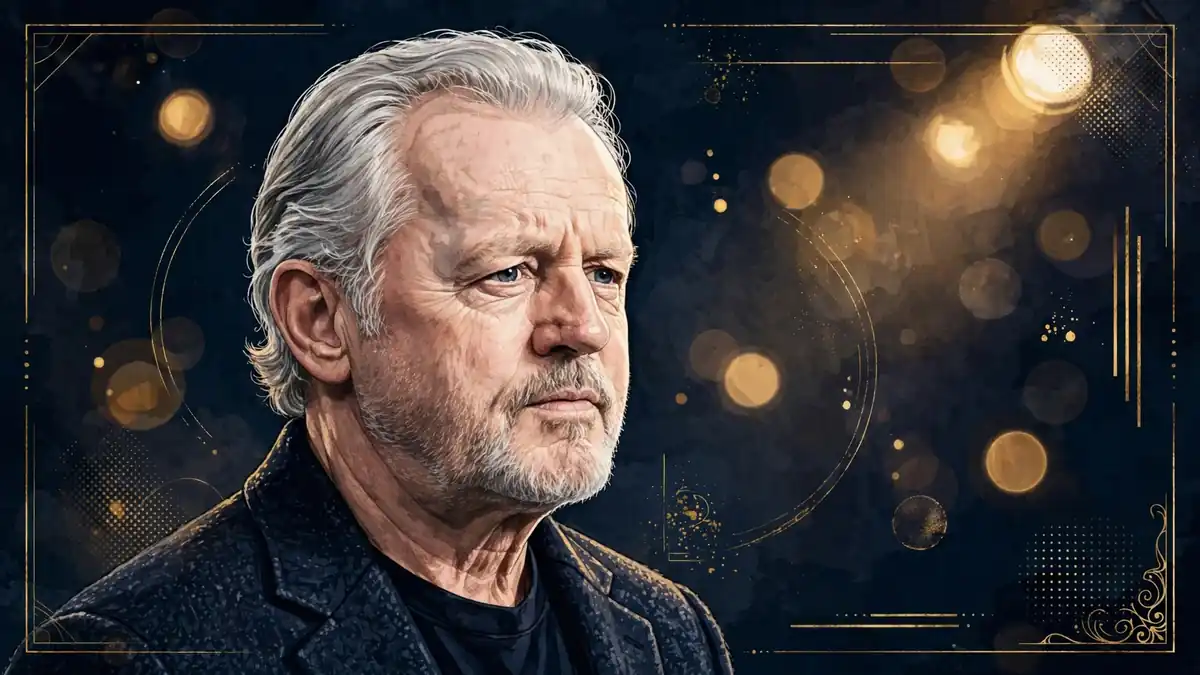
David Morse‘s net worth is estimated at $3–$4 million as of October 2026. The number looks modest next to modern streaming paychecks, and that is the whole story of his fortune: six years as a TV doctor on St. Elsewhere, a 50-film run of character work that included The Green Mile and The Rock, two Emmy nominations for House and John Adams, and a deliberate decision — stated in his own words — to stop caring whether a role paid well. Morse never became a box-office headliner, so his wealth was built slowly, across four decades of supporting roles, stage awards, residuals, and a famously quiet life in Philadelphia.
David Morse: Quick Facts
| Estimated net worth | about $3–$4 million (range: $3–$4 million) |
|---|---|
| Profession | Actor, director, producer, narrator |
| Nationality | American |
| Born | October 11, 1953 (age 73) |
| Height | 6 ft 4 in (193 cm) |
| Primary income sources | Film and television acting, stage performances, directing, audiobook narration |
| Active years | 1971–present (stage); 1980–present (screen) |
| Last reviewed | October 2026 |
- Early Life and Background
- Education
- Career Journey
- Rise to Fame
- Stage Career and Directing Work
- Key Films, Year by Year
- Recent and Upcoming Work
- Main Sources of Income
- Salary and Earnings
- Businesses and Investments
- Brand Deals and Sponsorships
- Houses, Cars and Other Assets
- Awards and Achievements
- Net Worth Growth Over the Years
- Social Media Presence
- Personal Life
- Sources & Reporting
- Frequently Asked Questions
Early Life and Background
David Bowditch Morse was born on October 11, 1953, in Beverly, Massachusetts, and raised in the neighboring towns of Essex and Hamilton on the state’s North Shore. His mother, Jacquelyn, was a teacher; his father, Charles, worked as a sales manager. He was the eldest of four children — three younger sisters and a stepsister — in what every profile of the actor describes as a solidly middle-class household. His unusual middle name came from Nathaniel Bowditch, the famed mathematician and navigator, a piece of family lore he has mentioned in interviews.
As a teenager Morse was confirmed in the Episcopal Church, and he has said he continues to pray daily into adulthood — a small but telling window into the private, inward-turning temperament that would later define his public life. He played no elite sports and chased no early fame; he discovered acting in high school, and the direction stuck fast. After graduating in 1971, he was invited by Esquire Jauchem — who had directed him in a school play — to audition for a new repertory company forming in Boston. Morse was 17. He got in, and he stayed for six years.
The Massachusetts roots never left him. Decades later, when his Los Angeles home was destroyed in the 1994 Northridge earthquake, he didn’t rebuild in the hills. He moved his family across the country to Philadelphia — his wife’s home region — and stayed there, out of the industry’s line of sight, for the rest of his career.
Education
Morse’s education was unconventional by Hollywood standards: there was no UCLA film school or Juilliard on his résumé. His classroom was the Boston Repertory Company, where he performed for six years after high school while living in the Fort Hill section of Roxbury. In 1975, artistic director Jauchem adapted and directed a stage musical version of The Point! with Morse in the lead role of Oblio; the production later toured to the Trinity Square Repertory Company in Providence.
In the late 1970s he moved to New York, joined the Circle Repertory Company, and studied acting at the William Esper Studio — the school founded by William Esper, one of the foremost teachers of the Meisner technique in America. That training, in a method built on listening and reacting rather than projecting, shows in every Morse performance: a stillness that reads as moral weight. By 1980 he was ready for the camera.
Career Journey
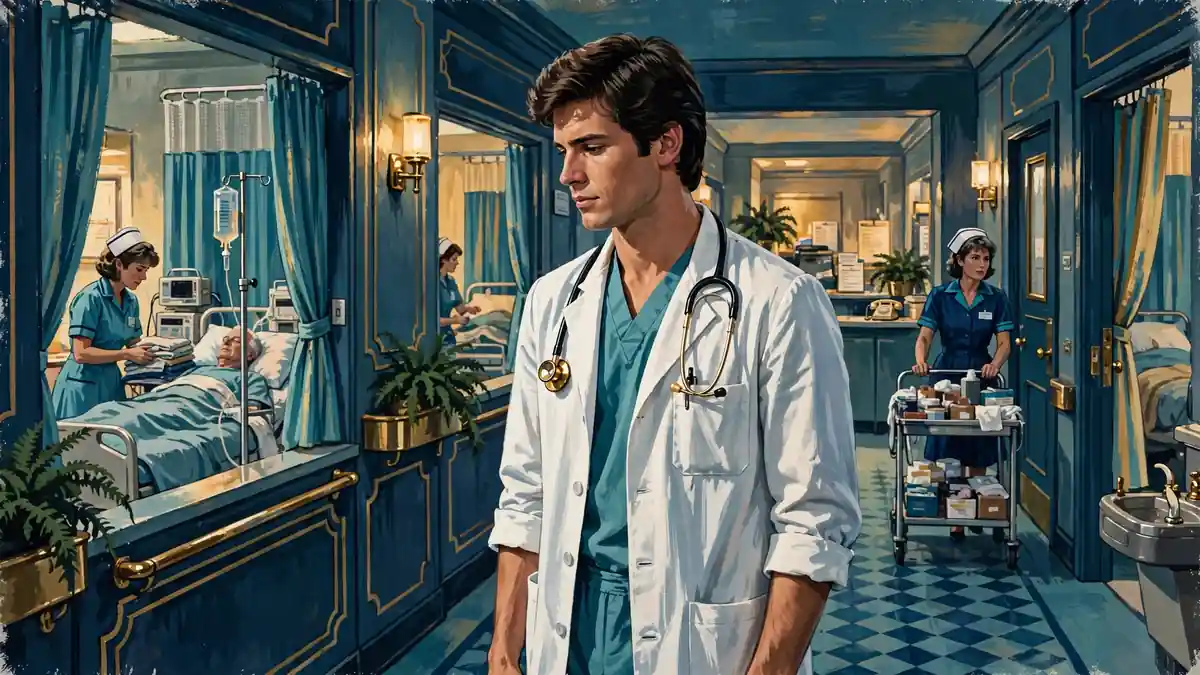
Morse’s film debut came in 1980 in Richard Donner’s drama Inside Moves, playing Jerry Maxwell, a basketball player turned bartender. The film earned an Oscar nomination, and Morse was listed among the twelve most “Promising New Actors of 1980” in John A. Willis’s Screen World, Vol. 32 — a quiet honor that marked him as someone to watch without making him a star. A small part as a shoe-store cop in Max Dugan Returns (1982) followed, and then the role that changed everything: Dr. Jack “Boomer” Morrison on NBC’s St. Elsewhere.
When St. Elsewhere ended in 1988, Morse made what he later called a conscious financial trade. He is quoted as saying: “I made the decision that I didn’t care if there was any money in the role or not. I had to find roles that were different from what I had been doing.” The quote explains his entire net-worth profile. He spent the next decade proving his range instead of cashing in: the menacing antagonist in Desperate Hours (1990), Joe Roberts in Sean Penn’s The Indian Runner (1991), Jack Evans in The Good Son (1993), and John Booth in The Crossing Guard (1995), the last of which earned him an Independent Spirit Award nomination for Best Supporting Male.
An unusual thread runs through his 1990s work: three Stephen King adaptations. He played Captain Brian Engle in the TV miniseries The Langoliers (1995), adult Bobby Garfield in Hearts in Atlantis (2001), and — the one that made the phrase “character actor” feel like a compliment — Brutus “Brutal” Howell in The Green Mile (1999). He also guested on Homicide: Life on the Street as a racist cousin of Detective Tim Bayliss, and film critic John Podhoretz called him “a largely unsung character actor who enlivens and deepens every movie fortunate enough to have him in the cast.”
Rise to Fame
Morse’s national breakthrough was St. Elsewhere (1982–88), where he appeared in 137 episodes as Dr. Jack “Boomer” Morrison — a young physician coping with his wife’s death and single parenthood. In a cast of eccentrics, Morrison was the show’s moral center, and Morse invested himself in the role’s most wrenching arcs. He also stepped behind the camera, directing two episodes in 1987: “A Coupla White Dummies Sitting Around Talking” and “Handoff.”
The 1990s turned the TV breakout into a film career. He played Major Tom Baxter in The Rock (1996), the Michael Bay action hit that grossed $335.1 million worldwide according to Box Office Mojo; Dr. Peters in Terry Gilliam’s 12 Monkeys (1995); Luke/Daedalus in The Long Kiss Goodnight (1996); and Ted Arroway in Robert Zemeckis’s Contact (1997). In 1998 he was Adam Beck opposite Samuel L. Jackson in The Negotiator. Then came The Green Mile (1999): Frank Darabont’s death-row drama grossed $286.8 million worldwide on a $60 million budget and earned Morse a Screen Actors Guild Award nomination for the ensemble. Morse himself has named The Green Mile, The Crossing Guard, and The Indian Runner as his three favorite films.
The 2000s brought him back to television at the top of the prestige era. He starred as Mike Olshansky, an ex-Philadelphia cop turned cab driver, in Hack (2002–04) — 40 episodes, and he wrote one of them, “Gone.” In 2006, House creator David Shore, who had worked with Morse on Hack, called to offer a guest role. Morse was skeptical — he told interviewers he watched the show and thought “this House guy is a total jerk” — but friends’ excitement talked him into it. His six episodes as Detective Michael Tritter, a detective with a vendetta against Dr. House, earned him his first Emmy nomination in 2007.
A year later came the second: his George Washington in HBO’s John Adams (2008), for which he wore prosthetic makeup — his own idea, he later explained, born from staring at portraits and feeling his face wasn’t “commanding” enough. The prosthetic nose stayed. The nomination followed. He has also voiced Washington for years as part of the Hall of Presidents show at Walt Disney World’s Magic Kingdom.
From 2010 to 2013 he played Lt. Terry Colson, an honest cop in a corrupt department, on HBO’s Treme — 31 episodes — and directed for the series as well. Later work kept the prestige-TV pattern going: the WGN America series Outsiders (2016–17), Ben Stiller’s Showtime miniseries Escape at Dannemora (2018) as Gene Palmer, Netflix’s The Chair (2021), Apple TV+’s The Last Thing He Told Me (2023–26), and the Amazon Prime series We Were Liars (2025) as Harris Sinclair. On film he played the late NFL player Mike Webster in Concussion (2015), Archbishop Corrigan in Cabrini (2024), voiced Abraham Lincoln in The Gettysburg Address (2025), and appears as Harold Kelly in Mayday (2026).
Stage work never stopped. His 1997 Off-Broadway performance as Uncle Peck in Paula Vogel’s Pulitzer Prize-winning How I Learned to Drive won him an Obie Award, a Drama League Award, a Drama Desk Award, and a Lucille Lortel Award. He played Sharky in The Seafarer on Broadway (2007–08) and earned a Tony nomination for the 2018 Broadway revival of The Iceman Cometh, followed by an Outer Critics Circle Special Achievement Award in 2022.
Stage Career and Directing Work
Morse’s stage career deserves its own accounting, because it is where his reputation as an actor’s actor was forged — and where a meaningful slice of his income still comes from. The defining role was Uncle Peck in Paula Vogel’s Pulitzer Prize-winning How I Learned to Drive (1997–98, Off-Broadway). Playing a charismatic, predatory family friend, Morse won four awards in a single season — the Obie, the Drama League Award, the Drama Desk Award for Outstanding Actor, and the Lucille Lortel Award — a sweep that established him as one of the premier stage performers of his generation. That same year he played Father Barry in the stage adaptation of On the Waterfront.
Broadway came a decade later with Conor McPherson’s The Seafarer (2007–08), where he played James “Sharky” Harkin, an alcoholic trying to stay sober — a physically and emotionally grueling part that kept him on stage through a full commercial run. In 2018 he returned to Broadway in the revival of Eugene O’Neill’s The Iceman Cometh, earning a Tony Award nomination for Best Actor in a Play. The role of Hickey in O’Neill’s four-and-a-half-hour ensemble piece is one of the hardest in the American canon; the nomination put Morse, then 64, back in the industry’s top tier. In 2022 the Outer Critics Circle honored him with a Special Achievement Award for his body of stage work.
Behind the camera, Morse has directed more than most actors of his profile. It started on St. Elsewhere, where he helmed two episodes in 1987. In 1989 he wrote and directed “A Friend to the End,” an episode of Friday the 13th: The Series. Decades later he directed episodes of Treme and The Chair. Directing fees — typically several thousand dollars per episodic-TV episode under DGA terms, plus residuals on each directed episode — add a second income stream inside the same productions that paid him as an actor, an efficiency few character actors manage.
Key Films, Year by Year
Morse’s filmography runs to roughly 50 feature films. The ones that mattered most to his income and standing, in order:
| Year | Film | Role | Why it mattered |
|---|---|---|---|
| 1980 | Inside Moves | Jerry Maxwell | Film debut; landed on the “Promising New Actors of 1980” list |
| 1991 | The Indian Runner | Joe Roberts | Sean Penn’s directorial debut; one of Morse’s three self-named favorite films |
| 1995 | The Crossing Guard | John Booth | Independent Spirit Award nomination; another self-named favorite |
| 1995 | 12 Monkeys | Dr. Peters | Terry Gilliam’s sci-fi hit; kept Morse visible in prestige ensembles |
| 1996 | The Rock | Major Tom Baxter | $335.1 million worldwide — his biggest-grossing film by box-office share |
| 1997 | Contact | Ted Arroway | Robert Zemeckis’s blockbuster; steady studio paycheck |
| 1998 | The Negotiator | Adam Beck | Samuel L. Jackson thriller; durable cable/streaming title |
| 1999 | The Green Mile | Brutus “Brutal” Howell | $286.8 million worldwide; SAG ensemble nomination; his signature screen role |
| 2000 | Dancer in the Dark | Bill Houston | Lars von Trier’s Palme d’Or winner; art-house prestige |
| 2002 | Double Vision (Shuang Tong) | Kevin Richter | First-ever Golden Horse nomination for an English-speaking actor |
| 2007 | Disturbia | Robert Turner | $80.2 million domestic; opened at No. 1 in April 2007 |
| 2008 | The Hurt Locker | Colonel Reed | Best Picture winner; Gotham + WAFCA ensemble awards |
| 2011 | Collaborator | Gus Williams | Karlovy Vary Best Actor win; Canadian Screen Awards nomination |
| 2013 | World War Z | Ex-CIA Agent | Roughly $540 million worldwide — his largest-grossing appearance |
| 2013 | McCanick | Eugene “Mack” McCanick | Also produced — his only producer credit to date |
| 2015 | Concussion | Mike Webster | Played the late NFL star; Will Smith vehicle |
| 2024 | Cabrini | Archbishop Corrigan | Angel Studios hit; late-career prestige casting |
Recent and Upcoming Work
Morse has worked steadily into his seventies, riding the streaming boom that prizes exactly his kind of veteran presence. In 2021 he played Dean Paul Larson on Netflix’s The Chair, followed by Dr. Rubin on Apple TV+’s The Last Days of Ptolemy Grey (2022). He stayed in the Apple ecosystem with The Last Thing He Told Me (2023–26), and in 2025 he joined the Amazon Prime adaptation of We Were Liars as Harris Sinclair — eight episodes of a buzzy YA property. On film, 2024 brought Cabrini as Archbishop Corrigan, 2025 brought the fishing drama Looking Through Water (originally titled Blood Knot) and a voice turn as Abraham Lincoln in The Gettysburg Address, plus Broken Land as Carson Tidwell. The 2026 survival thriller Mayday, in which he plays Harold Kelly, is his next theatrical credit. None of these are lead roles, but each is another year of union-scale-plus pay and another title feeding the residual tail.
Main Sources of Income
David Morse’s money comes from one thing, done relentlessly for 45 years: acting. His screen credits number roughly 120 across film and television, and the income stack breaks into five layers. First, episodic television pay — the foundation. A 137-episode run on a network drama in the 1980s, 40 episodes as the lead of Hack in the early 2000s, and 31 episodes of Treme on HBO a decade later. Second, film fees from supporting roles in major studio pictures, several of which were large commercial hits: The Rock ($335.1 million worldwide), The Green Mile ($286.8 million), Disturbia ($80.2 million domestic), and World War Z (roughly $540 million worldwide).
Third, residuals. Decades of reruns and streaming licenses on St. Elsewhere, House, Treme, and The Green Mile generate the kind of quiet, long-tail income that underwrites a character actor’s retirement — modest per check, meaningful across 30-plus years. Fourth, the stage: Broadway and Off-Broadway runs pay well below screen rates, but a Tony-nominated Broadway revival commands serious weekly money, and The Iceman Cometh ran eight months in 2018. Fifth, the extras: directing fees (two St. Elsewhere episodes, a wrote-and-directed episode of Friday the 13th: The Series, and directing work on Treme and The Chair), a producer credit on McCanick (2013), and audiobook narration — he is the voice of Allen Levi’s #1 New York Times bestseller Theo of Golden, Michael Bamberger’s The Second Life of Tiger Woods, and contributed narration to Doris Kearns Goodwin’s Leadership.
What he does not have, as far as any public record shows: endorsement deals, a production company empire, real-estate flipping, or tech investments. The income story is a working actor’s ledger — salaries, residuals, and stage weeks — stretched across half a century without the star-level paydays that turn that ledger into nine figures.
Salary and Earnings
Here is the honest accounting first: no verified source has ever published David Morse’s salary for any role. No studio filing, no salary-survey leak, no interview. That is typical for supporting actors of his generation — the public salary culture of the streaming era didn’t exist in the 1980s — and any site printing an exact “per episode” figure for Morse is guessing. What we can do is bracket what his peers earned and what his résumé implies.
On St. Elsewhere (1982–88), he was a young series regular on an NBC ensemble drama. One net-worth estimator site, NetWorthRanker, places 1980s primetime lead-actor pay in a $10,000–$50,000 per episode band — its own estimate, not a reported figure — and Morse’s position as a young regular (not the show’s top-billed star) would put him toward the lower end of such ranges. Six seasons of steady network work at even the bottom of that band is what moved him from Boston rep wages into real money.
The House arc (2006–07) is easier to contextualize. By then, headline TV salaries had exploded: a widely circulated 2010 ranking put Hugh Laurie at $400,000+ per episode for House. Guest and recurring actors earned a fraction of headliner pay under SAG-AFTRA scale minimums plus negotiated overages — comfortable, but not life-changing across six episodes. His HBO work — John Adams (2008) and Treme (2010–13) — came during the prestige-TV era, when HBO paid character actors strong episodic rates; again, no figure for Morse is public.
The realistic picture: Morse earned union-scale-or-better money for 45 years, banked long-tail residuals from syndicated series and blockbuster films, and never drew the seven-figure-per-episode checks that headline actors of the streaming era command. That pattern — steady, unflashy, compounding — is exactly what a $3–$4 million net worth looks like for a lifelong supporting actor.
Businesses and Investments
Morse has no known businesses. Unlike actors who parlayed screen fame into production companies, tequila brands, or venture portfolios, his only documented business-adjacent activity is creative, not commercial: a producer credit on the 2013 indie film McCanick, in which he also starred, and his directing work across television. No company filings, no brand launches, no startup investments appear in any public record under his name.
A note of caution for readers: some low-quality aggregator sites publish eye-catching figures for Morse — one claims $50 million built on “tech startups” and “endorsement deals,” another $60 million. None of these claims is sourced, and every one conflicts with the consensus of the estimators that actually itemize careers: $3 million (CineNetWorth), $4 million (InformationCradle), $4 million (UrbanSplatter), and $3–$4 million (American Home Protect). There is no documented investment income in Morse’s profile. The range we publish reflects what his documented career supports, not what scrapers invent.
Brand Deals and Sponsorships
None are publicly known. Morse has never been an endorsement figure — no fragrance, no watch campaign, no car commercials on his record, and no brand partnerships disclosed in any interview or press coverage. For an actor whose public life consists almost entirely of the work itself, with no verified social media presence to sell to, that absence is unsurprising. If endorsement money ever touched his income, it left no public trace, and our estimate assigns it zero weight.
Houses, Cars and Other Assets
The one documented asset in Morse’s name is his home. After the 1994 Northridge earthquake destroyed the family’s Los Angeles house, Morse and his wife relocated to Philadelphia — her home region — and have lived there ever since. Celebrity-property coverage reports the family in a Chestnut Hill mansion: roughly 7,800 square feet, seven bedrooms, six to eight bathrooms, on just under an acre of land, in a house originally built around 1920. American Home Protect, which profiled the property in a report updated in June 2026, ties a roughly $2 million transaction to the home in 2018 and puts its current estimated value at about $2.6 million. One other property blog claims the family bought the house in 1994 and sold it in 2018 — the reporting conflicts on dates, so we treat the 2018 figure as approximate, not certain.
On cars, there is no verified record. One aggregator claims a “collection of classic cars,” but no outlet has photographed, profiled, or otherwise documented it, and we don’t count it. Morse’s lifestyle, by every account, is deliberately un-showy: a Philadelphia family home, decades in the same marriage, no public displays of luxury spending.
Awards and Achievements
Morse’s trophy shelf is the résumé of an actor’s actor. On stage, his 1997 turn as Uncle Peck in How I Learned to Drive swept four awards: the Obie Award, the Drama League Award, the Drama Desk Award for Outstanding Actor, and the Lucille Lortel Award. Two decades later he was nominated for the 2018 Tony Award for Best Actor in a Play for The Iceman Cometh, and in 2022 he received an Outer Critics Circle Special Achievement Award.
On television, he earned two Primetime Emmy nominations: Outstanding Guest Actor in a Drama Series for House (2007) and Outstanding Supporting Actor in a Miniseries or Movie for John Adams (2008), plus a Monte-Carlo Television Festival nomination for the latter. In film, he was nominated for Best Supporting Male at the 1996 Independent Spirit Awards (The Crossing Guard), for Outstanding Cast at the SAG Awards (The Green Mile), and for Best Supporting Actor at Taiwan’s Golden Horse Awards for Double Vision (2002) — the first nomination ever for an English-speaking actor at those awards. He won Best Actor at the Karlovy Vary International Film Festival in 2011 for Collaborator, earned a Canadian Screen Awards nomination for the same film, and shared ensemble honors for The Hurt Locker: a Gotham Independent Film Award and a Washington DC Area Film Critics Association award, both in 2009. Back at the very start, he was listed among the twelve most “Promising New Actors of 1980” in Screen World.
Net Worth Growth Over the Years
No year-by-year figures for Morse exist in any public record. The table below is our reconstruction — labeled estimates built from his career phases, the pay norms of each era, and the consensus end-state of $3–$4 million. It shows how a supporting actor’s wealth compounds slowly rather than spiking.
| Period | Career phase | Estimated net worth |
|---|---|---|
| 1971–1981 | Boston and New York repertory theater | Modest savings (working-actor wages) |
| 1982–1988 | 137 episodes of St. Elsewhere; first directing work | Approaching $1 million |
| 1989–1999 | Character-actor film run: The Rock, The Green Mile ($286.8M global), first award nominations | $1–$2 million |
| 2000–2010 | Hack lead, House and John Adams Emmy nominations, The Hurt Locker | $2–$3 million |
| 2011–2020 | Treme, Broadway’s The Iceman Cometh, producing McCanick, streaming-era guest roles | About $3 million |
| 2021–2026 | The Chair, The Last Thing He Told Me, We Were Liars, audiobook narration, Philadelphia home appreciation | $3–$4 million |
The shape of the curve matters more than the numbers. There is no breakout year, no franchise payday, no business exit. A $3–$4 million estimate for a 45-year career in supporting roles implies steady saving, long residual tails, and a private life that never burned the money — which is exactly what the public record describes.
Social Media Presence
David Morse maintains no verified public social media accounts. No official Instagram, X, or Facebook page for the actor exists; fan-run but nothing is verified as his. This is consistent with a career-long pattern: he gives interviews about the work, lives in Philadelphia rather than Los Angeles, and keeps his family out of the press. For net-worth purposes, it also means zero income from sponsored posts or social-media partnerships — one more line item his estimate doesn’t need.
Personal Life
Morse has been married to actress and author Susan Wheeler Duff — credited as Susan Wheeler Duff Morse — since June 19, 1982, one of the longest marriages in the business. The couple has three children: a daughter, Eliza, who works as a still photographer, and twin sons, Benjamin and Samuel. The family moved to Philadelphia after the 1994 Northridge earthquake destroyed their Los Angeles home, settling in the Chestnut Hill neighborhood, and Morse has lived and worked from there ever since.
He keeps the rest of his life quiet. He has spoken about praying daily, about food sensitivities that mean he prepares nearly all his own food, and about playing drums — music has been a lifelong side interest alongside woodworking. He told interviewers that China, where he traveled in 2003, left a deep impression on him. The through-line is consistency: the same wife for 44 years, the same city for 30, the same craft for 55.
Sources & Reporting
Wikipedia — core biography, filmography, television credits, directing credits, and awards list (David Morse entry, reviewed October 2026).
EBSCO — research biography covering career milestones from Outsiders through We Were Liars, stage awards, and the 2022 Outer Critics Special Achievement Award.
TV Insider — career biography: Boston Repertory years, St. Elsewhere role details, directing credits, and the House/John Adams Emmy nominations.
Box Office Mojo — worldwide and domestic grosses for The Green Mile, The Rock, and Disturbia used in the income analysis.
InformationCradle — biographical details and a $4 million net-worth estimate.
CineNetWorth — $3 million net-worth estimate and career summary.
UrbanSplatter — $4 million estimate, directing/producing credits, and Philadelphia relocation details.
American Home Protect — Chestnut Hill property details (square footage, 2018 transaction figure, current value estimate) and the $3–$4 million net-worth range, report updated June 2026.
CanBee Lifestyle — additional $3–$5 million estimate and biographical cross-checks.
NetWorthRanker — its own 1980s primetime salary-band estimate, used only as labeled context, not as a reported fact.
Reporting window: research conducted October 19, 2026. Net-worth estimator sites update their figures on different schedules; the $3–$4 million range reflects their most recent published positions as of this review.
Frequently Asked Questions
What is David Morse’s net worth?
David Morse’s net worth is estimated at $3–$4 million as of October 2026. Independent estimators cluster in this range — CineNetWorth puts him at $3 million, while InformationCradle and UrbanSplatter put him at $4 million. Unsupported figures of $50 million or more appear on some aggregator sites, but none are sourced and they conflict with his documented career as a lifelong supporting actor.
How old is David Morse?
David Morse was born on October 11, 1953, in Beverly, Massachusetts, making him 73 years old as of October 2026. He began his stage career at 17 in 1971 and his screen career in 1980.
What is David Morse best known for?
His best-known roles are Dr. Jack “Boomer” Morrison on the NBC medical drama St. Elsewhere (1982–88, 137 episodes), Brutus “Brutal” Howell in The Green Mile (1999), Detective Michael Tritter on House (2006–07, earning an Emmy nomination), and George Washington in HBO’s John Adams (2008, earning a second Emmy nomination). He has also appeared in The Rock, 12 Monkeys, Contact, The Negotiator, Disturbia, and The Hurt Locker.
Is David Morse married?
Yes. David Morse has been married to actress and author Susan Wheeler Duff since June 19, 1982 — over 44 years. They have three children: a daughter, Eliza, and twin sons, Benjamin and Samuel. The family lives in Philadelphia.
How tall is David Morse?
David Morse stands 6 feet 4 inches tall (193 cm), a commanding physical presence that has been noted throughout his career, from his early theater work to his portrayal of George Washington.
Where does David Morse live now?
David Morse lives in the Chestnut Hill neighborhood of Philadelphia, Pennsylvania. He and his family moved there after losing their Los Angeles home in the 1994 Northridge earthquake and have lived in the area for about 30 years. Property coverage reports a roughly 7,800-square-foot mansion tied to an approximately $2 million transaction in 2018.
Was David Morse on House?
Yes. David Morse played Detective Michael Tritter in six episodes of House during the 2006–07 season. Tritter, a detective with a vendetta against Dr. House, earned Morse his first Primetime Emmy nomination in 2007 for Outstanding Guest Actor in a Drama Series.
Is David Morse related to Samuel Morse, the inventor?
No relation has ever been documented. David Morse’s middle name, Bowditch, comes from mathematician Nathaniel Bowditch, not from the Morse-code inventor. The shared surname is a coincidence.
Final Thoughts
David Morse’s estimated $3–$4 million net worth is the honest price of a choice he stated out loud early on: to stop caring whether a role paid well and chase range instead. That decision cost him star paydays and bought him a 45-year career most actors would trade their fortunes for — 137 episodes of St. Elsewhere, The Green Mile, two Emmy nominations, a Tony nomination, and a stage shelf crowded with Obies and Drama Desks.
Measured against today’s streaming-era salaries, the number looks small. Measured against the evidence — roughly 120 screen credits, decades of residuals, one documented family home, and no endorsements, businesses, or investment income on record — it is exactly what a working character actor’s ledger should show. Morse built his wealth the slow way: show up, be excellent in the scene, go home to Philadelphia. The fortune is modest. The career is not.
Published on October 19, 2026. Last reviewed October 2026. Found an error? See our corrections policy.