
Joe Manchin‘s net worth is estimated at $8–12 million as of November 2026. The former West Virginia senator and governor built most of that fortune before he ever reached Washington, through a waste-coal brokerage he founded in 1988 that has paid him more than $5.2 million in dividends — and since leaving the Senate in January 2025, he has added board seats and advisory work at one of Wall Street’s biggest private equity firms.
Joe Manchin: Quick Facts
| Estimated net worth | $8 million (range: $8–12 million) |
|---|---|
| Profession | Former U.S. Senator, former Governor of West Virginia, businessman |
| Nationality | American |
| Born | August 24, 1947 (age 79) |
| Height | 6 ft 3 in (1.91 m) |
| Primary income sources | Enersystems coal brokerage dividends, Senate and governor salaries, board and advisory fees, book royalties |
| Active years | 1982–present (public office 1982–2025) |
| Last reviewed | November 2026 |

- Early Life and Background
- Education
- Career Journey
- Rise to Fame
- Main Sources of Income
- Salary and Earnings
- Businesses and Investments
- Brand Deals and Sponsorships
- Houses, Cars and Other Assets
- Awards and Achievements
- Net Worth Growth Over the Years
- Social Media Presence
- Personal Life
- Sources & Reporting
- Frequently Asked Questions
- Final Thoughts
Early Life and Background
Joseph Manchin III was born on August 24, 1947, in Farmington, West Virginia, a coal town of a few hundred people in Marion County. His family story reads like a compressed history of the state itself. His grandfather Giuseppe Manchin immigrated from Italy and ran a grocery store in Farmington. His father, John Manchin, worked in the local coal economy and ran a furniture and carpet business, and his mother, Mary, kept the household running while the family built its standing in town.
Farmington sat in the middle of coal country, and the mines shaped everything about daily life there — the jobs, the politics, the risks. The town’s name is tied to one of the worst mining disasters in American history: the 1968 Farmington mine explosion killed 78 miners, when Manchin was 21. That disaster, and the safety laws it forced through Congress, formed the backdrop of his childhood and his later politics. He grew up watching a community that depended on coal for its pay checks and buried its men when the mines failed them.
Manchin has often described himself as a product of that world — a small-town kid who knew the mine owners, the union men and the shopkeepers by name. The local connections mattered. In a town that size, a family’s reputation was its currency, and the Manchins had one: hard-working, church-going, loyal to West Virginia. That reputation became the foundation of a political career that ran, almost without interruption, from 1982 to 2025.
The coal connection ran deeper than culture. It was financial, and it started early. Long before he held statewide office, Manchin understood the business of moving coal — buying low-grade and waste coal, cleaning it up and selling it to power plants. That knowledge, picked up in his home county, became the single most important money-making skill of his life.
Education
Manchin attended Farmington High School, where he played football as a quarterback. He earned a football scholarship to West Virginia University in Morgantown, the state’s flagship school, and arrived there in the late 1960s. A knee injury during practice ended his playing days and cost him the scholarship, a setback he has returned to in interviews over the years as the moment he learned to rebuild a plan from scratch.
He stayed at WVU and finished his degree, graduating in 1970 with a Bachelor of Business Administration. The business degree mattered more than the football career ever did. Within two decades of leaving Morgantown, he had turned classroom accounting and management into a coal brokerage that would pay him millions. WVU also gave him the network that carried him into state politics: the university’s alumni web runs through every courthouse and statehouse office in West Virginia, and Manchin used it.
He never pursued a graduate degree. For a man who later chaired the Senate Energy and Natural Resources Committee and negotiated the largest climate and energy bill in American history, his formal education stopped at a bachelor’s degree — and he has never hidden that. His expertise, as even his critics concede, came from four decades inside the energy business and the statehouse, not from a classroom.
Career Journey
Manchin’s political career began in 1982, when he won a seat in the West Virginia House of Delegates. He served two terms there, from 1982 to 1986, then moved up to the West Virginia Senate, where he served from 1986 to 1996. In the state legislature he built a reputation as a pro-business Democrat who voted with the coal industry and the Chamber of Commerce as often as with his own party’s leadership — a pattern that would define the next forty years.
He ran for governor in 1996 and lost the Democratic primary to Charlotte Pritt, a defeat that could have ended his rise. Instead he went back to his business, waited, and ran for Secretary of State in 2000 — winning. He served as West Virginia’s Secretary of State from 2001 to 2005, the statewide office that put his name in front of every voter in the state and set up his second run for governor.
In 2004 he won the governor’s office, taking over a state government that was drowning in workers’ compensation debt and pension liabilities. As governor from 2005 to 2010, he pushed through a restructuring of the state’s workers’ comp system, cut debt, and built a reputation as a fiscal manager. He won re-election in 2008 by a wide margin, and by 2010 he was the most popular politician in West Virginia.
That popularity carried him to Washington. When Senator Robert C. Byrd — the longest-serving senator in American history — died in June 2010, Manchin ran in the special election to finish Byrd’s term and won in November 2010, taking his Senate seat on November 15, 2010. He won a full term in 2012 and re-election in 2018, a year when West Virginia voted overwhelmingly Republican in every other statewide race. He was, by then, the last Democrat holding statewide office in a state that had turned deep red.
In the Senate he became the most powerful swing vote in the country. After the 2020 election split the chamber 50–50, no bill could pass without Manchin’s support, and he used that power on nearly everything: he sank the Build Back Better plan in late 2021, then negotiated the Inflation Reduction Act of 2022 — the $369 billion energy and climate package — almost single-handedly with Senate Majority Leader Chuck Schumer, in secret talks that stunned Washington when they were announced. He chaired the Senate Energy and Natural Resources Committee from 2021 until he left office, giving him formal control of the energy agenda he had spent his life working in.
In November 2023, Manchin announced he would not seek re-election in 2024. In February 2024 he said he would not run for president, ending months of speculation about a No Labels third-party bid. In May 2024 he left the Democratic Party and registered as an independent, though he kept caucusing with Senate Democrats for the rest of his term. His Senate career ended on January 3, 2025, when he was succeeded by Jim Justice, the Republican former governor. He had spent 42 years in elected office.
Rise to Fame
Manchin was never famous in the Hollywood sense. He became nationally known because the math of the Senate made him unavoidable. In a 50–50 chamber, a single Democrat from a state Donald Trump carried by nearly 40 points held a veto over the entire Democratic agenda — and he used it in public, in long interviews, in op-eds and in televised standoffs with his own party’s president.
The moment that fixed his national profile came in December 2021, when he announced on Fox News Sunday that he could not support Build Back Better, the $1.75 trillion social spending bill. The White House reacted with fury, progressive groups called him a traitor, and his name was suddenly on every front page in America. He had gone from a regional figure to the most talked-about senator in the country in a single Sunday morning.
Eight months later he flipped the story again. In July 2022, after months of telling reporters the talks were dead, Manchin and Schumer unveiled the Inflation Reduction Act — a deal negotiated in secret that paired $369 billion in clean-energy spending with new oil and gas leasing and a permitting deal for a natural-gas pipeline through West Virginia. The whiplash made him a case study in swing-vote power: he had killed one bill and written its replacement, on his terms.
That fame carried a cost, and a benefit. His critics called him a coal baron who put his family’s business ahead of the climate. His supporters called him the last honest broker in Washington, a man who said no to his own party when he thought it was wrong. Either way, the attention put his finances under a microscope that few senators ever face — and the disclosures that followed are why his net worth can be estimated with unusual precision for a politician.
His post-Senate fame has a different shape. In September 2025 he published a memoir, Dead Center: In Defense of Common Sense, with St. Martin’s Press, arguing the case for the centrism that defined his career. In July 2026 he launched the Independent Leadership Council, a new political organization aimed at electing independent candidates to Congress, working alongside his daughter Heather Bresch. At 78, he stepped back into politics — this time without a party, and without a salary from the taxpayer.
Main Sources of Income
Manchin’s money comes from three places, and the balance between them has flipped over the course of his life. In his working years, the coal brokerage dominated. During his Senate years, the government salary was steady but secondary. Since January 2025, the boardroom has taken over.
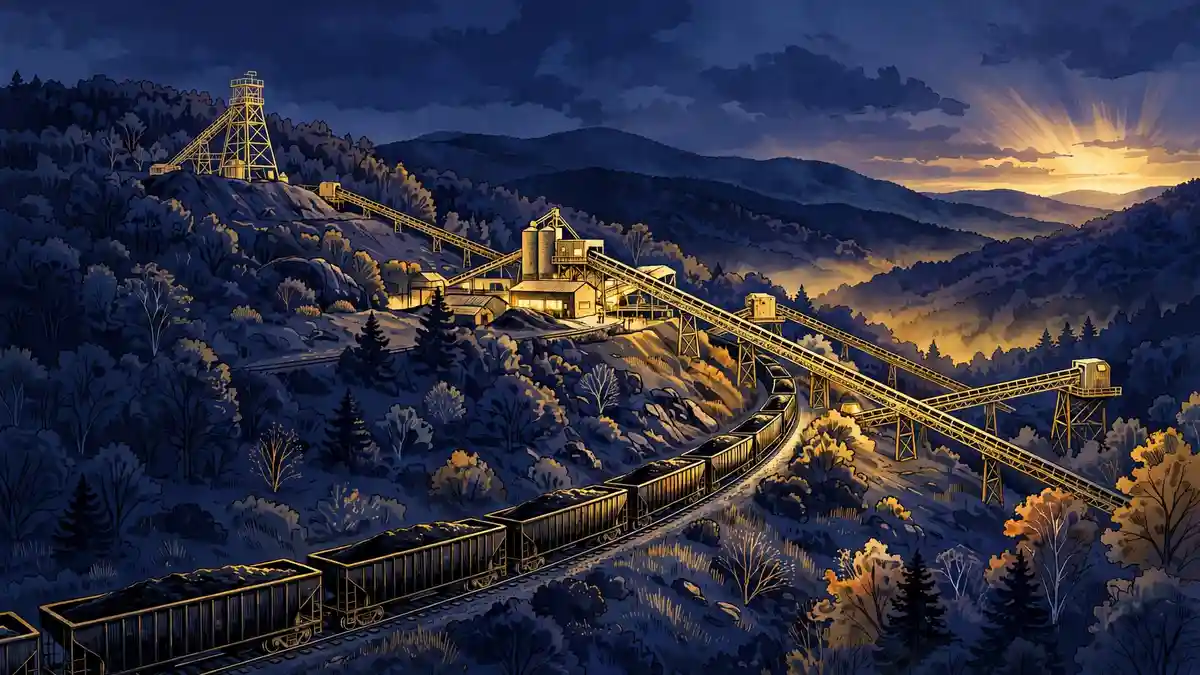
Enersystems — the coal brokerage. The core of the fortune is Enersystems, a waste-coal brokerage Manchin founded in Fairmont, West Virginia, in 1988. The company buys low-grade and waste coal — the leftover material from mining operations — and sells it to power plants. Manchin ran the company as president until 2000, when he entered statewide politics and handed daily operations to his son, Joe Manchin IV. The family still owns the business. According to his Senate financial disclosures, his non-public shares were worth between $1 million and $5 million in 2020, and the company supplied 71% of his investment income and roughly 30% of his entire net worth.
Government salaries. Fourteen years in the U.S. Senate at $174,000 a year, five years as governor at roughly $150,000 a year, plus earlier pay from the state legislature and the Secretary of State’s office. Respectable money — about $2.4 million in Senate salary alone across his tenure — but it explains only a fraction of an $8–12 million fortune. Manchin was rich before the Senate, and the Senate salary was never the engine of his wealth.
Board seats and advisory work. On February 3, 2025 — one month after leaving the Senate — Manchin became an adviser to Apollo Global Management, the private equity giant, and joined the board of directors of Athene Holding Ltd., Apollo’s retirement-services arm. The announcement, carried by GlobeNewswire on February 6, 2025, said he would advise Apollo on energy markets. Athene’s own board page confirms he sits on its legal and regulatory and risk committees, and lists additional board seats at Ramco Resources and Karbon Capital Partners Corp. He also joined Bondi Partners, the lobbying and consulting firm, as a senior adviser in February 2025, according to Sludge. Board fees and advisory retainers are not public, but for a former Senate energy chairman at firms of this size, they are typically six figures a year — a meaningful new income line that did not exist while he was in office.
Book royalties. His memoir, Dead Center, published in September 2025, added a fourth income stream. First-book advances for former senators of Manchin’s profile commonly run into six figures, though the exact figure has not been disclosed, and we do not guess at it here.
Real estate and investments. Manchin has listed a non-public real estate asset called AA Properties on his Senate disclosures every year since 2010, alongside retirement accounts and a blind trust. The details are thin — Senate disclosures give ranges, not appraisals — but the property holdings add ballast to the estimate.
Salary and Earnings
The salary numbers are the most exact figures in Manchin’s financial record, because the government publishes them. As a U.S. Senator he earned $174,000 a year — the standard Senate salary, unchanged since 2009. Across his tenure from November 2010 to January 2025, that adds up to roughly $2.4 million in gross Senate pay. He never held a leadership post that carried a higher salary, and he never took outside earned income while in office, because Senate ethics rules bar it for most work.
Before the Senate, his pay was smaller and steadier. As governor of West Virginia he earned about $150,000 a year — the governor’s salary in that period — across five years in office, roughly $750,000 in total. As Secretary of State from 2001 to 2005 he earned a state executive salary in the low six figures. His years in the state legislature in the 1980s and 1990s paid a part-time legislator’s wage, a few thousand dollars a year, and were never the point: he was running a coal company at the same time.
The dividends tell the real earnings story. Manchin’s own financial disclosures show he received $5,211,154 in Enersystems dividend income between 2011 and 2020 — an average of more than $520,000 a year, roughly three times his Senate salary. In 2020 alone, the dividend was more than $500,000. More recent disclosures show the flow easing as the coal market softened: he reported about $390,000 in Enersystems income in a recent filing year, down from $613,142 five years earlier, according to LivaRava’s review of the disclosures.
That gap — $174,000 in salary against $500,000-plus in annual dividends — is the single most important fact about Manchin’s money. He was a millionaire businessman who happened to hold a Senate seat, not a career politician who got rich in office. The salary kept the lights on in Washington. The coal company built the fortune.
What he earns now is harder to pin down. Apollo and Athene do not publish what they pay advisers and directors, and Athene is a private company. Public-company board seats of comparable size commonly pay $200,000–$300,000 a year in cash and equity, but Athene’s exact figure is not disclosed, so we do not state one. What is certain is that his post-Senate income no longer appears in any public disclosure, which is one reason outside estimates of his wealth run higher than the disclosure-based figures — and one reason our estimate is a range, not a single number.
Businesses and Investments
Enersystems is the business that explains Joe Manchin, and it is also the business that has drawn the most scrutiny of any senator’s holding in modern times. He founded it in 1988 in Fairmont, West Virginia, as a waste-coal brokerage — a company that buys the low-grade coal and refuse left over from mining, processes it, and sells it to power plants that can burn it. It was a family operation from the start: Manchin’s father had worked in the coal economy, and the brokerage turned local knowledge of the industry into a durable business.
Manchin served as president until 2000, when he stepped away to run for Secretary of State and passed daily control to his son, Joe Manchin IV, who still runs it. When Manchin became governor, he moved his Enersystems holdings into a blind trust — a step meant to separate his official decisions from his private business. That trust became a story in its own right.
The numbers, taken from his Senate financial disclosures, are unusually concrete for a politician’s business. His non-public Enersystems shares were valued at $1–5 million in his 2020 disclosure, a wide range because the shares are not publicly traded and their value moves with coal prices. Between 2011 and 2020, the company paid him $5,211,154 in dividends. In 2020 he received more than $500,000. Wikipedia’s summary of the disclosures puts the scale in plain terms: Enersystems supplied 71% of his investment income and about 30% of his net worth.
The blind trust is where the clean story gets complicated. The Joseph Manchin III Qualified Blind Trust was established in 2012 with $350,000 in cash. Later filings valued it at $500,000–$1 million and showed it earning no more than $15,000 in a recent year. The problem, as ethics experts pointed out, is that the trust appears not to have covered all of his Enersystems earnings — the dividends kept flowing outside it. Don Fox, a former general counsel and acting director of the Office of Government Ethics, told reporters that Manchin’s public claims about the blind trust were misleading, if not false, according to LivaRava’s reporting. The Senate Ethics Committee reviewed his filings and found no violations, but the episode left a permanent mark on his record: the man who chaired the Senate’s energy committee held a direct financial stake in the coal business throughout his chairmanship, and everyone in Washington knew it.
His other listed holding is AA Properties, a non-public real estate asset he has disclosed every year since his election to the Senate in 2010. The filings give no address and no value beyond a range, but the name has appeared in every disclosure for fifteen years, making it one of the most consistent lines in his portfolio. Alongside it sit the standard holdings of a man his age: retirement accounts, a blind trust, and cash. There is no record of Manchin holding stock in the big tech names or the venture bets that fill other politicians’ portfolios. His money stayed close to home — coal, West Virginia land, and the businesses his family built.
That concentration is the honest risk in his fortune, and it is worth stating plainly. Enersystems’ value rises and falls with coal, and coal has been in long decline. His own disclosures show the dividend income falling from $613,142 to about $390,000 over five recent years. A fortune tied to one commodity in one state is a fortune with a single point of failure, and it is one reason the low end of our range — $8 million — is the figure closest to his own disclosures, while the higher estimates depend on valuing the business and the property generously.
Brand Deals and Sponsorships
Manchin has no brand deals and no sponsorships in the commercial sense, and that is worth saying outright: he is a former senator, not a celebrity endorser, and no company has ever paid him to pitch a product. What he has instead is the post-office version of the same thing — paid advisory roles that trade on his name, his Rolodex and his knowledge of energy policy.
The biggest of those is Apollo Global Management, which named him an adviser in February 2025, a month after he left the Senate, and put him on the board of Athene Holding Ltd., its retirement-services arm. The announcement said he would advise on energy markets, where Apollo has been pouring capital into the industrial build-out. He also joined Bondi Partners as a senior adviser the same month, and sits on the boards of Ramco Resources, a coal company, and Karbon Capital Partners Corp., according to Athene’s investor-relations page.
These roles are the closest thing to endorsements a former senator gets, and they pay like it. Board and advisory fees at firms of Apollo’s size are typically six figures a year, and the work is light on hours and heavy on access — the former chairman of the Senate Energy Committee opening doors in Washington and in state capitals. Critics call it the revolving door. Supporters call it the market pricing fourteen years of expertise. Either way, it is now a real and growing line in Manchin’s income, and it began the moment his Senate salary stopped.
His book deal fits the same pattern. Dead Center: In Defense of Common Sense, published by St. Martin’s Press in September 2025, put him on the standard former-senator circuit of cable interviews, podcasts and speaking events — including a long October 2026 appearance on Sean Hannity’s show and an episode of Mike Rowe’s podcast the same month. Speaking fees for former senators of his profile commonly run in the tens of thousands of dollars per event, though Manchin’s exact fees are not public and we do not state them as fact.

Houses, Cars and Other Assets
Manchin’s most famous asset is not a house at all. It is a boat — a 65-foot houseboat called Almost Heaven, named for the John Denver song that West Virginia adopted as a state anthem. He lives aboard it when he is in Washington, docked on the Potomac River about eight miles south of the Capitol, and he has used it for years as a floating meeting room, hosting senators from both parties for pizza, beer and evening cruises.
The boat’s own story is a lesson in how Manchin’s money works. The vessel was built in 2001 by Custom Steel Boats of Merritt, North Carolina — a three-story steel hull with 1,500 square feet of living space, three and a half bedrooms and three and a half bathrooms, including a 14-by-20-foot master suite and a granite dining table. Its original owners spent $900,000 building and outfitting it. Manchin bought it in 2014 for $220,000, a fire-sale price, from M&T Bank through the liquidation firm National Liquidators, according to PolitiFact’s reporting on the sale documents. He insured it for $700,000. Marine experts who appraised it for the press put its real market value at about $300,000 — and argued, in a much-quoted piece, that it was too homely to be called a yacht at all. Republicans used the boat in attack ads during his 2018 re-election campaign, painting him as a Washington insider on a luxury yacht. The Washingtonian’s verdict was blunter: it is a houseboat, it cost less than the median single-family home in Washington, and Manchin lives on it because he does not like living in the city.
On land, the Manchins own a modest townhome in Charleston, West Virginia, and in January 2021 they paid $765,000 for a riverfront home on the Kanawha River, also in Charleston, according to Celebrity Net Worth’s review of property records. The purchase came in his final year in the Senate, and it gave the couple a permanent base in the state capital after decades in Fairmont.
His car is a Maserati Levante, an Italian luxury SUV valued at about $80,000, which he drove around Washington during his Senate years. It became a minor symbol in the same attack ads as the boat — the Italian sports car of a man who was supposed to be a humble coal-country Democrat. The car and the boat together tell the same story his critics have told for a decade: a politician who lives better than his salary alone could explain, and whose defenders answer that the salary was never the source of the money.
The family’s other property story belongs to his wife’s side. Gayle Manchin’s family has real-estate holdings in West Virginia that have added to the household’s wealth, and his disclosures list the AA Properties holding alongside his own. The full picture of the family’s land — including a 1,200-acre farm reported in some profiles — is not itemized in public filings, so we do not put a value on it here.
Awards and Achievements
Manchin never collected the trophies that fill celebrity profiles, but his record carries the markers that matter in politics. He won six statewide elections in West Virginia — two terms in the House of Delegates, two in the state Senate, Secretary of State in 2000, governor in 2004 and again in 2008 — and then three Senate races in 2010, 2012 and 2018, the last of them in a year when his party lost nearly everything else in the state.
His legislative record is the achievement his supporters point to. As chairman of the Senate Energy and Natural Resources Committee from 2021 to 2025, he shaped the energy provisions of the Inflation Reduction Act, the largest climate and energy investment in American history, and he forced the inclusion of oil and gas leasing and pipeline permitting that his own party’s left wing opposed. He also drove the bipartisan infrastructure law of 2021, casting the deciding votes that moved it through a deadlocked Senate.
As governor, his administration restructured West Virginia’s workers’ compensation system, cutting a debt that had threatened the state’s finances, and he led the state’s response to the 2006 Sago Mine disaster, which killed 12 miners — a moment that returned him, in the public mind, to the coal country he came from.
Since leaving office, his achievements have turned literary and organizational: a memoir published in September 2025, and the Independent Leadership Council, launched in July 2026 with his daughter Heather Bresch, Adam Brandon and Seth Cohen, to recruit and support independent candidates for Congress. Whether the council becomes a lasting force or a footnote, it is the project he has chosen to define his seventies — a final attempt to build something outside the two parties that shaped his career.
Net Worth Growth Over the Years
Manchin’s wealth grew slowly and then stayed flat — a profile that looks nothing like a tech founder’s hockey stick and everything like a coal businessman’s ledger. The figures below come from his own statements, his Senate disclosures and the main outside estimates, and the gaps between them are the reason this article publishes a range.
| Year | Estimated net worth | What changed |
|---|---|---|
| 2010 | $6 million | Self-stated estimate when first elected to the Senate |
| 2018 | More than $7.6 million | OpenSecrets calculation from his Senate disclosures |
| 2020 | $7–8 million | Senate financial disclosure range; Enersystems dividends topped $500,000 that year |
| 2022 | About $12 million | Higher outside estimates as coal prices and dividends stayed strong |
| 2024 | $4.4–$12.8 million | Disclosure asset range reported by LivaRava — the widest spread, showing how much the answer depends on valuation |
| 2026 | $8–12 million | Our estimate: disclosure-anchored low end, higher outside estimates and post-Senate board income at the top |
The table explains why you will see different numbers for Manchin depending on where you look. Celebrity Net Worth says $8 million, updated in February 2026. ValueWalk put him at $12 million in 2023. One lower-quality site claims $13.7 million, a figure with no sourcing behind it that we do not rely on. The honest answer is that Senate disclosures report assets in broad bands — $1–5 million for a business stake, $500,000–$1 million for a trust — so any single number is a judgment call. The $8 million anchor is the most defensible: it matches his own disclosures and the best-sourced outside estimate. The $12 million top end reflects the higher valuations and the income he has added since leaving office.
For comparison with his peers in the Senate, Manchin sits comfortably in the upper half of the chamber’s wealthy members, but far from its richest. Celebrity Net Worth estimates Mitch McConnell at about $35 million and Chuck Schumer at about $2 million, with Bernie Sanders at about $3 million — so Manchin, at $8–12 million, was richer than most of the leadership on either side, while remaining a long way from the billionaires and hundred-millionaires at the very top of the Senate wealth list.
Social Media Presence
Manchin keeps a public presence on X, Facebook and Instagram, where he posts about the Independent Leadership Council, his book and his appearances on cable news and podcasts. Since leaving the Senate he has used the accounts less as a legislator’s bulletin board and more as a platform for his independence project — promoting the council’s candidates, including Kevin Kiley’s independent re-election campaign in California and Seth Bodnar’s independent Senate run in Montana, and sharing clips from his October 2026 interviews with Sean Hannity and Mike Rowe.
He is not a high-volume poster by the standards of modern politics, and his following is modest next to the senators who built national brands on social media. That fits the rest of his profile: a politician whose power came from a committee chairmanship and a swing vote, not from a feed. His most-shared moments online have usually been other people’s clips of him — the Fox News Sunday interview that sank Build Back Better, the boat cruises on the Potomac, the floor speeches in which he broke with his party in public.
Personal Life
Manchin married Gayle Heather Conelly in 1967, when he was 20. The marriage has lasted nearly sixty years, through six decades of campaigns, and Gayle Manchin has had a public career of her own. She served as West Virginia’s Secretary of Education and the Arts, chaired the state’s Board of Education, and from 2021 to 2025 served as the federal co-chair of the Appalachian Regional Commission, the federal-state partnership for economic development in Appalachia, at a salary of about $170,000 a year.
The couple has three children. The best known is Heather Bresch, the former chief executive of Mylan, the pharmaceutical company that makes the EpiPen. Bresch led Mylan through its 2019 merger with Pfizer’s Upjohn unit to form Viatris, and left with a $37.6 million exit package — a figure that has made her, on paper, considerably richer than her father. She now works alongside him leading the Independent Leadership Council and her own centrist nonprofit, Americans Together. Their son, Joe Manchin IV, runs Enersystems, the family coal business. Their daughter Brooke has stayed out of public life.
The family is close, and it is also a political unit: father, daughter and son-in-law networks overlap across the coal business, the pharmaceutical world and now the independence movement. That closeness has drawn criticism — the EpiPen price controversy that engulfed Mylan in 2016 put Bresch, and by extension her father, under hostile scrutiny — but it has also given Manchin a successor generation that shares his politics and his Rolodex.
He is 79, a grandfather, and by his own account in his memoir, glad to be out of the Senate. He has said he does not see himself running for office again after 42 years in it. His life now runs between Charleston and Washington, between the riverfront house, the houseboat and the council’s work — a retirement that looks, from the outside, a lot like a second career.
Sources & Reporting
Celebrity Net Worth — the $8 million headline estimate, the $7–8 million disclosure range, the $5.2 million in Enersystems dividends from 2011 to 2020, the $765,000 Kanawha River home purchase, the $220,000 houseboat purchase and the Maserati Levante; page updated February 2026.
Wikipedia — career timeline (House of Delegates 1982–1986, state Senate 1986–1996, Secretary of State 2001–2005, governor 2005–2010, U.S. Senate November 15, 2010 – January 3, 2025), Enersystems founding in 1988 and the 2020 disclosure figures, the memoir’s September 16, 2025 publication date and the June 2026 launch of the Independent Leadership Council.
OpenSecrets — the 2018 net worth calculation of more than $7.6 million, cited in the Wikipedia entry.
CNN — the July 24, 2026 report on the Independent Leadership Council launch, its candidates and its aims, by Patrick Svitek.
GlobeNewswire — Apollo and Athene’s February 6, 2025 announcement that Manchin would advise Apollo and join Athene’s board effective February 3, 2025.
Athene Investor Relations — Manchin’s current board roles, committee seats and additional directorships at Ramco Resources and Karbon Capital Partners Corp.
Washingtonian — the February 2021 houseboat explainer: the $220,000 purchase price, the $700,000 insurance value, the Potomac mooring and the bipartisan cruises.
PolitiFact — the 2018 fact-check on the “luxury yacht” claim and the 2014 sale documents showing the $220,000 price.
LivaRava — the 2024 disclosure review: the $4.4–$12.8 million range, the $390,000 recent Enersystems income figure, and the blind-trust controversy including Don Fox’s assessment.
ValueWalk — the 2023 estimate of $12 million and the property details, used to set the top of our range.
EBSCO — biographical research on the 2023 re-election decision, the 2024 party switch and the September 2025 memoir.
Reporting window: February 2025 – November 2026. All figures are estimates drawn from public filings and reporting; where sources disagree, this article publishes a range and names who says what. No figure in this article comes from an anonymous source.
Frequently Asked Questions
What is Joe Manchin’s net worth in 2026?
Joe Manchin’s net worth is estimated at $8–12 million as of November 2026. Celebrity Net Worth puts the figure at $8 million, updated in February 2026, and his own Senate financial disclosures put him in the $7–8 million range. Higher outside estimates reach $12 million. We publish the range because Senate disclosures report assets in broad bands, so any single number is a judgment call.
How did Joe Manchin make his money?
Mostly through coal. He founded Enersystems, a waste-coal brokerage in Fairmont, West Virginia, in 1988, and the company paid him $5,211,154 in dividends between 2011 and 2020 — more than $500,000 in 2020 alone. His Senate salary of $174,000 a year was a much smaller part of his income. Since leaving the Senate in January 2025, he has added board and advisory fees from Apollo Global Management and Athene Holding Ltd., plus book royalties.
What is Enersystems and how much is it worth?
Enersystems is a waste-coal brokerage Manchin founded in 1988 that buys low-grade and leftover coal and sells it to power plants. His non-public shares were valued at $1–5 million in his 2020 Senate disclosure. The company supplied 71% of his investment income and about 30% of his net worth, according to the disclosures. His son, Joe Manchin IV, runs the company today.
Is Joe Manchin still a senator?
No. Manchin left the U.S. Senate on January 3, 2025, after announcing in November 2023 that he would not seek re-election. He served from November 15, 2010 to January 3, 2025, including four years as chairman of the Senate Energy and Natural Resources Committee. He was succeeded by Jim Justice. In May 2024, before leaving office, he left the Democratic Party and registered as an independent.
What is Joe Manchin doing now after leaving the Senate?
He became an adviser to Apollo Global Management and joined the board of Athene Holding Ltd. in February 2025, and joined Bondi Partners as a senior adviser the same month. He published his memoir, Dead Center: In Defense of Common Sense, in September 2025. In July 2026 he launched the Independent Leadership Council with his daughter Heather Bresch to recruit and support independent candidates for Congress.
How much did Joe Manchin earn as a senator?
He earned the standard Senate salary of $174,000 a year, which added up to roughly $2.4 million across his tenure from 2010 to 2025. That was far less than his business income: his Enersystems dividends averaged more than $520,000 a year between 2011 and 2020, about three times his Senate pay.
Where does Joe Manchin live — the houseboat?
When in Washington, he lives aboard Almost Heaven, a 65-foot houseboat docked on the Potomac River about eight miles south of the Capitol. He bought it in 2014 for $220,000 and insured it for $700,000. In West Virginia, he and his wife Gayle own a townhome in Charleston and a riverfront home on the Kanawha River that they bought for $765,000 in January 2021.
Who is Joe Manchin’s wife and daughter?
He has been married to Gayle Conelly Manchin since 1967. Gayle served as the federal co-chair of the Appalachian Regional Commission from 2021 to 2025. Their daughter Heather Bresch is the former chief executive of Mylan, the maker of the EpiPen, and left the company with a $37.6 million exit package after its merger to form Viatris. She now co-leads the Independent Leadership Council with her father.
Final Thoughts
Joe Manchin’s fortune is the least mysterious in American politics, and the most argued about. The money is documented in his own Senate filings: a coal brokerage founded in 1988, $5.2 million in dividends over a decade, a $174,000 Senate salary that never came close to explaining the balance sheet. The argument is about what the money meant — whether a senator who owned a coal company could fairly chair the committee that regulated coal, and whether the blind trust he set up in 2012 actually blinded anything.
What is certain is the scale. At $8–12 million, Manchin is wealthy by any normal measure and ordinary by Senate standards — richer than the leaders of both parties, poorer than the chamber’s billionaires. He made the money before Washington, kept making it while he was there, and has kept making it since he left, through Apollo, Athene and a memoir. The coal built the fortune. The Senate made it famous. The boardroom is now keeping it growing.
Published on November 9, 2026. Last reviewed November 2026. Found an error? See our corrections policy.