
Ja Rule‘s net worth is estimated at $4 million to $6 million as of November 2026. Celebrity Net Worth puts the figure at $4 million in its February 2026 update, while other trackers land near $6 million — a far cry from the roughly $30 million peak the same outlet credits him with at the height of his Murder Inc. run. The gap between those two numbers is the story: three chart-topping albums, a prison stretch, a tax bill that ran past $3 million, the Fyre Festival collapse, and a second act built on touring, a whiskey brand, and a celebrity-booking app.
Ja Rule: Quick Facts
| Estimated net worth | $4 million (range: $4 million to $6 million) |
|---|---|
| Profession | Rapper, singer, actor, entrepreneur |
| Nationality | American |
| Born | February 29, 1976 (age 50) |
| Height | 5 feet 9 inches (commonly listed; some bios list 5 feet 7 inches) |
| Primary income sources | Music royalties, touring, acting, Amber & Opal whiskey, ICONN |
| Active years | 1994–present |
| Last reviewed | November 2026 |
- Early Life and Background
- Education
- Career Journey
- Rise to Fame
- Main Sources of Income
- Salary and Earnings
- Businesses and Investments
- Brand Deals and Sponsorships
- Houses, Cars and Other Assets
- Awards and Achievements
- Net Worth Growth Over the Years
- Social Media Presence
- Personal Life
- Sources & Reporting
- Frequently Asked Questions
- Final Thoughts
Early Life and Background
Jeffrey Bruce Atkins was born on February 29, 1976, in Hollis, a neighborhood in the Queens borough of New York City. He was the only child of Debra Atkins and was raised by his mother and grandparents in the Hollis housing projects. The leap-day birthday became a running detail of his public life: he turns a year older only every fourth February 29, and turned 50 in 2026.
Hollis in the 1980s and early 1990s was a hard place to grow up, and Atkins has spoken in interviews about fights at school and a childhood shaped by the streets around him. He attended Public School 134 in Queens, where classmates picked on him for his small size — a detail that sits oddly beside the gravel-voiced persona he later built on record. Music was the way out he settled on early. By his mid-teens he was writing rhymes, and by 19 he had his first professional credit, guesting on Mic Geronimo’s 1995 track “Time to Build.”
The stage name came from his Cash Money Click days, the Queens rap group he formed with friends Chris Black and O-1. The group never broke through commercially, but it gave Atkins his first reps in a studio, his first local buzz, and a name that stuck. He has said the “Rule” in Ja Rule was a nod to ruling the mic — a boast a teenager makes before he has anything to back it up. Within five years, he did.
One fact competitors routinely skip: Atkins met his future wife, Aisha Murray, while both were still in school in Queens. The relationship predates the fame, the money, and every legal problem that followed — a thread that runs through the whole financial story, because the family stayed intact through the prison years and the tax cases that followed.
Education
Atkins attended public school in Queens, including Public School 134 and junior high in Floral Park, where he met Aisha Murray. There is no record of college, and none of his biographies claim one. His education, in the practical sense, came from the New York rap circuit of the mid-1990s: open mics, guest verses, studio sessions with Irv Gotti, and the apprenticeship of watching Def Jam run a label from the inside.
That gap matters for the money story. Atkins has said plainly that a mix of youthful inexperience and bad advice fed his later tax trouble — he earned millions fast, in his early twenties, with no financial training and a circle that spent like the run would never end. The 2011 court record backs the shape of that account, if not the excuse: he failed to file tax returns for five years while earning more than $3 million.
Career Journey
Ja Rule’s break came through two men: Irv Gotti and Jay-Z. Gotti, then a Def Jam A&R man and producer, heard the Cash Money Click material and took Atkins under his wing. In 1998, Atkins appeared on Jay-Z’s “Can I Get A…” from Vol. 2… Hard Knock Life, a platinum single that put his raspy voice in front of a national audience for the first time. Gotti then built Murder Inc. Records as a Def Jam imprint, with Ja Rule as its flagship artist.
The debut album, Venni Vetti Vecci, arrived on June 1, 1999. It opened at No. 3 on the Billboard 200 with 184,000 copies sold in its first week, went platinum, and produced the hit “Holla Holla.” For a debut from a brand-new label, that was a statement — and it set up a three-year run few rappers of the era matched.
Rule 3:36 followed on October 10, 2000, debuting at No. 1 on the Billboard 200 with 276,000 first-week copies. It went triple platinum, powered by “Between Me and You” with Christina Milian and “Put It on Me” with Vita and Lil Mo. A year later, Pain Is Love (October 2, 2001) did it again: No. 1 on the Billboard 200, 361,000 copies in week one, triple platinum, and 3.6 million US copies sold by 2007, according to Nielsen SoundScan figures cited in his discography record.
The next three albums charted the comedown. The Last Temptation (November 2002) reached No. 4 and went platinum on the strength of “Mesmerize” with Ashanti. Blood in My Eye (November 2003), recorded as a direct answer to 50 Cent, debuted at No. 8. R.U.L.E. (November 2004) opened at No. 7 with 166,000 first-week copies and had sold 658,000 copies by October 2007 — respectable numbers that still marked a steep fall from the two-million-plus sellers that preceded them. A greatest-hits set, Exodus, arrived in 2005. The Mirror, shelved and leaked for years, finally surfaced in 2009, and Pain Is Love 2 came out in February 2012 on his own Mpire imprint with Fontana distribution.
Acting ran alongside the music. He played Edwin, the street racer, in The Fast and the Furious (2001), then took roles in Half Past Dead (2002) with Steven Seagal, Scary Movie 3 (2003), The Cookout (2004), and Assault on Precinct 13 (2005). The acting money was never close to the music money, but it kept him visible through the years when the chart hits stopped coming.
Between 1999 and 2005, he placed seventeen songs on the Billboard Hot 100, most of them produced by Irv Gotti. As of 2018, he had sold 30 million records worldwide, a figure carried across his biographical record. Four Grammy nominations sit on his resume, including Best Rap Album for Pain Is Love in 2002.
Rise to Fame
The peak was 2001, and it was not close. That year Ja Rule put three songs at No. 1 on the Billboard Hot 100: Jennifer Lopez’s “I’m Real (Murder Remix),” his own “Always on Time” with Ashanti, and Lopez’s “Ain’t It Funny (Murder Remix).” No rapper that year was more present on American radio. The formula was Gotti’s: Ja’s gravel delivery against Ashanti’s smooth hooks, pop choruses over street verses, and a Murder Inc. roster — Ashanti, Vita, Lloyd, Cadillac Tah, Black Child — that made every single feel like a label event.
The money followed the airplay. Two consecutive triple-platinum albums, each moving more than 15 million units combined with his debut, turned a Queens kid into a headliner who could fill arenas. In a 2023 interview with Insider, Ja Rule said a tour at that peak could pay close to $15 million in under two months — the same math he used to explain turning down a $500,000 film role (more on that below). Celebrity Net Worth puts his all-time high fortune at roughly $30 million, a figure that dates to this period.
The fall was just as fast. The feud with 50 Cent, which had simmered since the late 1990s, exploded in 2003 as 50 Cent’s Get Rich or Die Tryin’ took over the charts. Radio and the streets picked sides, and Murder Inc. was already under federal pressure: agents raided the label’s offices in January 2003, and Irv Gotti and his brother Chris Lorenzo were charged with money laundering in 2005. Both were acquitted that December, but the two-year cloud hurt the label’s momentum and Ja Rule’s release schedule. Blood in My Eye answered 50 Cent track by track, and it sold — but it sold like a diss record, not like a pop album. The crossover audience that bought Pain Is Love drifted away, and the singles stopped reaching the top ten.
What competitors often miss is that the decline had a second driver beyond the feud: the tax clock. The income he failed to report between 2004 and 2006 was earned exactly as his commercial peak faded, which meant the bills arrived when the money was already thinning. That timing — peak earnings, no filings, then a collapse in new income — is what turned a bad stretch into a hole that took a decade to climb out of.
Main Sources of Income
Ja Rule’s money has come from five streams, and their order has flipped twice. In 2000–2004, recorded music was the engine: album sales, singles, and the publishing that came with writing hits for himself and for Jennifer Lopez’s Murder remixes. Touring sat second, with arena and theater dates paying the largest single checks of his career. Acting added film fees. After 2013, the order reversed — touring and nostalgia shows became the reliable income, catalog royalties trickled in the background, and business ventures (whiskey, apps, wine) became the growth bet.
Music royalties remain the base. Two triple-platinum albums and a platinum debut, plus writing credits on three Hot 100 No. 1 singles, generate publishing and streaming income more than two decades on. Streaming pays far less per play than CD sales did, which is why the catalog alone cannot support a $30 million lifestyle — but it is steady, and it is the income stream that never depended on his reputation holding up.
Touring is the present-day workhorse. The 2025 “Where’s the Party At” tour with Nelly, Eve, Fabolous, Jermaine Dupri, and Chingy ran internationally from March and across the US from July to September, and his 2026 calendar stayed full: Soaring Eagle Casino in January, the Kia Forum in February with DJ Cassidy, Hard Rock Cincinnati in May, Kitchener in June, the California State Fair in July, and dates in Washington and California in August. Nostalgia billing — 2000s hit packages with Ashanti, Nelly, and Busta Rhymes — is what fills those rooms, and it pays because the songs are burned into the memory of an audience now in its forties with money to spend.
Acting fees, the whiskey brand, and the ICONN app make up the rest. None of them individually matches a peak-year album cycle, but together they explain how the net worth stabilized at $4 million to $6 million instead of sliding toward zero after prison and the Fyre Festival fallout.
Salary and Earnings
Ja Rule has never published a salary, and no filing covers his music income, so this section reports the figures that exist on the record and labels the rest as estimates.
The album numbers are the firmest earnings data available. Venni Vetti Vecci moved 184,000 copies in its first week and went platinum. Rule 3:36 opened with 276,000 copies and finished triple platinum. Pain Is Love opened with 361,000 copies, went triple platinum, and had sold 3.6 million US copies by 2007. At late-1990s royalty economics, a triple-platinum album represented several million dollars to the artist before the label recouped recording, video, and marketing costs — which is why the headline sales figures always overstate what reached the artist’s bank account, and why we do not convert them into a salary here.
The single most revealing pay figure comes from Ja Rule himself. Asked in 2023 why he turned down the expanded role in 2 Fast 2 Furious, he said the film offered $500,000 for three months of shooting, while a tour at the time would pay close to $15 million in under two months. The first film had paid him $15,000 for his small role as Edwin. Director John Singleton told Grantland the same $500,000 figure and said Ja Rule stopped returning calls; the role went to Ludacris, whose character Tej Parker became a franchise fixture. Celebrity Net Worth ran the same math in a 2026 piece and put the franchise’s cumulative box office past $7 billion — the scale of the opportunity he walked away from, and a decision he has said he does not regret.
Lower-tier net-worth sites put his current yearly income near $500,000, drawn from touring, royalties, and appearances. Treat that as a rough estimate, not a reported figure: no outlet with access to his books has published an annual income. What is documented is lumpy, event-driven income — a tour here, a festival set there, a whiskey raise, an NFT sale — rather than a steady salary. The $122,000 he received in March 2021 for selling an oil-paint portrait of the Fyre Festival logo as an NFT is a good example: a one-off windfall from a disaster he co-created, reported by Baller Alert at the time.
Against those earnings sit the documented outflows. The 2011 tax case established more than $3 million in unreported income from 2004–2006 and a tax loss to the government of about $1,137,912, per the US Attorney’s office in New Jersey. He was ordered to pay the back taxes, and an IRS suit reported by Radar Online in April 2021 alleged a further $3,139,237.76 owed for tax years 2005–2010 and 2012–2017 — an allegation, not a judgment, and one his camp has not publicly settled on the record.
Businesses and Investments
The business chapter is where the Ja Rule story gets interesting again, because it is the part he controls now. Four ventures matter, and a fifth is still taking shape.
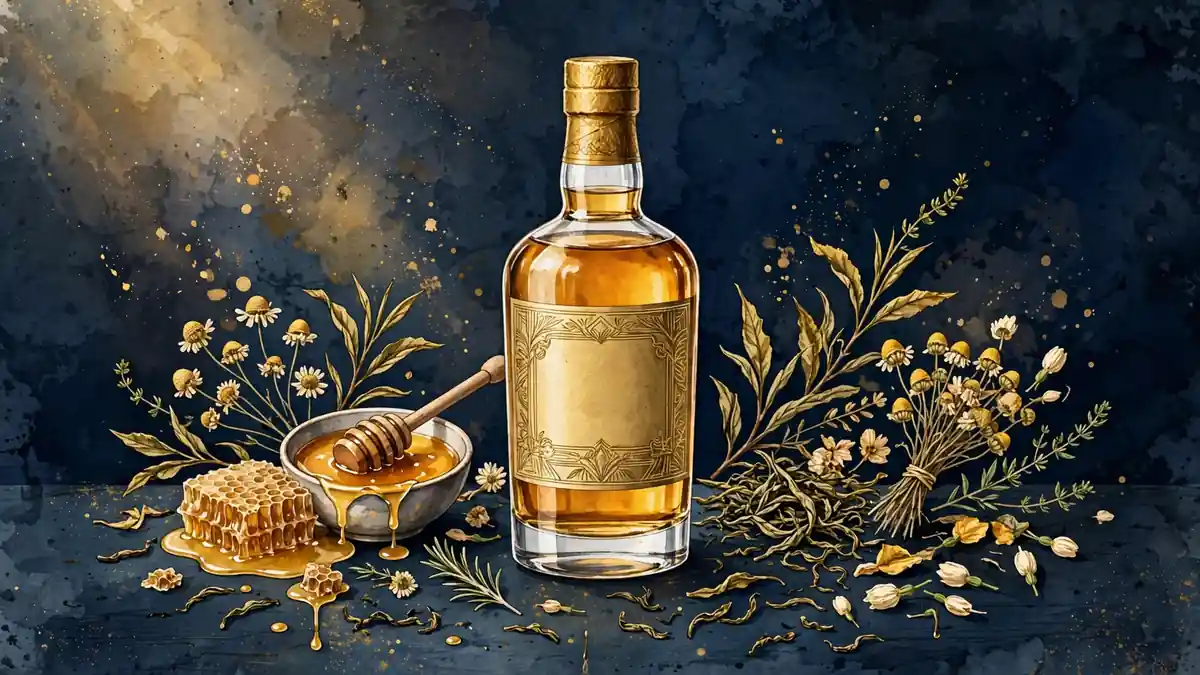
Amber & Opal whiskey is the biggest bet. He launched the honey-botanical rye whiskey in January 2025 with three longtime friends — Herb Rice, Sandy Sandiford, and Kelvin Barton. The venture began in 2021 as a barrel investment: the group bought whiskey barrels to sell once the liquid aged, then decided to build a brand instead. The finished whiskey is a Maryland straight rye, aged two years in medium-charred oak, blended with orange blossom honey, lapsang souchong black tea, fig, ginger, and cinnamon, and sold online at $69.99 a bottle. In October 2026, Inc. reported the four founders were raising $5 million to $7 million to hire staff and enter new markets — and that they had deliberately held back from a 238-store rollout to focus on seven markets they could visit in person, including Maryland and Florida. The company is bootstrapped by the four founders, with no outside funding to date, and the original barrels are being held for a premium bourbon later. That discipline — turning down shelf space to protect the brand — is the most businesslike move of his career, and the raise, if it closes, would be worth more than his entire current net worth.
ICONN is the app that started as the Fyre Festival’s booking platform. The original idea — fans booking celebrities for private events — survived the festival’s collapse, and Ja Rule rebuilt it as ICONN, a live-events and celebrity-booking app. In 2025 he announced the ICONN Network, a hub for original content, storytelling, and creator-led programming. Revenue figures for ICONN have never been published, so we do not value it here — but it is the venture that ties his music past to his tech ambitions, and it is the one he mentions most in interviews.
Mpire Music Group, founded in 2007, is his own label imprint. It released Pain Is Love 2 in 2012 with Fontana distribution and remains his vehicle for new music outside the major-label system. It is a small operation, not a Murder Inc.-scale business, and its value sits in the catalog and the masters rather than in annual revenue.
Flipkick and Rose Cellars fill out the portfolio. MoneyMade lists Flipkick, a sneaker marketplace venture, among his holdings, and Hard Rock’s 2026 artist bio names Rose Cellars, his wine label, alongside the ICONN app. Neither venture has published revenue, and we do not assign them values. A 2025 Chilled Magazine interview added one more project: a collaboration with the city of Gary, Indiana, and Mayor Eddie Melton to build a golf course there — early-stage, with no financing details public.
The honest read on the portfolio: Amber & Opal is a real operating business with a product, a price, and a raise in progress. The rest are small, plausible, and unvalued. No competitor should be crediting him with a nine-figure business empire on this evidence — and the $10 million net-worth claims floating on content farms appear to do exactly that, by treating the whiskey raise target as personal wealth. It is not; a $5 million to $7 million company raise is the company’s money, not his.
Brand Deals and Sponsorships
Ja Rule’s endorsement history runs in two eras. In the peak years, the deals were the standard early-2000s rapper package: apparel and footwear appearances, video cameos that doubled as product placement, and the kind of liquor and lifestyle tie-ins that came with radio dominance. None of them were disclosed at the time, and none produced the long-term equity deals that define the modern celebrity fortune — he was paid to appear, not paid in ownership.
The Fyre Festival era produced the most consequential brand episode of his career, and it cost him rather than paying him. As co-founder and promoter, he lent his name and his social following to a festival that collapsed on arrival in April 2017. The class-action lawsuit that followed sought $100 million. Ja Rule was cleared of wrongdoing — the claims against him were dismissed, and an appeal was denied — while the festival’s bankruptcy trustee settled the ticket-holder class action for $2 million in 2021, with $0 of it coming from Ja Rule, according to contemporary reports. The reputational damage was harder to settle: for two years, his name was shorthand for a scam he did not run, and the Netflix and Hulu documentaries of 2019 kept it there.
The current era flips the model. Amber & Opal is not a sponsorship; it is his company, and his public appearances now double as sales work — pouring cocktails for crowds outside Lincoln Center, signing bottles in Miami Beach stores, and talking up the brand in every interview. That is a better structure than the old endorsement deals: he owns the upside instead of renting out his name. The risk is the reverse, too — if the whiskey stalls, there is no brand partner absorbing the loss.
Smaller deals continue around the edges: casino and resort bookings (Hard Rock Cincinnati, Soaring Eagle, Yaamava’) function as paid appearances with a venue’s marketing behind them, and the DJ Cassidy “Pass the Mic” New Year’s shows in Atlantic City put him on a marquee with Ashanti, Busta Rhymes, and Lil Kim. None of these are sponsorships in the classic sense, but together they are the paid-appearance economy that keeps a legacy artist earning between album cycles that no longer come.
Houses, Cars and Other Assets
The one home on the record is in Saddle River, New Jersey. Court reporting from 2011 places him and his family in Saddle River, an upscale community in northern New Jersey, and the tax case itself turned on income earned while he lived there. MoneyMade’s portfolio breakdown lists the Saddle River home among his assets, alongside stocks, crypto, and NFTs, but no purchase price or current value is on the public record, so we do not put a number on it. Unlike the peak-era rappers who publicized mansions, Ja Rule’s property footprint looks modest — one family home, held for years, rather than a portfolio of flips.
Cars are a thinner file. The 2007 gun case began with a traffic stop of his luxury sports car after a concert at New York’s Beacon Theater, when police said they found a loaded gun in a rear door. Beyond that incident, no verified list of his current vehicles exists, and we do not repeat the invented car collections that fill lower-tier net-worth pages. The honest statement is that his car collection is not a documented part of his wealth.
The asset list that can be documented is different from the usual rapper inventory: music masters and publishing (through Mpire and his Murder Inc. catalog), equity in Amber & Opal, the ICONN app and network, a stock and crypto portfolio that MoneyMade says includes GameStop, Apple, Microsoft, Twitter, Nike, Plug, Bitcoin, Ethereum, Cardano, and Solana, and NFT holdings — including the Fyre Festival logo artwork he sold for $122,000. The stock and crypto names come from a single outlet’s portfolio breakdown and should be read as reported, not confirmed; he has spoken publicly about investing in crypto and NFTs, but the exact holdings are not verified.
One asset deserves a line of its own: the catalog. Thirty million records sold worldwide, seventeen Hot 100 hits, and three No. 1 singles are a durable income base in the streaming era. It will never again be worth $30 million on its own, but it is the reason the floor under his net worth is $4 million rather than nothing.
Awards and Achievements
Ja Rule’s trophy case is thinner than his chart record suggests, and that gap is part of the story. He earned four Grammy nominations and won none. The most notable was Best Rap Album for Pain Is Love at the 2002 Grammys, the year the album was also one of the best-selling rap records in America. The nominations recognized the commercial peak; the lack of wins reflects a career that the industry respected for sales more than it rewarded with prizes.
The achievements that matter more are the chart ones. Two No. 1 albums on the Billboard 200 in thirteen months (Rule 3:36 and Pain Is Love), three Hot 100 No. 1 singles in a single calendar year (2001), seventeen Hot 100 entries between 1999 and 2005, six top-ten albums, and triple-platinum certification on two consecutive records. As of 2018, the worldwide sales total stood at 30 million records. Those are the numbers that built the $30 million peak, and they are the numbers no later setback can take away.
Acting brought no major awards, but the filmography is a real second resume: The Fast and the Furious, Half Past Dead, Scary Movie 3, Assault on Precinct 13. The cultural achievement is harder to measure and easier to see: the Murder Inc. sound — rap verses over R&B hooks — shaped pop radio for the first half of the 2000s, and the Ja Rule–Ashanti pairing remains one of the most successful singer-rapper combinations of the era.
The post-prison years added a different kind of recognition. In April 2025, a six-classroom school block he helped fund through Pencils of Promise was completed in Ghana. It is a small project beside a $30 million fortune, but it is the kind of verifiable good deed that thin net-worth pages never mention — and it says more about where his money goes now than any award count.
Net Worth Growth Over the Years
The table below uses only figures that trace to a named source. Years without a sourced figure are shown as a direction, not a number — inventing a yearly balance would be guessing, and this site does not guess.
| Year | Estimated net worth | What drove it |
|---|---|---|
| 1999 | Under $5 million (our estimate) | Platinum debut Venni Vetti Vecci; first national exposure |
| 2001–2004 | Peak of roughly $30 million (Celebrity Net Worth) | Two triple-platinum No. 1 albums, three Hot 100 No. 1 singles, arena touring |
| 2005–2010 | Falling sharply (direction only) | Feud-era decline, Murder Inc. legal cloud, unreported income from 2004–2006 |
| 2011–2013 | Around $4 million (Celebrity Net Worth) | Prison, $1.1 million tax bill, catalog income only |
| 2017–2021 | Around $4 million (Celebrity Net Worth) | Fyre Festival fallout, cleared of wrongdoing; NFT sale of $122,000 in 2021 |
| 2026 | $4 million to $6 million | Touring, catalog royalties, Amber & Opal whiskey, ICONN |
The shape is a steep rise, a long flat bottom, and a slow rebuild. The $30 million peak and the $4 million present figure are the two anchors Celebrity Net Worth itself supplies, and the $6 million top of our range comes from MoneyMade and PowerNetWorth, which credit the whiskey and investment portfolio more generously. Claims of $8 million to $10 million appear on content farms with no sourcing and no math behind them; we do not use them.
Social Media Presence
Ja Rule’s social following is modest for a rapper of his sales, and that is a direct consequence of his career timing: his peak predated Instagram by a decade. A 2025 bio listing puts his Instagram following at roughly 2 million, while older listings show 1.2 million and under 1 million — the spread reflects different counting dates, not a collapse. He is active on Instagram and X (formerly Twitter), where he posts tour dates, whiskey promotion, family moments, and the occasional public spat, including the 2024 posts about the cancelled UK tour.
Social media is also where the two most public setbacks of his recent years played out. In February 2024, he announced on X that the UK had denied him entry for the Sunrise Tour because of his criminal record, saying he had spent $500,000 of his own money on production for shows that were almost sold out. The Leeds date at the First Direct Arena and the rest of the UK and Ireland leg were cancelled days before they were due to start. The episode cost him real money and showed the long tail of a 2011 conviction: fifteen years on, it still closes borders.
For a net-worth reader, the social numbers matter because they set the ceiling on influencer income. Two million Instagram followers is enough to sell whiskey and concert tickets to a loyal core, but it is not the ten-million-plus audience that commands seven-figure brand deals. His money now comes from owning the product, not from renting his reach.
Personal Life
Ja Rule married Aisha Murray in April 2001. They met as teenagers in Queens and were high-school sweethearts; their daughter Brittney was born in 1995, years before the wedding, and their sons Jeffrey Jr. and Jordan followed. The marriage has survived the full arc of the story in this article — the $30 million years, the prison stretch, the tax cases, and the Fyre Festival headlines — and Aisha has appeared with him publicly through all of it, including on reality television and at the whiskey launch events.
The family lives in Saddle River, New Jersey, where they were based through the 2011 court cases. His mother, Debra Atkins, raised him as an only child in Hollis, and he has credited her and his grandparents with keeping him close to home even as the money grew. He has also spoken about the leap-day birthday as a family joke that never gets old: he celebrated his 50th birthday in 2026, his thirteenth actual February 29 having passed in 2024.
Outside music and business, the verifiable personal detail is the Ghana school project: a six-unit classroom block built with Pencils of Promise and completed in April 2025. He has also talked publicly about his faith background and about fatherhood, including writing “Daddy’s Little Baby” for his daughter in 1999. We do not repeat the rumor-mill claims about his private life that fill gossip pages; none of them carry sourcing, and none of them change the money story.
Sources & Reporting
Celebrity Net Worth — the $4 million net-worth figure (updated February 10, 2026), the roughly $30 million all-time-high figure, and the $15,000 first-film / $500,000 sequel-offer account of the Fast & Furious decision. Reporting window: profile updated February 2026.
Forbes — context on the Amber & Opal whiskey blend and pricing, cited through the October 2026 raise coverage. Reporting window: 2025–2026.
Inc. — the October 13, 2026 report on the $5 million to $7 million Amber & Opal raise, the 238-store decision, the seven-market focus, and the four-founder bootstrapped structure.
U.S. Department of Justice — the July 18, 2011 sentencing release: 28 months in federal prison, failure to file tax returns for five years, and a tax loss of about $1,137,912 on income from 2004–2008.
Pollstar — court reporting on the 2011 tax and gun sentences, the $3 million unreported income figure, the $1.1 million back-tax order, and the Saddle River residence.
Billboard — chart positions and first-week sales for Venni Vetti Vecci, Rule 3:36, and Pain Is Love, and the 2001 Hot 100 No. 1 singles, as carried in the discography record.
RIAA — platinum and triple-platinum certifications for the first three albums.
AllHipHop — October 2026 coverage of the Amber & Opal rollout decision and the $5 million to $7 million raise.
Rolling Stone — background on the tax case and the prison years, cited for the 2004–2008 income window.
Wikipedia — biographical spine (birth date and place, discography dates and sales, Grammy nominations, the Pencils of Promise school completion in April 2025, and the January 2025 whiskey launch), cross-checked against the outlets above wherever a money figure was involved.
The Breakfast Club (iHeart) — the February 2025 interview on the whiskey venture, the “Where’s the Party At” tour, and the planned new album.
Ticketmaster — 2026–2027 tour listings, including the December 31, 2026 and January 1, 2027 DJ Cassidy shows in Atlantic City.
Frequently Asked Questions
What is Ja Rule’s net worth in 2026?
Ja Rule’s net worth is estimated at $4 million to $6 million as of November 2026. Celebrity Net Worth lists $4 million in its February 2026 update, and Wealthy Gorilla agrees, while MoneyMade and PowerNetWorth land near $6 million. We publish the range because the sources disagree and none of them has access to his private accounts.
How did Ja Rule lose his money?
He did not lose it in one event. His fortune peaked near $30 million around 2001–2004, then fell as the 50 Cent feud and the Murder Inc. legal cloud cut his record sales, while he failed to file tax returns on more than $3 million of income from 2004–2006. Prison in 2011–2013, a $1.1 million back-tax bill, and the Fyre Festival fallout kept the rebuild slow. Celebrity Net Worth puts the drop at roughly $30 million to $4 million.
Why did Ja Rule go to jail?
Two separate cases. In June 2011 he began a two-year New York state sentence after pleading guilty to attempted criminal weapon possession, from a gun found in his car after a 2007 concert. In July 2011 he received a 28-month federal sentence for failing to file income tax returns on more than $3 million earned between 2004 and 2006. He was released from prison in May 2013.
What is Ja Rule doing now in 2026?
He is touring, running a whiskey brand, and building an app network. He toured the US in 2025 on Nelly’s “Where’s the Party At” tour and played dates across America in 2026, including the Kia Forum, Hard Rock Cincinnati, and the California State Fair. His Amber & Opal whiskey, launched in January 2025, was raising $5 million to $7 million in October 2026, and he announced the ICONN Network for original content. A new album was planned for June 2025 but had not arrived as of November 2026.
Why did Ja Rule turn down Fast & Furious?
Money and timing. He earned $15,000 for his small role as Edwin in the first film, and the sequel offered $500,000 for three months of shooting. At the time, he said a tour would pay close to $15 million in under two months, so he chose the tour. The role went to Ludacris, whose character Tej Parker became a franchise fixture. Ja Rule has said he does not regret the decision.
What happened with Ja Rule and Fyre Festival?
Ja Rule co-founded Fyre Festival with Billy McFarland in 2016, and the luxury festival collapsed on arrival in the Bahamas in April 2017. He was sued as part of a $100 million class action but was cleared of wrongdoing, and the ticket-holder case settled for $2 million in 2021 with $0 coming from Ja Rule, according to contemporary reports. McFarland pleaded guilty to wire fraud and served a six-year prison sentence. Ja Rule later sold an oil painting of the Fyre Festival logo as an NFT for $122,000.
Who is Ja Rule’s wife?
Ja Rule is married to Aisha Murray Atkins, his high-school sweetheart from Queens. They married in April 2001 and have three children: daughter Brittney and sons Jeffrey Jr. and Jordan. The family lives in Saddle River, New Jersey.
How old is Ja Rule?
Ja Rule was born Jeffrey Bruce Atkins on February 29, 1976, in Hollis, Queens, New York. He turned 50 in 2026. Because he was born on a leap day, his actual February 29 birthday comes around only every four years.
Final Thoughts
Ja Rule’s net worth in 2026 — $4 million to $6 million, anchored on Celebrity Net Worth’s $4 million — is the price of a career that peaked early, fell hard, and refused to end. The $30 million fortune of 2001 was built on two triple-platinum albums and three No. 1 singles in a single year; it was spent down by a feud, a federal raid on his label, five years of unfiled tax returns, and a prison stretch that arrived exactly when the money was thinnest. The Fyre Festival should have finished the story. It did not, because he was cleared, kept touring, and built a second act out of the one thing the first act never gave him: ownership. Amber & Opal is his company, ICONN is his platform, and the catalog still pays. He will likely never be worth $30 million again, and the $10 million figures on content farms are not supported by any sourced math. What he is worth — a working musician with a real business, a loyal touring audience, and a catalog that still earns — is a more honest fortune than the peak ever was.
Published on November 12, 2026. Last reviewed November 2026. Found an error? See our corrections policy.