
Maureen McCormick‘s net worth is estimated at $4 million to $6 million as of October 2026. Marcia Brady paid her a reported $1,100 a week as a teenager; five decades later the money tells a story of survival — a Broadway paycheck, a bestselling 2008 memoir, a roughly $200,000 DWTS payday, and an HGTV revival that turned a 50-year-old sitcom into 2019 appointment television.
Maureen McCormick: Quick Facts
| Estimated net worth | $4 million (range: $4 million – $6 million) |
|---|---|
| Profession | Actress, singer, author |
| Nationality | American |
| Born | August 5, 1956, Encino, Los Angeles, California (age 70) |
| Height | 5 ft 3 in (160 cm) |
| Primary income sources | Acting, reality TV, memoir royalties, personal appearances, conventions |
| Active years | 1964–present |
| Last reviewed | October 2026 |

- Early Life and Background
- Education
- Career Journey
- Rise to Fame
- Main Sources of Income
- Salary and Earnings
- Businesses and Investments
- Brand Deals and Sponsorships
- Houses, Cars and Other Assets
- Awards and Achievements
- Net Worth Growth Over the Years
- Social Media Presence
- Personal Life
- Sources & Reporting
- Frequently Asked Questions
Early Life and Background
Maureen Denise McCormick was born on August 5, 1956, in the Encino neighborhood of Los Angeles, California, the youngest of four children of Richard McCormick, a teacher, and Irene McCormick. She has three older brothers — Michael, Dennis, and Kevin — and grew up in a Catholic household of Irish and German descent, according to Sing with the Stars.
Her show-business origin story is almost mythic in its simplicity. At age six, she won the Baby Miss San Fernando Valley pageant, and the win opened the door to modeling and commercials before she had finished grade school. Within a year of her stage debut at seven, she was a working child performer in Los Angeles, booking national television commercials for Mattel’s Barbie line and Kool-Aid, and — in a detail that foreshadows her later work as Marcia — appearing in commercials for the Chatty Cathy doll, Parade reported when she turned 70 in August 2026.
The money arrived early and steadily. Guest spots on Bewitched (1964), My Three Sons, I Dream of Jeannie (1966), Camp Runamuck (1965), and Honey West (1965) followed in quick succession, along with voice-over work — she reportedly recorded the voices for a dozen Mattel talking dolls. By the standards of 1960s child acting, she was already a professional with a résumé longer than most adults’. The discipline of that early work mattered later: when addiction and depression derailed her adult career, the craft training survived, and it is one reason she could return to the stage and to television cameras decades after her peak.
The Encino years also set the template for the financial story that follows. Child performers of her era earned under contracts that paid well by the standards of the time but offered none of the backend participation, licensing, or ownership structures that make modern sitcom stars rich. The Brady Bunch kids became cultural icons; their parents’ generation of producers kept the economics.
Education
McCormick attended William Howard Taft High School in Woodland Hills, California, while filming The Brady Bunch — a schedule that meant tutoring on set, classes between shoots, and the surreal experience of becoming a national teen idol in the hallways of a real high school. The show filmed its five seasons from 1969 to 1974, so her entire high school run overlapped with Marcia Brady’s. She did not pursue a conventional college education; the acting career was already full-time, and by her account the years after the show were consumed by personal struggle rather than classrooms.
That absence of formal higher education is worth noting only because her later career shows how much on-the-job training she had: by the time she made her Broadway debut in 1994, she had already been performing for thirty years.
Career Journey
The arc of Maureen McCormick’s career has three acts, and the money in each act looks very different. Act one, 1964 to 1974, is the child-star decade: commercials, guest roles, and then the five-season run as Marcia Brady on ABC’s The Brady Bunch, during which she was paid a reported $1,100 per week — solid money for a teenage sitcom actress in the early 1970s, roughly equivalent to $7,000–$8,000 a week in today’s dollars, but a fraction of what a comparable role pays now.
Act two, roughly 1975 to the early 2000s, is the long rebuilding. After the show’s cancellation in 1974, McCormick reprised Marcia in the animated The Brady Kids (1972–73, which aired while the original was still in production), The Brady Bunch Hour (1976–77), The Brady Brides (1981), and the television movie A Very Brady Christmas (1988). Alongside the franchise, she pursued a parallel film and stage career: supporting roles in Moonshine County Express (1977), The Idolmaker (1980), Texas Lightning (1981), and Return to Horror High (1987); Wendy Darling in a 1983 touring production of Peter Pan; and, per Broadway World’s stage-credit database, her Broadway debut as Betty Rizzo in the 1994 Broadway revival of Grease.
Music ran alongside acting. McCormick recorded four studio albums with the Brady Bunch cast and toured with them, and on April 4, 1995, she released her only solo album, the country record When You Get a Little Lonely, on Phantom Hill Records — a label owned by her brother — promoted with live dates and CD signings in California, per Sing with the Stars. It was a modest release, not a commercial breakthrough, but it established a pattern: McCormick kept working, in every medium, even when the spotlight moved on.
Television stayed the most reliable employer. In 1999–2000 she became the first actress to play Rebecca Hotchkiss (later Rebecca Crane) on the NBC soap opera Passions; she guest-starred on The Amanda Show, Son of the Beach, and Scrubs; and she anchored Hallmark-style Christmas movies including Christmas Land (2015) and Accidentally Engaged (2016).
Reality television arrived in waves. Celebrity Fit Club (2007) put her weight-loss journey on VH1 — she lost 34 pounds and was named her season’s individual winner. CMT’s Gone Country (2008) cast her competing for a recording contract, which led directly to the spin-off Outsiders Inn (2008), built around her opening a bed-and-breakfast in Newport, Tennessee. In 2015 she went into the jungle on the Australian I’m a Celebrity… Get Me Out of Here!, where she ate insects, waded through fish guts, and walked a wire over a dam before her March 2015 eviction — her husband Michael Cummings told the Daily Mail Australia she had quit prescription medication to take part. Then came Dancing with the Stars in 2016, where one of her numbers revisited Marcia herself in a reunion moment with her television mother Florence Henderson, who delivered the famous “Marcia, Marcia, Marcia!” line on the ballroom floor, per Ringside Report’s recap of her season.
Act three of the career truly began with the October 14, 2008, publication of Here’s the Story: Surviving Marcia Brady and Finding My True Voice, which debuted at number four on the New York Times bestseller list. The book’s candor about addiction, depression, and bulimia — including her account of botching a Raiders of the Lost Ark audition for Steven Spielberg because she was high — generated enormous press, repositioned her as a survivor rather than a cautionary tale, and opened the door to the reality-television work that would become her steadiest income stream of the 2010s.
Rise to Fame
The role of Marcia Brady — the eldest Brady daughter, the popular girl, the one who got hit in the face with a football — landed in 1969 when McCormick was 13. The Brady Bunch ran for five seasons and 117 episodes on ABC through 1974. It was a moderate hit in its original run; its afterlife was the phenomenon. The show never truly left television, syndicated for decades across local stations, cable, and later streaming platforms, and “Marcia, Marcia, Marcia!” became one of the most quoted lines in American pop culture.
What did it pay? Net-worth trackers commonly report her Brady Bunch salary at $1,100 per week — a figure repeated across multiple outlets but never confirmed by a primary source, so treat it as reported, not verified. Even if accurate, the economics of the era were unforgiving. Contracts in the late 1960s and early 1970s offered day-rate and weekly salaries with no meaningful residuals for child performers; the show’s enormous syndication value flowed to the studio, Paramount, and to creator Sherwood Schwartz’s estate. One clickbait outlet (Alot.com) has claimed she earns “absolutely nothing” from Brady Bunch reruns — an unverified assertion we could not confirm with a stronger source, and one her long career of public appearances and franchise revivals has clearly worked around.
The real financial value of Marcia Brady was not the weekly paycheck. It was the identity: fifty years of recognizability that could be converted, again and again, into reunion specials, spin-offs, reality-television bookings, convention appearances, and a memoir that sold precisely because readers already knew the name on the cover. Few performers of her generation have monetized nostalgia as durably.
The franchise extensions each paid something, though none were windfalls. The Brady Bunch Hour, The Brady Brides, A Very Brady Christmas, and The Bradys (1990) kept her in front of cameras and audiences between film roles. The reunions also kept the brand warm for the 2019 revival that would become one of her most lucrative late-career chapters.
Main Sources of Income
McCormick’s wealth was not built from a single payday. It accumulated across six decades from five distinct streams, and understanding the mix is the key to understanding why estimates land where they do.
Acting and residuals. Television and film work remains the foundation — five seasons of The Brady Bunch, the franchise spin-offs, soap-opera and guest-star work, Hallmark movies, and a 2023 guest role as Rosemarie on Fox’s Fantasy Island reboot. Residuals from older television exist under SAG-AFTRA formulas but are modest for pre-cable-era network contracts.
Reality television. From the mid-2000s onward, reality TV became her most consistent income. Celebrity Fit Club (2007), where she lost 34 pounds and won her season; CMT’s Gone Country (2008), which produced the spin-off Outsiders Inn (2008), built around her running a bed-and-breakfast in Newport, Tennessee; the Australian I’m a Celebrity… Get Me Out of Here! (2015); Dancing with the Stars season 23 (2016); A Very Brady Renovation (2019); Frozen in Time (2021); and Design at Your Door. Exact per-show fees are not public, but these formats typically pay working actors tens to hundreds of thousands of dollars per season — the DWTS structure is documented below.
Book royalties. Here’s the Story debuted at No. 4 on the New York Times bestseller list in October 2008, a genuinely strong launch for a celebrity memoir. Neither the advance nor the royalty total has been disclosed, but a top-five hardcover debut of that era generated meaningful money for an author — a standard hardcover royalty is 15% of list price, and the book’s paperback and e-book afterlife continues to sell.
Music royalties. Four Brady Bunch cast albums plus her 1995 solo country record produce small but ongoing royalty streams. The Brady Kids’ singing-group era even generated a dedicated LP, Chris Knight and Maureen McCormick (1973), pairing her with her television brother — a record that still turns up in Brady completist collections and generates a trickle of catalog income.
The convention economy. One structural advantage worth naming: McCormick belongs to the last generation of television stars whose fame predates the internet but whose audience shops on it. Her recognizability is universal among Americans over 40, her competition for nostalgia bookings is a small pool of surviving castmates, and her story — recovery, candor, longevity — gives promoters something to sell beyond a photograph. It is an income stream no algorithm can take away.
Appearances and conventions. Autograph signings, fan conventions, speaking engagements, and cameo-style personal appearances are the quiet engine of her income today. A recognizable television icon of her stature can command significant per-event fees, and this stream requires no studio.
Salary and Earnings
The documented paydays in McCormick’s career tell a clear story: no single fortune-making role, but a long series of respectable professional checks stretching across 60 years.
The Brady Bunch (1969–74): the reported $1,100-per-week salary for a teenage cast member. Across five seasons of roughly 22–24 episodes, that figure — again, reported by trackers, not confirmed by a primary source — would imply on the order of $150,000–$200,000 in total salary across the run, before taxes, agent commissions, and the California Coogan Law set-aside requirements that protected a portion of child performers’ earnings.
Dancing with the Stars (2016): the best-documented payday of her career. Variety reported in 2019 that DWTS celebrities receive a $125,000 sign-on covering rehearsals and the first two weeks, with weekly bonuses of $10,000 for weeks three and four, $15,000 for week five, $20,000 for weeks six and seven, $30,000 for weeks eight and nine, and $50,000 for the semifinal and finale weeks, capped around $295,000. McCormick, partnered with Artem Chigvintsev, survived to week seven — eliminated on “Eras Night” on October 24, 2016, finishing eighth — which puts her on roughly $200,000 for the season ($125,000 base + $20,000 for weeks three–four + $15,000 for week five + $40,000 for weeks six–seven). That is an estimate built from the published scale; ABC has never confirmed the figures.
Reality series fees: not disclosed for any of her shows, but format economics suggest the CMT, VH1, and Australian Network Ten bookings paid in the mid-five-figure to low-six-figure range each. HGTV’s A Very Brady Renovation and Frozen in Time fees are similarly undisclosed; HGTV typically pays talent per episode, and a limited series of that profile would represent one of her larger late-career checks.
Passions (1999–2000): soap-opera day rates for a recurring player were on the order of $1,000–$3,000 per episode in that era; her ten-episode arc contributed rather than defined her income.
Hallmark-style movies (2014–16): supporting roles in holiday television movies of the period typically paid in the low-to-mid five figures per film.
Broadway (1994): as a replacement Betty Rizzo in the Grease revival, she would have earned the union minimum or above for the run — thousands per week for the engagement’s duration.
The memoir: the one asset whose scale is a matter of public record in outcome if not in dollars. A No. 4 New York Times hardcover debut in October 2008, during the peak of the hardcover celebrity-memoir market, meant a substantial advance and royalty stream; McCormick has never disclosed the figure.
Add it up and a pattern emerges: nothing that creates a fortune overnight, everything that creates one over decades. The spending years — by her own account, addiction and its costs — subtracted meaningfully in the middle. The steady, sober working decades added it back.
Businesses and Investments
McCormick has never been a mogul, and the record is honest about that. Her one true business venture grew directly out of television: Outsiders Inn (2008), the CMT spin-off of Gone Country, followed her as she opened and ran a bed-and-breakfast in Newport, Tennessee. The series was short-lived, and there is no public record that the B&B became a long-term operating business.
Her 1995 album was released on Phantom Hill Records, a label owned by her brother — a family enterprise rather than a personal investment vehicle. No startups, no real-estate flipping operation, no publicly traded holdings are documented. Public financial disclosures are not required of entertainers, and none of the wealth trackers cite business assets.
What she does have is the durable asset every long-running television icon owns: the commercial value of her own name and likeness, converted through appearances, licensing of her memoir, and franchise participation. It is less flashy than a startup portfolio, but for a working actor of her era, it has proven more reliable.
Brand Deals and Sponsorships
The endorsement ledger is modest, and again the era matters. As a child performer she was already doing national commercial work — Mattel’s Barbie line, Kool-Aid, the Chatty Cathy doll commercials, and voice-over recordings for roughly a dozen Mattel talking dolls. Those were paid jobs, not brand ambassadorships in the modern sense, and they predated the celebrity endorsement economy.
As an adult, she never fronted a major national campaign of the kind that defines modern celebrity wealth. No sneaker line, no fragrance, no fast-food spokesperson role is documented. What she has done, consistently, is the direct-to-fan economy: paid convention and autograph appearances, speaking engagements, and the kind of personal-appearance circuit where a television icon’s signature carries real market value. In recent years she has also maintained active social channels that support that circuit.

Houses, Cars and Other Assets
McCormick has lived most of her life in Southern California. Trackers variously place her residence in the Encino area of Los Angeles, where she was born, or elsewhere in the San Fernando Valley. She has never been a tabloid real-estate story: no mansion-flipping saga, no $20 million compound. The public record contains no confirmed purchase prices for her homes, and we will not invent them.
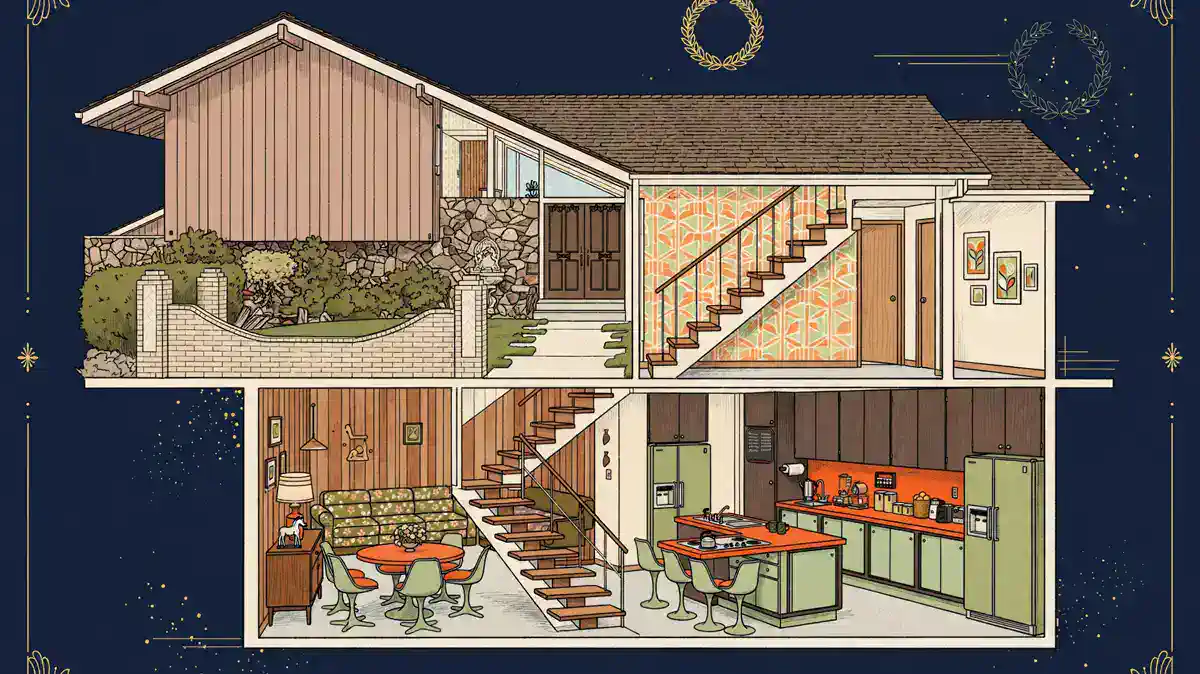
The one property story attached to her name is the house she did not buy. In 2018, the Studio City house whose exterior had appeared in every episode of The Brady Bunch hit the market for the first time since 1973, when the McCallister family had bought it for $61,000. A bidding war broke out. Lance Bass bid $3 million; HGTV, planning A Very Brady Renovation, paid $3.5 million — nearly double the $1.88 million asking price — and closed on August 11, 2018, according to Forbes via PopCulture.com. Reports at the time noted McCormick had expressed interest in the house herself. HGTV spent a further $1.9 million gutting and rebuilding the interior to match the television sets, added 3,000 square feet and a second story, listed it at $5.5 million in May 2023, and sold it for $3.2 million later that year to fan Tina Trahan, per TV Series Finale and the Wall Street Journal.
On cars and collectibles, the record is silent — no documented luxury fleet, no art collection, no yacht. Her asset base, so far as the public record shows, is a normal Southern California life: a home, earnings, and the ongoing commercial value of her career.
Awards and Achievements
The formal awards shelf is thin, which is typical for sitcom actors of her generation and says nothing about cultural impact. She received a TV Land Pop Culture Award in 2007, when the network honored the enduring phenomenon of The Brady Bunch — the kind of award that recognizes what the audience decided, decades after the fact.
The real achievements are the durable ones. She turned the most typecasting-prone role in television history — the perfect eldest daughter — into a 60-year working career spanning network sitcoms, animation, Broadway, country music, soap operas, reality television, and a New York Times bestselling memoir. She survived addiction, depression, and bulimia and wrote about them with a directness that helped destigmatize those struggles for a generation of readers. Her 2008 memoir’s No. 4 New York Times debut remains the single biggest publishing achievement of any Brady Bunch cast member. And in 2016, at 60, she conquered a public fear of dancing on national television — the ringside press at the time noted she had signed on to Dancing with the Stars specifically to face that fear — finishing eighth.
Against her castmates, she sits in the middle of the wealth table: Barry Williams (Greg) is estimated around $6 million, Christopher Knight (Peter) around $5 million, Eve Plumb (Jan) around $3 million, and Susan Olsen (Cindy) lower still. McCormick’s $4–6 million range reflects the most diversified post-Brady career of the group — the only one with a Broadway credit, a bestselling book, and a solo album.
Net Worth Growth Over the Years
No audited year-by-year record of McCormick’s wealth exists, so the honest version of this table is a reconstruction from the career record: what she was earning, what she was spending, and what the trackers have said. The 1970s and 1980s were the lean years — by her own memoir account, addiction consumed both income and opportunity. The 1990s brought stage work, the soap opera, and the 1995 album. The memoir in 2008, the reality-TV run of the 2010s, and the HGTV era from 2019 onward are the visible accumulation phase.
| Year | Estimated net worth | What was happening |
|---|---|---|
| 1974 | Low six figures (estimated) | Brady Bunch ends; teen-idol years, Coogan-protected savings |
| 1985 | Modest (estimated) | Sobriety, marriage to Michael Cummings; career rebuilding |
| 1995 | ~$500K–$1M (estimated) | Broadway’s Grease, Passions era approaching, solo album |
| 2008 | ~$2M (estimated) | Memoir debuts at No. 4 on the NYT list; reality TV begins |
| 2016 | ~$3M–$4M (estimated) | Dancing with the Stars season 23; conventions and appearances |
| 2021 | ~$4M (estimated) | A Very Brady Renovation afterglow; Frozen in Time on HGTV |
| 2026 | $4M – $6M (current range) | 70th birthday; steady appearance and royalty income |
The trackers tell a consistent story even where they disagree on the number. Celebrity Net Worth holds at $4 million, the figure most outlets repeat. Celeb Limelight’s 2026 profile puts her at $4–6 million, noting she is among the most financially successful of the Brady cast. The Most 10’s various pages drift between $4 million and $8 million — the $8 million figure appears on only one low-authority page (PowerNetWorth) and is not corroborated anywhere else, so we treat it as an outlier. Our anchored estimate: $4 million, with a defensible range to $6 million.
Social Media Presence
McCormick maintains the standard modern celebrity footprint, primarily on Instagram and X as @momccormick7, plus an official Facebook page. Her posts mix personal life, Brady Bunch nostalgia, convention announcements, and the occasional HGTV throwback. She is not a mega-influencer — the audience is in the hundreds of thousands, not millions — and there is no evidence of major sponsored-post income. The accounts function as what they are: a direct line to the fan base that buys the convention tickets, which is where the social presence converts to actual dollars.
Personal Life
The personal story is the one readers of the memoir already know, and it is the reason the money story has the shape it does. After The Brady Bunch ended, McCormick spent years in addiction — cocaine and quaaludes — alongside depression and bulimia, a combination she has described in interviews as consuming her twenties and early thirties. In her memoir she recounts binging at the Playboy Mansion and at Sammy Davis Jr.’s house, and losing a Raiders of the Lost Ark audition for Steven Spielberg because she was high. The financial cost of those years is unknowable, but the career cost is documented: a reputation for unreliability that kept her out of the roles her fame might otherwise have brought.
The turn came in 1985 — the year she got sober after interventions and rehab, and the year she married actor Michael Cummings, whom she has credited with getting her through the worst years. Their daughter, Natalie Michelle Cummings, was born on May 19, 1989. The marriage has now lasted more than 40 years, one of the longest in the business. She has spoken about managing her depression with therapy and medication, and on The Doctors in 2017 she said she felt “lucky to be alive” — a line that reads as the thesis of her entire second act.
Family has been complicated in other ways. In 2007 she appeared on Dr. Phil over a bitter dispute with her brother Kevin concerning their father’s care and finances — a reminder that money stress in her life has not only been about her own accounts. She lost her mother, Irene, to cancer, and the grief contributed to a weight gain she later addressed publicly on Celebrity Fit Club, losing 34 pounds and winning her season.
Today, at 70, she lives in Southern California with her family, working steadily but selectively: conventions, the occasional television guest spot — most recently Fox’s Fantasy Island in 2023 — and the HGTV relationship that keeps the Brady brand warm.
Sources & Reporting
- Celebrity Net Worth — the widely cited $4 million estimate and her reported $1,100-per-week Brady Bunch salary.
- Parade — her 70th birthday profile (August 2026); Chatty Cathy commercial detail at age six; DWTS salary structure explainer citing Variety (2026).
- Variety — the $125,000 DWTS sign-on and weekly bonus pay scale (2019 reporting), via Parade and TV Insider.
- TV Insider — DWTS contestant pay breakdown and season caps ($295,000–$360,000 era).
- Wikipedia — biographical spine: birth date and place, career chronology, stage credits, Passions, memoir bestseller debut.
- Broadway World — stage-credit database confirming her 1994 Broadway Grease run as Betty Rizzo (replacement).
- Entertainment Tonight — inside the 2019 Brady house renovation; HGTV’s $3.5 million purchase (May 2019).
- Forbes — the $3.5 million Brady house sale details and the Lance Bass bidding war (2018), via PopCulture.com.
- TV Guide — memoir coverage: addiction, rehab, and recovery account (2008).
- ScreenRant — post-DWTS career summary; A Very Brady Renovation and Frozen in Time details.
- Celeb Limelight — 2026 profile placing her at $4–6 million, among the most financially successful Brady cast members.
Frequently Asked Questions
What is Maureen McCormick’s net worth in 2026?
Maureen McCormick’s net worth is estimated at $4 million in 2026, with a defensible range of $4 million to $6 million. Celebrity Net Worth holds the $4 million figure, while other trackers go as high as $6 million. The estimate reflects six decades of income: her Brady Bunch salary, Broadway and soap-opera work, a New York Times bestselling memoir, reality-television paydays including Dancing with the Stars, music royalties, and steady convention and appearance income.
How old is Maureen McCormick?
Maureen McCormick was born on August 5, 1956, in Encino, Los Angeles, California. She turned 70 in August 2026. She was 13 when she began playing Marcia Brady in 1969.
Is Maureen McCormick still alive?
Yes. As of October 2026, Maureen McCormick is alive at 70 and remains active, making convention appearances, posting on social media, and taking occasional television roles — most recently a 2023 guest spot on Fox’s Fantasy Island.
Who is Maureen McCormick married to?
She has been married to actor Michael Cummings since 1985 — more than 40 years. She has credited him with helping her through her addiction and recovery years. They have one daughter, Natalie Michelle Cummings, born May 19, 1989.
How much did Maureen McCormick make on The Brady Bunch?
Her salary is commonly reported at about $1,100 per week, though no primary source has confirmed the figure. Across five seasons that would imply roughly $150,000–$200,000 in total salary. Her 1960s–70s contracts included no meaningful backend or syndication participation, so the show’s enormous rerun value did not flow to her the way modern sitcom residuals flow to stars.
What happened to Maureen McCormick after The Brady Bunch?
She struggled for years with cocaine and quaalude addiction, depression, and bulimia, which damaged her acting career in the late 1970s and early 1980s. She got sober in 1985, married Michael Cummings, and rebuilt her career through stage work (including Broadway’s Grease in 1994), the soap opera Passions, a 1995 country album, and later reality television. Her 2008 memoir Here’s the Story, which debuted at No. 4 on the New York Times bestseller list, documented the full story.
How much did Maureen McCormick earn on Dancing with the Stars?
The exact figure was never disclosed, but based on the publicly reported DWTS pay scale (a $125,000 sign-on plus weekly bonuses of $10,000–$50,000), her seven-week run in season 23 — eliminated in week seven, finishing eighth — implies earnings of roughly $200,000 for the season. ABC has never confirmed the scale.
What is Maureen McCormick doing now?
She works selectively: fan conventions and autograph appearances, occasional television guest roles (Fantasy Island in 2023), and her ongoing relationship with HGTV, where she co-hosted A Very Brady Renovation (2019) and Frozen in Time (2021). She remains active on Instagram and X as @momccormick7.
Final Thoughts
Maureen McCormick’s $4 million — give or take a couple of million either way — is not the story of a single fortune. It is the story of a child star who got the fame without the fortune, lost the middle of her career to addiction, and then did something harder than getting rich: she kept working. Broadway at 38. A soap opera at 43. A memoir at 52 that told the truth and hit No. 4 on the New York Times list. A dance competition at 60. An HGTV hit at 63.
The honest accounting is that the Brady Bunch money was never the money. The money came later, in six-figure increments, from every medium that would have her — and from the stubborn commercial fact that Marcia Brady never stopped being famous. Six decades in, McCormick is the rare child star whose second act outlasted the first.
Published on October 8, 2026. Last reviewed October 2026. Found an error? See our corrections policy.