
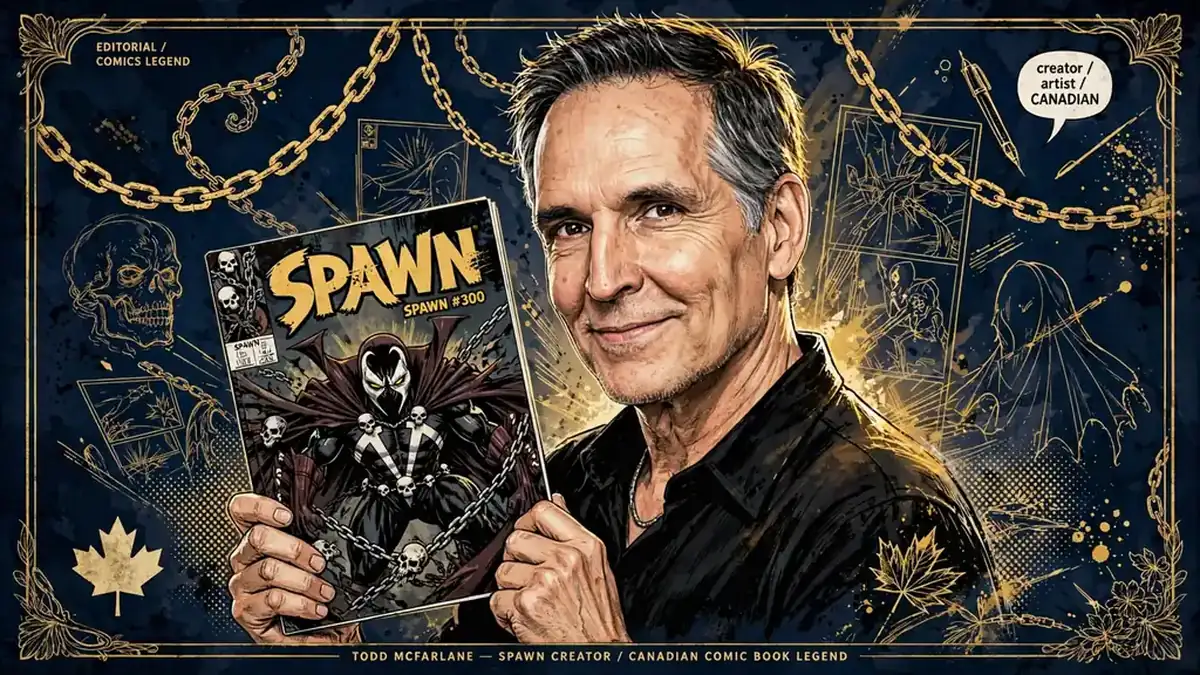
Todd McFarlane‘s net worth is estimated at $300 million to $350 million as of November 2026. The Canadian comic book creator built that fortune the hard way: by walking away from Marvel at the peak of his fame, keeping full ownership of Spawn, and turning a toy company he started in 1994 into the engine that funds everything else. Celebrity Net Worth puts the figure at $300 million, while newer 2026 coverage of his toy and publishing empire lands in the $300 million to $350 million band.
Todd McFarlane: Quick Facts
| Estimated net worth | $300 million (range: $300 million to $350 million) |
|---|---|
| Profession | Comic book creator, artist, writer, entrepreneur |
| Nationality | Canadian |
| Born | March 16, 1961 (age 65) |
| Height | 5 ft 5 in (1.70 m) |
| Primary income sources | Spawn comics and licensing, McFarlane Toys, Image Comics, film and television, original art sales |
| Active years | 1984–present |
| Last reviewed | November 2026 |
- Early Life and Background
- Education
- Career Journey
- Rise to Fame
- Main Sources of Income
- Salary and Earnings
- Businesses and Investments
- Brand Deals and Sponsorships
- Houses, Cars and Other Assets
- Awards and Achievements
- Net Worth Growth Over the Years
- Social Media Presence
- Personal Life
- Sources & Reporting
- Frequently Asked Questions
Early Life and Background
Todd Dean McFarlane was born on March 16, 1961, in Calgary, Alberta, Canada, to Bob and Sherlee McFarlane. His father worked in the printing business, and the family moved constantly during his childhood — by some accounts living in roughly thirty different places between Alberta and California before Todd finished school. The printing connection mattered: a kid who grew up around presses and paper learned early that comics were a physical product, printed and sold, and that whoever controlled the printing plate controlled the money.
Drawing filled the gaps between moves. McFarlane sketched superheroes through his school years in Calgary, and he paired that obsession with a second one: baseball. He was good enough at the sport to dream about it professionally, and the two ambitions — drawing comics and playing ball — ran side by side through his teens. The baseball dream never died entirely; decades later it would resurface in one of the most famous memorabilia purchases in sports history, when he paid $3.05 million for Mark McGwire’s 70th home run ball.
Calgary in the 1970s was a long way from the Marvel offices in New York, and McFarlane had no industry connections. What he had was volume: he drew constantly, studied the artists he admired, and sent work out to publishers who mostly sent it back. The rejection years lasted through his late teens and early twenties, and they shaped the business instinct that later defined him. He learned to treat his art as inventory he owned, not as work-for-hire he surrendered — a distinction that would be worth hundreds of millions.
Education
McFarlane attended Sir Winston Churchill High School in Calgary, then won a baseball scholarship to Eastern Washington University in Cheney, Washington, where he studied graphic art. The scholarship solved two problems at once: it paid for the art education, and it kept the professional baseball dream alive for a few more years. He played outfield for the Eagles while building a portfolio in class, and he has said the discipline of daily practice — in both fields — carried into his working life.
After graduating, he and his wife Wanda lived in a trailer while he chased comic work full time, sending samples to Marvel and DC and taking whatever assignments came back. His first published comics work appeared in the mid-1980s, including work for Coyote Comics, and DC Comics soon gave him pages on titles like Infinity Inc., Detective Comics, and Batman. The DC run included Batman: Year Two, and it put his name in front of editors who mattered. He was not yet a star, but he was in the building, and he was watching how the money moved: the publisher kept the characters, the publisher kept the licensing, and the artist kept a page rate.
Career Journey
Marvel hired McFarlane in the late 1980s, first on The Incredible Hulk and then, in 1988, on The Amazing Spider-Man. The Spider-Man assignment made him famous. His version of the character — wiry, contorted, webbing rendered in dense, almost sculptural detail — looked like nothing else on the stands, and readers noticed. Sales climbed, his covers became collector items, and by 1990 Marvel gave him his own title, Spider-Man #1, written and drawn by McFarlane himself. That first issue sold roughly 2.5 million copies, one of the biggest single-issue sales figures of the era.
His most durable Marvel contribution arrived during the Amazing Spider-Man run. Working with writer David Michelinie, McFarlane helped design and draw Venom, the black-suited symbiote villain who first appeared in full in The Amazing Spider-Man #300 in 1988. Venom became one of Marvel’s most valuable characters, headlining films that grossed hundreds of millions decades later — and McFarlane, as a work-for-hire artist, owned none of it. The character’s success, and the royalty checks that did not follow, sharpened a conviction he already held: the next character he created would belong to him.
At his peak in the early 1990s, Celebrity Net Worth reports, McFarlane was earning more than $1 million a year in salary from Marvel. He was, by every measure, the biggest artist in American comics. And in 1991, he walked away from it. He left Marvel along with six other top artists — Jim Lee, Rob Liefeld, Erik Larsen, Marc Silvestri, Jim Valentino, and Whilce Portacio — to found a company where creators would own their work outright.
Rise to Fame
Image Comics launched in 1992, and McFarlane’s contribution was Spawn, a horror-fantasy series about Al Simmons, a murdered government assassin who returns from Hell as a demonic antihero. The first issue sold about 1.7 million copies, a record for an independent comic book that still stands, and it made McFarlane’s point in the loudest possible way: the same artist who had sold 2.5 million copies of a Marvel comic could sell nearly as many of a comic he owned completely. Every dollar of profit stayed with the creator instead of flowing to a publisher.
Spawn kept going when the speculator boom of the 1990s collapsed around it. The series passed its 300th issue in August 2019, making it the longest-running creator-owned comic book series on record, a mark recognized by Guinness World Records. By 2026 the main series had run past 380 issues, with spinoffs — King Spawn, Gunslinger Spawn, The Scorched — expanding the universe McFarlane controls. In September 2026, Image published Spawn 77, a limited series co-written by McFarlane, as the character approached its 35th anniversary in 2027.
The ownership model is the whole story of his wealth. At Marvel, a hit comic paid a page rate and a salary. At Image, a hit comic paid McFarlane as writer, artist, publisher, licensor, and merchandiser. He has served as Image Comics’ president since its founding, and the company remains the third-largest comic publisher in North America, behind Marvel and DC. Spawn is not a job he had; it is an asset he holds, and it has paid him for more than three decades.
The same ownership logic explains why he has turned down easy money. The long-delayed Spawn film reboot — with Jamie Foxx attached to play Al Simmons and Blumhouse producing — has spent nearly a decade in development because McFarlane, who intends to direct, has refused to sign off on a script that does not match the dark, R-rated film in his head. As he told Den of Geek at San Diego Comic-Con in August 2026, the project is still in the scripting phase, and he is holding out for a screenplay that captures how “vicious and twisted” the character can be. He can afford to wait: nobody else owns the rights, so nobody else can force the film into production.
Main Sources of Income
McFarlane’s fortune comes from five streams, and the balance between them is what separates him from other comic creators. Most artists earn from one stream — page rates or royalties. McFarlane earns from the comic, the toy of the comic character, the film of the comic character, the company that publishes the comic, and the resale market for the original art itself.
| Income stream | What it pays | Scale |
|---|---|---|
| Spawn comics and licensing | Sales, collected editions, and licensing of the Spawn character across media | 1.7 million copies of Spawn #1; 380+ issues and counting |
| McFarlane Toys | Action figures and collectibles under 150+ licenses | Industry estimates put annual revenue at $50 million to $100 million |
| Image Comics | Equity and leadership as co-founder and president of the third-largest North American comic publisher | Private company; value not disclosed |
| Film and television | 1997 Spawn film, HBO animated series, the in-development reboot, and animation projects | 1997 film grossed about $90 million on a $45 million budget |
| Original art and collectibles | Sales of original pages and covers; value of his baseball memorabilia collection | Single Spider-Man pages have sold for more than $650,000 |
The toy business is the largest of the five. McFarlane Toys, founded in 1994, started with Spawn figures and grew into one of North America’s top action-figure manufacturers, with licenses spanning DC Comics, Mortal Kombat, Warhammer, Fortnite, Avatar, and the major sports leagues. Industry estimates cited in 2026 coverage put the company’s annual revenue at $50 million to $100 million, and McFarlane owns the company outright through McFarlane Companies. Revenue is not profit, and no audited figure is public, so the range stays wide — but even the low end of the band makes the toy line the single biggest contributor to his net worth.
Publishing pays twice: once through Spawn itself, and once through his position at Image Comics, where the company’s catalog of creator-owned hits generates publishing income he shares in as a partner. Film and television pay in lumps — the 1997 film, the HBO series, and whatever the reboot eventually earns — while original art pays in spikes, when a page from his Spider-Man run comes to auction and collectors bid it past $650,000.
Salary and Earnings
McFarlane’s earnings history splits cleanly into two eras: the salary era and the ownership era. In the salary era, at Marvel in the late 1980s and early 1990s, he earned more than $1 million a year at his peak, according to Celebrity Net Worth — a large figure for a comic artist at the time, and still a fraction of what the characters he drew were earning for Marvel. Spider-Man #1 sold 2.5 million copies in 1990; the artist’s share of that success arrived as salary and modest royalties, while the character stayed with the company.
The ownership era began in 1992, and its economics are different in kind. Spawn #1 sold 1.7 million copies, and because McFarlane owned the character, the publishing profit, the merchandising, and the licensing all flowed to his own company, Todd McFarlane Productions. There is no public filing that breaks out his annual take from Spawn, and the figure has moved with the comics market — strong in the 1990s boom, thinner in the 2000s slump, steadier since as collected editions, spinoffs, and licensing smoothed the curve. What the record does show is durability: a character that has sold comics continuously for 34 years, with no sign of stopping, is a far better asset than a salary, however large.
The film business added lump sums. McFarlane independently financed and produced the 1997 Spawn film, which cost about $45 million and earned about $90 million worldwide, according to Celebrity Net Worth — a profitable result, though a modest one by superhero standards, and a film McFarlane himself has described as a disappointment creatively. The HBO animated series Todd McFarlane’s Spawn, which ran from 1997 to 1999, earned an Emmy and kept the character visible through the years when the comic’s monthly sales were at their lowest. The reboot, whenever it arrives, is structured to pay him as rights holder, writer, and director — three paydays from one project, all flowing to the same person because he never sold the underlying rights.
Original art is the quietest earner and one of the most lucrative per hour worked. Pages from his Amazing Spider-Man run are among the most sought-after original comic art in the world, and reported sales of single pages have topped $650,000. He does not sell often, and he does not need to — but the auction record sets a floor under the value of the archive he still holds, which includes decades of his own original pages.
Businesses and Investments
McFarlane Toys is the center of the empire. Founded in 1994 under the name Todd Toys, it changed the action-figure business by treating figures as sculptures: more detail, more articulation, more paint, sold to adult collectors rather than children. The Spawn line proved the model, and the company then won licenses that let it apply the same treatment to other people’s characters — DC Comics figures under the DC Multiverse line, Mortal Kombat, Warhammer, Fortnite, Avatar, and officially licensed figures for the NFL, MLB, and NHL. Publisher materials describe the company as holding more than 150 licenses, and 2026 coverage credits it with annual revenue estimated at $50 million to $100 million.
That licensing machine is why his net worth kept growing long after monthly Spawn sales fell from their 1990s peak. A comic sells once; a toy line sells every quarter, in every Walmart and comic shop in the country, under licenses that renew. The company’s 2026 product announcements, including a premium McFarlane Elite Edition line unveiled at San Diego Comic-Con, show the strategy still running: higher prices, more detail, aimed at the adult collector who grew up on Spawn.
Image Comics is the second pillar. As co-founder and president, McFarlane holds equity in the third-largest comic publisher in North America, a company whose catalog includes The Walking Dead, Saga, Invincible, and Spawn itself. Image is private and publishes no financials, so no value can be assigned with confidence — but a stake in a publisher of that scale is a real asset, and it pays in distributions as well as in the platform it gives his own books.
Beyond the two flagships, McFarlane has built a cluster of smaller ventures under the McFarlane Companies umbrella: McFarlane Productions for film and television, McFarlane Publishing, and an art and collectibles arm. He moved into digital collectibles in 2021 with Spawn NFTs, which sold out quickly, and he has kept a hand in video games through Spawn appearances and licensing. The pattern is consistent across three decades: every new medium gets a Spawn product, and every product is owned, not rented. Mark Cuban, whose own fortune was built on owning the platform rather than the content on it, runs the same play in a different industry — and the comparison is instructive, because both men got rich by refusing to sell the thing that made them valuable.
The one costly detour was legal. Neil Gaiman, who wrote Spawn #9 and co-created the character Angela, sued McFarlane in 2002 over royalties and ownership of Angela, Medieval Spawn, and Cogliostro. The case ran for a decade: a jury and later rulings favored Gaiman, and the two settled in 2012 with Gaiman receiving joint 50 percent ownership of the copyrights to Spawn #9 and #26 and the first three Angela issues, under a confidential settlement. Reporting at the time put the payment to Gaiman at more than $1 million, and Gaiman later sold Angela to Marvel. The settlement cost money and a character, but it closed the dispute without touching the core Spawn rights — the asset that matters most.
Brand Deals and Sponsorships
McFarlane’s brand deals are licensing deals, and they run in the opposite direction from a typical celebrity endorsement. He does not get paid to hold someone else’s product; other companies pay him for the right to make products from his characters, and he pays other companies for the right to make figures from theirs. The DC Comics partnership, which began in 1994 and now produces the DC Multiverse line, is the longest-running example: McFarlane Toys pays DC a license fee, then earns its margin on figures of Batman, Superman, and the rest, sculpted to the standard the company set with Spawn.
The sports licenses work the same way. McFarlane Toys has held licenses with the NFL, MLB, and NHL, producing the Sports Picks line of realistic player figures — a business that fit naturally with McFarlane’s own baseball obsession and gave the company shelf space in sporting-goods stores as well as comic shops. Add Mortal Kombat, Warhammer, Fortnite, and Avatar, and the roster runs past 150 licenses, each one a separate revenue line that renews on its own cycle.
Outside toys, his best-known creative commission was the music video for Pearl Jam’s “Do the Evolution” in 1998, an animated short he directed that won the Grammy Award for Best Music Video, Short Form, in 1999. He has directed other music videos and television work, and the awards shelf that publisher biographies describe — two Emmys, a Grammy, and MTV Music Awards — comes mostly from that directing work rather than from comics. It is a reminder that the fortune was built by a man who could draw, direct, produce, and negotiate, and who rarely hired someone else to do a job he could do himself.
Houses, Cars and Other Assets
McFarlane lives with his family in the Ahwatukee Foothills area of Phoenix, Arizona, where he runs his companies from a home studio filled with comic art and collectibles. He has kept his home life private — no public property records anchor a reliable value for the house, and this article does not guess at one — but the studio setup itself is part of the business: Spawn is written, drawn, and managed from the same property where he lives, which keeps overhead low and control close.
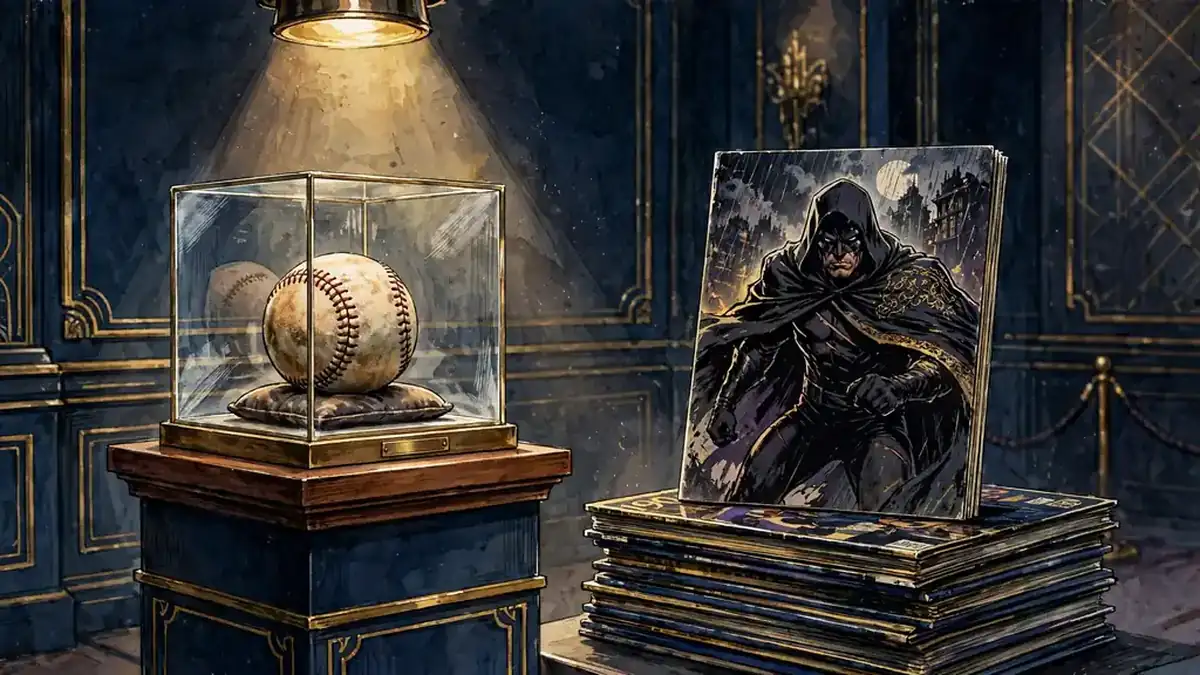
The most famous asset he owns is not a house or a car. It is a baseball. In January 1999, at a Guernsey’s auction at Madison Square Garden, McFarlane paid $2.7 million plus a $305,000 commission — $3.05 million in total — for the ball Mark McGwire hit for his 70th home run of the 1998 season, a record at the time for a single piece of sports memorabilia. The ball had been caught by Phil Ozersky, a 26-year-old research scientist, on the final day of the season. McFarlane described the purchase to the Calgary Herald as “a mixture of business, charity and self indulgence,” and said he planned to lend the ball to charities and the National Baseball Hall of Fame for display.
It was a bad investment and a good story. Barry Bonds broke McGwire’s record with 73 home runs in 2001, and the ball’s value fell hard: by 2020, auction houses estimated it at $250,000 to $400,000, with Goldin Auctions’ Ken Goldin putting it at $250,000 to $300,000. McFarlane bought Bonds’ 73rd home run ball as well, paying $517,500 for it in 2003 — a purchase widely read as an attempt to protect the value of the first ball by controlling the record-breaking one too. In total he bought nine home run balls from the 1998 and 2001 chases, including McGwire’s 67th, 68th, and 69th and Sammy Sosa’s 61st and 66th (the Sosa 66th cost him $175,000). The collection is worth far less than he paid for it, and he has said he is happy with the purchase anyway — a collector’s answer, not an investor’s, and an honest one.
The rest of the asset picture is intellectual property and paper. The Spawn rights — the character, the back catalog of 380-plus issues, the film and television rights, the merchandising — are the single most valuable thing he owns, and they cannot be priced from public data because they have never been sold. His archive of original art, including pages from the Spider-Man run that have sold individually for more than $650,000, is a second store of value. He is not known for a flashy car collection or a property portfolio, and no credible reporting credits him with one; the money went into the companies and the collection, not into a garage.
Awards and Achievements
The awards shelf tells the story of a career that crossed mediums. The HBO animated series Todd McFarlane’s Spawn won a Primetime Emmy Award in 1999 for Outstanding Animated Program, and his directing work on Pearl Jam’s “Do the Evolution” won the Grammy Award for Best Music Video, Short Form, the same year. Publisher biographies credit him and his companies with nearly a hundred national and international awards across comics, toys, and television, including MTV Music Awards for his video work.
The comics achievements are the ones that last. Spawn #1’s 1.7 million copies remain the best-selling independent comic book debut of all time. Spider-Man #1’s 2.5 million copies in 1990 were among the biggest single-issue sales in Marvel history. Spawn #300 in 2019 made the series the longest-running creator-owned comic in history. And Image Comics, the company he co-founded in 1992, is still the third-largest comic publisher in North America more than three decades later — a record of institutional survival that no single issue, however big, can match.
He has also been recognized inside the industry he helped reshape: an Inkpot Award at San Diego Comic-Con, and a place in the conversation — alongside Stephen King, whose books-to-film empire runs on the same own-your-work logic — about creators who kept control of what they made. King built a fortune by keeping his rights; McFarlane built his by refusing to give his away in the first place.
Net Worth Growth Over the Years
Year-by-year figures for a private fortune are reconstructions, not filings. The table below uses the figures public reporting supports, and labels the rest as estimates. The shape of the curve is what matters: a fast rise in the early 1990s, a long plateau while the toy business compounded, and a stable $300 million level through the 2020s.
| Year | Estimated net worth | What drove it |
|---|---|---|
| 1990 | About $1 million | Peak Marvel salary of more than $1 million a year; Spider-Man #1 sells 2.5 million copies |
| 1992 | About $5 million | Image Comics founded; Spawn #1 sells 1.7 million copies as a creator-owned book |
| 1994 | About $15 million | McFarlane Toys founded; Spawn licensing begins |
| 1999 | About $100 million | Toy line scaling, 1997 film and HBO series, $3.05 million baseball purchase signals cash on hand |
| 2005 | About $150 million | Toy licenses expand across DC, sports leagues, and entertainment brands |
| 2012 | About $200 million | Gaiman lawsuit settled; Spawn passes 200 issues; toy revenue compounds |
| 2019 | About $250 million | Spawn #300 sets the creator-owned longevity record; King Spawn universe launches |
| 2021 | $300 million | Celebrity Net Worth publishes its $300 million estimate |
| 2025 | $300 million | Celebrity Net Worth updates the figure at $300 million |
| 2026 | $300 million to $350 million | Newer 2026 coverage of the toy and publishing empire supports the wider band |
Two things stand out in that table. First, the fortune was mostly built by 1999 — the toy company and the Spawn rights did the heavy lifting in a single decade. Second, it has not collapsed since, which is the unusual part. Comic fortunes from the 1990s usually faded with the speculator boom; McFarlane’s survived because the toy business kept paying while the comic’s monthly sales fell, and because he never sold the rights that would have let someone else capture the upside. The $3.05 million baseball is the exception that proves the rule: it is the one big purchase that lost money, and it lost money because it was a collectible, not a business.
The range for 2026 — $300 million to $350 million — reflects a genuine disagreement in the sources. Celebrity Net Worth, the most-cited tracker, holds at $300 million. Several 2026 outlets put the figure at $300 million to $350 million, citing the toy company’s revenue and the Spawn catalog. A few low-quality sites claim $500 million or even $1 billion; those figures trace to no reporting and no filing, and this article does not use them. Where the record is thin, the honest answer is a range, and the range here is $300 million to $350 million.
Social Media Presence
McFarlane runs his social media the way he runs his companies: directly, frequently, and without a middleman. He is active on X (formerly Twitter), Instagram, Facebook, and YouTube, where the McFarlane Toys channels post figure reveals, unboxings, and behind-the-scenes looks at the sculpting process. He uses the accounts to announce new Spawn issues, toy pre-orders, and convention appearances, and he answers fan questions in regular live streams — a habit that dates back years and that he has kept up through 2026, including updates from San Diego Comic-Con on the Spawn reboot and the Spawn 77 series.
The accounts are business tools as much as personal ones. A toy company that sells to adult collectors lives or dies on pre-order announcements, and McFarlane’s personal following is the cheapest distribution channel his companies have. He does not publish follower counts, and this article does not invent them, but the engagement pattern is visible in the coverage: when he posts a new figure or a Spawn update, the comics press picks it up within hours. For a creator whose fortune depends on a character he owns, that direct line to the audience is worth more than any advertising budget.
Personal Life
McFarlane married his high school sweetheart, Wanda Kolomyjec, on July 27, 1985. Wanda, a teacher who later became a faculty associate at Arizona State University, has been with him since before the Marvel years, through the trailer in Spokane, the move to Vancouver and Portland, and the long run in Phoenix. They have three children: daughters Cyan and Kate, and son Jake. The family lives in the Ahwatukee Foothills area of Phoenix, Arizona, where the home studio doubles as the headquarters of his companies.
He has kept his children out of the public eye, and there is little public record of their adult lives — which is by design. What is public is the marriage itself: forty years together, through a career that moved from page rates to a nine-figure fortune, without the tabloid record that usually follows that kind of money. Wanda appears in the credits of his life the way she appears in the biographies: as the constant, not the story.
Baseball remains the hobby that never became a business. He still follows the game, still talks about the 1998 home run chase, and still owns the balls he bought during it — including the McGwire 70th, now worth roughly a tenth of what he paid. He has said the purchase was part business, part charity, part self-indulgence, and that he would do it again. It is the one place in his financial life where sentiment clearly beat arithmetic, and he has never pretended otherwise.
Sources & Reporting
Celebrity Net Worth — the $300 million net worth estimate, the peak 1990s salary of more than $1 million a year, and the 1997 Spawn film figures ($90 million gross on a $45 million budget). Profile published 2021, updated January 30, 2025.
Forbes — context on creator-owned fortunes and the peer figures used in the comparison table, including Tyler Perry’s billionaire status and Mark Cuban’s reported wealth.
ESPN — the 2003 purchase of Barry Bonds’ 73rd home run ball for $517,500, and McFarlane’s ownership of the McGwire and Sosa balls from the 1998 home run chase.
Den of Geek — the August 2026 San Diego Comic-Con interview on the Spawn reboot’s scripting phase, the Spawn 77 limited series, and the McFarlane Elite Edition toy line.
CBR — the January 2012 settlement of the Gaiman v. McFarlane lawsuit, including the 50/50 split of Spawn #9 and #26 and the Angela issues.
Justia — the February 2012 final judgment in Gaiman v. McFarlane (W.D. Wis. No. 02-cv-48), declaring Gaiman a joint 50 percent owner of the copyrights at issue.
Bleacher Report — the 2020 valuation of the McGwire 70th home run ball at $250,000 to $400,000, down from the $3.05 million McFarlane paid in 1999.
TMZ — the auction-house estimates behind the McGwire ball’s current value, as reported through theScore and Bleacher Report in June 2020.
Associated Press — the 2007 reporting on Phil Ozersky, the fan who caught the McGwire 70th ball and sold it to McFarlane for $3 million, via the Honolulu Advertiser.
Screen Rant — the July 2026 report on the completed 90-minute animated Spawn film, with Keith David reprising the role and Mark Hamill voicing Twitch.
Reporting window: January 2021 through November 2026. Figures are reported estimates from the outlets named; McFarlane’s companies are private and publish no audited financials.
Frequently Asked Questions
What is Todd McFarlane’s net worth in 2026?
Todd McFarlane’s net worth is estimated at $300 million to $350 million as of November 2026. Celebrity Net Worth, the most-cited tracker, puts the figure at $300 million, while newer 2026 coverage of his toy and publishing empire supports the wider $300 million to $350 million band. His companies are private, so no audited figure exists.
How did Todd McFarlane make his money?
He made it by owning his work. After leaving Marvel in 1991, he co-founded Image Comics and created Spawn, a character he owns outright — Spawn #1 sold 1.7 million copies. He then founded McFarlane Toys in 1994, which grew into a company with more than 150 licenses and estimated annual revenue of $50 million to $100 million. Comics, toys, film and television, and original art sales make up the rest.
Did Todd McFarlane really pay $3 million for a baseball?
Yes. In January 1999 he paid $3.05 million — a $2.7 million winning bid plus a $305,000 commission — for the ball Mark McGwire hit for his 70th home run of the 1998 season. It was a record price for sports memorabilia at the time. The ball is now estimated to be worth $250,000 to $400,000, because Barry Bonds broke McGwire’s record in 2001. McFarlane also bought Bonds’ 73rd home run ball for $517,500 in 2003.
How much is McFarlane Toys worth?
McFarlane Toys is a private company, so no valuation is public. Industry estimates cited in 2026 coverage put its annual revenue at $50 million to $100 million, and the company holds more than 150 licenses, including DC Comics, Mortal Kombat, Warhammer, Fortnite, and the NFL, MLB, and NHL. McFarlane owns the company outright, which makes it the largest single contributor to his net worth.
How much did Spawn #1 sell?
Spawn #1 sold about 1.7 million copies when it was published in 1992, a record for an independent comic book that still stands. The series passed its 300th issue in August 2019, making it the longest-running creator-owned comic book series on record, and by 2026 it had run past 380 issues.
Is the Spawn movie with Jamie Foxx still happening?
Yes, but it is still in development. Jamie Foxx has been attached to play Al Simmons since 2018, with Blumhouse producing and McFarlane intending to direct. As of August 2026, McFarlane told Den of Geek the project was still in the scripting phase because he has refused to sign off on a script that does not match his dark, R-rated vision. There is no release date. A separate 90-minute animated Spawn film, with Keith David reprising the voice role, has been drawn and is waiting on final production.
Who is Todd McFarlane’s wife?
Todd McFarlane has been married to Wanda Kolomyjec since July 27, 1985. She is a teacher and a faculty associate at Arizona State University. The couple has three children — daughters Cyan and Kate, and son Jake — and lives in the Ahwatukee Foothills area of Phoenix, Arizona.
How old is Todd McFarlane?
Todd McFarlane was born on March 16, 1961, in Calgary, Alberta, Canada, which makes him 65 years old as of November 2026. He has been working in comics since the mid-1980s, co-founded Image Comics in 1992, and remains the company’s president.
Final Thoughts
Todd McFarlane’s fortune is the best argument in comics for owning what you make. He was already rich by the standards of his profession when he left Marvel — earning more than $1 million a year at his peak — and he gave that up for a comic he owned completely. Spawn #1 sold 1.7 million copies, the toy company he built from it now brings in an estimated $50 million to $100 million a year, and the character has paid him for 34 straight years. The $300 million to $350 million estimate holds up because the assets behind it are real: a publishing company, a toy company, and a character with 380 issues of back catalog.
The baseball is the footnote that proves the rule. It is the one famous purchase that lost money, dropping from $3.05 million to roughly $250,000 to $400,000, and McFarlane has never pretended otherwise. Everything else in his financial life — the rights he kept, the company he built, the film he refuses to rush — follows the same discipline: own it, control it, and wait. The Spawn reboot will arrive when the script is right, not when a studio schedule says so, because no studio can force it. That is what $300 million buys when it is built on ownership rather than salary: the freedom to say no.
Published on 2026-11-16. Last reviewed November 2026. Found an error? See our corrections policy.