
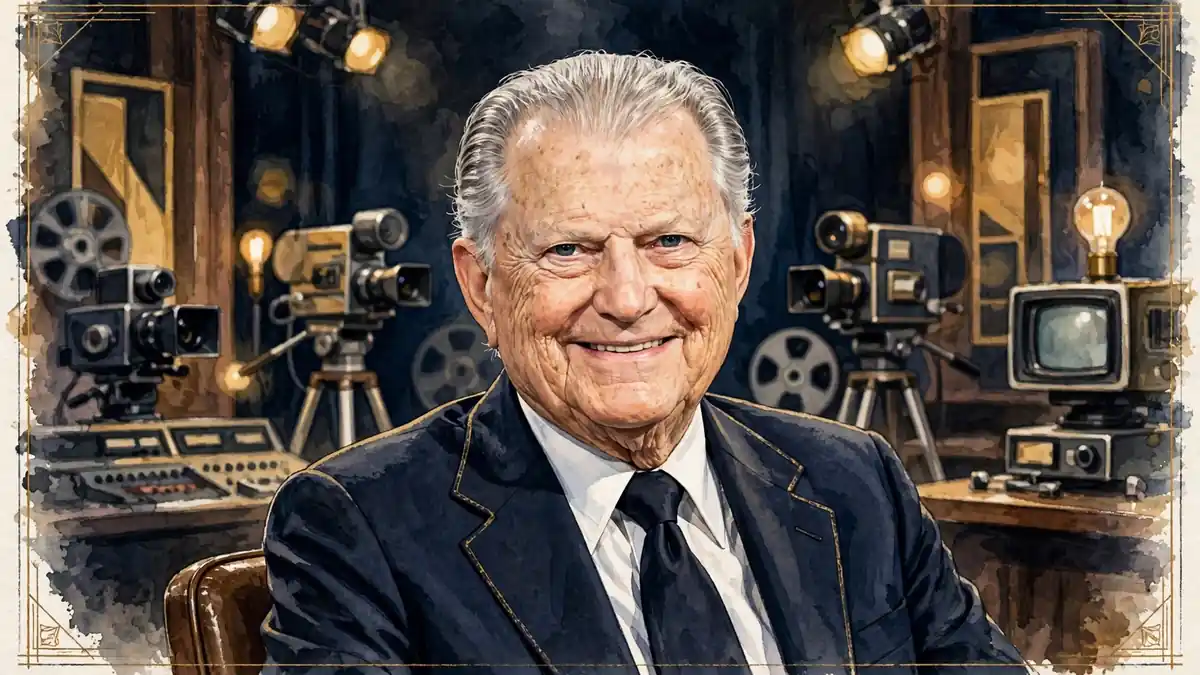
Burt Sugarman‘s net worth is estimated at $100 million as of November 2026. The figure is a combined estimate shared with his wife, longtime Entertainment Tonight host Mary Hart, according to Celebrity Net Worth, which updated its profile of the producer in October 2026. Sugarman built the fortune in two distinct acts: first as the television producer who created The Midnight Special, the late-night music series that ran on NBC from 1972 to 1981, and then as the chairman of Giant Group Ltd., a holding company that bought into cement, steel, game-show production and a newspaper group — including a failed $1.8 billion bid for Media General in 1988. A Beverly Hills estate sale worth $27 million in 2013 and a string of profitable condominium sales in Los Angeles show how much of the wealth now sits in real estate.
Burt Sugarman: Quick Facts
| Estimated net worth | $100 million (shared with wife Mary Hart) (range: $100 million, combined household estimate) |
|---|---|
| Profession | Television and film producer, businessman |
| Nationality | American |
| Born | January 4, 1939 (age 87) |
| Height | 5 ft 9 in (1.75 m), as listed by biographical profiles |
| Primary income sources | Television production and syndication, film producing, corporate investments, real estate |
| Active years | 1969–present |
| Last reviewed | November 2026 |
- Early Life and Background
- Education
- Career Journey
- Rise to Fame
- Main Sources of Income
- Salary and Earnings
- Businesses and Investments
- Brand Deals and Sponsorships
- Houses, Cars and Other Assets
- Awards and Achievements
- Net Worth Growth Over the Years
- Social Media Presence
- Personal Life
- Sources & Reporting
- Frequently Asked Questions
- Final Thoughts
Early Life and Background
Burton Roy Sugarman was born on January 4, 1939, in Los Angeles, California. His father owned a pharmacy in Beverly Hills, which put the young Sugarman close to the entertainment world without placing him inside it. As a teenager he developed a passion for automobiles and racing, winning a California drag-racing championship and spending weekends riding dirt bikes through the desert, according to Celebrity Net Worth’s biographical reporting.
The car obsession turned into his first business. After finishing his studies, Sugarman began selling used cars and set up a separate business to finance his customers’ purchases — an early sign of the deal-making instinct that would later define his corporate career. At 24, he spotted a photograph of an Italian Ghia automobile in a magazine and travelled to Turin, Italy, to buy one. The trip led to him becoming Ghia’s North American distributor, and he went on to acquire distributorships for Maserati and Excalibur, supplying exotic cars to wealthy buyers and Hollywood celebrities.
By age 28, Sugarman had made enough money from the car business to consider retirement. He sold his automobile distributorships and took up golf. The leisure lasted about five months. In a 1973 interview with the Los Angeles Times, he said boredom drove him to look for a new field, and a partnership with an agent at MCA opened the door to television production. The pivot is the hinge of his whole financial story: the car trade gave him seed capital and a taste for spotting undervalued assets, and television gave him a product — hit shows — that could pay for decades.
One detail from his early years keeps resurfacing in profiles: Sugarman liked to control costs and to own what he made. That habit showed up first in the car business, where he financed his own customers instead of handing the margin to a bank, and it showed up again when he kept ownership of The Midnight Special rather than selling the show outright to a network.
Education
Sugarman attended the University of Southern California, where he completed a four-year bachelor’s degree in finance in just three years. The compressed degree matters more than it first appears. A finance education, finished early, gave him the vocabulary of balance sheets and acquisitions that most television producers of his generation never had — and it helps explain why his second career, running a publicly traded holding company, looked so different from the career of a typical show producer.
No record in the major biographical profiles lists postgraduate study, and Sugarman has never presented himself as holding an advanced degree. His education, in the record as it stands, is a USC finance degree plus a self-taught education in deal-making that began on a used-car lot and continued through cement plants, steel mills and game-show companies.
Career Journey
Sugarman’s first major production credit was the 1969 television special Dionne Warwick: Souled Out. He followed it with The Switched-On Symphony in 1970, which earned him a Primetime Emmy nomination for Outstanding Variety or Musical Program – Classical Music, shared with Pierre Cossette and Jack Good. His early credits also included the Changing Scene specials, Stand Up and Cheer, The Mancini Generation, the 1972 Grammy Awards telecast and The Jud Strunk Show. Those jobs built the network relationships — with performers, sponsors and NBC executives — that made his next move possible.
While The Midnight Special was running, Sugarman expanded into game shows. He produced The Wizard of Odds in 1973 and co-produced Celebrity Sweepstakes from 1974, then produced Whew! from 1979 to 1980 and worked on a revival of The Newlywed Game in 1988. His other television credits included The Richard Pryor Special? and The Richard Pryor Show in 1977, the Billboard No. 1 Music Awards, and, in 1990, Mary Hart Presents Love in the Public Eye, made with his wife.
Film came next. After producing The Manipulator in 1971, Sugarman returned to features with the 1982 romantic comedy Kiss Me Goodbye, starring Sally Field, James Caan and Jeff Bridges. His biggest film year was 1986, when three productions associated with him reached theatres: Extremities, Children of a Lesser God and Crimes of the Heart, the last as executive producer. His most recent producing credit in the public record is the 2019 short film Holy Jail, directed by Maria Lavelle, according to ComingSoon.
The career splits cleanly into three phases, and each one fed the fortune differently. The 1970s television phase created a library he still owns. The 1980s film phase produced one genuine box-office hit and an Oscar nomination. The corporate phase, running in parallel through the 1980s and 1990s, produced the largest single transactions of his life — some profitable, one expensive failure — and turned a producer into an industrialist.
Rise to Fame
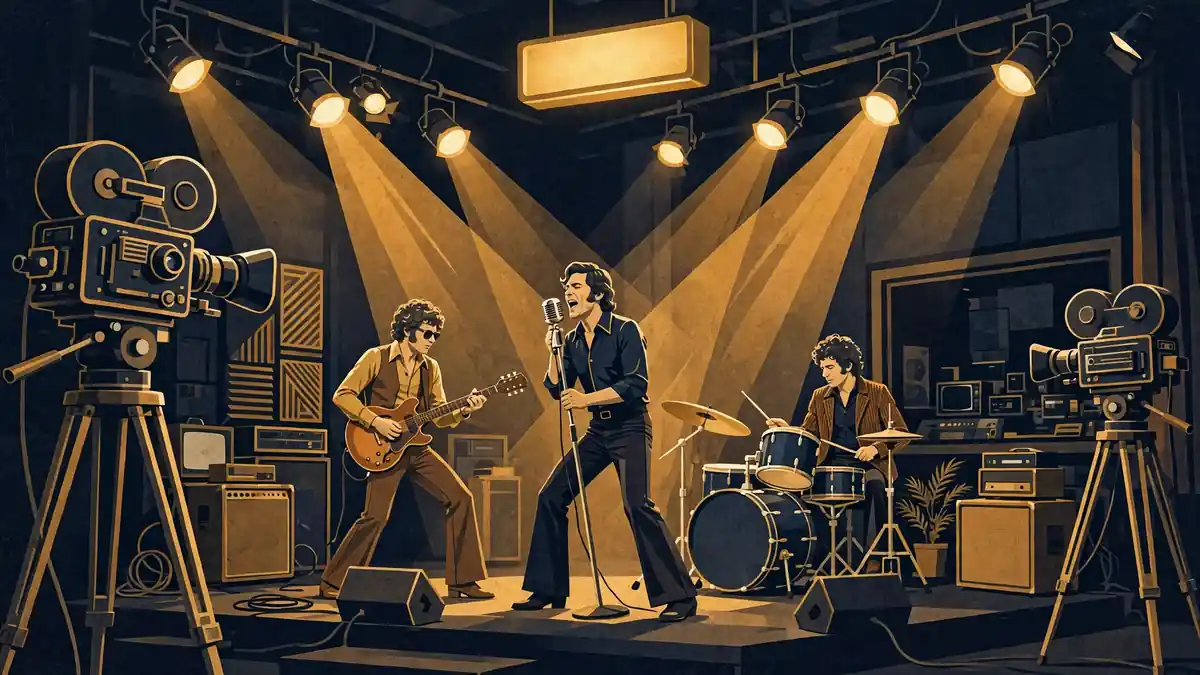
The defining move came in 1972. Sugarman approached NBC with an idea that sounded risky at the time: a late-night series built around contemporary rock, pop, soul and country performers playing their own music, live, in front of a television audience. Most American networks offered little after midnight, and music shows of the era usually made performers lip-sync or sing to arrangements written by television orchestras. Sugarman believed younger viewers would stay up after Johnny Carson’s Tonight Show to watch real concert performances.
NBC said no. Sugarman answered by offering to pay for the production himself and buy the airtime from the network. He personally recruited advertisers, including Chevrolet, whose support followed a pitch to General Motors executive John DeLorean. He also promoted the pilot as a voter-registration drive, urging newly eligible 18-year-olds to take part in the 1972 presidential election. His friend, concert promoter Jerry Weintraub, suggested John Denver as host.
The 90-minute pilot aired on August 19, 1972, with Linda Ronstadt, the Everly Brothers, War, the Isley Brothers and Cass Elliot, and it drew an audience of 6 million viewers. NBC ordered a weekly series, which began its regular run on February 2, 1973, in the Friday 1 a.m. slot. The Midnight Special ran until May 1981 and produced more than 400 episodes.
The guest list reads like a hall of fame for 1970s popular music: Elton John, David Bowie, Tina Turner, Fleetwood Mac, Led Zeppelin, Aretha Franklin, Johnny Cash, Dolly Parton, KISS, the Bee Gees, Donna Summer and Electric Light Orchestra, with comedians Steve Martin, George Carlin and Richard Pryor also appearing. Wolfman Jack became a familiar on-air voice, and FM radio stations began simulcasting the show so audiences could hear it in stereo. The format — live performance, no lip-syncing — is the part of Sugarman’s legacy that other producers copied for decades.
His fame never matched his influence. Sugarman worked behind the camera, and his name was known mainly inside the industry. The public knew the show, the music and, later, his wife. That low profile suited a man whose money came as much from boardrooms as from studios, and it is one reason the $100 million estimate still surprises people who only know him as “Mary Hart’s husband.”
Main Sources of Income
Sugarman’s income has come from four streams, and their balance shifted over time. Television production paid first, through fees and ownership. Film producing paid second, through a small number of pictures with one large hit. Corporate investing paid third, through dividends, asset sales and capital gains at Giant Group. Real estate paid fourth, through a long series of buys and sales in Los Angeles and Montana that accelerated after 2013.
The most durable stream is the Midnight Special library. Sugarman kept ownership of the show and its archive instead of selling the rights outright, a decision that separated him from most producers of his era. He invested in transferring the original videotapes to newer formats as technology changed, and the recordings were eventually digitised, preserving hundreds of performances that might otherwise have decayed. Over the years he licensed the material for cable television, home-video releases and DVD collections. The library was valuable enough that Microsoft co-founder Paul Allen made a substantial offer to buy it, and Sugarman turned him down. In 2023 he launched an official Midnight Special YouTube channel, putting restored performances online and opening another distribution channel more than four decades after the show ended.
Game shows formed a second television stream. Celebrity Sweepstakes, The Wizard of Odds, Whew! and the 1988 Newlywed Game revival all carried his name as producer or executive producer, and game shows of that era earned producers fees per episode plus a share of syndication when the format sold on. The film stream was thinner but sharper: three 1986 pictures, one of which grossed more than $100 million worldwide on a $10.5 million budget.
The corporate stream is the hardest to measure and the easiest to misread. Giant Group’s reported profits and asset sales were company-level figures. Sugarman owned a large stake and chaired the company, but the $53.4 million TRE sale or the $96 million newsprint sale belonged to Giant’s shareholders as a group. His personal gain came through his shareholding, his salary as chairman and the value of his stake — none of which was ever disclosed in a public filing summary. This article treats every Giant Group number as corporate, not personal, and says so each time one appears.
Real estate is the stream with the cleanest paper trail. The couple’s Los Angeles and Montana transactions are recorded in county records and reported by the Los Angeles Times and Celebrity Net Worth, with buy and sell prices attached. The Beverly Hills sale alone — $27 million in July 2013 — returned more than the entire stale $25 million net-worth figure that some older pages still carry, which is one reason that figure can be set aside.
Salary and Earnings
No public source discloses Burt Sugarman’s salary, and Celebrity Net Worth states plainly that his salary from his screen career has not been disclosed. That gap is normal for a producer-owner: his pay came through production fees, ownership stakes and profit participation rather than a published weekly wage, and the corporate side of his career paid through shareholdings that were never broken out in public summaries.
What can be stated with figures attached is the scale of the deals around him. The Midnight Special pilot drew 6 million viewers in 1972 and ran for more than 400 episodes. Children of a Lesser God grossed $101.5 million worldwide against a $10.5 million budget, according to Wikipedia’s film page, with $31.85 million of that total earned in North America, according to Box Office Mojo. Giant Group’s cement operations generated more than $80 million in annual revenue by 1986, and the holding company earned $21.4 million that year, helped by investment gains and tax benefits. Those are company revenues and profits, not Sugarman’s pay, but they show the size of the machine he ran.
His wife’s earnings are better documented and feed the same household total. Mary Hart co-hosted Entertainment Tonight from 1982 until 2011, a 29-year run that set a Guinness world record for the longest-serving entertainment news host. Celebrity Net Worth gives her the same $100 million figure, explicitly shared with Sugarman, and notes endorsement income alongside her hosting pay. The honest way to read the headline number is as a household estimate: two long, well-paid entertainment careers, plus decades of investing, pooled into one figure that no single salary line can explain.
One comparison puts the number in proportion. Television producers who only ever collected fees — even on hit shows — rarely reach nine-figure wealth. Sugarman reached it because he owned the library, owned the production company, and then took the same ownership instinct into cement, steel and game-show companies. The salary was never the story; the equity was.
Businesses and Investments
The Giant Group years are the most revealing part of Sugarman’s financial life, and the least covered by the net-worth pages that repeat the $100 million figure without explaining it. The story starts in 1982, when Sugarman spent $3 million to acquire 28% of the voting shares of Giant Portland & Masonry Cement, a struggling South Carolina manufacturer that had lost money for five consecutive years. Industry executives wondered why a Hollywood producer would buy into a nearly bankrupt cement company during a severe construction downturn.
Sugarman became chairman, reorganised the business, recruited experienced managers, cut costs and changed production methods. He expanded into Pennsylvania through the acquisition of Keystone Cement in 1985. Under his leadership the business grew into Giant Group Ltd., a publicly traded holding company with interests far beyond cement. By late 1986, Giant controlled two cement manufacturers with combined assets of $150 million. Its investment subsidiary, KCC Delaware, held $90 million in cash and another $81 million in securities. The cement operations were generating more than $80 million in annual revenue by 1986, and the holding company earned $21.4 million that year.
Giant’s money went into a string of industrial bets: Wheeling-Pittsburgh Steel, building-products maker Ply-Gem Industries, and aerospace-related manufacturer TRE Corporation. The TRE investment produced one of his cleanest wins. TRE resisted Giant’s attempt to gain influence over its board, and when aluminium maker Alcoa agreed to acquire TRE in 1986, Giant sold its 17.2% stake for $53.4 million. The deal contributed heavily to Giant’s investment profits that year.
Sugarman had already been buying into entertainment companies. In 1979 he owned shares in Old Tucson Corporation, which owned the Old Tucson and Old Vegas amusement parks in Arizona and Nevada. The bigger entertainment play came in 1986, when Giant Group agreed to pay $26 million for 23% of Barris Industries, the game-show company founded by Chuck Barris. The purchase made Giant the largest shareholder, and Sugarman replaced Barris as chairman. In 1987, Barris merged with Guber-Peters, the film production company run by Peter Guber and Jon Peters. The pattern will look familiar to anyone who follows media investors: Mark Cuban’s move from software into sports and media followed the same instinct of using one fortune to buy into the next industry, though Cuban’s deals ran far larger.
Then came the bid that defined Sugarman’s reputation as a corporate raider. In 1987, companies he controlled acquired a substantial stake in Media General, the Virginia-based newspaper and broadcasting conglomerate. In March 1988 he proposed a $1.8 billion merger involving Media General, Giant Group and Barris Industries, offering a 40% premium over Media General’s share price. The Bryan family, which controlled Media General through a separate class of voting stock, rejected the offer. A long fight followed — lawsuits, proposed board changes and disputes over shareholder rights — and Sugarman eventually walked away. In December 1988 his companies agreed to exchange their Media General shares for $44 million in cash and a California paper mill, a package valued at $100 million. The catch: the companies had paid more than $100 million to build the position, so the investment ended up less successful than his earlier deals.
The exits continued into 1989. In March that year, Giant sold its 24.4% stake in Barris Industries for $34.5 million to an Australian investment group, Westfield Group and Northern Star Holdings, owners of Network Ten. Sugarman stepped down as chairman, and the company was renamed Guber-Peters Entertainment. Later that year Sony agreed to acquire Guber-Peters for $200 million. Sugarman had already sold, so the Sony money went to others — a timing detail that matters when weighing his deal record.
Giant kept evolving through the 1990s. It sold its California newsprint and recycling businesses for $96 million in 1990, booking a company-level gain of $14.9 million. Later investments included Rally’s, the fast-food chain, where some businesses struggled. In 1991 Sugarman agreed to pay $620,000 to settle Securities and Exchange Commission allegations about the disclosure of his partnership’s intentions to acquire control of Rally’s. He settled without admitting or denying wrongdoing. In 1996, Fidelity National Financial chairman William P. Foley II tried to acquire Giant Group, opening with a $49 million proposal. Giant rejected the offer, Sugarman resisted the takeover, and the dispute ended when Giant agreed to repurchase Fidelity’s large shareholding.
The honest scorecard: a cement turnaround that worked, a TRE exit that paid $53.4 million, a Barris stake sold for $34.5 million, and a Media General campaign that cost more than it returned. It is a deal-maker’s record — strong on buying cheap assets, mixed on the biggest swing — and it explains why the $100 million estimate is plausible without needing to invent a salary.
Brand Deals and Sponsorships
Sugarman was never a celebrity endorser, and there is no record of him fronting a consumer brand campaign. His version of a brand deal was the advertiser relationship. When NBC rejected The Midnight Special, he recruited the sponsors himself, and Chevrolet’s backing — won through a pitch to General Motors executive John DeLorean — was the deal that got the pilot on air. That is a sponsorship in the old television sense: a brand paying to be attached to a show, negotiated by the producer in person.
The same pattern ran through his career. The game shows and specials he produced were built around sponsor relationships, and the Midnight Special archive later earned licensing fees from cable channels, home-video distributors and DVD publishers. In 2023, the official YouTube channel added a platform-era revenue line to a 50-year-old library. None of these deals carried a published fee, so this section reports the structure, not invented numbers.
Mary Hart’s endorsement income is the closer brand story in the household. Celebrity Net Worth notes that her career included substantial endorsement earnings alongside her Entertainment Tonight salary, and she famously insured her legs for $1 million each with Lloyd’s of London — a publicity-era detail that underlines how marketable her image was at its peak. Those earnings sit inside the shared $100 million total.

Houses, Cars and Other Assets
Sugarman and Hart have assembled one of the more thoroughly documented real-estate portfolios among Hollywood couples, with holdings across Los Angeles, the Coachella Valley and Montana. The transactions carry exact prices, and several of them show a clear buy-low, sell-high pattern.
The largest single deal was the Beverly Hills estate in Trousdale Estates: an 11,536-square-foot house that the couple sold in July 2013 for $27 million. The sale is the anchor fact of the property story, and it alone exceeds the stale $25 million net-worth figure that some older pages still attach to Sugarman.
After the Beverly Hills sale, the couple became major buyers in the luxury condominium market, above all at Sierra Towers in West Hollywood. In early 2015 they paid $8 million for a 3,321-square-foot condominium there, setting a building price record at the time. In March 2016 they bought another unit from Evan Metropoulos, son of billionaire investor C. Dean Metropoulos, for $4.65 million. By 2018 they owned four units on the same floor of Sierra Towers, including three connected apartments combined into a residence of about 5,000 square feet. That year they listed a separate 1,200-square-foot unit for $5.5 million; they had bought that apartment for $2 million in 2016.
The Ritz-Carlton Residences at L.A. Live in Downtown Los Angeles produced two more profitable turns. The couple bought a 4,170-square-foot condominium there in 2013 for $3.8 million and sold it in January 2019 for $6.3 million. A separate penthouse of more than 4,000 square feet sold in March 2016 for $6.7 million. A smaller 2,220-square-foot unit in the same building was listed at $2.6 million in 2015, according to the Los Angeles Times.
Montana is the other half of the portfolio. The couple’s most ambitious property there was Elk Horn Ranch, a 160-acre compound near Big Sky with a 7,000-square-foot main residence, a guest apartment, a log cabin and a barn, with views of Lone Peak and access to the private Yellowstone Club’s skiing and golf. They listed it for $26.5 million in 2013, cut the price to $21 million in 2015 and then to $19.5 million. Public reporting has not established a completed sale at those prices, so the ranch counts as an asking-price story, not a realised gain. In 2014 they listed a separate Yellowstone Club home for $7.9 million — a roughly 7,850-square-foot house on more than two acres with a home theatre, a game room and a pond — and public reporting did not establish a final sale price for that one either. They previously owned a lakefront compound in Whitefish, Montana, marketed for $5.9 million before selling in late 2014, with the final price not publicly disclosed.
The couple have also owned a residence at the Madison Club in La Quinta, California, one of the Coachella Valley’s most exclusive private golf communities. Biographical profiles put the value of their disclosed real-estate holdings at around $50 million in total, though that figure moves with every sale and should be read as a snapshot, not a fixed sum.
Cars remain a personal passion rather than a documented collection. Sugarman’s teenage drag-racing championship, his Ghia, Maserati and Excalibur distributorships, and his regular appearances with Hart in seats behind home plate at Los Angeles Dodgers games all point to the same taste: machines and live sport, enjoyed in person rather than collected for display. No public inventory of his current cars exists, and this article does not invent one. One persistent error deserves correction here: some low-quality pages describe Sugarman as an owner of the Los Angeles Dodgers. He is not, and never has been. The Dodgers were sold to the Guggenheim group in 2012; Sugarman and Hart are simply famous, long-time fans with prominent seats behind home plate.
Awards and Achievements
Sugarman’s awards shelf is short, and that is part of the story: his influence ran through ownership and format, not through prize ceremonies. The formal record has two entries. In 1970 he received a Primetime Emmy nomination for Outstanding Variety or Musical Program – Classical Music for The Switched-On Symphony, shared with Pierre Cossette and Jack Good. In 1987, Children of a Lesser God was nominated for Best Picture at the Academy Awards, with Sugarman sharing the nomination with fellow producer Patrick J. Palmer. The film took five Oscar nominations in total — Best Picture, Best Actor for William Hurt, Best Supporting Actress for Piper Laurie, Best Adapted Screenplay, and Best Actress for Marlee Matlin, who won at 21, the youngest winner in the category.
The achievements that matter more to the fortune are not trophies. He created a music-television format that outlived its era: live performance on late-night television, a model that later shows borrowed without always crediting. He kept and preserved the archive when the industry standard was to wipe tapes. He bought the film rights to three stage plays — Extremities, Children of a Lesser God and Crimes of the Heart — before any of them had their later theatrical acclaim, and all three reached screens in the same year, 1986. And he turned a $3 million stake in a failing cement company into a holding company with $150 million in combined cement assets within four years. Television producers who build holding companies are rare; Sugarman did it while still producing hit shows.
Net Worth Growth Over the Years
Year-by-year net-worth figures for Sugarman do not exist in public reporting, and this article does not invent them. What exists is a chain of dated, documented milestones that shows how the fortune was assembled. The table below uses those milestones, with an estimate only where a current source publishes one.
| Year | Milestone | Financial note |
|---|---|---|
| 1967 | Car distributorships sold; brief retirement at 28 | Seed capital from Ghia, Maserati and Excalibur distributorships; amount not disclosed |
| 1969–1970 | First production credits; Emmy nomination for The Switched-On Symphony | Production fees; no published estimate |
| 1972–1981 | The Midnight Special runs on NBC; 400+ episodes | Ownership of the show and its archive retained — the long-term asset |
| 1982 | $3 million buys 28% of Giant Portland & Masonry Cement | Start of the Giant Group holding company |
| 1986 | Three films released; TRE stake sold for $53.4 million (company-level) | Giant earned $21.4 million that year; cement assets $150 million |
| 1988 | $1.8 billion Media General merger proposed, then abandoned | Settlement valued at $100 million after costs above $100 million |
| 1989 | Barris stake sold for $34.5 million; Sony buys Guber-Peters for $200 million | Sugarman had already exited before the Sony deal |
| 2013 | Beverly Hills estate sold for $27 million | Largest documented personal property sale |
| 2015–2019 | Sierra Towers and Ritz-Carlton condominium sales | Includes $6.7 million and $6.3 million Ritz-Carlton sales |
| 2026 | Current estimate | $100 million, shared with Mary Hart (Celebrity Net Worth, updated October 2026) |
Two things stand out in that chain. First, the fortune was built in lumps — a show library, a cement turnaround, a handful of property sales — rather than through a steady salary. Second, the oldest figure still in circulation, $25 million, belongs to pages last updated years ago and conflicts with the documented sales alone: a man who sold one house for $27 million in 2013 does not plausibly hold a $25 million total in 2026. Readers who see the lower figure should check the date on the page carrying it.
Social Media Presence
Burt Sugarman has no verified personal social-media account in the public record, and he keeps the low profile that has marked his whole career. He does not post about his wealth, his deals or his family, and the major net-worth profiles all note the absence rather than filling it with speculation.
The one living digital presence attached to his name is the official Midnight Special YouTube channel, launched in 2023, which publishes restored performances from the archive. It serves as both a cultural record and a revenue channel: clips of Bowie, Elton John, Tina Turner and Fleetwood Mac reach viewers who were not born when the show aired, and each stream adds a small return to a library Sugarman has owned for more than 50 years. His wife Mary Hart is similarly absent from the daily social-media churn, and the couple’s public appearances in recent years have mostly been at Dodgers games, where television cameras find them in their familiar seats behind home plate.
Personal Life
Sugarman has been married three times. His first marriage was to Pauline Schur, whom he wed on October 17, 1957; the couple divorced in 1961 and had one child together. In 1962 he became engaged to actress Ann-Margret, though the couple never married; biographical profiles also record an engagement to actress Myrna Hansen. He later married actress Carol Wayne on December 28, 1975, and that marriage ended in divorce in 1980. Wayne, best known for her appearances on The Tonight Show, died in 1985.
He married television personality Mary Hart on April 8, 1989, in a private ceremony aboard a yacht. Hart, born November 8, 1950, is 11 years his junior. Their son, Alec Jay Sugarman, known as AJ, was born on December 24, 1991. AJ has been reported to have served as a special assistant for legislative affairs in the Trump White House. The couple have two children between them, counting Sugarman’s child from his first marriage, according to Wikipedia’s biographical entry.
Hart’s own career is inseparable from the household figure. She co-hosted Entertainment Tonight from 1982 to 2011, and her long run made her one of the most recognisable television hosts in America. The couple’s shared public life has been notably steady: married since 1989, based in Los Angeles and Montana, and regulars at Dodger Stadium. Ryan Seacrest’s long run as a television host and producer offers the closest modern parallel to the Hart-Sugarman household model — a hosting career paired with production ownership — while Howard Stern’s radio fortune shows how a single long-running broadcast career can anchor a nine-figure total on its own.
Sugarman turned 87 on January 4, 2026, and he is alive and living in Los Angeles and Montana, according to current biographical reporting. The “is he still alive” question appears in search results because his peak fame sits 40 years in the past; the answer, as of November 2026, is yes.
Sources & Reporting
Celebrity Net Worth — the $100 million combined estimate shared with Mary Hart; the full biography including the USC degree, car distributorships, the Midnight Special pilot and 6 million viewers, the Giant Group figures ($3 million cement stake, $150 million combined assets, $53.4 million TRE sale, $1.8 billion Media General bid, $34.5 million Barris sale, $620,000 SEC settlement), the Emmy nomination and the complete real-estate record. Profile updated October 15, 2026; reporting window November 2026.
ComingSoon — the $100 million estimate for 2025 and the 2019 short film Holy Jail as Sugarman’s most recent producing credit. Published April 3, 2025.
Wikipedia — birth date and place, occupations, marriages and children, the full producer filmography, Old Tucson Corporation shares, the Barris Industries sale to Sony in 1989, and the Children of a Lesser God box-office total of $101.5 million on a $10.5 million budget with five Academy Award nominations. Pages reviewed November 2026.
Box Office Mojo — the $31,853,080 North American gross for Children of a Lesser God and its opening weekend of $1,909,084.
Los Angeles Times — the 1973 interview in which Sugarman described his five-month retirement, and the 2015 Sierra Towers purchase reporting ($8 million, building record) and Ritz-Carlton listing. Reporting window 1973 and 2015, as cited in secondary profiles.
The Global Stardom — the $100 million combined estimate, the 1989 yacht wedding date, and the Sierra Towers purchase prices. Updated September 22, 2026.
Where sources disagreed, this article followed the newer, better-documented figure and said so: the $25 million estimate on older net-worth pages is treated as stale, and Giant Group’s corporate proceeds are kept separate from Sugarman’s personal wealth throughout.
Frequently Asked Questions
What is Burt Sugarman’s net worth in 2026?
Burt Sugarman’s net worth is estimated at $100 million as of November 2026. The figure is a combined household estimate shared with his wife, Mary Hart, according to Celebrity Net Worth, which updated its profile in October 2026. ComingSoon gave the same $100 million figure for 2025.
How did Burt Sugarman make his money?
He made it in three phases: television production, above all creating and owning The Midnight Special (1972–1981) and producing game shows; film producing, led by Children of a Lesser God, which grossed $101.5 million worldwide; and corporate investing as chairman of Giant Group Ltd., with stakes in cement, steel and Barris Industries. Real estate — including a $27 million Beverly Hills sale in 2013 — added further gains.
Who is Burt Sugarman’s wife?
Burt Sugarman has been married to television host Mary Hart since April 8, 1989. They married in a private ceremony aboard a yacht. Hart co-hosted Entertainment Tonight from 1982 to 2011. The couple share the $100 million net-worth estimate and have one son, Alec Jay “AJ” Sugarman, born December 24, 1991.
How old is Burt Sugarman?
Burt Sugarman was born Burton Roy Sugarman on January 4, 1939, in Los Angeles, California. He turned 87 in January 2026 and will turn 88 on January 4, 2027.
Is Burt Sugarman still alive?
Yes. As of November 2026, Burt Sugarman is alive and living in Los Angeles and Montana, according to current biographical reporting. He and Mary Hart are regularly seen at Los Angeles Dodgers games.
What shows did Burt Sugarman produce?
His best-known creation is The Midnight Special (1972–1981), the NBC late-night music series. He also produced The Wizard of Odds, Celebrity Sweepstakes, Whew!, The Richard Pryor Show and the 1988 revival of The Newlywed Game, plus the films Kiss Me Goodbye, Extremities, Children of a Lesser God and Crimes of the Heart.
Did Burt Sugarman own the Los Angeles Dodgers?
No. Sugarman has never owned the Dodgers. The team was sold to the Guggenheim Baseball Management group in 2012. Sugarman and Mary Hart are well-known Dodgers fans with prominent seats behind home plate, which is where the confusion comes from.
What is Mary Hart’s net worth?
Mary Hart’s net worth is also estimated at $100 million, shared with her husband Burt Sugarman, according to Celebrity Net Worth. Her wealth comes from 29 years co-hosting Entertainment Tonight, endorsement income and the couple’s shared real-estate portfolio.
Final Thoughts
Burt Sugarman’s $100 million is a producer’s fortune built the hard way: own the show, keep the archive, buy the cheap asset, sell at the right moment. The Midnight Special gave him a library that still earns money 50 years after the pilot aired to 6 million viewers. Giant Group gave him a cement turnaround, a $53.4 million steel-related exit and a $34.5 million Barris sale — plus a $1.8 billion Media General bid that cost more than it returned and keeps the record honest. The Beverly Hills sale, the Sierra Towers condominiums and the Montana ranch land turned paper gains into property the public can price.
The number to carry away is $100 million, shared with Mary Hart, current as of November 2026. The older $25 million figure belongs to stale pages and should be ignored. And the lesson of Sugarman’s career is the one his own life keeps proving: the money was never in the salary. It was in the ownership — of a show, of a company, of a building — held long enough for the value to show.
Published on November 16, 2026. Last reviewed November 2026. Found an error? See our corrections policy.