
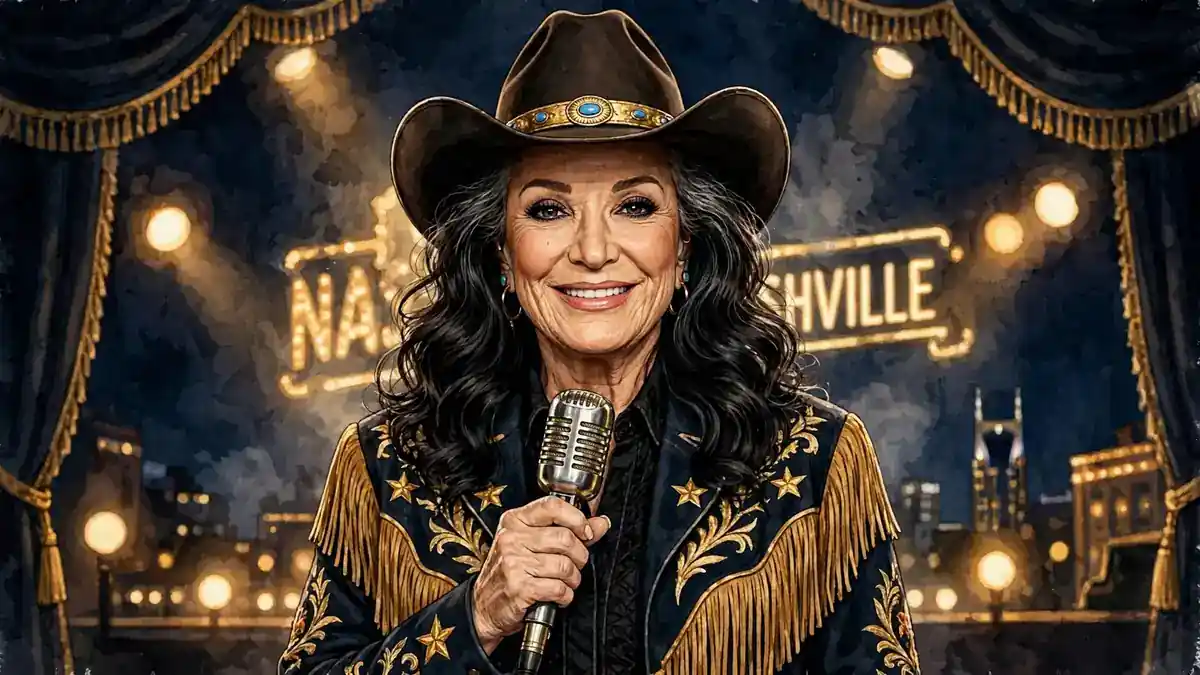
Tanya Tucker‘s net worth is estimated at $50 million to $60 million as of November 2026, anchored at $60 million. The country singer has been earning from music since she was 13 years old, when “Delta Dawn” made her a star in 1972, and her money story runs through a $1.5 million teenage record deal, a late-1980s comeback that produced 24 top-ten singles, a $11.5 million Tennessee land sale, two Grammy Awards won nearly five decades after her first nomination, and a tequila brand she launched in 2019.
Tanya Tucker: Quick Facts
| Estimated net worth | $60 million (range: $50 million to $60 million) |
|---|---|
| Profession | American country singer and songwriter |
| Nationality | American |
| Born | October 10, 1958 (age 68) |
| Height | 5 ft 3 in (1.60 m) |
| Primary income sources | Record sales and streaming royalties, touring, songwriting and publishing, television and film, Cosa Salvaje Tequila |
| Active years | 1971–present |
| Last reviewed | November 2026 |
- Early Life and Background
- Education
- Career Journey
- Rise to Fame
- Main Sources of Income
- Salary and Earnings
- Businesses and Investments
- Brand Deals and Sponsorships
- Houses, Cars and Other Assets
- Awards and Achievements
- Net Worth Growth Over the Years
- Social Media Presence
- Personal Life
- Sources & Reporting
- Frequently Asked Questions
Early Life and Background
Tanya Denise Tucker was born on October 10, 1958, in Seminole, Texas, the youngest of three children of Juanita and Jesse “Beau” Tucker. Her father worked construction and took whatever jobs he could find, so the family moved often while he chased work. Her older siblings were Don and LaCosta; her sister LaCosta later cut country records of her own, charting in the 1970s. Much of Tucker’s childhood played out in Willcox, Arizona, where country radio filled the house and shaped what she wanted to be. Her parents pushed her singing from the start, and her father spent years hunting for stages where his youngest daughter could perform for visiting country acts.
The family later lived in St. George, Utah, and Henderson, Nevada, which put Tucker within reach of the Las Vegas entertainment circuit. She sang at fairs and local venues, appeared on the Phoenix children’s television program The Lew King Ranger Show, and picked up a small, non-speaking part in the 1972 film Jeremiah Johnson, starring Robert Redford. None of that paid much. What it did was put a 13-year-old with a voice that sounded twenty years older in front of the right people, again and again, until a demo tape found its way to actress and songwriter Dolores Fuller, who carried it to producer Billy Sherrill at Columbia Records.
That chain of introductions is the first money fact of Tucker’s life, and it matters for the net worth story: she never had a slow apprenticeship. She went from singing at fairs to a major-label recording contract before she was old enough to drive, which meant her earning years started in 1972 and never really stopped. The gaps in her chart career in the early 1980s were real, but she was still recording, touring, and collecting royalties through them, and the catalog she built as a teenager kept paying while she rebuilt her career as an adult.
Education
Tucker has no public record of a college education, and the reason is plain: her schooling was cut short by a recording career that began at 13. She was touring, recording, and promoting singles while other children her age were in classrooms, and the road became her education in the only sense that mattered to her career. She learned the music business by living inside it — sessions with Billy Sherrill, tours with established acts, contract negotiations handled by adults around her, and, by her late teens, the hard lessons of fame arriving too early.
That early start is a double-edged fact in any honest account of her wealth. A child star who earns for fifty years has a longer runway than almost any peer, but a teenager does not control her own money, and Tucker has spoken openly about the personal cost of growing up in public. The fortune she holds now was built in the second half of her career, after she took control of her recording and business affairs, founded her own label, and started keeping the ownership stakes she had given away as a teenager.
Career Journey
Billy Sherrill signed Tucker to Columbia Records and produced “Delta Dawn,” written by Alex Harvey and Larry Collins. Released in 1972, the single reached number six on the country chart and earned Tucker her first Grammy nomination at 13. She had first heard the song sung by Bette Midler on The Tonight Show, and her version turned a song about a faded Southern woman into a hit sung by a child who sounded as if she had lived it. Her follow-up, “Love’s the Answer,” also reached the country top ten before the year was out.
In 1973, Tucker reached number one for the first time with “What’s Your Mama’s Name” and “Blood Red and Goin’ Down.” The next year brought “Would You Lay with Me (In a Field of Stone),” written by David Allan Coe, her third chart-topper. The songs dealt with abandonment, violence, and adult relationships, and the contrast between the material and the singer’s age made her impossible to ignore. In 1974 she appeared on the cover of Rolling Stone, a rare honor for a country act, let alone a 15-year-old. On her sixteenth birthday that October, she signed with MCA Records. According to the Country Music Hall of Fame, that contract was worth $1.5 million — a large sum for a teenage artist in 1974, and the first hard dollar figure in her financial story.
Her first MCA album, released in 1975, produced the number-one country singles “Lizzie and the Rainman” and “San Antonio Stroll.” “Lizzie and the Rainman” also became her only top-40 hit on the Billboard Hot 100, peaking at number 37. Other MCA hits followed: “Here’s Some Love,” “Don’t Believe My Heart Can Stand Another You,” and “It’s a Cowboy Lovin’ Night.” As she grew older, Tucker pushed for more control over her music and image. Her 1978 album TNT leaned into rock, with a more provocative presentation, and still produced the lasting country favorite “Texas (When I Die)” plus a Buddy Holly cover, “Not Fade Away,” that crossed to number 79 on the Hot 100. She carried the rock direction further on 1979’s Tear Me Apart.
By the end of the 1970s, her sales were fading. In 1980 she managed only two hits, and the early 1980s brought albums — Dreamlovers, Should I Do It, Changes — that sold modestly even as singles like “Pecos Promenade,” “Can I See You Tonight,” and “Feel Right” kept her on the radio. By her mid-twenties she was without a recording contract and dealing openly, in later years, with alcohol and drug problems. The turnaround began when she signed with Capitol Records and reunited with producer Jerry Crutchfield. The 1986 album Girls Like Me launched a sustained comeback, producing the number-one single “Just Another Love” and the top-ten hits “One Love at a Time,” “I’ll Come Back as Another Woman,” and “It’s Only Over for You.”
The comeback ran deep. Tucker followed with Love Me Like You Used To and a run of number-one records in 1988: “I Won’t Take Less Than Your Love,” cut with Paul Davis and Paul Overstreet, “If It Don’t Come Easy,” and “Strong Enough to Bend.” Her Capitol years produced 24 top-ten country singles between 1986 and 1997. The early 1990s added “Down to My Last Teardrop,” “(Without You) What Do I Do with Me,” “Two Sparrows in a Hurricane,” and “It’s a Little Too Late.” In 1991 she won the Country Music Association’s Female Vocalist of the Year award — and watched the ceremony from a hospital bed, having given birth to her son earlier that same day. She sang at the Super Bowl XXVIII halftime show in 1994, and “Little Things” returned her to the country top ten in 1997, her last top-ten hit.
In 2002, Tucker founded Tuckertime Records, her own label, and released the album Tanya through it — a move that changed the economics of her career, because an artist who owns her label keeps the share a label used to take. That same year she was inducted into the Texas Country Music Hall of Fame. She recorded My Turn, a set of country standards, in 2009, and released “Forever Loving You” in 2017, her first single in eight years, on the eve of Glen Campbell’s funeral. Then came the partnership that remade her late career: Brandi Carlile and Shooter Jennings produced While I’m Livin’, released in 2019, her first album of new original material in 17 years. The record drew on family, loss, and resilience, and it won her first two Grammy Awards at the January 2020 ceremony — Best Country Album and Best Country Song for “Bring My Flowers Now.” She followed it with the live album Live from the Troubadour in 2020 and reunited with Carlile and Jennings for Sweet Western Sound, released June 2, 2023, on Fantasy Records. On October 22, 2023, she was inducted into the Country Music Hall of Fame, alongside Patty Loveless and songwriter Bob McDill.
Rise to Fame
Tucker’s rise was fast and strange: a 13-year-old singing songs about women twice her age, with a husky voice that sounded nothing like a child. “Delta Dawn” did the work in 1972, and the three number-one singles that followed in 1973 and 1974 — “What’s Your Mama’s Name,” “Blood Red and Goin’ Down,” and “Would You Lay with Me (In a Field of Stone)” — made her a fixture before she turned 16. The Rolling Stone cover in 1974 and the $1.5 million MCA deal the same year marked the moment the industry decided she was not a novelty act. Across her career she has scored 10 number-one singles on Billboard’s country chart, a total that puts her in rare company among women in the format.
The second rise matters more to her bank balance than the first. The Capitol comeback of 1986 to 1997 gave her 24 top-ten singles in a little over a decade, and that run — eight top-ten hits in a row across 1988 and 1989 alone — rebuilt her touring value and her catalog at the exact moment country music was becoming a stadium business. The third rise came in 2019, when While I’m Livin’ and the documentary The Return of Tanya Tucker: Featuring Brandi Carlile introduced her to a generation that had never bought a Tanya Tucker record. That late-career revival is what keeps her touring in 2026 and 2027, with dates booked from Oklahoma and Georgia into Denver in February 2027 and the Florida Strawberry Festival in March 2027. Few artists get one comeback; Tucker has had two, and each one added a fresh layer of earnings on top of a catalog that never stopped selling.
One gap in her resume still surprises people who know the genre: despite a career that started in 1972 and a Hall of Fame induction in 2023, Tucker is not a member of the Grand Ole Opry. She has performed on the Opry stage, but membership — often described as country music’s highest honor — has never been extended to her, and no clear public explanation has ever been given. The omission has become part of her story, and it has not slowed her down: she closed the 2023 Rose Parade as the grand finale performer, singing “Ready As I’ll Never Be,” her new anthem from Sweet Western Sound.
Main Sources of Income
Tucker’s money comes from five streams, and their balance has shifted across five decades. In the 1970s and 1980s, record sales and touring carried the load. In the 1990s, the Capitol comeback rebuilt both. Since 2002, ownership — her own label, her publishing, and later her tequila brand — has mattered as much as the next tour. The sections below break each stream down.
Record sales and streaming. Tucker has released more than 25 studio albums across Columbia, MCA, Arista, Capitol, and her own Tuckertime imprint, plus compilations that have sold steadily for decades. Her 10 number-one country singles and 24 Capitol-era top-ten hits form a catalog that earns every time a song is streamed, licensed, or played on country radio. The 2019 and 2023 albums added new material to that catalog under modern deals: While I’m Livin’ was released on Fantasy Records, and Sweet Western Sound followed on the same label in 2023. Streaming pays far less per play than the album sales of her peak years, but it pays forever, and a catalog as deep as hers — “Delta Dawn,” “Lizzie and the Rainman,” “Texas (When I Die),” “Strong Enough to Bend,” “Two Sparrows in a Hurricane,” “Bring My Flowers Now” — is the kind of asset that keeps generating royalties long after the chart runs end.
Touring and live performance. Live shows are the largest single income line for a heritage country act, and Tucker still tours hard at 68. Ticketmaster listed her November 14, 2026 date at Stage 271 in Grant, Oklahoma, and a November 11, 2026 show at the Hard Rock Hotel and Casino in Tulsa; listings for 2027 already show a February 25 date at Ophelia’s Electric Soapbox in Denver and a March 8 appearance at the Florida Strawberry Festival in Plant City. Her dates run through casinos, fairs, festivals, and theaters — rooms that pay established headliners well — and her setlist leans on fifty years of hits, which is exactly what those audiences buy tickets for. No public record states her per-show fee, and this article does not guess one: fees for heritage acts vary widely by room, market, and deal structure, and any site quoting a precise figure for Tucker is inventing it.
Songwriting and publishing. Tucker is a songwriter as well as a singer, and she shares the writing credit on “Bring My Flowers Now” with Brandi Carlile and the brothers Phil and Tim Hanseroth — the song that won the 2020 Grammy for Best Country Song. Publishing income flows from her own compositions, from her Tuckertime publishing interests, and from the master and publishing stakes she has held since founding her own label in 2002. Owning the label changed the math: instead of a royalty rate set by a major, she controls the recording process and keeps the label’s share of her own releases.
Television, film, and books. Her screen work runs from the 1972 film Jeremiah Johnson through the television movie The Rebels, the 1981 film Hard Country, and a 2022 television movie, A Nashville Country Christmas, in which she played a country superstar. In 2005 she starred in the TLC reality series Tuckerville, which followed her life as a performer and mother of three for two seasons. The 2022 documentary The Return of Tanya Tucker: Featuring Brandi Carlile played theaters in New York and Los Angeles from October 21, 2022, before a nationwide release on November 4, and later streamed on Netflix. Her books include the 1997 memoir Nickel Dreams: My Life and the 2005 collection 100 Ways to Beat the Blues. None of these paid like a hit record, but together they kept her name — and her earning power — alive through the years when she was not releasing new albums.
Business ventures. In 2019 she launched Cosa Salvaje Tequila with entrepreneur Elle France, a silver tequila produced in Jalisco, Mexico. In May 2024 she opened Tanya Tucker’s Tequila Cantina, a pop-up bar on the second floor of Nudie’s Honky Tonk on Nashville’s Lower Broadway, serving cocktails made with Cosa Salvaje. The brand is covered in full in the business section below.

Salary and Earnings
There is no public salary record for Tanya Tucker in the way there is for an athlete or a television host, and any article that prints a precise annual salary for her is guessing. What the record does show is a series of hard figures that mark the scale of her earnings. The first is the $1.5 million MCA contract she signed on her sixteenth birthday in 1974, a figure the Country Music Hall of Fame itself reports. The second is the $11.5 million she received in 2007 for 500 acres of farmland in Arrington, Tennessee — a single transaction worth nearly a fifth of her estimated net worth. The third is the property flip documented in Tennessee records: a Brentwood home bought for $1.51 million and sold in 2022 for $2.275 million, a gain of about $765,000 in three years.
Her peak earning years were the Capitol comeback, 1986 to 1997, when 24 top-ten singles, constant touring, and a country boom put her among the format’s top draws. Her current earning years run on a different model: fewer dates than a young arena act, but higher-value rooms — casinos, festivals, and theaters — plus a catalog that earns from streaming and licensing, a tequila brand, and the prestige bookings that followed the Grammy wins and the Hall of Fame induction. The 2026 collaboration with Shania Twain, “Little Miss Twain,” reported by Celebrity Net Worth in its November 2026 update, shows the machine still working: a new recording, a new audience, and another royalty stream, 54 years after her first hit.
For scale, here is how Tucker’s reported fortune compares with other country stars whose numbers are publicly reported. The figures below are the outlets’ estimates, not audited wealth, and they move as those outlets update them.
| Artist | Reported net worth | Reported by |
|---|---|---|
| Dolly Parton | $650 million | Forbes |
| Shania Twain | $400 million | Celebrity Net Worth |
| Reba McEntire | $95 million | Celebrity Net Worth |
| Tanya Tucker | $60 million | Celebrity Net Worth |
| Miranda Lambert | $60 million | Celebrity Net Worth |
The comparison puts Tucker in the middle of country music’s wealth table: far below the crossover empires of Parton and Twain, who built theme parks, Las Vegas residencies, and global touring businesses, and level with Miranda Lambert’s reported $60 million fortune — a useful peer, since Lambert is the modern artist most often compared with Tucker as a tough, plain-spoken country voice. What the table hides is longevity: Tucker’s fortune was built over 54 earning years, the longest runway of anyone on it, and the Hall of Fame induction in 2023 locked in the legacy value of a catalog that will keep paying her family for decades.
Businesses and Investments
Tuckertime Records. Founded in 2002, Tuckertime is the most consequential business decision of Tucker’s career. By releasing the album Tanya through her own label, she took control of the recording process and the choice of singles, and she kept the label’s share of the revenue. For an artist who had spent thirty years on major labels, the move was worth more than any single royalty check: it turned her from a hired voice into an owner. The label has remained her home for independent releases ever since, and the 2019 and 2023 albums, though released through Fantasy Records, were made on the terms of an artist who no longer needed a label to survive.
Cosa Salvaje Tequila. In 2019, Tucker partnered with entrepreneur Elle France to launch Tanya Tucker’s Cosa Salvaje Tequila, a silver tequila produced in Jalisco, Mexico. The brand put her into the spirits business at a moment when celebrity tequila was booming, and it gave her a product to sell at shows, in stores, and, from May 2024, at her own bar. The tequila is the rare Tucker venture with her name on the bottle, and it is built to outlast her touring years in a way a concert cannot.
Tanya Tucker’s Tequila Cantina. In May 2024, Tucker partnered with Nudie’s Honky Tonk on Nashville’s Lower Broadway to open Tanya Tucker’s Tequila Cantina, a pop-up bar on the venue’s second floor. The cantina serves cocktails made with Cosa Salvaje alongside a menu inspired by Mexican cuisine, and it sits on the busiest strip in country music — Lower Broadway, where thousands of tourists pass every night. A pop-up is a low-risk way to test a permanent venue, and the cantina doubles as a marketing engine for the tequila brand: every drink sold is an advertisement for the bottle.
Publishing and catalog ownership. Beyond the label and the tequila, Tucker’s quietest asset is her publishing and catalog position. She holds stakes in her own recordings through Tuckertime, shares writing credit on her Grammy-winning song, and owns a catalog of hits that other artists still cover and license. Catalogs are the music industry’s steadiest asset class, and hers spans five decades of hits — the kind of depth that buyers pay a premium for, and that generates income whether she tours or not.
Brand Deals and Sponsorships
Tucker has never been a heavy endorsement artist in the modern sense — no long list of fashion or beauty contracts — and that is consistent with her career: she built her money on records, tours, and ownership rather than on lending her face to other companies. The brand work she has done is tied to her own ventures. Cosa Salvaje Tequila is her brand, not a sponsorship, and the Tequila Cantina is her bar, not a paid appearance. The 2026 Shania Twain collaboration, “Little Miss Twain,” is a recording partnership rather than a commercial endorsement, but it carries the same commercial effect: it puts Tucker in front of Twain’s audience and attaches her name to a current release.
Her most visible commercial partnerships have been in television and live entertainment: the TLC series Tuckerville, the Sony Pictures Classics documentary, festival and casino headline slots, and the Rose Parade grand finale in 2023. Each of those paid her as a performer rather than as an endorser, which fits the shape of her fortune. Where younger artists chase brand deals, Tucker owns the brands she promotes — the label, the tequila, the bar — and keeps the margin a sponsor would otherwise take.
Houses, Cars and Other Assets
The Arrington land sale. The largest single property transaction in Tucker’s public record came in 2007, when she sold 500 acres of farmland in Arrington, Tennessee, for $11.5 million. The buyer, Eagle Ridge Investments, planned a golf course community on the land. The sale is often confused with a second Arrington property, and the two should not be mixed up: a separate 126.75-acre family ranch in Arrington, described in marketing materials as her parents’ ranch, was listed for $12.5 million during the 2010s, with listing history showing that asking price as early as 2015. That ranch included a 5,400-square-foot house, barns, and fenced pasture. The $11.5 million figure is a completed sale; the $12.5 million figure is an asking price for a different parcel.
The Brentwood flip. Tucker bought a home in Brentwood, Tennessee, for $1.51 million and sold it in 2022 for $2.275 million, a gain of roughly $765,000 in about three years. The deal is a clean example of how her property moves have worked: buy well, hold, and sell into a rising Nashville-area market.
Malibu and Austin. After the Brentwood sale, Tucker bought a home in Malibu, California, reported at about $8.4 million — a 5,746-square-foot house with five bedrooms and six bathrooms on Carbon Mesa Road. The Malibu purchase was reported by biography outlets rather than by a property-record filing in the sources we reviewed, so treat the price as reported rather than confirmed. When she is not touring, Parade reports that she lives on her ranch near Austin, Texas, where she has been based in recent years. That Austin base puts her close to the Texas country scene she came from and to the touring circuit she still works.
Cars and other assets. Tucker has never made her car collection a public talking point, and no reliable source lists her vehicles, so this article does not invent one. Her visible assets are the ones the record supports: the catalog, the label, the publishing stakes, the tequila brand, and the property. Those are also the assets that matter to a net worth estimate — a car depreciates, while a catalog of 10 number-one singles pays royalties every year.
Awards and Achievements
Tucker waited longer than almost any major artist for her first Grammy, and the wait is part of the story. Her first nomination came in 1973, for “Delta Dawn,” when she was 14. Her first wins came on January 26, 2020 — 47 years later — when While I’m Livin’ won Best Country Album and “Bring My Flowers Now” won Best Country Song, the songwriting award shared with Brandi Carlile and Phil and Tim Hanseroth. Two Grammys at 61, for an album made after a 17-year gap, is the kind of late-career validation that changes an artist’s earning power: it put her back on television, back on festival stages, and back in front of buyers for her catalog.
Her other honors trace the arc of the career. She won the Country Music Association’s Female Vocalist of the Year award in 1991, the same day she gave birth to her son — a detail that has become one of the most repeated stories in country music. She was inducted into the Texas Country Music Hall of Fame in 2002, and into the Country Music Hall of Fame on October 22, 2023, in a medallion ceremony at the Hall of Fame and Museum in Nashville, inducted by Connie Smith and Brenda Lee, with tribute performances from Wynonna, Charlie McCoy, Margo Price, Jessi Colter, and Brandi Carlile. She performed at the Super Bowl XXVIII halftime show in 1994. CMT ranked her ninth on its list of the greatest outlaws in country music, the only woman on the list — a nod to the rebellious streak that ran through her image from the TNT years onward. Carrie Underwood, another multi-time CMA Female Vocalist winner, is the modern star most often mentioned in the same breath as Tucker when the conversation turns to women who carried country music across generations.
The Hall of Fame induction is the honor that matters most to the net worth story, because it is permanent. A Hall of Fame plaque does not pay a royalty, but it fixes an artist’s place in the genre’s history, and that place drives catalog sales, licensing, and booking fees for the rest of her life. Tucker was inducted in the Veteran Era Artist category, alongside Patty Loveless in the Modern Era category and songwriter Bob McDill. In her induction speech, she thanked Carlile and Jennings, who she said had “brought me back from the dead” with While I’m Livin’.
Net Worth Growth Over the Years
No audited year-by-year record of Tucker’s wealth exists, and this article will not invent one. What the public record does support is a timeline of the financial milestones that built the fortune, and that timeline tells the story more honestly than a made-up annual chart.
| Year | Milestone | Reported figure |
|---|---|---|
| 1972 | “Delta Dawn” reaches number six on the country chart; first Grammy nomination follows | Career begins at 13 |
| 1974 | Signs with MCA Records on her sixteenth birthday; Rolling Stone cover the same year | $1.5 million contract |
| 1975 | “Lizzie and the Rainman” tops the country chart and reaches number 37 on the Hot 100 | First crossover hit |
| 1986–1997 | Capitol comeback produces 24 top-ten country singles | Peak commercial era |
| 1991 | Wins CMA Female Vocalist of the Year | Career honor |
| 2002 | Founds Tuckertime Records; inducted into the Texas Country Music Hall of Fame | Ownership era begins |
| 2007 | Sells 500 acres of Arrington, Tennessee farmland | $11.5 million sale |
| 2019 | Releases While I’m Livin’; launches Cosa Salvaje Tequila | Comeback + new business |
| 2020 | Wins first two Grammy Awards | Best Country Album + Best Country Song |
| 2022 | Sells Brentwood, Tennessee home | $2.275 million sale |
| 2023 | Inducted into the Country Music Hall of Fame; releases Sweet Western Sound | Legacy secured |
| 2024 | Opens Tanya Tucker’s Tequila Cantina in Nashville | Brand expansion |
| 2026 | Still touring; records “Little Miss Twain” with Shania Twain | $60 million estimated net worth |
The shape of that timeline is the point. Tucker’s wealth was not made in a single windfall year. It was built in three waves — the teenage stardom of the 1970s, the Capitol comeback of the late 1980s and 1990s, and the Grammy and Hall of Fame revival of 2019 to 2023 — with property sales and business ownership adding to the total between waves. The $11.5 million land sale alone accounts for close to a fifth of the estimated fortune, which is why the range in this article runs from $50 million to $60 million: the top of the range reflects the best-sourced estimate, and the bottom reflects the lower figures other biography sites publish without showing their working.
Social Media Presence
Tucker stays active on Instagram, X, and Facebook under her own name, and her official site, tanyatucker.com, carries tour dates, music, and tequila brand news. Her feeds mix tour announcements, throwback photos from the 1970s and 1980s, clips from recent shows, and posts about Cosa Salvaje Tequila and the Nashville cantina. She uses social media the way a touring heritage act should: as a box office tool, not a lifestyle brand. When a new date is announced — a casino show, a festival slot, a 2027 date in Denver or Plant City — it goes up on her accounts first, and her fans, many of whom have followed her since “Delta Dawn,” buy from there.
Her online presence got a second wind from the documentary and the Hall of Fame induction, which put clips of her 1970s performances in front of younger viewers who had never seen them. Blake Shelton, a fellow country touring headliner who built his own fortune across records, television, and touring, works the same rooms and festivals Tucker plays, and the two represent opposite ends of country music’s modern economy: Shelton as a television-era star, Tucker as a catalog-era lifer whose audience has stayed with her for five decades. For a singer who started before the internet existed, a direct line to her fans is now one of her most useful business assets — it sells tickets without a middleman and keeps the tequila brand in front of the people most likely to buy it.
Personal Life
Tucker has never married, though she has come close twice. In 1982 she was set to marry Glen Campbell after a high-profile and stormy romance that began around the time of Campbell’s third divorce in 1980; the pair were 22 years apart in age, and the wedding was planned to follow a joint European tour before the relationship ended. In 1999 she called off her wedding to Nashville musician and songwriter Jerry Laseter days before it was to take place, after discovering she was pregnant with the couple’s child and not wanting to walk down the aisle while pregnant. She and Laseter had first become engaged in 1997 and again in 1999. She has also been linked with Merle Haggard, Andy Gibb, and Don Johnson.
She has three children. With actor Ben Reed, her partner in the late 1980s and early 1990s, she had daughter Presley Tanita, born July 5, 1989, and son Beau Grayson, born October 2, 1991. Her youngest daughter, Layla LaCosta, was born June 25, 1999, during her relationship with Laseter, and is named after Tucker’s older sister LaCosta. Tucker has spoken openly about her struggles with substance abuse, including treatment at the Betty Ford Center in 1988, and her 1997 memoir Nickel Dreams: My Life deals with that period directly.
Since the summer of 2019 she has been in a relationship with fellow country singer-songwriter Craig Dillingham. The two first met when they were both 13 years old, at a Fort Worth radio station, and stayed in each other’s lives for decades before becoming a couple. “If it ain’t him, I’m done,” she told People in January 2020. “Craig’s always loved me, always. I mean, he’s never not loved me.” Friends tease the couple about marriage, and Tucker has said she regards marriage as sacred and wants to do it once, if she does it at all. Her parents, Juanita and Jesse, are both gone — her mother died in 2012 — and her brother Robert died of pneumonia in 2017.
Sources & Reporting
Celebrity Net Worth — the $60 million estimate, the $1.5 million MCA contract figure, the 2007 land sale and Arrington ranch details, and the 2026 Shania Twain collaboration; page updated November 12, 2026. Parade — 2026 profile covering her age, the Tequila Cantina opening, the Rose Parade finale, her relationship history, and her Austin ranch; published January 1, 2026. Wikipedia — career chronology, chart history, label history, Grammy wins, and the October 22, 2023 Hall of Fame induction date. Tanya Tucker (official site) — the Sweet Western Sound release, the Carlile and Jennings production credits, and the Hall of Fame announcement. MusicRow — the June 2, 2023 album release and track details. Ticketmaster and StubHub — 2026 and 2027 tour dates and venues. People — Tucker’s 2020 remarks about Craig Dillingham, via Parade’s reporting. Texas Monthly — her Austin ranch base and the 2023 career cover story. Reporting window: November 2026. Figures are estimates built from public reporting; where outlets disagree, this article publishes a range and names who says what.
Frequently Asked Questions
What is Tanya Tucker’s net worth in 2026?
Tanya Tucker’s net worth is estimated at $50 million to $60 million as of November 2026, anchored at $60 million. Celebrity Net Worth, updated November 12, 2026, puts the figure at $60 million, and Parade’s 2026 profile repeats it. Lower-tier biography sites quote $20 million to $50 million without showing their working, which is why this article publishes a range rather than a single number.
How old is Tanya Tucker?
Tanya Tucker was born on October 10, 1958, in Seminole, Texas, which makes her 68 years old as of November 2026. She was 13 when “Delta Dawn” became a hit in 1972, 16 when she signed her $1.5 million MCA contract in 1974, and 61 when she won her first two Grammy Awards in 2020.
How did Tanya Tucker get famous?
She became famous at 13 with “Delta Dawn” in 1972, which reached number six on the country chart and earned her a Grammy nomination. She followed it with three number-one singles before she turned 16: “What’s Your Mama’s Name” and “Blood Red and Goin’ Down” in 1973, and “Would You Lay with Me (In a Field of Stone)” in 1974. A Rolling Stone cover in 1974 confirmed she was not a novelty act.
What are Tanya Tucker’s most famous songs?
Her best-known songs are “Delta Dawn,” “What’s Your Mama’s Name,” “Blood Red and Goin’ Down,” “Would You Lay with Me (In a Field of Stone),” “Lizzie and the Rainman,” “San Antonio Stroll,” “Texas (When I Die),” “Strong Enough to Bend,” “Two Sparrows in a Hurricane,” “Down to My Last Teardrop,” and “Bring My Flowers Now.” Across her career she has scored 10 number-one singles on Billboard’s country chart.
Has Tanya Tucker ever been married?
No, Tanya Tucker has never married. She was set to marry Glen Campbell in 1982, but the wedding never happened, and she called off a wedding to Nashville musician Jerry Laseter in 1999, days before the ceremony, after learning she was pregnant. Since the summer of 2019 she has been in a relationship with fellow country singer-songwriter Craig Dillingham, whom she first met when they were both 13.
How many children does Tanya Tucker have?
Tanya Tucker has three children: daughter Presley Tanita, born in 1989, and son Beau Grayson, born in 1991, both with actor Ben Reed; and daughter Layla LaCosta, born in 1999, with musician and songwriter Jerry Laseter. Layla is named after Tucker’s older sister, LaCosta, who was also a country singer.
Did Tanya Tucker win a Grammy?
Yes. She won her first two Grammy Awards on January 26, 2020, nearly five decades after her first nomination: Best Country Album for While I’m Livin’ and Best Country Song for “Bring My Flowers Now,” shared with Brandi Carlile and Phil and Tim Hanseroth. She was inducted into the Country Music Hall of Fame on October 22, 2023.
Where does Tanya Tucker live now?
When she is not touring, Tanya Tucker lives on her ranch near Austin, Texas. She previously owned property in Tennessee, including farmland in Arrington — 500 acres of which she sold for $11.5 million in 2007 — and a Brentwood home she sold for $2.275 million in 2022. She also owns a tequila bar, Tanya Tucker’s Tequila Cantina, at Nudie’s Honky Tonk in Nashville.
Final Thoughts
Tanya Tucker’s $60 million fortune is the product of the longest runway in country music: a career that started at 13 and is still adding dates in 2027. The teenage hits built the catalog, the Capitol comeback rebuilt her touring value, and the Grammy wins and Hall of Fame induction turned a working singer into a legacy act with a catalog that will pay for decades. The property deals — an $11.5 million land sale, a $765,000 gain on a Brentwood flip — and the businesses she owns outright, Tuckertime Records and Cosa Salvaje Tequila, did the rest. She never had the crossover empire of a Dolly Parton or a Shania Twain, and she never chased one. She kept the songs, kept the label, kept the land until it was worth selling, and at 68 she is still on stage, still recording, and still adding to the total.
Published on November 23, 2026. Last reviewed November 2026. Found an error? See our corrections policy.