
Andrew Schulz‘s net worth is estimated at $4 million to $10 million as of November 2026. The anchor figure is the $4 million that Celebrity Net Worth carries, and the top of the range reflects the fuller picture — arena tours, two hit podcasts, self-distributed specials and a 2026 Hollywood film role — that the wider reporting supports. Schulz built the fortune by refusing the standard comedy deal: he bought back his own special for more than $1 million, sold it directly to fans, and kept the ownership that most comedians hand to a streamer.
Andrew Schulz: Quick Facts
| Estimated net worth | $4 million (range: $4 million to $10 million) |
|---|---|
| Profession | Stand-up comedian, podcaster, actor, writer, producer |
| Nationality | American |
| Born | October 30, 1983 (age 43) |
| Height | 6 feet 2 inches (188 cm) |
| Primary income sources | Stand-up touring, Flagrant and The Brilliant Idiots podcasts, self-distributed comedy specials, Netflix specials, acting, merchandise |
| Active years | 2009–present |
| Last reviewed | November 2026 |

- Early Life and Background
- Education
- Career Journey
- Rise to Fame
- Main Sources of Income
- Salary and Earnings
- Businesses and Investments
- Brand Deals and Sponsorships
- Houses, Cars and Other Assets
- Awards and Achievements
- Net Worth Growth Over the Years
- Social Media Presence
- Personal Life
- Sources & Reporting
- Frequently Asked Questions
Early Life and Background
Andrew Cameron Schulz was born on October 30, 1983, in New York City, and grew up in the East Village of Manhattan. His father, Larry Schulz, worked as a reporter, and his mother, Sandra Cameron, was a Scottish ballroom dancer. The household mixed newsroom habits with performance: a father who chased stories and a mother who made a living on a dance floor. Schulz has a brother, Greg Schulz, and the family roots run through New York on both sides — both of his parents were born in the city, and his mother’s family traces back to Chicago, Illinois.
New York shaped the act before Schulz ever stepped on a stage. He grew up around fast talk, crowded rooms and audiences that punish hesitation, and the material he later became known for — blunt crowd work, rapid-fire observations about race, dating and city life — reads as a product of that upbringing. He started doing stand-up while still a student, working the open-mic circuit in New York clubs where a comic learns within minutes whether a joke works. The early years paid almost nothing. Schulz has described the grind in interviews as a stretch of $1,500 and $2,000 weekend payouts in cities like Milwaukee, the kind of money that covers travel and a hotel and leaves little else. That period matters to the net worth story because it explains the business instinct that followed: Schulz learned early that the person who controls the room, the recording and the distribution keeps the money.
His first screen credit came in 2009, when he appeared in the web series Rise of the Radio Show, and the acting work that followed stayed small for years. The slow start is part of why the $4 million anchor figure is credible and the $40 million outlier figure is not: Schulz spent the first decade of his career as a working comic and cable television personality, not a movie star, and the money arrived in stages — television, then podcasting, then touring at scale — rather than in one large contract.
Education
Schulz attended the University of California, Santa Barbara, where he earned a Bachelor of Arts in psychology. The degree shows up in the work more than a resume line suggests. His crowd work — the improvised exchanges with front-row audience members that open his specials and fill his clips — depends on reading a stranger in seconds, finding the pressure point, and turning it into a joke before the room turns. Psychology gave him a vocabulary for that; the stage gave him the practice.
College was also where the stand-up habit became a plan. He experimented with comedy while studying, and by graduation he was committed to it as a career rather than a hobby. Santa Barbara put distance between him and the New York scene, and the return to New York after college put him back in the most competitive comedy market in the country. The combination — a psychology degree, a New York upbringing, and a willingness to work clubs for small guarantees — produced a comic who treats the audience as material to be studied and worked, rather than simply entertained.
Career Journey
Schulz’s first real break arrived with MTV2’s Guy Code, the panel show about the unwritten rules of being a man, which he joined in 2011. The show ran for several seasons and made Schulz a familiar face to the MTV audience, and it spun off appearances on Girl Code and other MTV properties. Cable television paid a working wage and, more usefully, put his face in front of millions of viewers who had never seen him in a club. He parlayed the exposure into acting work, including a recurring role on Amazon’s Sneaky Pete, and into writing and producing credits that kept him employed between stand-up dates.
The second act started in podcasting. In 2014, Schulz began co-hosting The Brilliant Idiots with Charlamagne tha God, the radio host and media personality. The show paired Schulz’s club-comic timing with Charlamagne’s broadcast instincts, and it built an audience that followed both men across platforms. Then came Flagrant, launched in 2018 with comedian Akaash Singh and co-hosts Mark Gagnon and Kaz Mir — the show that became the center of Schulz’s business. Flagrant mixes comedy, pop culture and current events, records live in front of audiences, and sells tickets to those recordings as a separate revenue line. It grew into one of the most-downloaded comedy podcasts in the world, with hundreds of millions of views across YouTube and audio platforms.
The specials trace the same arc from rented to owned. Schulz released Views from the Cis on YouTube in 2017, then signed with Netflix for Schulz Saves America, a four-part special that premiered on December 17, 2020, taking on the politics, race debates and pandemic arguments of that year. The Netflix deal gave him scale and a global shop window, but the next special changed the model entirely. Infamous, finished in 2022, was shopped to streamers and then pulled back: Amazon Prime had been the highest bidder, but Schulz has said the platform wanted jokes cut, so he bought the rights back for more than $1 million and released the special himself, selling it directly to fans for $20 a copy. MoneyMade reports the buyback cost him upwards of $1 million and returned roughly three times that amount. The move made headlines across the comedy industry and became the case study other comics cite when they talk about owning their work.
His most recent special, Life, returned to Netflix and premiered on March 4, 2025, filmed at New York’s Beacon Theatre after a global tour that included back-to-back sellouts at Madison Square Garden. Life is built around IVF and new parenthood — Schulz and his wife conceived their daughter through IVF — and it is the most personal hour he has released. The special holds a 7.6 rating on IMDb, and its subject matter signalled a shift: the comic who built his name on provocation was now selling out arenas with material about fertility clinics and fatherhood.
October 2026 added a new line to the resume. Schulz joined the cast of Legendary Entertainment and Paramount’s live-action Street Fighter film as Dan Hibiki, the overconfident martial artist who invented his own fighting style, Saikyo-ryu, and considers himself a legend despite losing most of his fights. The film, directed by Kitao Sakurai and set in 1993, opened in theaters on October 16, 2026, with an ensemble that includes Andrew Koji as Ryu, Noah Centineo as Ken Masters, Callina Liang as Chun-Li, Jason Momoa as Blanka, Roman Reigns as Akuma, Cody Rhodes as Guile and 50 Cent as Balrog. Dan Hibiki is a comic character in a fighting franchise, and the casting fits Schulz’s strengths: the part asks for exactly the inflated self-belief he has been playing on stage for fifteen years. It is his first major studio film role, and it opens a door — franchise acting — that pays differently from stand-up, with backend participation and sequel options that do not exist in a club contract.
Rise to Fame
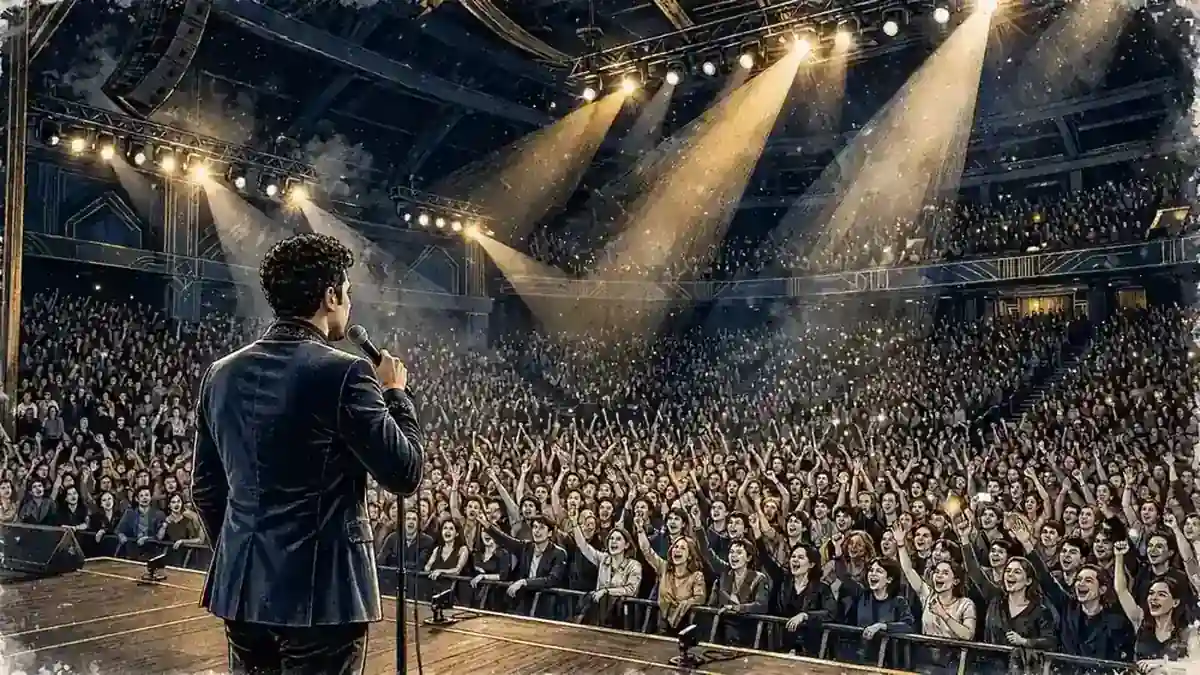
Schulz did not become famous in one moment. He became unavoidable in stages, and each stage added a revenue stream rather than replacing one. Guy Code gave him television recognition in 2011. The Brilliant Idiots gave him a podcast audience in 2014. Flagrant gave him ownership of an audience in 2018. Infamous gave him a business model in 2022. The arena tours that followed gave him scale: Radio City Music Hall sold out twice in a single night, and the Life tour played Madison Square Garden on consecutive nights.
The clips did as much work as the tours. Schulz was early among stand-up comics in treating YouTube as a distribution channel rather than a promotional afterthought, posting crowd-work segments and full bits that travelled far beyond the rooms where they were recorded. His YouTube channel now carries about 2.8 million subscribers, according to Net Worth Spot’s October 2026 estimate, and the clips function as a funnel: a viewer watches a three-minute crowd-work exchange for free, then buys a ticket, then buys a special, then subscribes to the podcast. The funnel is the reason his net worth kept climbing while other comics of his generation stayed dependent on a network’s schedule. Schulz owns the top of the funnel and the bottom of it.
The Infamous episode accelerated the rise because it turned a business dispute into a story the press wanted to tell. Comedians had complained about streamer notes for years; Schulz put a price on refusing them — more than $1 million of his own money — and then reported, in public, that the bet paid off threefold. The story travelled through the PBD Podcast, where Schulz discussed the economics in detail, and through trade coverage that framed him as the comic who proved independence could pay. By the time Life arrived on Netflix in 2025, the negotiation had flipped: Schulz returned to a streamer on his own terms, with an audience he could take with him if the deal soured.
Main Sources of Income
Schulz earns from six distinct lines, and the mix is the point: no single source dominates, so no single gatekeeper can cut him off. Stand-up touring is the largest line. He plays theaters and arenas, sells merchandise at the shows, and records the live dates for later sale. The Most 10 reports an average of about $50,000 per performance, a figure that varies sharply with venue size — a club date pays a fraction of an arena night — but the direction is clear: a touring comic who sells out Radio City twice in one night is earning at the top of the club-to-arena ladder.
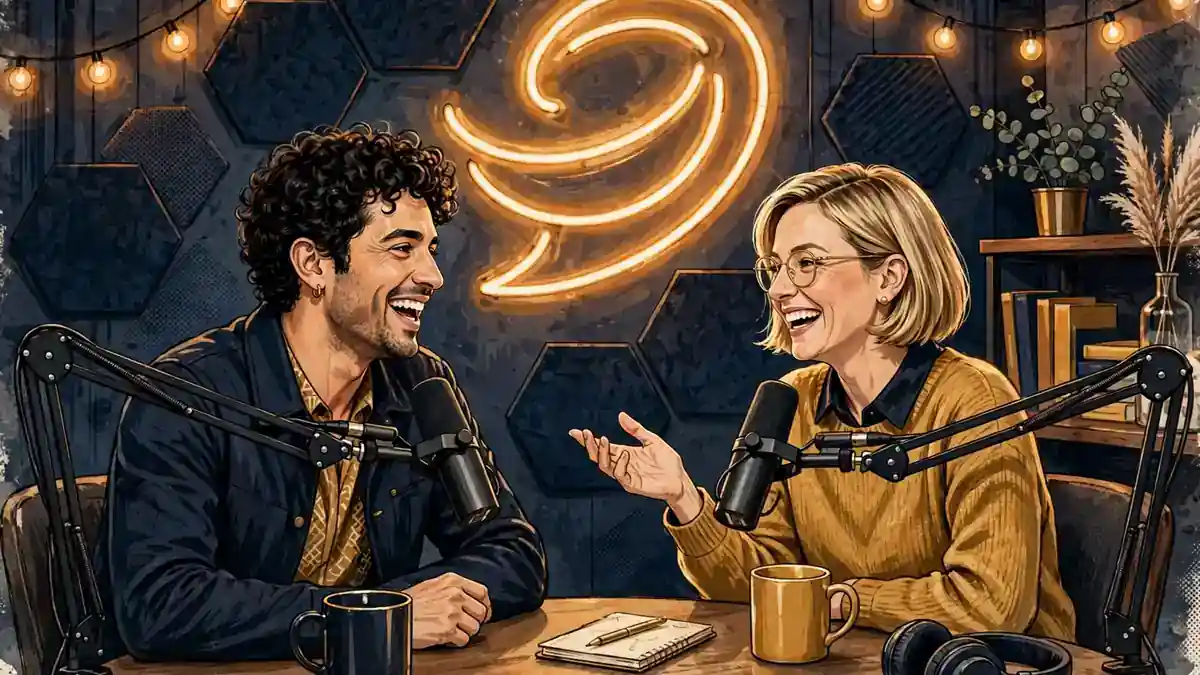
Podcasting is the second line, and the steadiest. Flagrant earns through sponsorships, live-recorded episodes that sell tickets, and a subscription layer that YesPress and The News God both place at roughly $1 million a year from Patreon alone, before sponsorships, touring or merchandise are counted. The Brilliant Idiots, co-hosted with Charlamagne tha God, adds a second show’s sponsorship and ad revenue; MoneyMade estimates the two podcasts together bring in about $1 million a year in ad and sponsorship income on top of the subscription figure. Podcasting also feeds the touring business directly: Flagrant listeners buy tickets to live recordings and stand-up dates, so the show functions as both a product and an advertisement for the other products.
The specials are the third line. Schulz Saves America (Netflix, 2020) and Life (Netflix, 2025) paid streamer license fees, while Infamous (self-distributed, 2022) paid him directly — $20 per purchase, with no platform taking a cut. The direct-sale model is smaller in gross audience than a Netflix release and larger in margin per viewer, which is why Schulz has alternated between the two: Netflix for reach, self-distribution for profit.
YouTube is the fourth line. Net Worth Spot, which models channel revenue from views and ad rates, places the Andrew Schulz channel’s annual ad earnings at about $500,800, with an optimistic case near $901,500, and values the channel itself at roughly $2 million to $2.8 million. Those are channel-only figures — they exclude podcast sponsorships, touring and specials — and they illustrate why single-source estimates of his wealth miss the mark: the YouTube channel alone is a seven-figure asset, and it is one of six lines. MoneyMade separately reports about $50,000 a month in YouTube ad revenue, which annualizes to roughly $600,000 and sits inside the same band as Net Worth Spot’s estimate.
Acting is the fifth line, and the one with the most headroom. The Street Fighter role as Dan Hibiki is his first major studio film part, and franchise films pay in ways stand-up cannot: a fixed acting fee, possible backend participation, and the option value of sequels. His earlier acting work — Sneaky Pete on Amazon, MTV series, small film parts — paid working-actor rates. The 2026 film is a step change, and its financial effect will show up in the 2027 estimates rather than the 2026 ones.
Merchandise and live recordings form the sixth line. Tour merch, podcast merch and the direct sale of specials and live recordings all carry high margins because Schulz owns the storefront. Comedyville notes that merchandise and touring sit alongside podcasting as the core of the $4 million to $10 million range, and the structure supports that: a comic who owns his audience can sell to it at retail prices instead of wholesale ones.
How does that compare with the podcast-first comics around him? Joe Rogan’s net worth sits in a different league — Rogan’s Spotify deal alone was reported in the hundreds of millions — but the model is the same one Schulz follows: a free show that builds an audience, then touring, specials and sponsorships that convert it. Schulz’s version is smaller and, in one respect, more independent: Rogan licensed his show exclusively to a platform, while Schulz kept Flagrant distributed everywhere and owned outright.
Salary and Earnings
There is no single salary figure for Andrew Schulz, because comedians do not draw salaries — they assemble annual earnings from dates, deals and distributions. The honest way to present the number is as a set of reported lines with their sources named, and to flag the one figure that does not survive scrutiny.
The strongest reported lines: about $1 million a year from Patreon, reported by both YesPress and The News God; about $1 million a year from podcast advertising and sponsorships across Flagrant and The Brilliant Idiots, per MoneyMade; about $500,000 to $900,000 a year from YouTube advertising, per Net Worth Spot; and about $50,000 per live performance, per The Most 10. Stacked together, and before touring guarantees, merchandise, special sales and acting fees, the reported lines point to annual earnings in the low seven figures in a touring year — consistent with a net worth in the $4 million to $10 million range for a performer who has been earning at this level for roughly five years and spending on a buyback, a wedding, a child and a New York life along the way.
The figure that does not survive scrutiny is the $40 million net worth claimed by InfoCelebs, which also asserts Flagrant earns $8 million to $12 million a year for Schulz personally and that his wealth jumped to $10 million to $15 million by 2021. No other outlet supports those numbers. Celebrity Net Worth, MoneyMade, The News God, Comedyville and ASAPLand all cluster between $4 million and $10 million, and the $8 million to $12 million podcast claim would require Flagrant to gross at a level no independently reported podcast of its size reaches. We list the $40 million claim here so readers who meet it elsewhere know it exists — and know why we did not use it. The same discipline applies to the low end: Net Worth Spot’s $2 million figure covers the YouTube channel only, not the man, and citing it as his total net worth would understate the touring, podcast and special income documented above.
Peer context sharpens the picture. Dave Chappelle’s net worth is reported at about $50 million by The Most 10, built on three Netflix specials reported at $20 million each — the kind of streamer money Schulz walked away from on Infamous. Kevin Hart’s net worth is listed at $200 million by the same outlet, built on film franchises, a touring machine and a production company. Schulz sits well below both, and the gap is structural: Chappelle and Hart took the big streamer and studio checks, while Schulz spent his peak earning years building an owned audience instead. The trade looks different now that the audience is built — Life on Netflix and Street Fighter in theaters are the payoff for owning the funnel first.
Businesses and Investments
Schulz’s most consequential business move was not a company he bought but a product he refused to sell: Infamous. The buyback — more than $1 million paid to Amazon Prime to recover the rights to his own special after the platform asked for cuts — is the single best-documented investment of his career, and MoneyMade reports it returned about three times the outlay. The return came with a second dividend: the story of the buyback became marketing for everything Schulz sold afterward, and it established the pricing power he now holds with streamers.
His second business is the Flagrant operation itself. The show is not a hobby with a tip jar; it is a small media company with hosts, producers, live events, merchandise and a subscription tier. The live recordings are a distinct product: fans pay to watch the podcast taped in front of an audience, which means the show earns ticket revenue for doing the work it would do anyway. That structure — content as event, event as content — is the same loop that powers the arena tours, and it is why the podcast’s value exceeds its ad revenue.
What Schulz has not done, publicly at least, is equally informative. There are no reported real-estate portfolios, no restaurant chains, no venture fund, no tequila brand, no sneaker line. The reporting on his holdings is thin because the holdings are thin: the wealth is concentrated in the audience, the catalog of specials, and the touring business. That concentration is a risk — an audience can cool — and it is also the reason the $4 million anchor is defensible. A comic with $40 million would show property records, production-company filings or investment announcements; Schulz’s public record shows a working performer reinvesting in his own output. Readers should treat any site that lists houses, cars and stock portfolios for him as inventing detail: no outlet in our research window published a verified property record or vehicle list for Schulz, and this article does not invent one.
Brand Deals and Sponsorships
Schulz’s sponsorship income arrives mainly through the podcasts, where host-read ads for direct-to-consumer brands, betting-adjacent products and male-grooming lines sit inside episodes that regularly run past two hours. The rates are not public — podcast ad rates are negotiated privately and vary by episode — but the volume is visible: Flagrant carries multiple sponsors per episode across hundreds of episodes, and MoneyMade’s $1 million-a-year podcast estimate is built on that volume. The subscription layer, at roughly $1 million a year per YesPress and The News God, is sponsorship-adjacent: fans pay for ad-free or early access, which means the audience itself is the sponsor.
He has avoided the traditional celebrity endorsement path. There is no reported long-term deal with a car brand, a watchmaker or a fashion house, and no evidence of the seven-figure ambassadorships that actors of his profile sometimes sign. The absence fits the brand: Schulz’s act is built on saying things sponsors dislike, and a comic who sells the right to be unfiltered cannot easily rent his name to a company that wants veto power over the jokes. The Street Fighter casting is the closest thing to a brand deal in his recent record — a studio paying for his persona — and it arrived without him having to soften the act to get it.
Houses, Cars and Other Assets
Honest reporting requires saying what is not known. No property record, mortgage filing or verified home purchase for Andrew Schulz appeared in the outlets we reviewed for this article, and no reliable source has published a car collection or a list of real-estate holdings for him. He lives in New York — the city where he was born and where the Beacon Theatre taping of Life was filmed — but the address, the ownership status and the price are not public, and this article will not guess at them.
What can be stated with confidence is the shape of the asset base. The valuable assets are intangible and owned outright: the Flagrant audience and back catalog, the Brilliant Idiots catalog, the rights to Infamous, the YouTube channel with about 2.8 million subscribers, and the touring business that converts all of it into ticket sales. Intangible assets do not photograph well for a net worth article, which is why lower-quality sites invent houses and cars to fill the section. The catalog is the house. A special that sells directly at $20 a copy, with no platform taking a cut, is an asset that pays every time a new fan discovers it — and unlike a property, it does not come with a mortgage.
Awards and Achievements
Schulz has not won an Emmy, a Grammy or a Golden Globe, and this article does not pretend otherwise. The comedy industry’s formal awards have largely passed him by, in part because his distribution model kept him outside the rooms where those awards are decided: a self-distributed special does not get submitted through a network’s awards apparatus, and a podcast does not compete for television prizes.
The achievements that matter to his balance sheet are commercial, and they are documented. Selling out Radio City Music Hall twice in a single night is a feat few comics of any generation manage. Playing Madison Square Garden on back-to-back nights on the Life tour is another. Building Flagrant from a 2018 launch into one of the most-downloaded comedy podcasts in the world is a third. Landing a role in a Legendary and Paramount franchise film — Street Fighter, October 2026 — is a fourth. And the Infamous buyback, which turned a censorship dispute into a reported threefold return, is the achievement other comedians now cite as a model. None of these comes with a trophy. All of them come with revenue.
The Life special’s 7.6 rating on IMDb is the closest thing to a scored verdict on his recent work, and it is a strong one for a comedy special — a genre where audiences rate harshly and personal material usually scores lower than crowd-pleasing crowd work. The rating, the arena sellouts and the franchise casting together describe a comic at his commercial peak, even without a shelf of awards.
Net Worth Growth Over the Years
| Year | Estimated net worth | What changed |
|---|---|---|
| 2018 | $2 million | Flagrant launches; touring and podcasting replace club dates as the core income |
| 2020 | $3 million | Schulz Saves America premieres on Netflix (four parts, December 2020) |
| 2022 | $4 million | Infamous self-distributed after a $1 million-plus buyback; reported threefold return |
| 2024 | $4 million to $6 million | Arena touring at scale; daughter born February 2024; Life tour sells out Madison Square Garden |
| 2026 | $4 million to $10 million | Life on Netflix (March 2025); Street Fighter as Dan Hibiki (October 2026) |
The table is an estimate compiled from the sources named in this article, not an audited ledger. The pattern it shows is more reliable than any single cell: slow growth through the television years, a step up when podcasting and touring scaled, and a widening range in 2026 as the film role and the second Netflix special add income lines that did not exist five years ago. The low end of the 2026 range is the number every major outlet agrees on; the high end is what the touring, podcast and special income supports when all six lines are counted together. A reader who wants one number should use $4 million. A reader who wants the honest picture should use the range.
Social Media Presence
YouTube is Schulz’s home platform, and the numbers there are the firmest in this section: about 2.8 million subscribers on his main channel, per Net Worth Spot’s October 2026 estimate, with clips of crowd work and full bits doing the work of a marketing department. The channel’s ad revenue — about $500,800 a year on Net Worth Spot’s model, with an optimistic case near $901,500 — is a fraction of what the channel earns him indirectly, because every viral clip sells tickets to a room that holds thousands.
Instagram, X and TikTok carry the same clips in shorter form, and the podcast accounts extend the reach further: Flagrant clips circulate as standalone videos that regularly outperform the full episodes, pulling new listeners into the subscription funnel. Exact follower counts for the secondary platforms shift weekly and were not consistently reported across the outlets reviewed, so this article does not print figures it cannot verify. The structural point stands without them: Schulz’s social presence is a distribution system, not a vanity metric, and it is the reason a comic without a network show can fill an arena in a city he has never played.
Personal Life
Schulz married Emma Turner on December 18, 2021, in a private ceremony in Montecito, California. Turner, born February 14, 1995, in Santa Barbara, California, works in business and fitness, and the couple had announced their engagement a year earlier. They kept the wedding small and the relationship largely out of the act — until the act caught up with it.
Their daughter, Shiloh Jean Schulz, was born in February 2024 after the couple went through IVF, and the experience became the spine of the Life special. Schulz has spoken openly about the fertility process — the clinical detail, the cost, the waiting — and turned it into an hour of arena material that sold out Madison Square Garden. It is a sharp turn for a comic whose early reputation rested on provocation: the most personal special of his career is also the one that played the biggest rooms.
Family remains close to the story. His father Larry’s reporting background and his mother Sandra’s career as a Scottish ballroom dancer gave Schulz two models of making a living from words and performance, and his brother Greg has stayed out of the public eye. Schulz still works out of New York, the city where he was born, and the late-night circuit that raised him — including appearances on the kind of shows Jimmy Fallon’s net worth was built on — remains part of how he reaches audiences who never open a podcast app.
Sources & Reporting
Celebrity Net Worth — the $4 million anchor figure for Schulz’s net worth, carried as its current estimate and used as the base of our range.
MoneyMade — profile updated April 28, 2026: the $4 million figure, the $1 million-plus Infamous buyback with a reported threefold return, about $1 million a year from the two podcasts, and about $50,000 a month in YouTube ad revenue.
Comedyville — July 2026 profile placing the 2026 range at $4 million to $10 million, with touring, podcasting and specials as the core income lines.
ASAPLand — the $4 million to $6 million range, the October 30, 1983 birth date, the 6-foot-2 height, and the 42-year age figure published before his October 2026 birthday.
The News God — the $4 million figure, the 2.8 million YouTube subscriber count, and the reported $1 million annual Patreon income.
The Most 10 — the $10 million to $12 million upper estimates, the reported $50,000 average per live performance, and the peer figures for Kevin Hart ($200 million) and Dave Chappelle ($50 million).
InfoCelebs — the $40 million outlier figure and the $8 million to $12 million podcast claim, listed here and set aside for the reasons given in the salary section.
Net Worth Spot — October 2026 channel model: about $2 million to $2.8 million for the YouTube channel alone, about $500,800 a year in channel ad revenue, and 2.8 million subscribers.
YesPress — the Life special’s March 4, 2025 Netflix premiere at the Beacon Theatre, the Radio City double sellout, the Madison Square Garden dates, and the reported $1 million annual Patreon income.
Anime News Network and Wikipedia — the Street Fighter casting as Dan Hibiki, the October 16, 2026 theatrical opening, and the ensemble cast list. Reporting window: October–November 2026.
Reporting window for this article: April–November 2026. Figures are estimates drawn from the outlets above; where they disagree, this article publishes the range and names who says what. No figure in this article comes from an unnamed source.
Frequently Asked Questions
What is Andrew Schulz’s net worth in 2026?
Andrew Schulz’s net worth is estimated at $4 million to $10 million as of November 2026. The $4 million figure comes from Celebrity Net Worth, MoneyMade and The News God, while Comedyville places the range at $4 million to $10 million and ASAPLand at $4 million to $6 million. The range reflects touring, podcasting, specials and his 2026 film role; a $40 million figure published by one outlier site is not supported by any other outlet.
How much does Andrew Schulz make per show?
The Most 10 reports an average of about $50,000 per live performance, though the figure varies sharply with venue size — a club date pays far less than an arena night at Radio City Music Hall or Madison Square Garden. Touring is his largest income line, and the arena sellouts of the Life tour sit at the top of that scale.
How much does Andrew Schulz make from the Flagrant podcast?
No audited figure is public. MoneyMade estimates about $1 million a year from podcast advertising and sponsorships across Flagrant and The Brilliant Idiots, while YesPress and The News God report roughly $1 million a year from Patreon subscriptions alone. Live-recorded episodes that sell tickets add a third podcast revenue line.
Is Andrew Schulz married?
Yes. Andrew Schulz married Emma Turner on December 18, 2021, in a private ceremony in Montecito, California. Turner was born February 14, 1995, in Santa Barbara, California. The couple welcomed their daughter, Shiloh Jean Schulz, in February 2024 after going through IVF — the experience that became the subject of his Netflix special Life.
How old is Andrew Schulz?
Andrew Schulz is 43 years old as of November 2026. He was born on October 30, 1983, in New York City, and turned 43 on October 30, 2026. Some profiles published earlier in 2026 still list him as 42 because they were written before his birthday.
How tall is Andrew Schulz?
Andrew Schulz is 6 feet 2 inches tall (188 cm). His wife Emma Turner is 5 feet 6 inches, a difference of eight inches that has been noted in profiles of the couple.
What is Andrew Schulz’s Netflix special Life about?
Life, which premiered on Netflix on March 4, 2025, is built around IVF and new parenthood — Schulz and his wife conceived their daughter Shiloh through IVF. Filmed at New York’s Beacon Theatre after a global tour with back-to-back Madison Square Garden sellouts, it is his most personal special and holds a 7.6 rating on IMDb.
Is Andrew Schulz in the Street Fighter movie?
Yes. Andrew Schulz plays Dan Hibiki in Legendary Entertainment and Paramount’s live-action Street Fighter film, directed by Kitao Sakurai, which opened in theaters on October 16, 2026. Dan is the overconfident martial artist who invented his own fighting style, Saikyo-ryu — a comic character in the franchise and Schulz’s first major studio film role.
Final Thoughts
Andrew Schulz’s net worth — $4 million to $10 million, anchored at $4 million — is a number that tells a story about ownership. He spent his twenties working clubs for $1,500 weekends and his early thirties on cable television, then spent his late thirties building something no network could take away: a podcast audience, a catalog of specials he controls, and a touring business that fills arenas. The Infamous buyback is the hinge of the story. Paying more than $1 million to recover his own special looked reckless in 2022; the reported threefold return, the press it generated, and the negotiating power it gave him with Netflix on Life make it look like the smartest check he ever wrote.
The 2026 picture is a comic at his commercial peak with room still to grow. Life proved he could sell arenas with personal material, and Street Fighter proved a major studio would pay for his persona without asking him to change it. The risks are real — the wealth is concentrated in an audience and a catalog rather than property or a production company — but the structure is sound: six income lines, no single gatekeeper, and an audience he owns outright. If the film work grows into a second career the way the podcasting did, the next revision of this estimate will be higher. For now, $4 million is the figure every reliable outlet agrees on, and $10 million is the top of what the documented income supports.
Published on November 10, 2026. Last reviewed November 2026. Found an error? See our corrections policy.