
Armand Assante‘s net worth is estimated at $2 million–$10 million as of November 2026. The honest answer is a range, not a single number, because the two kinds of sources that track celebrity wealth disagree sharply about him: Celebrity Net Worth puts him at $2 million, citing the Chapter 11 bankruptcy he filed in 2011 and the foreclosure of his 222-acre New York horse farm in 2014, while a cluster of smaller net-worth trackers still list $10 million. He won a Primetime Emmy for playing John Gotti in HBO’s 1996 film Gotti, built a filmography of more than 140 credits across five decades, and kept working into his late seventies — including producing and starring in the 2024 comedy-crime film Don Q — yet his finances tell a very different story from the usual Hollywood success arc. This article works through the documented record: the peak years, the 80 percent income drop his own accountant linked to the aftermath of September 11, the $31,000 a month he owed for mortgage and spousal support combined, and the steady television and independent-film work that rebuilt his income after the bankruptcy.
Armand Assante: Quick Facts
| Estimated net worth | $2 million–$10 million (range: $2 million–$10 million) |
|---|---|
| Profession | Actor and producer |
| Nationality | American |
| Born | October 4, 1949 (age 77) |
| Height | 5 ft 10 in (1.78 m) |
| Primary income sources | Film and television acting, residuals, voice work, producing, Ora Vivo Cigars |
| Active years | 1974–present |
| Last reviewed | November 2026 |

- Early Life and Background
- Education
- Career Journey
- Rise to Fame
- Main Sources of Income
- Salary and Earnings
- Businesses and Investments
- Brand Deals and Sponsorships
- Houses, Cars and Other Assets
- Awards and Achievements
- Net Worth Growth Over the Years
- Social Media Presence
- Personal Life
- Sources & Reporting
- Frequently Asked Questions
Early Life and Background
Armand Anthony Assante Jr. was born on October 4, 1949, in New York City, and raised in Cornwall, a small town in Orange County, New York, about 50 miles north of Manhattan. His father, Armand Anthony Assante Sr., was a painter and artist; his mother, Katharine Healy, was a music teacher, an English teacher and a poet. The household was Italian on his father’s side — the family traced its roots to Rome and Naples — and Irish on his mother’s side, and Assante was raised in a devoutly Roman Catholic family. That mix of backgrounds shaped the casting pattern of his whole career: with his dark looks and his name, casting directors in the 1970s and 1980s kept reading him as foreign talent, and he played Frenchmen, Italians, Spaniards, Arabs, Cubans and Latin American characters long before he played the Italian-American mobsters who made him famous.
Cornwall mattered to Assante in a way that went far past childhood. He stayed attached to the Hudson Valley for his entire adult life, and the land he bought there became the centre of his financial life — first as the place where he built a home with his father, then as the asset at the heart of his bankruptcy. The farm estate in Campbell Hall, Orange County, eventually ran to 222 acres across three parcels at 435, 451 and 467 Hulsetown Road, with a 7,248-square-foot main house holding five bedrooms. In a 2014 statement quoted by Celebrity Net Worth, Assante called the property “my home” and “something I built with my father” and “the legacy I want to leave to my children.” The same property later produced the starkest numbers in his financial record: a $1.5 million mortgage, monthly payments that rose from $11,000 to $16,000 after a refinancing, and a foreclosure auction in 2014.
Assante’s path into acting ran through the stage rather than through film school. He grew up in a house where art and music were daily work — a painter father, a mother who taught both music and English — and he has spoken in interviews about choosing scripts for their writing quality ahead of their commercial prospects. A 2007 Backstage profile, published when he was promoting his small role in Ridley Scott’s American Gangster, quoted him saying that money was a consideration when he chose a project, but that the quality of the script took precedence over a film’s commercial viability and even over the size of his role. That preference explains a great deal about the shape of his earnings: a career full of respected work in independent film and television movies, rather than a run of big studio paydays.
Education
Assante attended Cornwall Central High School in his home town, then trained as an actor at the American Academy of Dramatic Arts in New York, graduating in 1969. The Academy, founded in 1884, is the oldest acting school in the English-speaking world, and its two-year conservatory programme in the late 1960s was built around voice, movement, scene study and classical text — the training that later let Assante move between stage, soap opera, miniseries and film without the adjustment period that trips up many screen-only actors.
He was 20 when he graduated, and the five years between graduation and his first credited screen work were spent in theatre and in the New York acting circuit. The stage grounding shows in the roles that defined him: the classical weight he brought to Napoleon in Napoleon and Josephine: A Love Story (1987), to Odysseus in The Odyssey (1997), and to Friedrich Nietzsche in When Nietzsche Wept (2007) all draw on the same training. Unlike many actors of his generation, Assante never chased a university degree or a second career credential; the Academy diploma was the whole of his formal education, and his working life began almost at once in daytime television.
One detail worth noting for readers comparing him with his peers: Assante entered the profession before the modern era of eight-figure film salaries for character actors. His generation of working actors — men who came up through soaps and TV movies in the 1970s — earned their money in volume, across dozens of roles, rather than in a few huge paydays. That structure is central to understanding why a 140-credit career can still produce a modest net worth, and why the loss of that volume after 2001 hit him so hard.
Career Journey
Assante’s first film was The Lords of Flatbush in 1974, though his role as a wedding guest was cut from the finished film and the end credits misspelled his surname as “Assanti.” His first on-screen role that survived the edit was playing Sylvester Stallone’s brother Lenny Carboni in Paradise Alley (1978). Before that, television had already given him steady work: he was a regular on two NBC soap operas in the 1970s, playing Johnny McGhee on How to Survive a Marriage and Dr. Michael Powers on The Doctors from 1975 to 1976. Soap work in that era paid a reliable weekly wage and, just as usefully, taught an actor to shoot fast, learn lines overnight and hold a character across hundreds of episodes.
The late 1970s and 1980s built his screen identity. He appeared in the horror film Prophecy (1979), played the French lover Henri Alan Tremont opposite Goldie Hawn in Private Benjamin (1980) — a film that grossed $69.8 million worldwide on a $9.2 million budget, according to Wikipedia’s box-office record — and took the title role of Mickey Spillane’s private eye Mike Hammer in I, the Jury (1982). Television movies filled the gaps between features: Sophia Loren: Her Own Story (1980), Rage of Angels (1983), in which he played mobster Michael Moretti, and a run of late-1980s TV films including A Deadly Business (1986), Stranger in My Bed (1987) and Hands of a Stranger (1987). He also carried the independent film Belizaire the Cajun (1986) as the title character, the kind of leading role in a small film that paid little and earned him lasting respect among directors.
The 1990s were his peak decade, and the work came in clusters. Sidney Lumet’s Q&A (1990) cast him as the corrupt drug dealer Roberto Texador and earned him a Golden Globe nomination for Best Supporting Actor. The following year he played Bugsy Siegel in Neil Simon’s The Marrying Man (1991). In 1992 alone he appeared in three very different films: as the Cuban bandleader Cesar Castillo in The Mambo Kings opposite Antonio Banderas, as Gabriel Sanchez in Ridley Scott’s 1492: Conquest of Paradise, and as the mob enforcer Carl “Dally” D’Allesandro in Hoffa, starring Jack Nicholson. He followed that with Trial by Jury (1994), then played Rico Dredd, the villainous clone of Sylvester Stallone’s Judge Dredd, in the 1995 science-fiction film Judge Dredd, and Lieutenant Al Garcia in Striptease (1996) opposite Demi Moore. The Lumet performance deserves emphasis: it was Texador that won him the Mambo Kings role — a part that had been turned down by Kevin Kline — and it set the template for the charismatic, dangerous men he would play for the next thirty years.
Television gave him the two roles that still define him. He played Napoleon Bonaparte in the 1987 miniseries Napoleon and Josephine: A Love Story opposite Jacqueline Bisset, and Richard Mansfield in the 1988 miniseries Jack the Ripper, which brought him an Emmy nomination for supporting actor and a Golden Globe nomination. Then came Gotti in 1996, the HBO film about mob boss John Gotti, and The Odyssey in 1997, in which he played Odysseus across a two-part, big-budget retelling of Homer. Both were prestige television events of the kind that no longer exists in the same form: multi-night miniseries with film-scale budgets and mass audiences.
The 2000s mixed voice work, studio supporting roles and a long run of independent films. He voiced the villain Tzekel-Kan in the DreamWorks animated film The Road to El Dorado (2000), which brought him an Annie Award nomination for voice acting. He starred in and executive produced the 2005 independent thriller Dot.Kill, appeared in Two for the Money (2005) with Al Pacino and Matthew McConaughey, and played the philosopher Friedrich Nietzsche in When Nietzsche Wept (2007). The same year he joined the cast of Ridley Scott’s American Gangster as Dominic Cattano, a character based on the real-life Lucchese family boss Carmine Tramunti, alongside Denzel Washington and Russell Crowe. The film grossed $269.8 million worldwide on a $100 million budget, according to Box Office Mojo, and earned two Oscar nominations. Television kept him visible through the decade: a recurring role as Richard Elliot on ER (2006), the international arms dealer Rene “La Grenouille” Benoit on NCIS (2007), and Gabriel Diaz on October Road (2008).
The 2010s and 2020s show a working actor adapting to a changed industry. The studio supporting roles thinned out, and Assante worked in independent features and streaming series: Dead Man Down (2013), Once Upon a Time in Brooklyn (2013), Magic Man (2010), and recurring television as Sal Dash on the BET drama The Family Business (2018–2019) and Mr. Martino on HBO’s The Deuce (2018–2019). He also worked extensively outside the United States, taking roles in film projects and humanitarian work in Romania, Bulgaria, North Macedonia, Serbia, Croatia, Bosnia-Herzegovina, Kazakhstan and Uzbekistan, according to his Wikipedia biography. Recent credits include the title role in Don Q (2023–2024), which he also produced, the horror film Oak (2024) as Abe, the drama 260 Days (2025), and the thriller Misdirection, listed for 2026. His filmography runs past 140 acting credits, a volume that puts him among the hardest-working American actors of his generation.
Rise to Fame
Assante’s rise was gradual rather than sudden, and it ran through television more than through film. Private Benjamin in 1980 gave him his first wide audience: the film was one of the biggest box-office hits of the year, and his turn as the handsome Frenchman who marries Goldie Hawn’s Judy Benjamin — then leaves her — made him a recognisable face. But the film belonged to Hawn, and Assante’s next steps were character parts rather than leading-man vehicles. I, the Jury in 1982 was meant to change that: he carried the film as Mike Hammer, and it failed at the box office. The failure mattered. It closed the door on the conventional leading-man track and pushed him toward the ensemble and supporting work where he did his best acting.
What rebuilt his standing was a run of performances that critics and awards voters noticed even when audiences were modest. Q&A in 1990 gave him the Golden Globe nomination that announced him as a serious screen actor rather than a handsome presence. The Mambo Kings in 1992 showed a different register — warmth, music, romantic leading-man charm opposite Antonio Banderas — and proved he could carry a film’s emotional centre. Jack the Ripper in 1988 had already brought Emmy and Golden Globe nominations for his supporting work. Each of these roles raised his asking price a little and, more importantly, kept directors calling.
Gotti in 1996 was the turning point. Assante played John Gotti, the head of the Gambino crime family, in the HBO film, gaining 50 pounds for the part and then losing it all in four months to play Odysseus in The Odyssey, as he told Backstage in 2007. The performance won him the Primetime Emmy Award for Outstanding Lead Actor in a Miniseries or a Special in 1997, plus Golden Globe and Screen Actors Guild nominations. For an actor who had spent twenty years as a reliable supporting presence, the Emmy was the credential that changed how the industry saw him — and it arrived at the exact moment when HBO was becoming the prestige address in American television. His co-star in Gotti was Anthony Quinn, and the film’s success fixed the Gotti role as the one Assante would be asked about for the rest of his career: in 2021 it was even announced that he would reprise the role in a sequel project, Gotti 2: The Final Chapter, Facts Undisputed.
The fame that followed was real but narrow. Assante never became a tabloid figure or a franchise lead; his name carried weight with casting directors and awards voters rather than with opening-weekend audiences. That distinction is the key to his finances. An actor whose fame is critical rather than commercial can work for fifty years and still earn character-actor money — steady, respectable, and far below the sums attached to stars who open films. His peak earning years were the 1990s, when he combined studio supporting roles, HBO prestige films and miniseries leads. After 2001, as his own accountant later described, that volume fell away sharply, and it never fully returned.
Main Sources of Income
Acting has always been Assante’s main income, and it has come in four distinct streams across his career. The first was daytime and prime-time television: the soap-opera regular work of the 1970s, the television movies of the 1980s, and the miniseries of the late 1980s and 1990s. TV movies and miniseries paid flat fees rather than box-office participation, but they paid reliably, and for an actor of Assante’s standing they were the financial backbone of his peak years. The second stream was feature films — studio supporting roles in the 1990s such as Judge Dredd, Striptease and American Gangster — where the pay was higher per job but the work was less frequent. The third was voice work, led by The Road to El Dorado in 2000, which pays session fees plus residuals on home-video and streaming use. The fourth, and the one that has sustained him longest, is independent film: dozens of low-budget features from the 2000s onward that pay modest day rates but keep an actor working, visible and eligible for residuals.
Residuals deserve a paragraph of their own, because they explain how a working actor survives between jobs. Every time a film or television show Assante appeared in is re-aired, streamed or sold on home video, the Screen Actors Guild’s residual system sends him a payment. With more than 140 credits, including films that still circulate — Private Benjamin, Gotti, The Odyssey, Judge Dredd, American Gangster — those payments add up to a meaningful annual sum even in years when he shoots nothing new. They are also the income stream that fell when viewing habits changed: the shift from broadcast reruns to streaming licensing changed how residuals are calculated, and older contracts pay less under the new formulas than they did under the old ones. Assante’s own bankruptcy filing listed a debt of $12,000 to the Screen Actors Guild’s credit union, a small but telling detail — the guild was both his paymaster and, at the worst moment, one of his creditors.
Producing is the second income stream that grew in importance as acting fees levelled off. Assante starred in and executive produced Dot.Kill in 2005, and he produced Don Q in 2024, the film in which he also played the title role. Producing an independent film is not a salary in the usual sense: the producer’s money comes from ownership points, distribution advances and, if the film sells, a share of the returns. On small films those returns are usually modest, and producers often defer their own fees to get the film finished. The value for Assante was control — the ability to keep working in roles he chose, on his own schedule, rather than waiting for casting calls — and the producer credit also gave him a stake in whatever the film earned over time.
The third stream is his cigar business, Ora Vivo Cigars, launched in 2013. Premium cigars are a niche luxury market, and a celebrity-branded cigar line earns money through wholesale distribution to cigar shops and lounges, plus direct sales at events and appearances. Assante is a genuine cigar enthusiast, and the brand trades on his name and on the mob-movie persona that Gotti fixed in the public mind. No revenue figure for Ora Vivo has ever been published, and we do not estimate one here — the honest statement is that the brand exists, it has survived for more than a decade, and it gives him an income that does not depend on casting decisions. For a man whose acting income fell 80 percent after 2001, a second business that he controls outright has real value even if its turnover is small.
Personal appearances, conventions and voice-over work round out the picture. Assante has appeared at fan conventions and film festivals — he received a Lifetime Achievement Award at the Westchester Film Festival in 2007 — and working actors of his generation commonly earn appearance fees at such events. He has also done narration work, including narrating the 2017 documentary Power of Silence. None of these streams is large on its own. Together they describe a diversified working actor’s income: several modest sources rather than one large one, which is exactly why the loss of the largest source — steady acting volume — hit him so hard in the 2000s.

Salary and Earnings
No studio, network or trade publication has ever published Assante’s fee for a specific role, and this article will not invent one. That absence is itself informative: actors at his level — respected, award-winning, but not box-office draws — are paid under Screen Actors Guild scale-plus agreements, where the fee is negotiated privately per project and rarely leaks. What the public record does give us is the shape of his earnings over time, and it comes from the most reliable source available: his own bankruptcy file, as reported by Celebrity Net Worth from the court documents.
According to one of Assante’s former accountants, quoted in that reporting, his income fell nearly 80 percent in the wake of the September 11 attacks and the economic shock that followed. The figure is striking because it is specific and sourced to a person who saw the books. The mechanism is easy to understand: after 2001, the television-movie and miniseries market that had been his steadiest employer contracted sharply, independent-film financing dried up, and the volume of work that had supported him through the 1990s did not return. He kept working — the filmography shows credits in every year of the 2000s — but the work paid less, and there were fewer of the mid-budget studio roles that had been his best paydays.
The bankruptcy filing of October 2011 gives the clearest snapshot of his finances at their worst. He filed for Chapter 11 protection in Poughkeepsie, New York, in a move designed to stop the foreclosure of the 222-acre farm. The filing showed roughly $36,000 in unpaid taxes for the years 2006, 2007 and 2009, $12,000 owed to the Screen Actors Guild’s credit union, $150,000 already spent on legal fees, and $66,000 owed to an accounting firm. The two obligations that dominated his monthly outgoings were the mortgage and his divorce settlement: after a 2005 refinancing, his mortgage payment had risen from $11,000 to $16,000 a month, and his 1997 divorce settlement required him to pay his former wife Karen McArn $15,000 a month until she turned 59 and a half — a total of $1.35 million over the remaining seven and a half years at the time of the filing. Combined, those two obligations alone came to $31,000 a month, before taxes, legal fees or living costs.
Set against that, the high end of his net-worth range — the $10 million repeated by many smaller trackers — looks hard to square with the court record. A man with $10 million in net assets does not usually file for Chapter 11 over a $1.5 million mortgage, and does not lose a property to foreclosure three years later. That is why this article anchors its estimate to the $2 million figure: it is the only figure in circulation that is consistent with the documented bankruptcy and foreclosure. The $10 million figure appears to be a legacy number, carried forward by content sites from before the bankruptcy, and repeated without checking the court record. Readers who see $10 million elsewhere should know that it predates the financial collapse it ignores.
What did he earn at his peak? The honest answer is that we can bound it, not pin it down. In the mid-1990s, a Golden Globe-nominated supporting actor with an Emmy win could command a six-figure fee for a studio supporting role and a comparable fee for a television-movie lead. Across a year with three or four such jobs, plus residuals from a deep catalogue, his gross income in the peak years plausibly ran into seven figures annually. We label that a reasoned inference, not a reported fact, because no source has published the number. The inference matters because it explains the farm: a man earning at that level in the 1990s could reasonably buy 222 acres and build a 7,248-square-foot house. It also explains the fall: when that income dropped by 80 percent, the fixed costs of the property and the divorce settlement did not drop with it.
Since the bankruptcy, his earnings have followed the pattern of a working character actor in his seventies: independent-film fees, television recurring roles, residuals, producing points and the cigar business. The 2018–2019 run on The Family Business and The Deuce put him back on two series at once, and the 2024 Don Q project gave him a producer’s stake as well as an acting fee. None of this restores the 1990s income level, but it is steady, diversified work — and it is the reason the low end of our range is $2 million rather than zero. He kept the parcel of the farm that held the house he built with his father, he kept working, and he kept the cigar brand alive.
Businesses and Investments
Ora Vivo Cigars is Assante’s only documented business, and it is the one venture in his financial life that he built from scratch rather than inheriting from a career. He became a partner in the premium cigar brand in 2013, and the brand has been sold through cigar shops and lounges under his name ever since. The economics of a boutique cigar line are straightforward: the brand contracts with a factory, usually in the Dominican Republic or Nicaragua, to produce cigars to its blend, then sells them wholesale to retailers at a margin, with the celebrity name doing the marketing work. Assante’s name carries a specific charge in this market — the Gotti association gives the brand a story that a generic premium cigar cannot match — and he has promoted it personally at cigar events and through his official website, armandassante.net.
What Ora Vivo is not, as far as the public record shows, is a large company. There is no published revenue, no funding round, no acquisition, and no indication that it employs more than a small team. That is normal for a celebrity cigar brand: most of them are licensing and distribution plays, not manufacturing businesses. The value to Assante is that it is an asset he owns and controls, it produces income without a casting director’s approval, and it keeps his name in front of an audience that buys premium products. In the context of a $2 million–$10 million net worth, the cigar brand is best understood as a meaningful small business rather than a fortune-maker — a distinction the $10 million trackers, which often list “business ventures” as a wealth source without any numbers, fail to make.
His other investments, so far as the record shows, were property — and property is where his finances came apart. The Orange County farm was his main investment as well as his home, and it was bought with borrowed money: a 30-year, $1.5 million mortgage at 10 percent interest after the 2005 refinancing, on a property his lawyer later valued at $3.5 million. The refinancing itself is the detail that still draws attention. Before it, Assante was paying 16 percent interest; after it, 10 percent — but the monthly payment rose from $11,000 to $16,000. His lawyer, Tom Vlasti, called it one of the most predatory loans he had seen, and said the bank had refused settlement offers because it had always planned to foreclose. Whether or not the loan was predatory in a legal sense, the arithmetic is not in dispute: the refinancing that was supposed to shore up his finances increased his monthly burden by $5,000 at the exact moment his income was falling.
There is no public record of Assante holding stocks, bonds, a production company of significant scale, or real-estate holdings beyond the farm. He did not, so far as the record shows, invest in restaurants, tequila brands or other celebrity side businesses of the kind that have made fortunes for some of his peers. His investment story is therefore a narrow one: one large property, bought with peak-era earnings and held with borrowed money, plus one small business started after the collapse. The contrast with actors who diversified early is the central financial lesson of his career, and it is the reason the growth table later in this article is built from documented events rather than from a smooth upward curve.
Brand Deals and Sponsorships
Assante has never been a brand ambassador in the modern sense. There are no sneaker deals, no watch campaigns, no fragrance line and no paid social-media partnerships in his record — and given that he has no large verified social-media following, that is not surprising. His generation of actors earned endorsement money, when they earned it at all, from a different system: personal appearances, voice-over work for commercials, and the kind of regional and trade-show appearances that pay a fee without ever being called a “brand deal.”
The closest thing to an endorsement in his career is Ora Vivo Cigars itself, which is his own brand rather than a deal with someone else’s. The distinction matters for the net-worth calculation: an endorsement deal pays a fee for the use of a name, while owning the brand means keeping the margin — but also carrying the costs and the risk. Assante chose the second model, late in his career, and it has lasted. The brand’s survival for more than a decade, through the same years in which his acting income was at its lowest, suggests it was a genuine business decision rather than a vanity project.
Readers comparing Assante with his peers should keep this gap in mind. Actors of his generation who built large fortunes — the ones with $100 million-plus net worths — almost always had a second engine: a production company, a franchise role with backend points, or a major endorsement. Assante had none of those. His earnings came from the work itself, job by job, and when the jobs thinned out, there was no backend or endorsement income to cushion the fall. That is not a criticism of his choices — he has said plainly that he chose scripts for quality over commercial value — but it is the structural reason his net worth sits where it does.
Houses, Cars and Other Assets
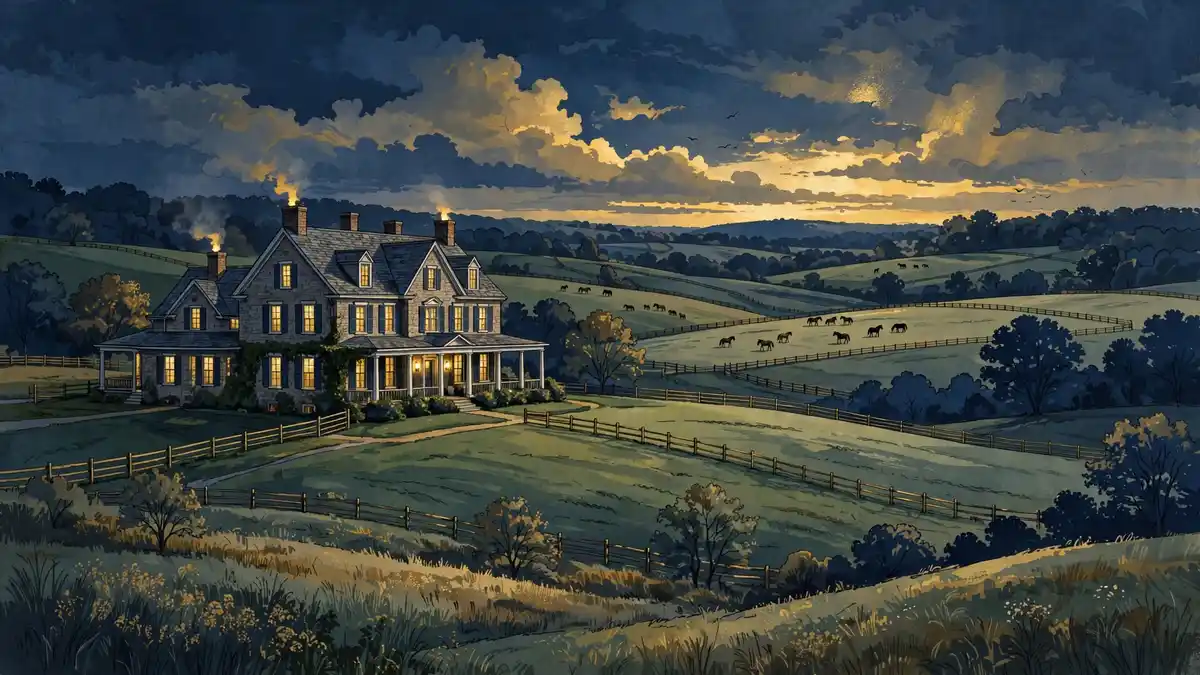
The farm in Campbell Hall, Orange County, New York, is the only property in Assante’s record that can be described in detail, because the bankruptcy and foreclosure put its particulars into public documents and auction listings. The estate ran to 222 acres across three parcels at 435, 451 and 467 Hulsetown Road. The main house measured more than 7,248 square feet, with five bedrooms and two and a half bathrooms, set on land that included horse facilities — it was described in the auction marketing as a farm estate, and Assante’s own account of the property emphasised the home he built with his father. RISMedia reported in April 2014 that the property was being marketed for auction as part of the bankruptcy process, with a deadline of May 2 for qualified bids and an auction scheduled for May 6, handled by GA Keen Realty Advisors.
The outcome of the foreclosure was partial, and the partial nature of it is the most human detail in the whole financial record. Assante did not lose everything: he appears to have kept one of the three parcels — the one holding the house he built with his father — while the other two were sold off. One of those parcels came to market in 2021 for $2.75 million, according to Celebrity Net Worth’s reporting. That single listing price is worth pausing on: it suggests the land itself retained substantial value even after the foreclosure, and it is the strongest piece of evidence for the upper half of our net-worth range. If the parcel he kept holds comparable value, his real-estate assets alone could account for a large share of the $2 million low-end estimate, with the rest made up of residuals, the cigar business and future earnings.
No other property owned by Assante appears in the public record. There is no reported Los Angeles home, no New York City apartment, and no second property bought after the bankruptcy. That is consistent with a man who lived on the farm and worked on location: his life was organised around one place, and when that place came under threat, there was no second home to fall back on. The concentration of his assets in a single property is the second structural lesson of his finances, after the concentration of his income in acting work.
Cars and other personal assets are not documented in any source we could verify, and we will not invent a collection. Assante has never been photographed with an exotic-car collection, and no auction or bankruptcy document lists vehicles of note. The bankruptcy filing’s inventory of debts — taxes, legal fees, the guild credit union — is a list of obligations, not of luxury assets, and the absence of a car collection in the record is itself a data point: this is not a celebrity whose wealth was parked in visible luxuries. His most valuable assets, on the evidence, were land, a catalogue of 140-plus performances that still generates residuals, and a name that still opens doors in independent film.
Awards and Achievements
Assante’s awards record is the strongest part of his professional story, and it is the part that the net-worth trackers most often get wrong — many of them credit him with an Emmy win and leave it there, without the nominations that show how consistently his peers rated him. The full record, drawn from Wikipedia and Celebrity Net Worth, is: two Primetime Emmy Award nominations, with one win; four Golden Globe nominations; and two Screen Actors Guild Award nominations.
The Emmy win came in 1997, for Outstanding Lead Actor in a Miniseries or a Special, for Gotti. His other Emmy nomination was for Outstanding Supporting Actor in a Miniseries or a Special, for Jack the Ripper in 1989. The four Golden Globe nominations span a decade: Best Supporting Actor in a Series, Miniseries or Motion Picture Made for Television for Jack the Ripper (1989); Best Supporting Actor in a Motion Picture for Q&A (1991); and Best Actor in a Miniseries or Motion Picture Made for Television for Gotti (1997) and for The Odyssey (1998). The Screen Actors Guild nominations were for his Gotti performance and, as part of the ensemble cast, for American Gangster.
The nominations beyond the Emmys and Globes fill out the picture. He was nominated for an Annie Award for voice acting in The Road to El Dorado (2000), and for a Gopo Award as Best Actor for the Romanian film California Dreamin’ (2007). He won a Lifetime Achievement Award at the Westchester Film Festival in 2007, won Outstanding Cast Performance at the Action on Film International Film Festival in 2016 with his The Red Maple Leaf co-stars, and won a Most Valuable Player award at the Garden State Film Festival in 2018. In 2010 he received a star on the Italian Walk of Fame in Toronto, Ontario — a civic honour that reflects his standing in the Italian-Canadian community as much as his film work. The documentary The Man Who Unlocked the Universe, in which he appeared, won the Ischia Documentary Feature Award at the Ischia Global Film & Music Festival in 2017.
Two points about this record matter for the money story. First, awards do not pay rent: an Emmy win raises an actor’s quote, but only if the work keeps coming at the higher rate, and Assante’s post-Emmy years coincided with the contraction of the television-movie market that had been his best employer. Second, the breadth of the nominations — across film, television, miniseries and voice work, over thirty years — shows a working actor whose peers kept recognising him long after the box-office spotlight moved on. That breadth is why he was still being cast in his seventies, and why the income stream, though reduced, never stopped.
Net Worth Growth Over the Years
Most net-worth articles present a smooth year-by-year table of rising figures. We will not do that here, because no source supports one: the numbers would be invented. What the record does support is a table of documented milestones, each tied to a date and a source. That table tells a truer story — a rise through the 1980s and 1990s, a sharp fall after 2001, a legal and financial crisis in 2011–2014, and a slow rebuild after it.
| Period | Documented event | Financial meaning |
|---|---|---|
| 1974–1980 | Soap-opera regular work on The Doctors; first film roles; Private Benjamin grosses $69.8 million | Steady working-actor income; first national exposure |
| 1980s | Television-movie leads and miniseries; I, the Jury (1982); Napoleon in 1987 | Volume builds; no single large payday recorded |
| 1990–1997 | Q&A, The Mambo Kings, Hoffa, Judge Dredd; Emmy win for Gotti (1997) | Peak earning years; farm estate assembled in this period |
| 2000–2005 | The Road to El Dorado voice work; Dot.Kill produced; 2005 mortgage refinancing to $1.5 million | Income down nearly 80% after 2001, per his accountant; monthly mortgage rises to $16,000 |
| 2007 | American Gangster grosses $269.8 million worldwide; When Nietzsche Wept | High-profile studio work continues, but at supporting-role scale |
| October 2011 | Chapter 11 bankruptcy filed in Poughkeepsie, New York | Debts include $36,000 in unpaid taxes, $150,000 in legal fees, $66,000 to an accounting firm |
| 2013–2014 | Ora Vivo Cigars launched (2013); farm put up for foreclosure auction (2014) | New business starts as the property is lost in part |
| 2018–2019 | Recurring roles on The Family Business and The Deuce | Steady television income returns on two series at once |
| 2021 | One farm parcel listed for sale at $2.75 million | Land value confirms real assets survived the foreclosure |
| 2023–2026 | Don Q produced and released; Oak (2024); 260 Days (2025) | Working actor in his seventies; net worth estimated at $2 million–$10 million |
The shape of that table is the point. Assante’s wealth did not grow in a straight line, and the range we publish reflects the two ends of the story: the low end is what the court record supports, and the high end is what the legacy trackers still carry from before the collapse. A reader who wants a single number should use $2 million, because it is the only figure that survives contact with the bankruptcy file. A reader who wants the full picture should hold the range, because the 2021 parcel listing and the continued work suggest assets above the bankruptcy-era low point.
Peer comparison sharpens the picture. Assante’s contemporaries in the tough-guy and character-actor ranks — Jack Nicholson, his Hoffa co-star; Sean Penn; Mel Gibson; Jamie Foxx; and Forest Whitaker — all built larger fortunes, and the reasons are structural rather than personal: franchise leads, directing careers, production companies and backend deals that Assante never had. His career is the honest counter-example to the idea that a long filmography equals a large fortune. Volume pays the bills; ownership builds wealth. Assante had volume. He did not, until the cigar brand, have ownership.
Social Media Presence
Assante keeps a low profile online, and readers should be wary of any article that quotes follower counts for him. We found no verified Instagram, X or TikTok account with a large following that can be confirmed as his, and no social-media metric is cited in any reliable source we checked. His official website, armandassante.net, remains his public home on the internet, and it is the channel through which the cigar brand and his appearances are promoted.
That absence is consistent with his age and his career: he is 77, he came up in an era when an actor’s public presence was the work itself, and his most recent roles have been in independent film and cable drama rather than in the franchise and streaming projects that drive social-media followings. It also means social media contributes nothing measurable to his net worth — there is no sponsored-post income to count, and no influencer deal to value. For a net-worth estimate, the honest figure for social-media earnings is zero, and we record it as such rather than inventing a number.
Fans looking for him online will find fan pages and film-database profiles — TMDB, TV Insider and Rotten Tomatoes all carry current filmographies, and TMDB lists his 2025 and 2026 credits — but those are listings, not his own channels. The practical advice for readers is simple: if an account claims to be Assante and asks for money, a subscription or a personal message fee, treat it as unverified. His real public presence is his work, and his work is listed, credit by credit, in the filmography sources cited below.
Personal Life
Assante married the actress Karen McArn on February 28, 1982. The couple had two daughters, Alessandra and Anya — Karen co-starred with him in The Mambo Kings in 1992 — and they separated in 1994. The divorce settlement, finalised in 1997, required Assante to pay Karen $15,000 a month until she turned 59 and a half, a commitment that later became one of the two fixed obligations at the centre of his bankruptcy. In February 2012, Karen sued him, claiming he owed her $1.8 million in matrimonial support. The dispute is a matter of public record, and it underlines how completely his personal and financial lives were entangled by the early 2010s.
Before his marriage, Assante had a high-profile relationship with Dyan Cannon, his co-star in the 1978 television film Lady of the House. He has also been linked in the press with the Italian actress Mara Venier and with Vanessa Constantino. His daughters have stayed largely out of the public eye, with one notable exception: his daughter Alesandra appeared in the cast of Don Q, the film he produced in 2024.
Assante’s personal story is inseparable from the farm. He was born in New York City and raised in Cornwall, and the land in Orange County was not an investment property bought at arm’s length — it was the place where he built a house with his father and where he intended to leave a legacy for his children. That is why his 2014 statement about the property reads as it does, and why the partial outcome of the foreclosure — keeping the parcel with the house — mattered more to him than the financial arithmetic. He still lives in the Hudson Valley region, still works, and still promotes the cigar brand that bears his name. At 77, with a career spanning 1974 to the present, he is one of the few actors of his generation still taking leading roles in new films.
Sources & Reporting
Celebrity Net Worth — the $2 million net-worth estimate; the full bankruptcy and foreclosure account, including the 80 percent income drop, the $1.5 million refinancing, the $31,000 monthly obligations, the $2.75 million 2021 parcel listing and the $1.8 million support claim. Article published May 29, 2023, updated May 30, 2023; checked November 17, 2026. This is the only source in the field that builds its figure from court and property records, and it is the anchor of our low end.
Wikipedia — biography, filmography and awards record, including the Emmy win, four Golden Globe nominations, two SAG nominations, and the 2023–2026 credits (Don Q, Oak, 260 Days). Page last reviewed in the September 2026 crawl; checked November 17, 2026.
Backstage — 2007 interview on choosing projects, the 50-pound weight gain for Gotti and the four-month loss for The Odyssey, and the six independent films he shot in the year before the interview. Published November 16, 2007; checked November 17, 2026.
RISMedia — the April 2014 report of the farm auction: the Hulsetown Road addresses, the 7,248-square-foot house, the May 2 bid deadline and the May 6 auction date. Published April 13, 2014; checked November 17, 2026.
Box Office Mojo — American Gangster worldwide gross of $269.8 million on a $100 million budget. Checked November 17, 2026.
The Numbers and Wikipedia — Private Benjamin box-office record: $69.8 million worldwide on a $9.2 million budget. Checked November 17, 2026.
TV Insider and TMDB — birth date, age 77, and current credits including Don Q, Oak, 260 Days and Misdirection (2026). Checked November 17, 2026.
Insights Journal, MetaUnfolded, Cine Net Worth and FamousDB — the $10 million figure repeated across the smaller net-worth trackers, with no court or property sourcing. These sources supply the high end of our range and are flagged here as lower-quality trackers; their figure predates the bankruptcy reporting and is not consistent with it. NetWorthList ($1.5 million), LuxLux ($16 million) and RiffBlog ($14 million) were checked and excluded: their figures carry no sourcing and conflict with the documented record in both directions.
Reporting window: all sources were checked on November 17, 2026. Figures are estimates built from public reporting, not audited statements. Where sources disagreed, this article publishes the range and names who says what, rather than picking the most flattering number.
Frequently Asked Questions
What is Armand Assante’s net worth in 2026?
Armand Assante’s net worth is estimated at $2 million–$10 million as of November 2026. Celebrity Net Worth, the only tracker that builds its figure from court and property records, puts him at $2 million, while several smaller trackers still list $10 million. We publish the range because the two figures cannot both be right, and the $2 million figure is the one consistent with his 2011 bankruptcy and 2014 foreclosure.
Why do some sites say $10 million and others say $2 million?
The $10 million figure is a legacy number that circulated before Assante’s financial collapse and was repeated by content sites without checking the court record. The $2 million figure comes from Celebrity Net Worth’s reporting on his Chapter 11 filing, the foreclosure of his farm and the sale of one of its parcels. A man with $10 million in net assets would not normally file for bankruptcy over a $1.5 million mortgage, which is why this article treats $2 million as the credible anchor.
Did Armand Assante file for bankruptcy?
Yes. He filed for Chapter 11 bankruptcy protection in October 2011 in Poughkeepsie, New York, to stop the foreclosure of his 222-acre horse farm in Orange County. The filing listed about $36,000 in unpaid taxes, $12,000 owed to the Screen Actors Guild’s credit union, $150,000 in legal fees already spent, and $66,000 owed to an accounting firm. His income had fallen nearly 80 percent after September 11, 2001, according to one of his former accountants.
What happened to Armand Assante’s house and farm?
The 222-acre farm estate at 435, 451 and 467 Hulsetown Road in Campbell Hall, New York, went to a foreclosure auction in May 2014 after the bank refused his settlement offers. Assante kept one of the three parcels — the one holding the house he built with his father — and the other two were sold. One of the sold parcels came to market in 2021 for $2.75 million.
What is Armand Assante best known for?
He is best known for playing mob boss John Gotti in the 1996 HBO film Gotti, a performance that won him the Primetime Emmy Award for Outstanding Lead Actor in a Miniseries or a Special. His other defining roles include Odysseus in The Odyssey (1997), Cesar Castillo in The Mambo Kings (1992), Roberto Texador in Q&A (1990), Rico Dredd in Judge Dredd (1995) and Dominic Cattano in American Gangster (2007).
How old is Armand Assante?
Armand Assante was born on October 4, 1949, in New York City, which makes him 77 years old as of November 2026. He was raised in Cornwall, New York, and has been acting professionally since 1974.
Is Armand Assante still acting in 2026?
Yes. His recent credits include the title role in Don Q (2023–2024), which he also produced, Abe in the horror film Oak (2024), a role in 260 Days (2025), and the thriller Misdirection, listed for 2026. He also held recurring television roles as Sal Dash on The Family Business and Mr. Martino on The Deuce in 2018–2019.
What is Ora Vivo Cigars?
Ora Vivo Cigars is the premium cigar brand Assante became a partner in during 2013. It sells through cigar shops and lounges under his name, trading on his long association with mob-movie roles. No revenue figure for the brand has ever been published, so this article does not estimate one; it is best understood as a small, owner-controlled business that gives him income outside acting.
Final Thoughts
Armand Assante’s story is the one the net-worth internet usually gets wrong, because it is easier to copy a $10 million figure than to read a bankruptcy file. The documented record says something more interesting: a gifted actor who reached the top of his profession — an Emmy, four Golden Globe nominations, a 140-credit career — and still lost his footing when his income fell 80 percent and his fixed costs did not. The farm he built with his father, the $31,000 a month in mortgage and support payments, the foreclosure auction of 2014: these are the numbers that explain the $2 million anchor of our estimate, and they are all on the public record.
What the record also shows is a rebuild. He kept the parcel with the house, kept working through his seventies, started a business he owns outright, and took a producer’s stake in his own films. At 77, with Don Q, Oak and 260 Days behind him and new work listed for 2026, he is still a working actor — not a retired one. The $2 million–$10 million range is honest about what can and cannot be known from public sources. If a single number is needed, use $2 million: it is the figure that survives contact with the evidence.
Published on November 17, 2026. Last reviewed November 2026. Found an error? See our corrections policy.