
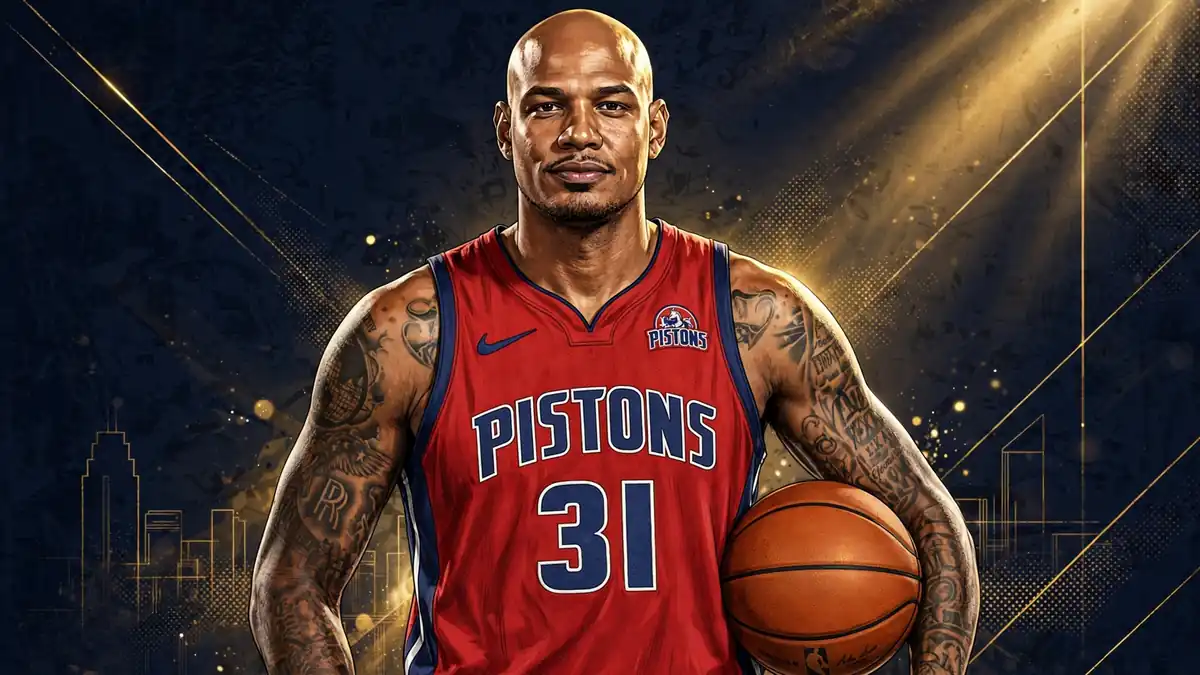
Charlie Villanueva‘s net worth is estimated at $28 million to $30 million as of November 2026. The former NBA power forward turned 11 seasons of professional basketball into $51,577,806 in career salary, according to Basketball-Reference, then put the money to work in Texas real estate — founding his own development company, 824TX Properties, in 2017 and partnering on a 24-unit luxury rental building in New York. His most famous property regret, a Toronto penthouse he could have bought for $600,000 as a rookie and watched climb to roughly $4 million, says as much about his second act as any contract he signed.
Charlie Villanueva: Quick Facts
| Estimated net worth | $30 million (range: $28 million to $30 million) |
|---|---|
| Profession | Former NBA power forward; real estate developer |
| Nationality | Dominican-American |
| Born | August 24, 1984 (age 42) |
| Height | 6 ft 11 in (2.11 m) |
| Primary income sources | NBA salaries, real estate development and investment |
| Active years | 2005–2016 (NBA); 2017–present (real estate) |
| Last reviewed | November 2026 |
- Early Life and Background
- Education
- Career Journey
- Rise to Fame
- Main Sources of Income
- Salary and Earnings
- Businesses and Investments
- Brand Deals and Sponsorships
- Houses, Cars and Other Assets
- Awards and Achievements
- Net Worth Growth Over the Years
- Social Media Presence
- Personal Life
- Sources & Reporting
- Frequently Asked Questions
- Final Thoughts
Early Life and Background
Charlie Alexander Villanueva Mejia was born on August 24, 1984, in Queens, New York, and raised in Elmhurst, a working-class Queens neighborhood where his parents, Roberto Villanueva and Doris Mejia, had settled after emigrating from the Dominican Republic. He grew up as a first-generation Dominican-American, speaking Spanish at home with his family, and he still speaks the language fluently. That dual identity shaped his whole career: he represented the United States at youth level, then switched his sporting citizenship to the Dominican Republic in 2009 and wore its colors at senior international tournaments.
Villanueva has three brothers, all named Roberto after their father — Rob Antonio, Rob Elia and Rob Carlos — a family detail that has followed him into adulthood; in September 2015 he announced he was working with two of his brothers on a documentary about his condition, titled “What is Alopecia.” He lives with alopecia universalis, an autoimmune condition that prevents hair growth on the scalp and elsewhere on the body. It is not painful or life-threatening, but it made him visibly different from every other teenager on a basketball court, and he has spent much of his public life talking about it. He became a spokesman for the National Alopecia Areata Foundation, and the NBA gave him its Community Assist Award for February 2006 for that work.
Basketball was the way out of Elmhurst and the way through the condition at the same time. As a freshman he attended Newtown High School in Queens, where his teammate was future NBA guard Smush Parker. For his final three years of high school he transferred to Blair Academy in Blairstown, New Jersey, where he played beside another future NBA player, Luol Deng. The two teenagers — one from Queens, one a refugee from Sudan who had settled in London — became close, a friendship that would resurface years later in a business deal. At Blair, Villanueva earned All-American honors as a senior, was named New Jersey Co-Player of the Year, and was rated by Rivals.com as the No. 2 power forward and the No. 5 player in the entire 2003 recruiting class, a five-star prospect with his pick of college programs.
The recruiting trail itself was eventful. Villanueva first gave a verbal commitment to the University of Illinois, then withdrew it when head coach Bill Self left the Illini for Kansas. He considered following Self to the Jayhawks, then chose the University of Connecticut instead — a decision that put him under Hall of Fame coach Jim Calhoun and on a roster built to win a national title. He even entered the 2003 NBA draft as a high school senior, then withdrew his eligibility so he could play college basketball, a rare move for a player of his ranking that showed how much the UConn opportunity mattered to him.
Education
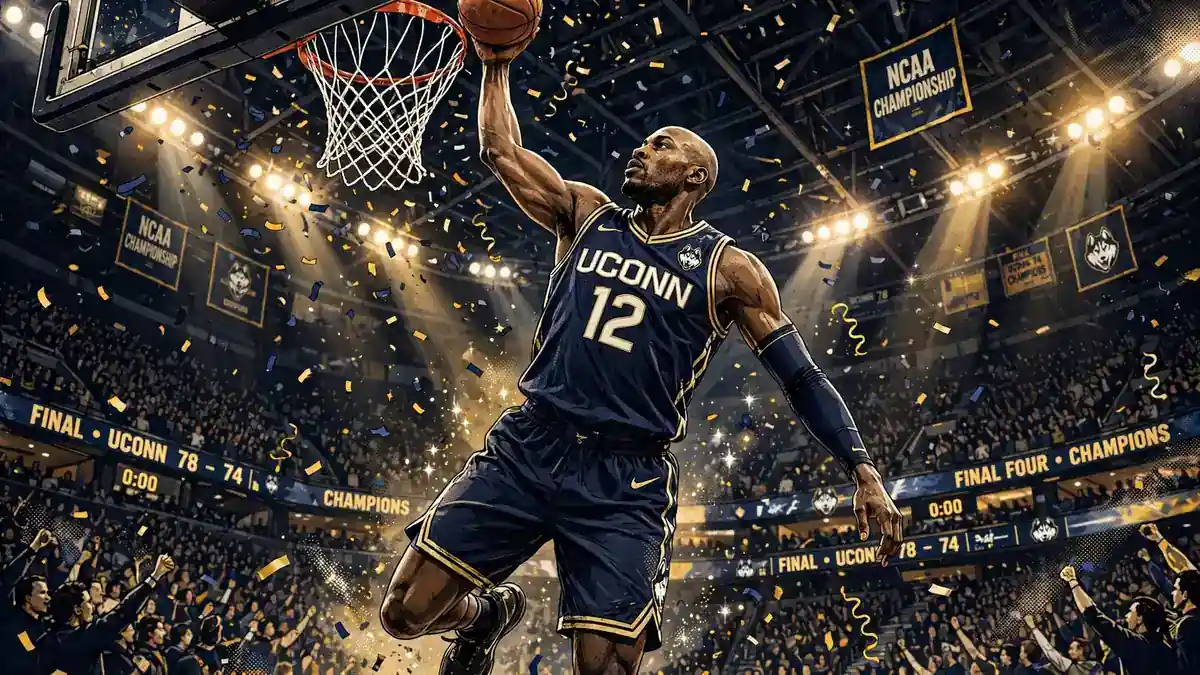
Villanueva spent two seasons at UConn, from 2003 to 2005, and both of them ended with his stock higher than it started. As a freshman he earned Big East All-Rookie Team honors and served as a key reserve on the 2004 NCAA National Championship team, playing 19 minutes a game and averaging 8.9 points and 5.3 rebounds for a Huskies side that cut down the nets. As a sophomore he became the team’s best player: 13.6 points and 8.3 rebounds a game, leading UConn in scoring, earning team MVP honors and a spot on the second-team All-Big East. He shot 52.1 percent from the field that season and an eye-catching 50 percent from three-point range, the stretch-big skill set that would define his professional career.
He declared for the 2005 NBA draft after that sophomore season, giving up his final two years of college eligibility. It was the right call on the numbers alone: he left Storrs as a national champion, a conference honoree and a projected lottery pick, and the draft confirmed it. UConn later became the through-line of his business life, too — his college teammate Luol Deng would become his partner in a New York real estate project more than a decade after they last shared a locker room.
Career Journey
The Toronto Raptors selected Villanueva with the seventh overall pick in the 2005 NBA draft, and the pick was panned the moment his name was called. Critics called it a reach. Villanueva answered with one of the best rookie seasons in franchise history: 13.0 points and 6.4 rebounds in 81 games, second among rookies in scoring and rebounding, third in minutes and blocked shots, with 12 double-doubles. On March 26, 2006, he scored 48 points against the Milwaukee Bucks, setting Raptors rookie records for points (48) and rebounds (18) in a single game. He was named to the NBA All-Rookie First Team and played in the Rookie Challenge. The skeptics went quiet.
Toronto still moved him fast. On June 30, 2006, the Raptors traded Villanueva to the Milwaukee Bucks in exchange for point guard T.J. Ford, a deal Villanueva learned about in an unusual way — in 2026 he revealed that a girlfriend of one of his brothers had tipped him off about the trade in advance. In Milwaukee he spent three seasons, from 2006 to 2009, developing into a reliable stretch forward. His best year came in 2008–09, when he averaged a career-high 16.2 points and 6.7 rebounds a game, including a 38-point night with a career-high seven three-pointers against his old team, Toronto, on April 9, 2008. The same season produced a first: in March 2009, Bucks coach Scott Skiles reprimanded him for posting a message on Twitter during halftime of a Bucks–Celtics game, an early sign that Villanueva lived his career in public, on social media, in real time.
Free agency in the summer of 2009 delivered the contract that built his fortune. On July 8, 2009, he signed a five-year deal with the Detroit Pistons — a deal reported at $35 million by several outlets and at $40 million in ESPN’s signing-day report, a $5 million gap in the public record that still shows up in net worth estimates today. Pistons president of basketball operations Joe Dumars called him “a versatile big man who can play in the post and score from the perimeter,” and he arrived in Detroit alongside fellow free-agent signing Ben Gordon as the two “key pieces” of the Pistons’ rebuild. The Detroit years, from 2009 to 2014, were the longest stop of his career and the most lucrative, but they were also uneven: 11.9 points a game in his first season, then a slide into a bench role as injuries and a changing rotation cut his minutes. His highest single-season salary, $8,580,000 in 2013–14 according to Basketball-Reference, came in his final Pistons season, when he played only 20 games and averaged 4.6 points.
Detroit also produced the two most talked-about incidents of his career. In November 2010, Villanueva wrote on Twitter that Boston Celtics forward Kevin Garnett had called him a “cancer patient” during a game — a reference to his alopecia — setting off a league-wide argument about trash talk. Garnett insisted his words had been “you are cancerous to your team and our league,” Celtics coach Doc Rivers backed him, and the episode ended without a fine, but it put Villanueva’s condition at the center of a national sports debate. On January 2, 2013, the NBA fined him $25,000 for a flagrant foul on Sacramento Kings guard Isaiah Thomas the night before, after he had been ejected for elbowing Thomas on a drive.
His final stop was Dallas. He signed with the Mavericks on September 23, 2014, remaking himself as a veteran three-point specialist off the bench, and on February 9, 2015, he scored a season-high 26 points in a loss to the Los Angeles Clippers. He re-signed on August 6, 2015, for one year at the veteran minimum of $1.5 million, and played his last NBA game in the 2015–16 season. The Dallas years gave him something the rest of his career never had: the playoffs. He appeared in nine postseason games across 2015 and 2016, averaging 4.3 points in 7 minutes a game — a small role, but the only playoff basketball of his 11 seasons. His career totals read 656 games, 163 starts, 10.4 points and 4.6 rebounds a game, shooting 43.5 percent from the field and 34.1 percent from three.
Internationally, Villanueva switched his sporting citizenship to the Dominican Republic in 2009 and represented the country at the FIBA Americas Championship that year. He won a silver medal at Centrobasket in Santo Domingo in 2010 and a bronze at the FIBA AmeriCup in Mar del Plata in 2011, adding a senior international medal collection to the FIBA Americas U20 gold he had won with the United States back in 2004.
Rise to Fame
Villanueva’s fame arrived in two waves, and neither looked like the usual path. The first was the 48-point rookie night in Toronto, the kind of single-game explosion that turns a questioned draft pick into a household name overnight. At 20 years old, a 6-foot-11 forward with a shaved head and a soft three-point touch, he finished second among all rookies in scoring and rebounding, and for a few months in the spring of 2006 he looked like a future All-Star. The second wave was quieter and longer-lasting: his openness about alopecia. In an era when athletes rarely discussed medical conditions in public, Villanueva talked about his openly, worked with the National Alopecia Areata Foundation, and won the NBA’s Community Assist Award for it within months of his debut. The Garnett episode in 2010 pushed that story onto front pages and sports-talk shows everywhere, and it made him one of the most recognizable faces — and most discussed voices — of his draft class even as his on-court role shrank.
What kept him famous after retirement was money, or more precisely the visible evidence of it. In October 2026, former NBA All-Star Gilbert Arenas spent several minutes on the “We Said What We Said” podcast marvelling at Villanueva’s Texas home — an elevator inside a closet, a full basketball court just outside the bedroom — and admitting that seeing it made him rethink his own spending. “You ever see Charlie Villanueva’s house?” Arenas asked. “That’s some balling s— around here, man.” Essentially Sports picked the story up within days, and it travelled because it flipped the usual retired-athlete script: here was a player who had never made an All-Star team, never signed a nine-figure deal, and still owned a house that made a $111 million man jealous.
The fame also came with a correction problem that follows Villanueva’s name across the internet. Low-quality net worth sites routinely get his story wrong — one claims he was drafted 60th overall, another says he signed a $100 million deal with Dallas, a third invents a contract with the Chicago Bulls, a team he never played for. The record, confirmed by Basketball-Reference, ESPN and his own Wikipedia biography, is simple: seventh overall in 2005, four NBA teams, no Bulls, no $100 million deal. Any estimate of his wealth that starts from those invented contracts is worthless, which is why this article anchors on the documented salary total instead.
Main Sources of Income
Villanueva’s wealth rests on two pillars, separated by a decade: NBA salary first, real estate second. The basketball money is the documented part. Basketball-Reference puts his total NBA earnings at $51,577,806 across 11 seasons, and that figure is the spine of every serious estimate of his net worth. It came in four chunks — a rookie-scale deal in Toronto, three seasons in Milwaukee, the five-year Pistons contract that supplied the bulk of it, and two veteran-minimum years in Dallas. Endorsements never became a major pillar: unlike the superstars of his draft class, Villanueva never carried a signature shoe deal or a national campaign, and the endorsement figures quoted on content-farm sites — one claims $10–20 million in lifetime endorsement income — have no named source behind them and should be treated as invented.
The second pillar is real estate, and it is the one that has grown since he stopped playing. In 2017, a year after his final NBA season, Villanueva founded 824TX Properties, a real estate development company focused on residential and commercial projects in the Dallas–Fort Worth area, known for buying older properties, modernizing them and selling them on. He has since partnered with his old Blair Academy and UConn teammate Luol Deng and Los Angeles-based investor David Gross on Harrison Mews, a 24-unit luxury rental building in Harrison, New York. The company name itself is a clue to his thinking: 824 is his birthday, August 24, and TX is Texas, the state where he settled after basketball. Where his NBA income was a salary paid on a schedule, his real estate income is equity — slower, less visible, and the reason his net worth has held up years after his last paycheck.
A third, smaller stream runs through his advocacy and apparel work. Villanueva founded Alopecia Apparel, a clothing line tied to his awareness work, and has sold merchandise under his CV7 label — the initials and his jersey number turned into a brand. One content-farm estimate puts CV7 revenue at $2–3 million, but no reliable outlet has confirmed a figure, so we count it as a real but modest business rather than a numbered one. He has also earned money from podcast appearances and speaking engagements, including the 2026 “To The Baha” podcast appearance where he told the penthouse story that travelled across basketball media. None of these streams approaches the scale of his NBA salary, and honest accounting says so.
Salary and Earnings
The salary record is the strongest part of Villanueva’s financial story, because it is public and precise. Basketball-Reference lists his career earnings at $51,577,806, and the season-by-season shape of that total tells the story of his career: a steady climb, a peak in Detroit, and a sharp drop to the veteran minimum in Dallas.
| Period | Team | Deal / salary detail |
|---|---|---|
| 2005–2006 | Toronto Raptors | Rookie-scale deal, roughly $9–11 million over four years; about $2.3 million in his debut season |
| 2006–2009 | Milwaukee Bucks | Acquired by trade for T.J. Ford; career-best season in 2008–09 at 16.2 points a game |
| 2009–2014 | Detroit Pistons | Five-year deal reported at $35 million to $40 million; peak single-season salary $8,580,000 in 2013–14 |
| 2014–2016 | Dallas Mavericks | Veteran minimum deals, about $1.3 million then $1.5 million a year |
| Career total | Four teams, 11 seasons | $51,577,806 (Basketball-Reference) |
Three numbers in that table do the heavy lifting. The first is the Pistons deal, which supplied roughly two-thirds of his career earnings and is also the most misreported figure in his story. ESPN’s signing-day report in July 2009 put it at $40 million over five years; several net worth sites, including the one that breaks his earnings down team by team, say $35 million; TheRichest’s earnings table lists a $37.7 million Pistons contract. The honest statement is that the deal was reported at $35–40 million, with incentives and reporting differences explaining the spread, and that his actual salaries in Detroit ran from about $6 million in 2009–10 to the $8.58 million peak in 2013–14. The second number is that peak: $8.58 million for a season in which he played 20 games and averaged 4.6 points — a reminder that NBA contracts pay for past performance and future promise, and that a guaranteed deal keeps paying even when the minutes disappear. The third is the Dallas drop: from $8.58 million to roughly $1.3–1.5 million a year on veteran-minimum deals, a pay cut of more than 80 percent that he accepted to keep playing and to reach the playoffs for the first time.
Gross salary is not net worth, and the gap between the two is where most net worth estimates go wrong. The $51.6 million arrived before federal and state taxes, agent fees of around 3 percent, and a decade of living costs that included luxury real estate in Florida and Texas. One low-quality site claims a 2012 tax bill of more than $1.1 million that he could not pay, but no reliable outlet has confirmed it, so we do not count it as fact. What is documented is that he kept enough of the money to buy, hold and develop property after retirement — and that, more than any single paycheck, is what separates his post-career finances from the broke-after-basketball stories that fill the same search results. For scale, his $51.6 million in career salary sits well below the career earnings of the biggest names of his era — LeBron James, drafted two years earlier, has earned several times that from salary alone — but it sits far above the median NBA career, and it arrived with a five-year guaranteed deal at its center, the kind of contract that makes wealth possible even without stardom.
Businesses and Investments
Villanueva’s business life began while he was still playing and accelerated the moment he stopped. The centerpiece is 824TX Properties, the real estate development company he founded in Dallas in 2017. The firm focuses on residential and commercial projects in the Dallas–Fort Worth area and built its reputation on flips — buying older properties, renovating them thoroughly, and selling them at a profit. It is a hands-on business rather than a passive portfolio: Villanueva has spoken about walking job sites and making renovation decisions himself, the same attention to detail that once went into scouting reports.
The second project shows a longer horizon. Harrison Mews is a 24-unit luxury rental residence in Harrison, New York, developed with his former Blair Academy and UConn teammate Luol Deng and Los Angeles-based investor David Gross. Rental buildings pay back slowly, through monthly income and appreciation rather than a single sale, which makes the deal a different kind of bet from the Texas flips: less cash up front, steadier returns, and an asset that can be held for decades. The partnership itself is the story — two teenagers who shared a high school locker room in New Jersey ended up co-owning a building in Westchester County as adults.
His other ventures are smaller and closer to his personal story. Alopecia Apparel turns his condition into a clothing brand, and the CV7 label sells merchandise under his initials and jersey number. He has also worked in media and speaking, including podcast appearances in 2026 where his candor about money — the penthouse regret, the trade story, the Texas house — has made him a popular guest. None of these is a nine-figure business, and the honest reporting is that his investment portfolio beyond real estate is private: no verified stock holdings, no disclosed startup stakes, no fund investments have been reported by a reliable outlet. The wealth is visible in property, not in a portfolio statement.
Brand Deals and Sponsorships
Here is where Villanueva’s story differs from most players with a $30 million net worth: there is almost no endorsement record to report. He never signed a signature shoe deal, never fronted a national advertising campaign, and never became the face of a consumer brand. The apparel he sells is his own — Alopecia Apparel and the CV7 label — rather than a deal with someone else’s company. That absence is itself a data point: his fortune was built on salary and property, not on selling his image, which is why the endorsement figures on some net worth sites (one table claims $10–20 million in lifetime endorsement income, another $1–2 million) collapse the moment you ask for a source. No brand, no campaign, no figure has ever been named by a reliable outlet.
What he did monetize was his story. His alopecia advocacy brought him the NBA’s Community Assist Award in 2006, a spokesman role with the National Alopecia Areata Foundation, and a documentary project with his brothers — reputation rather than cash, but reputation that later fed his speaking and podcast work. His social media presence, where he was an early adopter — he was tweeting from halftime in 2009, years before most players treated Twitter as a platform — gave him a direct audience without a sponsor in the middle. In 2026, that audience is what turned a podcast anecdote about a Toronto penthouse into a story carried by basketball media across the internet. The deal sheet is thin; the personal brand is not.

Houses, Cars and Other Assets
Real estate is the most visible part of Villanueva’s wealth, and the October 2026 podcast moment made it famous. On “We Said What We Said,” Gilbert Arenas described Villanueva’s Texas residence in disbelief: an elevator inside a closet, a full basketball court just outside the bedroom, a layout so extravagant that Arenas — himself a veteran of a $111 million contract and a Virginia mansion with a grotto and a shark tank — said seeing it made him feel he had spent his own money wrong. Essentially Sports reported the exchange within days, and the details have been repeated across basketball media since. The house’s purchase price has not been publicly reported, which is worth saying plainly: the awe is documented, the price is not.
The earlier property record is documented. Villanueva listed a tricked-out residence in Davie, Florida, for $3.25 million in 2017, the year after his final NBA season — a sale that coincided with his move into Texas real estate full time. One report, from the site FindUsLawyers, puts a 2016 purchase of a $2.5 million waterfront home on Miami’s Fisher Island in the same period; that figure comes from a single lower-quality source, so we report it as reported rather than confirmed. The most telling property story is the one that never happened. As a rookie in Toronto, Villanueva rented a penthouse at 10 Navy Wharf Court, a short walk from the Raptors’ arena. The owner offered to sell it to him for $600,000. He passed. On the “To The Baha” podcast in 2026 he called it one of his biggest regrets: a decade later, he said, the same unit was worth about $4 million. Basketball Network reported the story in 2026, and it has become the signature anecdote of his financial life — a $3.4 million lesson in buying rather than renting, delivered by a man who now buys, renovates and sells houses for a living.
On cars, the public record is thin but specific in one place: Villanueva has said he and his wife Lala survived a hit-and-run crash while travelling in their Mercedes G-Wagon, an incident he documented with photos on social media. Beyond that, no reliable outlet has published a verified list of his vehicles, and we do not invent one. The pattern of his assets is consistent: property first, cars second, and the property concentrated in Texas and Florida, the two states where his post-basketball life has been based.
Awards and Achievements
Villanueva never made an All-Star team and never won an NBA title, and any honest account of his career says so up front. His honors are the kind that mark a very good player rather than a great one — and a remarkable college career that peaked early.
- NCAA champion — 2004, with UConn, as a freshman reserve on Jim Calhoun’s title team.
- NBA All-Rookie First Team — 2006, after averaging 13.0 points and 6.4 rebounds for Toronto.
- Second-team All-Big East — 2005, as UConn’s leading scorer and team MVP.
- Big East All-Rookie Team — 2004.
- McDonald’s All-American — 2003, at Blair Academy.
- New Jersey Co-Player of the Year — 2003, his senior year of high school.
- NBA Community Assist Award — February 2006, for his alopecia awareness work with the National Alopecia Areata Foundation.
- FIBA AmeriCup bronze — 2011, with the Dominican Republic in Mar del Plata.
- Centrobasket silver — 2010, with the Dominican Republic in Santo Domingo.
- FIBA Americas U20 gold — 2004, with the United States in Halifax.
The record that matters most to his bank account sits beside the trophies: the 48-point rookie game against Milwaukee on March 26, 2006, still the Raptors’ rookie record for points in a game, and the 18 rebounds in the same game, also a franchise rookie record. Those two numbers are why a seventh overall pick who never became an All-Star still earned $51.6 million — they proved, for one night and then for a whole rookie season, that he could score at an NBA level.
Net Worth Growth Over the Years
Year-by-year net worth figures for Villanueva are estimates built on a thin public record, and the table below says so. What is documented is the salary curve; what is estimated is the wealth curve, and the two are not the same. His money arrived in a lump in the middle of his career, then had to survive a decade of spending, taxes and fees before his real estate income began to replace it.
| Year | Estimated net worth | What changed |
|---|---|---|
| 2006 | $2–4 million | Rookie season done; first NBA salary banked; All-Rookie First Team |
| 2009 | $8–12 million | Five-year Pistons deal signed; career-best 16.2 points a game in Milwaukee |
| 2014 | $20–25 million | Pistons deal paid out, including the $8.58 million peak season; Dallas move begins |
| 2016 | $25–28 million | Final NBA season; career salary total reaches $51,577,806 |
| 2017 | $25–28 million | Founds 824TX Properties; Davie, Florida, home listed for $3.25 million |
| 2021 | $28–30 million | Marries Lala Alvarez; Harrison Mews partnership under way |
| 2026 | $28–30 million | Consensus estimate $30 million; Texas home goes viral via the Arenas podcast |
The shape of the curve is the point. Villanueva’s net worth grew fastest between 2009 and 2014, when the Pistons deal paid him $6–8.6 million a year, then flattened after retirement as salary stopped and real estate income took time to build. The $30 million consensus — Celebrity Net Worth, TheRichest, Essentially Sports and LegitNetWorth all land there, with TheMost10 slightly lower at $28 million — has barely moved in years, which is itself informative: it suggests a fortune that was largely made by 2014 and has been preserved and slowly grown since, rather than one still compounding fast. One outlier estimate of $18–20 million circulates on a content-farm site that also claims his career salaries totaled $65 million, a figure contradicted by Basketball-Reference’s $51.6 million; we do not use it. The range we publish, $28–30 million, is the overlap of the credible estimates, and the anchor, $30 million, is the figure the most outlets agree on.
A useful comparison sits inside his own draft class. The 2005 draft produced Chris Paul at No. 4 and Deron Williams at No. 3, both of whom earned far more than Villanueva over longer, star-level careers. Villanueva, picked seventh, earned his money the other way: one big guaranteed contract, then a careful second act. His $51.6 million in salary is roughly what a mid-level starter of his era could expect from a single long deal — and his net worth, at just under 60 percent of his gross career earnings, is a plausible retention rate for a player who paid taxes in four states and two countries, paid an agent, and then kept buying property instead of selling it.
Social Media Presence
Villanueva was early to social media in a way that shaped his public image. In March 2009 he was reprimanded by his own coach for tweeting during halftime of a game, a story that now reads as a period piece from the first year athletes carried Twitter into the locker room. In November 2010 his tweet about Kevin Garnett turned a courtside exchange into a national debate, and in 2026 his podcast appearances — the penthouse regret on “To The Baha,” the trade story on YouTube — travelled because he tells them plainly and in his own voice.
Today he remains active on Instagram and X, where he posts about his family, his real estate projects and his life in Dallas, and where his wife Lala’s design and real estate work also features. He has used the accounts to share personal news directly, including photos after the hit-and-run crash he and Lala survived in their Mercedes G-Wagon. We do not publish follower counts here because they change daily and no reliable outlet has reported a verified figure in 2026; the point that matters is that his audience is real, engaged and largely his own — built over a decade of posting rather than bought or borrowed from a team account.
Personal Life
Villanueva married Lala Alvarez on July 24, 2021, in Dallas, Texas, after proposing on New Year’s Eve 2020 at Nick & Sam’s, the Dallas steakhouse where they had their first date. The couple share a birthday — both were born on August 24, Lala in 1986, two years after Charlie — a detail they have mentioned often on social media. Lala, a former sports reporter with Time Warner Cable in Dallas from 2014 to 2017, now works as a designer and realtor in the Dallas–Fort Worth area, founded the design firm Views and Vibes Design, and works as a licensed realtor with JP and Associates Realtors. The marriage brought his personal life into alignment with his business life: both of them now work in Dallas real estate.
He was previously engaged to model and entrepreneur Michelle Game in 2014. The two share a daughter, Aaliyah, born in 2015. Villanueva also has a son, CJ, from an earlier relationship; Wikipedia’s biography states he has two children from a first marriage, while other outlets differ on the details of who belongs to which relationship, so the careful statement is that he is a father of two from earlier relationships and now married to Lala. He remains close to his parents, Roberto Villanueva and Doris Mejia, and to his three brothers, all named Roberto, two of whom worked with him on the alopecia documentary announced in 2015.
His condition has stayed at the center of his personal story. Alopecia universalis took his hair as a child and never gave it back, and he has chosen to talk about it rather than hide it — as a spokesman for the National Alopecia Areata Foundation, as the subject of his own documentary project, and as the founder of Alopecia Apparel. In a league where image is currency, he built a public identity around the one thing he could not change about his appearance, and it became the most durable part of his fame.
Sources & Reporting
Reporting window: October–November 2026, with career records checked against Basketball-Reference and the player’s biography. Every figure in this article traces to one of the outlets below; where outlets disagree, the article publishes the range and names who says what.
- Basketball-Reference — career salary total of $51,577,806; peak single-season salary of $8,580,000 in 2013–14; career averages of 10.4 points and 4.6 rebounds over 656 games.
- Wikipedia — biography, draft position (7th overall, 2005), career history across four teams, season-by-season statistics, alopecia advocacy, family details and the July 24, 2021 marriage to Lala Alvarez.
- ESPN — the Pistons’ five-year signing reported at $40 million in July 2009, and the 2009 report of Villanueva switching sporting citizenship to the Dominican Republic.
- Celebrity Net Worth — the $30 million net worth estimate that anchors this article’s range.
- TheRichest — $30 million net worth estimate and a $37.7 million Pistons contract figure, noted here as part of the $35–40 million reporting spread.
- Essentially Sports — October 2026 reporting on Gilbert Arenas’ podcast remarks about Villanueva’s Texas home, the $3.25 million Davie, Florida, listing in 2017, and the ~$30 million estimate.
- Basketball Network — 2026 reporting on the $600,000 Toronto penthouse Villanueva declined as a rookie, the founding of 824TX Properties in 2017, and the Harrison Mews partnership with Luol Deng and David Gross.
- PlayersBio — marriage and family reporting, including the July 24, 2021 wedding, Lala Alvarez’s real estate and design career, and the hit-and-run crash in the couple’s Mercedes G-Wagon.
- Sportsnet — Villanueva’s return to Dallas for a second season on a one-year veteran-minimum deal of $1.5 million.
Estimates from TheMost10 ($28 million for 2026) set the low end of our published range. Figures from low-quality content sites that could not be verified — including claims of a 60th-overall draft position, a $100 million Mavericks deal, a Chicago Bulls contract and $10–20 million in lifetime endorsements — were checked against Basketball-Reference and ESPN, found false, and excluded from this article.
Frequently Asked Questions
What is Charlie Villanueva’s net worth in 2026?
Charlie Villanueva’s net worth is estimated at $28 million to $30 million as of November 2026, with $30 million the figure most outlets agree on. Celebrity Net Worth, TheRichest and Essentially Sports all publish $30 million; TheMost10 puts it slightly lower at $28 million. The estimate rests on $51,577,806 in documented NBA career salary, per Basketball-Reference, plus his Texas real estate business, 824TX Properties.
How much did Charlie Villanueva make in the NBA?
Villanueva made $51,577,806 in NBA salary over 11 seasons, according to Basketball-Reference. The bulk came from his five-year deal with the Detroit Pistons, reported at $35 million to $40 million, and his highest single-season salary was $8,580,000 in 2013–14. His final two seasons in Dallas paid the veteran minimum, about $1.3 million and then $1.5 million a year.
What teams did Charlie Villanueva play for?
Villanueva played for four NBA teams: the Toronto Raptors (2005–06), the Milwaukee Bucks (2006–09), the Detroit Pistons (2009–14) and the Dallas Mavericks (2014–16). He was drafted seventh overall by Toronto in 2005, traded to Milwaukee for T.J. Ford in 2006, signed with Detroit as a free agent in 2009, and finished his career in Dallas, where he reached the playoffs for the only time.
How tall is Charlie Villanueva?
Charlie Villanueva is 6 feet 11 inches tall (2.11 metres) and played at a listed weight of 232 pounds (105 kg). He played power forward, using his height and three-point shooting as a stretch big — a role that was still unusual for a player his size when he entered the league in 2005.
Is Charlie Villanueva married?
Yes. Villanueva married Lala Alvarez on July 24, 2021, in Dallas, Texas, after proposing on New Year’s Eve 2020 at Nick & Sam’s, the steakhouse where they had their first date. Lala is a former sports reporter who now works as a designer and realtor in the Dallas–Fort Worth area. The couple share a birthday, August 24 — Charlie was born in 1984 and Lala in 1986.
What is Charlie Villanueva doing now?
Since retiring in 2016, Villanueva has worked in real estate. He founded 824TX Properties, a development company in the Dallas–Fort Worth area, in 2017, and partnered with former teammate Luol Deng and investor David Gross on Harrison Mews, a 24-unit luxury rental building in Harrison, New York. He also runs Alopecia Apparel, makes podcast appearances, and remains active in alopecia awareness work.
Why is Charlie Villanueva bald?
Villanueva has alopecia universalis, an autoimmune condition that prevents hair growth on the scalp and elsewhere on the body. He has lived with it since childhood. It is not painful or life-threatening, and he has spoken about it openly for years as a spokesman for the National Alopecia Areata Foundation, winning the NBA’s Community Assist Award in February 2006 for that work.
What was Charlie Villanueva’s biggest contract?
His biggest contract was the five-year deal he signed with the Detroit Pistons in July 2009. It was reported at $40 million by ESPN on signing day, at $35 million by several other outlets, and at $37.7 million by TheRichest — so the honest figure is a $35–40 million range. His highest single-season pay came inside that deal: $8,580,000 in 2013–14, per Basketball-Reference.
Final Thoughts
Charlie Villanueva’s $30 million fortune is a study in what a good-but-not-great NBA career can produce when the money is handled with patience. He never made an All-Star team, never signed a nine-figure deal, and never sold a signature shoe — and still banked $51.6 million in salary, kept enough of it to buy property in two states, and turned a 2017 real estate startup into a second career. The Pistons contract did the heavy lifting; the Texas flips and the Harrison Mews partnership are doing the quiet work now.
The numbers that will stick with most readers are not the contract figures but the two property stories: the $600,000 Toronto penthouse he passed on as a rookie and watched climb toward $4 million, and the Texas house with an elevator in the closet that left Gilbert Arenas rethinking his own spending. One is a lesson in what inexperience costs; the other is proof of what the money bought. Together they explain why Villanueva’s net worth has held at $28–30 million a decade after his last NBA paycheck — and why his story still travels in 2026.
Published on November 21, 2026. Last reviewed November 2026. Found an error? See our corrections policy.