
Kim Jong Un‘s net worth is estimated at $4 billion to $5 billion as of October 2026. He owns no company, draws no public salary, and files no tax return — yet the third-generation ruler of North Korea presides over what defectors, intelligence officials, and sanctions investigators describe as one of the world’s most secretive private fortunes: a slush-fund empire called Office 39, more than 200 offshore accounts, and a lifestyle of yachts, palaces, and Swiss watches that persists under some of the heaviest sanctions ever imposed. Fifteen years into his rule, a September 2025 state visit to China with his daughter Kim Ju-ae, a birthday letter to Vladimir Putin in October 2026 hailing Russia’s war as “sacred,” and a reportedly multi-billion-dollar windfall from arms and troop sales to Moscow have pushed his finances back into the global spotlight.
Kim Jong Un: Quick Facts
| Estimated net worth | $5 billion (range: $4 billion–$5 billion) |
|---|---|
| Profession | Supreme Leader of North Korea; General Secretary of the Workers’ Party of Korea |
| Nationality | North Korean |
| Born | January 8, 1984 (age 42) — North Korea claims 1982; some sources say 1983 |
| Height | ~1.70 m (5’7″) |
| Primary income sources | Office 39 slush fund, foreign-currency state enterprises, arms and military sales, overseas worker revenues, cybercrime and sanctions-evasion proceeds |
| Active years | 2010–present (Supreme Leader since December 2011) |
| Last reviewed | October 2026 |
- Early Life and Background
- Education
- Career Journey
- Rise to Power
- Main Sources of Income
- Salary and Earnings
- Businesses and Investments
- Brand Deals and Sponsorships
- Houses, Cars and Other Assets
- Awards and Achievements
- Net Worth Growth Over the Years
- Social Media Presence
- Personal Life
- Sources & Reporting
- Frequently Asked Questions
- Final Thoughts
Early Life and Background
Few living world leaders have a murkier origin story. Even Kim Jong Un’s birthday is contested: Pyongyang’s official position is January 8, 1982 — a date skeptics note is suspiciously neat, landing exactly 70 years after grandfather Kim Il Sung’s birth and 40 years after father Kim Jong Il’s. South Korea’s National Intelligence Service says he was born January 8, 1984, the date most Western outlets use, while some biographers split the difference at 1983. Either way, he is the third child of Kim Jong Il and his consort Ko Yong-hui, a Japan-born dancer who was the leader’s favorite partner and a woman whose name North Korea long scrubbed from official histories.
Kim Jong Un grew up inside the family’s cocoon of walled compounds, raised alongside his older brother Kim Jong-chul and younger sister Kim Yo-jong — who is now one of the regime’s most powerful figures, often described as overseeing the financial machinery behind Office 39. His eldest half-brother, Kim Jong-nam, lived in exile for years and was assassinated with the nerve agent VX at Kuala Lumpur International Airport in February 2017, a killing widely attributed to Pyongyang. Nothing about the Kim household resembled a normal childhood: Swiss classmates later recalled a shy boy obsessed with basketball who arrived at school in a chauffeured car and never discussed his family. Back home, he was already being groomed as a possible heir to a dynasty that had ruled since the Korean War.
Education
From roughly 1996 to 2000, Kim Jong Un attended school in Switzerland under an assumed name — a detail confirmed by former classmates and Swiss school records. He is listed as having studied at the International School of Berne and the Liebefeld Steinhölzli public school in Köniz, near Bern, where he registered as the son of a North Korean embassy chauffeur. Classmates remembered him as quiet and guarded, fluent enough to blend in, and consumed by basketball — he worshipped Michael Jordan and the Chicago Bulls, a fixation that years later would explain the surreal friendship with Dennis Rodman. His grades were reportedly unremarkable.
Pulled out of school around 2000 and returned to Pyongyang, Kim then received his real grooming at home. Celebrity Net Worth reports he earned two degrees from Kim Il-sung University — one in physics, one as an Army officer through its military branch — graduating in 2007. Other biographers place him at the Kim Il Sung Military University instead. North Korea has never clarified, so we report the commonly cited account: a university education with a military track, completed in 2007, followed by his public emergence in 2010. What is not disputed is that he learned the two subjects that matter for a dictator’s balance sheet — the physics of a weapons program and the chain of command that controls it.
Career Journey
Kim Jong Un’s career has exactly one employer: the North Korean state. His trajectory is a study in how dynastic power converts into personal wealth. In September 2010 he appeared at a Workers’ Party conference in Pyongyang and was named a four-star general — a military rank for a 26- or 27-year-old with no field command, and the first public signal that the succession was his. By 2009 he had already been designated his father’s successor behind closed doors, and in 2010–2011 the regime began quietly rounding up potential rivals — Jang Song-thaek’s network among them — with purges and internments that would later turn into executions.
When Kim Jong Il died on December 17, 2011, state television declared Kim Jong Un the “Great Successor” within days. Analysts who had predicted a regency were wrong: by April 2012 he held the titles of First Secretary of the Workers’ Party, Chairman of the Central Military Commission, and Supreme Commander, and in July 2012 he was elevated to Marshal of the Republic, the highest military rank in the country. The promotion was about more than vanity — it cemented his personal command over the army, the party, and, crucially, the financial organs that both answer to. In North Korea, controlling the money-printing machinery is the job description; everything else follows.
Rise to Power
Kim’s first five years in power were a consolidation campaign conducted in blood and money. In December 2013 he ordered the execution of his uncle Jang Song-thaek — once the regime’s second-in-command — an act that defectors like Office 39 veteran Choi Kun-chol linked to the flow of funds through the slush-fund apparatus. Over the following years, purges of senior military and party figures continued, each one a reminder that the Kim family’s wealth machine tolerates no alternative cashiers.
The international breakthrough came in 2018. Kim met South Korean president Moon Jae-in twice, walked across the demilitarized zone into South Korea, held a first-ever summit with a sitting U.S. president — Donald Trump in Singapore — followed by meetings in Hanoi and at the DMZ, and later met Vladimir Putin in Vladivostok. The diplomacy won him a spot at No. 38 on Forbes’ 2018 ranking of the world’s most powerful people, the only Korean on the list that year. The talks produced no denuclearization deal, but they achieved something arguably more valuable to a man whose wealth depends on regime survival: direct, leader-to-leader legitimacy on the world stage.
The post-COVID chapter of his rule has been defined by two gambles. First, deep alignment with Russia after its 2022 invasion of Ukraine: North Korea became the first third-party state to send frontline troops to the war, deployed thousands of soldiers to Russia’s Kursk region, and — per Western and South Korean intelligence — supplied up to half of Russia’s heavy artillery ammunition needs. South Korea’s spy agency estimates roughly 2,000 North Korean soldiers were killed, with later assessments putting killed-or-wounded near 6,000. In return, Pyongyang received what analysts describe as financial aid, food, energy, and military technology. Second, the public grooming of his daughter Kim Ju-ae as a possible fourth-generation successor: she stood beside him at the unveiling of new Saeppyol Street apartments for fallen soldiers’ families, joined his September 2025 state visit to Beijing, and appeared at the Workers’ Party’s 81st founding anniversary on October 10, 2026 — an event state media deliberately kept low-key, with no military parade, a signal analysts read as diplomatic caution rather than weakness.
Main Sources of Income
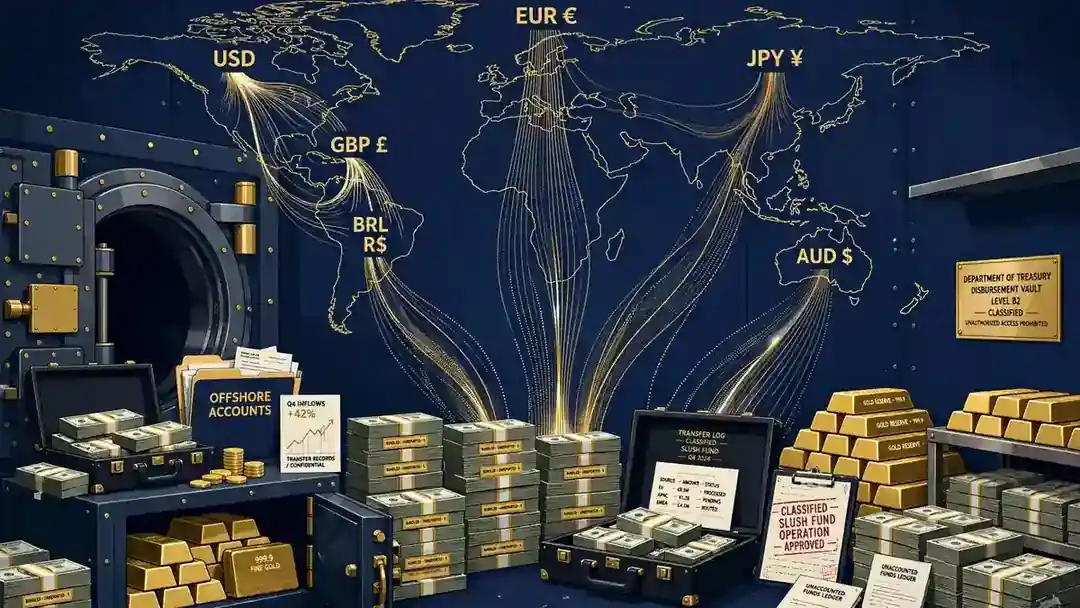
Kim Jong Un’s income is not a salary, a dividend, or a capital gain. It is personal control over a shadow economy whose centerpiece is Office 39 — known in Pyongyang simply as “Room 39” — a department of the Workers’ Party Central Committee created in the 1970s by Kim Jong Il to build a private foreign-currency slush fund. More than a dozen defectors, including former Office 39 official Ri Jong-ho, have described how the money moves: Kim can spend the fund as he pleases, using it for nuclear and missile development, luxury imports, and payoffs that keep the elite loyal. Congressional testimony in 2024 cited a high-ranking defector’s account that revenues from North Korea’s illicit IT workers — thousands of programmers working abroad — flow directly into Kim Jong Un’s personal accounts, with 90 percent affiliated with military-industry offices and the Reconnaissance General Bureau.
The revenue streams feeding Office 39, as documented by defectors, U.S. officials, and sanctions investigators, include: arms and narcotics trafficking; counterfeit currency — Pyongyang’s near-perfect forged $100 bills are the ones experts call “supernotes”; cybercrime and cryptocurrency theft; insurance fraud through the state-run Korea National Insurance Corporation, which files false claims and collects settlements from foreign reinsurers; gold and coal smuggling across the Chinese border; and the net wages of roughly 100,000 overseas laborers plus thousands of IT technicians, which a former Office 39 official told Radio Free Asia nets about $300 million a year. Legal money flows in too: Office 39 controls state-run trading companies, including the Daesong Group, that sell textiles, fish, and minerals abroad. And there is a political insurance policy built into the structure — the fund doubles as the regime’s patronage machine, showering loyal generals with Patek Philippe watches, apartments, and imported cars.
How much does all of this add up to? Nobody outside Pyongyang knows, but official estimates have a clear upward trend. A 2007 U.N. report put Office 39’s annual take at $500 million to $1 billion. A 2010 U.S. Treasury assessment said “several billion” illicit dollars a year. And in March 2013, a joint South Korean–American investigation located up to $5 billion in Kim family assets spread across more than 200 foreign bank accounts in Austria, Liechtenstein, Russia, Singapore, China, Switzerland, and Luxembourg — with the heaviest concentrations, in cash, sitting in Chinese banks. Those are state-adjacent flows, and we keep them separate from the personal net-worth number, but they explain how a man with no job on paper became a billionaire many times over.
The newest and largest revenue surge comes from Russia’s war in Ukraine. A 2025 analysis of Bloomberg data, reported by Dagens, estimated that between 2022 and 2025 North Korea collected roughly $22 billion in foreign currency from arms sales and troop deployments to Russia — a figure that would make it the biggest single windfall of Kim’s reign. It is a single-source claim and should be treated with caution: much of that “income” arrived as goods, food, energy, and military technology rather than cash, since sanctions bar Pyongyang from normal banking. But the direction is undisputed, and it marks the first time since the 2010s that the regime’s foreign earnings appear to be growing rather than shrinking.
Salary and Earnings
Here is the strangest line in any net-worth profile we publish: nobody knows what Kim Jong Un earns per year, because there is no public payroll and no published salary for the position of Supreme Leader. Some online profiles claim an official monthly salary of about $800 — a number that circulates without a traceable source and that we could not verify, so we do not stand behind it. What we can document is the earnings machinery around him.
The closest thing to a disclosed “paycheck” is the flow through Office 39. If you take the 2010 U.S. Treasury figure of several billion dollars a year and the 2007 U.N. figure of $500 million to $1 billion, the midpoint of the official estimates is roughly $1.5–2.5 billion in annual throughput during the 2000s and 2010s — though much of that financed the nuclear program and elite patronage rather than landing in a personal account. A former Office 39 official told Radio Free Asia that overseas workers and IT technicians alone net about $300 million a year for Kim’s “revolutionary fund.” Add gold production and domestic resource extraction, which the same official named as a core funding source, and the annual intake looks closer to the Treasury’s upper range in good years.
Context makes the numbers obscene. The average North Korean worker earns the equivalent of a few dollars a month — defector Hyun-seung Lee, a former elite-soldier, told reporters that even generals make about $1 a month plus rations — while Kim’s apparatus moves billions. That gap is the real story of his earnings: the Supreme Leader’s income is not a wage but the entire margin between a national economy and a personal treasury.
Businesses and Investments
Kim Jong Un does not invest the way a billionaire does. He controls the way a sovereign does — which is to say, the country’s productive assets answer to him. Office 39’s legal portfolio runs through front companies like the Daesong Group, a state-owned conglomerate whose tentacles reach textiles, seafood, minerals, and consumer goods. Defectors describe it as the above-board face of the slush fund: profitable, export-oriented, and answerable only to the Leader.
His most visible “investments” are the leisure megaprojects that double as economic policy. The Wonsan-Kalma coastal tourist zone — dubbed the “Benidorm of North Korea” after a North Korean delegation quietly studied Spanish resorts — opened in summer 2025 with hotels, water parks, and apartments meant for up to 20,000 visitors; Reuters reported in September 2026 that it drew more than 300,000 domestic visitors in the second half of 2025, citing China’s embassy in Pyongyang. Five luxury hotels opened in Samjiyon near the Chinese border in December 2025, and at least two dozen regional leisure complexes are built or under construction. These are state assets, not personal holdings — but in a system where the Leader’s word moves the budget, the distinction is academic, and each project adds to the portfolio of infrastructure he personally controls.
On the illicit side, the “businesses” include the operations no annual report would list: the insurance-fraud pipeline through the Korea National Insurance Corporation, cybercrime units whose cryptocurrency theft sanctions experts attribute to the regime, and the arms trade that Bloomberg-linked analysis credits with a roughly $22 billion foreign-currency haul from Russia between 2022 and 2025. Sanctions have made every one of these operations more expensive and more dependent on transshipment hubs in Singapore, Hong Kong, Macau, and Vladivostok — the choke points U.N. sanctions monitors have tracked for over a decade.
Brand Deals and Sponsorships
There are no brand deals, no sponsorships, and no endorsement contracts — Kim Jong Un has never signed one, and no brand would survive the association. What exists instead is something scholars call “gift politics”: the regime’s practice of buying loyalty with luxury. The import ledgers tell the story. South Korean lawmaker Yoon Sang-hyun, citing Chinese customs data in 2015, found the regime imported about $644 million in luxury goods in a single year — roughly double the $300 million-a-year pace under Kim Jong Il, with the surge concentrated in liquor, watches, handbags, cosmetics, jewelry, and carpets. The buyers were senior party and military officials, and the shopping lists were filled by Office 39 agents in Zurich, Vienna, and Prague. It is the one sponsorship market he will ever need: himself as the sponsor, the entire elite as the audience.
Houses, Cars and Other Assets
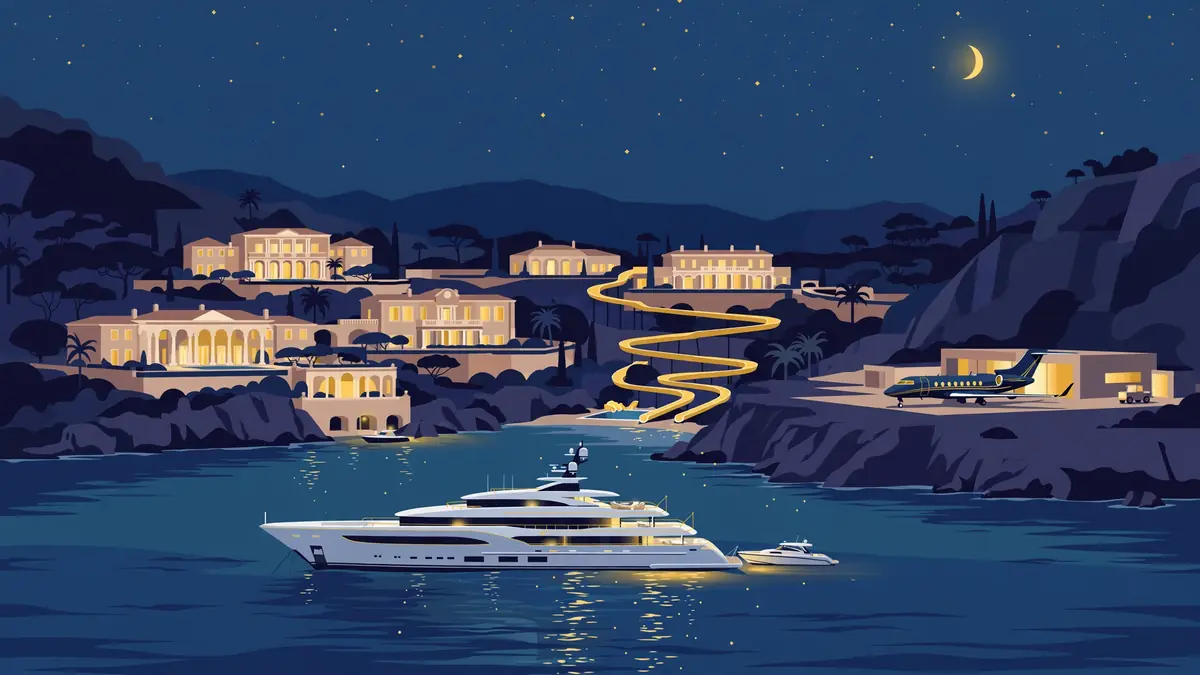
This is where the fortune becomes visible from space. Satellite analysts have identified between 17 and 20 residences used by Kim across North Korea — walled compounds with swimming pools, airstrips, stables, banquet halls, and yacht docks, many of them photographed from the outside only once or never. The flagship is the Ryongsong Residence in Pyongyang, a sprawling multi-mansion complex that rivals a presidential palace, complete with a subterranean command center that specialists describe as hardened against nuclear attack, and a rumored underground railway running toward the Chinese border.
The crown jewel is the Wonsan seaside compound on the east coast. Dennis Rodman — who visited in 2013 and remains the only American celebrity to have seen it up close — described a private island with a 50-meter pool, waterslides, and a seven-star-style guesthouse; Russian foreign minister Sergey Lavrov was photographed in 2025 sailing aboard Kim’s two-story, 29-meter yacht. Private security barges patrol the surrounding waters for miles. Analysts count at least one private jet — an Ilyushin-62 known as “Chammae-1,” fitted out like a head-of-state aircraft — and a 100-foot-plus yacht, plus a green armored train, modeled on the ones his father and grandfather used, that carried him to Beijing, Vladivostok, and Singapore for summits.
The vehicle fleet is estimated at more than 100 luxury cars, headlined by armored Mercedes-Maybach limousines, a Rolls-Royce Phantom, and — in a 2024 flourish that embarrassed sanctions monitors — a Russian-made Aurus Senat gifted by Vladimir Putin, photographed cruising through Pyongyang. On his wrist: Swiss watches from Patek Philippe and Audemars Piguet, the kind of pieces that fetch five and six figures at auction. In his glass: Hennessy cognac and Macallan whisky, Scotch whisky being a reported weakness, alongside Bordeaux wines, Swiss cheese, Parma ham, and Kobe beef — a 2024 report from a South Korean defense-linked research institute estimated the regime had allocated up to $1.8 billion to maintain elite privileges including cars, luxury goods, exclusive housing, and preferential medical care.
Awards and Achievements
Kim Jong Un collects titles, not trophies. He holds the rank of Marshal of the Republic, the chairs of the Workers’ Party Central Military Commission and the State Affairs Commission, and the position of Supreme Commander of the armed forces. The achievement the regime celebrates loudest is the nuclear weapons program: under his rule, North Korea conducted its most powerful nuclear tests and unveiled intercontinental ballistic missiles — including the Hwasong-20 shown off at the 2025 parade — that can reach the continental United States. We report these as facts about his record, not as endorsements; they are inseparable from the sanctions that shape his finances.
On the diplomatic ledger, he was ranked the 38th most powerful person in the world by Forbes in 2018 — the highest placement for any Korean that year — after a summit run that included two meetings with South Korea’s Moon Jae-in, three encounters with Donald Trump, and talks with Xi Jinping and Vladimir Putin. In 2025 he attended China’s Victory Day military parade in Beijing alongside Xi and Putin, his first multilateral diplomatic appearance. The domestic record is the leisure-building boom: Wonsan-Kalma, the Masikryong ski resort, and the Samjiyon hotel cluster — infrastructure meant to project modernity while the U.N. estimated in 2023 that more than 45 percent of North Koreans were undernourished.
Net Worth Growth Over the Years
No audited records exist, so the “growth” of this fortune is really the history of what investigators found. When Kim Jong Il died in December 2011, South Korean and U.S. officials privately estimated the family’s accumulated offshore wealth at roughly $4 billion — the baseline Kim Jong Un inherited. In March 2013, the joint South Korean–American investigation put the figure at up to $5 billion across 200+ accounts, which remains the most-cited hard number and the anchor for every estimate since. Through the 2010s, U.N. sanctions squeezed the flows — luxury imports were tracked and seized, banks were cut off — but the slush fund adapted, shifting into cybercrime, cryptocurrency theft, and insurance fraud.
The COVID lockdown years (2020–2022) choked cross-border trade with China and likely contracted the fund’s income. Then came the Russia windfall: from 2022 onward, arms sales and troop deployments generated the biggest foreign-currency surge of Kim’s reign — the Bloomberg-based analysis reported by Dagens puts it near $22 billion over 2022–2025, mostly in goods and technology rather than cash. As of October 2026, the personal figure stands where it has stood for a decade: an estimated $5 billion, with the honest range of $4–5 billion reflecting the difference between the inherited estate and the 2013 investigation.
| Year | Estimated net worth | What happened |
|---|---|---|
| 2011 | ~$4 billion (inherited) | Kim Jong Il’s death; SK–US officials estimate the family’s offshore estate at about $4B |
| 2013 | $5 billion | Joint SK–US investigation finds up to $5B across 200+ foreign accounts |
| 2017 | $5 billion (est.) | Toughest U.N. sanctions pass; luxury imports under pressure |
| 2020 | $4–5 billion (est.) | COVID border closure with China; trade — and likely fund income — contracts |
| 2022 | $4–5 billion (est.) | Russia-Ukraine war begins; arms trade windfall starts |
| 2025 | $5 billion (est.) | Beijing summit; Wonsan-Kalma resort opens; Russia windfall peaks |
| 2026 | $5 billion (range $4–5B) | Party’s 81st anniversary; Kim Ju-ae’s succession role grows |
For scale, here is how the estimate compares with other authoritarian fortunes that have been publicly estimated:
| Figure | Published estimate | Source |
|---|---|---|
| Kim Jong Un | $5 billion | Celebrity Net Worth; 2013 SK–US investigation |
| Vladimir Putin | Up to $200 billion (claimed) | Bill Browder’s testimony — unverifiable, widely disputed |
| Bashar al-Assad | ~$1.5 billion (reported) | Widely reported estimates of the Assad family fortune |
| Fidel Castro | $900 million | Forbes, 2006 |
| Kim Jong Il (estate) | ~$4 billion | SK–US officials, reported at his death |
Social Media Presence
Kim Jong Un has no personal social media accounts, and North Korea has no public internet to host them. His “presence” is the state propaganda apparatus: the Korean Central News Agency, Rodong Sinmun, and Korean Central Television, whose cameras record every factory visit, missile test, and family outing for domestic and foreign consumption. The machine is increasingly sophisticated — the nearly 50-minute documentary on his September 2025 China trip, aired the day he returned, was analyzed frame by frame by North Korea watchers for clues about Kim Ju-ae’s role.
Internationally, he trends whether he wants to or not. His October 2026 birthday letter to Putin — calling Russia’s war in Ukraine a “sacred war of justice” — made headlines worldwide within hours. Rumors about his health periodically spike on social media; we do not repeat them here because they are never sourced to anything verifiable. The honest version: the most interesting media about Kim Jong Un is the official media, because every photo the regime releases is a calculated message, and decoding it is a profession.
Personal Life
Kim married Ri Sol-ju, a former singer from Chongjin, around 2009 — state media did not confirm the marriage until July 2012, when she began appearing beside him at concerts and factory visits. South Korea’s intelligence service believes the couple has three children. The one the world knows is Kim Ju-ae, born around 2013 — a date established when Dennis Rodman told reporters after a 2013 visit that he had held the leader’s baby daughter. The two other children have never been publicly identified.
Ju-ae’s rise is the personal story with the biggest financial implications. Since her public debut at a missile test in November 2022, state media has styled her the “Respected Daughter” and even the “Morning Star of Korea.” She has fired rifles at shooting ranges, toured new apartment blocks for soldiers’ families, and — most tellingly — accompanied her father on his September 2025 state visit to Beijing. South Korea’s National Intelligence Service now describes her as designated as a successor, though Pyongyang has never used that word. If the designation holds, the $5 billion apparatus may one day be hers.
The hobbies are better documented than the family: basketball (the Jordan obsession, the Rodman friendship, the pickup games at the Wonsan compound), Jackie Chan action movies, computer games, and — according to the drinks trade press — Scotch whisky, Hennessy cognac, Bordeaux wine, and Brazilian coffee bought by the container load. It is a private life built on imported luxury in a country where the military once lowered its height requirements because generations of soldiers had been stunted by malnutrition.
Sources & Reporting
Celebrity Net Worth — the $5 billion anchor estimate; the March 2013 joint South Korean–American investigation (200+ foreign accounts); the 17–20 residences, 100+ luxury cars, private jet, and yacht details; the Swiss schooling and dual-degree account.
The Wall Street Journal — defector Choi Kun-chol’s account of Office 39’s slush fund (via the reporting it has long anchored); the fund’s creation in the 1970s and its role in buying elite loyalty.
Reuters — the September 2026 review of 1,200+ state-media articles documenting North Korea’s leisure boom; Wonsan-Kalma’s 300,000+ domestic visitors in H2 2025 (via China’s embassy in Pyongyang); the Samjiyon hotel openings.
Radio Free Asia — the former Office 39 official’s account that overseas workers and IT technicians net about $300 million a year, with the proceeds deposited in Kim’s revolutionary fund; gold production as a funding source.
U.S. Congress — 2024 House testimony citing a high-ranking defector that illicit IT-worker revenues flow directly into Kim Jong Un’s personal accounts, controlled by him personally.
Dagens — the 2025 Bloomberg-analysis-based report estimating roughly $22 billion in North Korean foreign-currency income from Russia arms and troop sales, 2022–2025; defector claims about pocketed soldier salaries.
CBS News — Kim Ju-ae’s July 2026 Korean War anniversary appearance and the succession speculation around it.
Daily NK — the September 2025 China-trip documentary analysis and what Kim Ju-ae’s screen time reveals about her status.
Forbes — the 2018 ranking of the world’s most powerful people (Kim at No. 38); the 2006 estimate of Fidel Castro’s fortune used in the comparison table.
SOFREP — Office 39’s insurance-fraud pipeline, diplomatic-cover luxury procurement in Zurich, Vienna, and Prague, and gift-politics distributions to elites.
The Express — the 2020 “Room 39” reporting on the ~$1 billion-a-year throughput and Kim Yo-jong’s oversight role.
The Drinks Business — Chinese customs data on roughly $30 million a year in spirits imports for the regime; the Brazilian coffee and Yves Saint Laurent cigarette details.
Cosmetics Design Asia — South Korean lawmaker Yoon Sang-hyun’s 2015 figures: $644 million in luxury imports in one year, roughly double the Kim Jong Il-era pace.
Asia One — September 2026 reporting on the Wonsan-Kalma resort and the broader consumer-leisure push.
Reporting window: January 2013 – October 2026. Where sources conflict — notably the birth year (1982 vs. 1983 vs. 1984), the university attended, and the Russia-windfall totals — we publish the range and name who says what. Estimates of Office 39’s annual revenue span $500 million (U.N., 2007) to “several billion” (U.S. Treasury, 2010); we report both.
Frequently Asked Questions
What is Kim Jong Un’s net worth in 2026?
We estimate it at $5 billion, within a $4–5 billion range. Celebrity Net Worth publishes the $5 billion figure, and it traces to a March 2013 joint South Korean–American investigation that found up to $5 billion in Kim family assets across more than 200 foreign bank accounts. We keep the range because nothing about this fortune can be independently audited — North Korea publishes no financial disclosures, and the line between Kim’s personal money and state funds does not exist.
How does Kim Jong Un make money?
Through Office 39, a Workers’ Party department created in the 1970s that defectors and U.S. officials describe as the Kim family’s private slush fund. It is fed by arms and narcotics trafficking, counterfeit currency, cybercrime, insurance fraud, overseas worker wages, gold and coal smuggling, and legal state-run trading companies like the Daesong Group. A former Office 39 official told Radio Free Asia the fund’s overseas labor alone nets about $300 million a year.
How old is Kim Jong Un?
His exact age is disputed. North Korea’s official line is January 8, 1982; South Korea’s National Intelligence Service says January 8, 1984, which most Western outlets use; some sources cite 1983. That makes him 42 to 44 years old in October 2026, depending on which date you accept.
How many houses does Kim Jong Un own?
Between 17 and 20 residences, according to defectors and satellite analysts. The best known are the Ryongsong Residence in Pyongyang — a walled multi-mansion compound with a hardened underground command center — and the seaside complex near Wonsan with a private island, waterslides, and a yacht dock that Dennis Rodman visited in 2013.
Who is Kim Jong Un’s wife, and does he have children?
His wife is Ri Sol-ju, a former singer from Chongjin; they married around 2009, though state media confirmed it only in July 2012. South Korean intelligence believes they have three children. The most visible is daughter Kim Ju-ae (born around 2013), styled by state media as the “Respected Daughter” and described by Seoul’s spy agency as the designated successor.
Is Kim Jong Un a businessman?
No. He has never owned or run a commercial company, signed an endorsement deal, or held a paid job outside the state. His entire fortune is state-derived: personal control over government funds, foreign-currency slush accounts, and assets accumulated through Office 39. The “salary,” “businesses,” and “assets” sections above are all framed around that reality.
Is Kim Jong Un the richest person in North Korea?
By the published estimates, yes — no other North Korean is reported to hold wealth remotely close to his. Comparisons with Forbes-listed billionaires are apples-to-oranges because his fortune is inseparable from state funds and cannot be audited, but on the raw numbers a $5 billion estimate puts him in the multi-billion-dollar tier of the world’s wealthy.
Who will inherit Kim Jong Un’s fortune?
The honest answer: nobody knows, because the money and the state are the same thing. The leading candidate is his daughter Kim Ju-ae, described by South Korea’s National Intelligence Service as designated as a successor. She joined his September 2025 Beijing state visit and stood beside him at the Workers’ Party’s 81st founding anniversary in October 2026. Whether she actually inherits power — and with it the Office 39 apparatus — is one of the most watched open questions in geopolitics.
Final Thoughts
Kim Jong Un’s $5 billion fortune is the strangest on any rich list: there is no salary to report, no company to value, no portfolio to itemize. What exists is a system — Office 39 and its century of accumulated tradecraft, 200-plus foreign accounts, and a leisure-and-luxury empire mapped by satellite — that converts an entire country’s margin into one family’s treasury. The 2013 joint investigation that anchored the number is now more than a decade old, and the Russia windfall of 2022–2025 may already have moved the real figure; we hold the $4–5 billion range because claiming more precision would be dishonest. What the October 2026 record does show is a ruler at the peak of his financial power: a resort boom at home, cash flowing from Moscow, and a daughter being positioned as the fourth generation of the dynasty. The money, like the regime, is built to outlast him.
Published on October 11, 2026. Last reviewed October 2026. Found an error? See our corrections policy.