
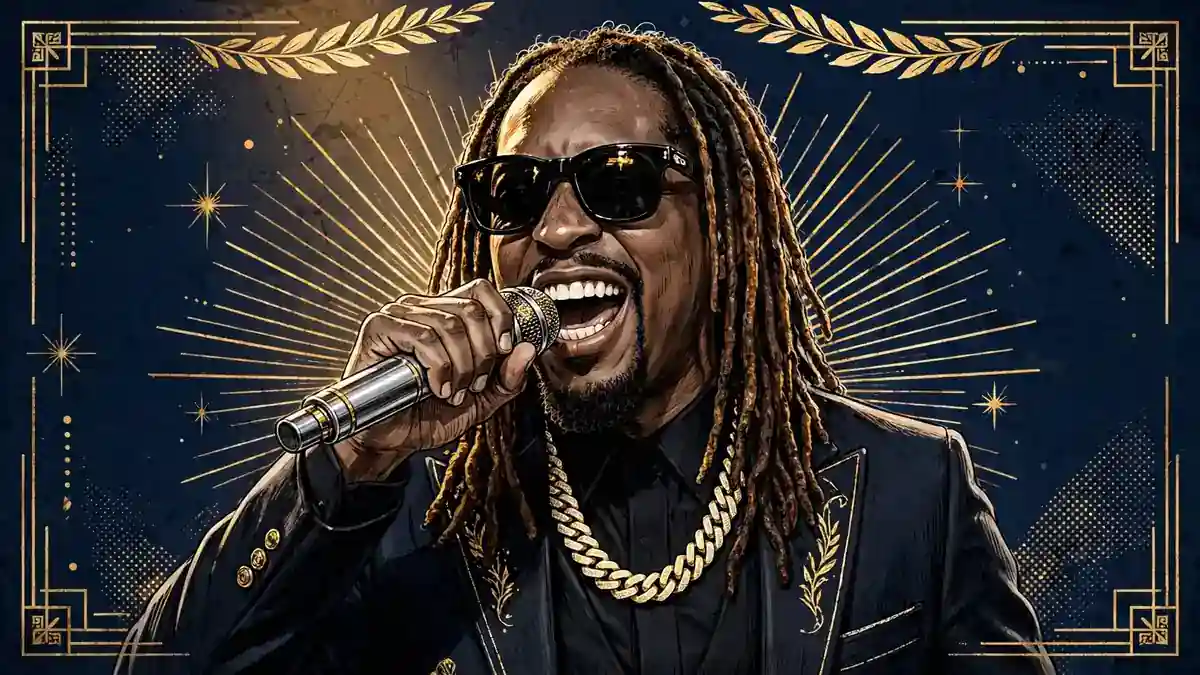
Lil Jon‘s net worth is estimated at $30 million as of November 2026. The Atlanta rapper, producer and DJ built that fortune across three decades: first as the architect of crunk music, then as the producer behind one of the biggest singles of the century, and later as a high-earning touring DJ, television personality and businessman with a wine label, an energy drink and his own record label. The figure comes from Celebrity Net Worth and Net Worth Spot, which agree on $30 million — though a handful of lower-quality sites print $40 million or even $45 million without showing their working, a gap this article unpacks below.
Lil Jon: Quick Facts
| Estimated net worth | $30 million (range: $30 million–$45 million; see the range note below) |
|---|---|
| Profession | Rapper, record producer, DJ, entrepreneur, television personality |
| Nationality | American |
| Born | January 17, 1971 (age 55) |
| Height | 5 feet 6 inches (168 cm) |
| Primary income sources | Music royalties, production fees, DJ performances and residencies, television, business ventures |
| Active years | 1991–present |
| Last reviewed | November 2026 |
- Early Life and Background
- Education
- Career Journey
- Rise to Fame
- Main Sources of Income
- Salary and Earnings
- Businesses and Investments
- Brand Deals and Sponsorships
- Houses, Cars and Other Assets
- Awards and Achievements
- Net Worth Growth Over the Years
- Social Media Presence
- Personal Life
- Sources & Reporting
- Frequently Asked Questions
Early Life and Background
Jonathan H. Smith was born on January 17, 1971, in Atlanta, Georgia, and grew up in the city’s Southwest Atlanta neighborhood. His father worked as an engineer and his mother, Carrie Smith-Williams, raised him in a middle-class household where music was a constant presence. The boy who would become Lil Jon taught himself to DJ at 15, spinning records at house parties and neighborhood events around Atlanta while his friends were still figuring out what they wanted to do after school.
Atlanta in the 1980s and early 1990s was building the sound that would eventually take over American hip-hop, and Smith was standing in the middle of it. The city had clubs, skating rinks and bass music scenes that rewarded DJs who could keep a room moving, and Smith learned the trade the practical way — reading crowds, cutting records and building a reputation one party at a time. That education in what makes people dance would later become the entire foundation of crunk, the high-energy subgenre he is credited with carrying into the mainstream.
One detail from his adult life reframes the early years. While writing his memoir I Only Shout So You Can Hear Me, published in October 2026, Lil Jon learned that the man who raised him was not his biological father — a discovery he has spoken about publicly in interviews around the book’s release, including on CNN’s All There Is with Anderson Cooper. Both his biological father and the man who raised him had died by the time the book came out, as had his mother, Carrie. The revelation adds a personal layer to a career that has always been presented as pure Atlanta hustle, and it is one of the reasons the memoir drew attention well beyond music media in late 2026.
Education
Smith attended Frederick Douglass High School in Atlanta, enrolling in the school’s magnet program while his closest friends went to Benjamin E. Mays High School. He played in the Douglass marching band, an experience that put him inside the discipline of arranged, high-volume performance — brass, drums and crowd energy — years before he started producing records built on exactly those elements. The marching band connection runs through his whole story: crunk’s shouted hooks, pounding drums and call-and-response structure all carry the DNA of a school band that knew how to fill a stadium.
There is no record of Smith attending college. After graduating from Douglass, he went straight to work as a DJ in downtown Atlanta clubs, and the clubs became his classroom. It was on those dance floors that he met Jermaine Dupri, the producer and founder of So So Def Recordings, a meeting that changed the direction of his working life and gave him his first foothold inside the music business proper.
Career Journey
Lil Jon’s professional career breaks into four clear acts, and each one paid him in a different way. The first act was the So So Def years, 1991 to 2000, when he worked inside the industry rather than in front of it. Dupri hired him to run A&R for So So Def Recordings, and Smith rose to Executive Vice President of A&R. His first project was the So So Def Bass All-Stars compilation series, which he built by recruiting Atlanta producers and rappers including DJ Smurf, Shawty Redd, Raheem the Dream and Playa Poncho. The first volume, released May 12, 1996, sold more than 500,000 units and was certified gold by the RIAA on September 19, 1996 — four months after release. Two more volumes followed in 1997 and 1998. The money in this period was salary and executive pay, not stardom, but the job taught him how records get made, marketed and sold — and it put him in rooms with the people who would bankroll his next move.
The second act was Lil Jon & the East Side Boyz, the group he formed in the mid-1990s with Big Sam and Lil Bo after meeting them through Atlanta’s club and skating-rink scene. Their debut album, Get Crunk, Who U Wit: Da Album, arrived independently in 1997 on Mirror Image Records, distributed by Ichiban Records. A second independent album, We Still Crunk!, followed in 2000 on his own BME Recordings imprint. Neither record broke nationally, but both built the regional following that made the group a live draw across the South. A deal with TVT Records followed, and the 2001 album Put Yo Hood Up pushed the group closer to the mainstream. The group released five albums in total, and its run from 1995 to 2005 is the period when crunk went from an Atlanta club sound to a national chart force.
The third act was the producer-for-hire peak. By 2003 and 2004, Lil Jon was the most in-demand producer in American popular music. He produced Usher’s “Yeah!”, Ciara’s debut single “Goodies” and Petey Pablo’s “Freek-a-Leek” — three records that all reached the top of the charts or close to it, and all carried his unmistakable sonic signature: booming 808 drums, synth stabs and shouted ad-libs. Production fees, publishing royalties and songwriter shares from this period are the single biggest building block of his fortune, because those records have never stopped earning. “Yeah!” alone has sold more than 13 million copies in the United States as of February 2024, according to Billboard’s reporting, and every one of those sales, streams and radio plays generates publishing income for its writers and producer.
The fourth act is the one that has kept the money coming for the past decade: DJ, television and brand Lil Jon. His solo debut album Crunk Rock arrived in 2010 to a lukewarm reception, but it hardly mattered, because by then he had reinvented himself as a touring DJ. Forbes noted in 2013 that he had played more than 100 shows in the previous year alone. The 2013 single “Turn Down for What” with DJ Snake gave him a second global hit a full decade after “Yeah!”, and television — Celebrity Apprentice in 2011 and 2013, then his own HGTV series Lil Jon Wants to Do What? — turned him into a personality with earning power beyond music. In 2024 he added meditation albums and a wellness brand to the mix, and in 2026 he executive-produced a full album for Bay Area rapper LaRussell. At 55, he is still releasing music, still touring and still finding new rooms to work.
Rise to Fame
The breakthrough record was “Get Low,” the lead single from the 2002 album Kings of Crunk. The song’s hook — “to the window, to the wall” — became one of the most quoted lines in hip-hop, and the single became a Top 5 hit on the Billboard Hot 100. Kings of Crunk was certified multi-platinum by the RIAA in August 2004, and the album’s success moved Lil Jon & the East Side Boyz from regional favorites to national stars. The follow-up album, Crunk Juice, released in 2004, went double platinum and spawned “Lovers & Friends,” a smoother hit featuring Usher and Ludacris that showed Lil Jon could produce R&B-leaning records as well as club anthems.
But the record that made him rich was one he produced for someone else. In early 2004, Usher returned to the studio to record extra tracks for his album Confessions at the insistence of Arista Records, and he called Lil Jon. The result was “Yeah!”, a track Lil Jon produced and co-wrote with Sean Garrett, Patrick “J. Que” Smith, Robert McDowell and LRoc, featuring vocals from Lil Jon himself and Ludacris. Released in January 2004, “Yeah!” topped the Billboard Hot 100 for 12 consecutive weeks, stayed on the chart for 45 weeks, topped charts in twelve countries, and finished at No. 2 on Billboard’s Hot 100 Songs of the Decade chart for the 2000s. It won Best Rap/Sung Collaboration at the 47th Grammy Awards in 2005 and was nominated for Record of the Year. As a writer and producer on the biggest single of the year, Lil Jon earned publishing royalties, producer royalties and a featured-artist share — income streams that have compounded for more than two decades as the song passed 13 million US sales.
The second wave came almost a decade later. “Turn Down for What,” his December 2013 collaboration with French DJ and producer DJ Snake, peaked at No. 4 on the Billboard Hot 100, was certified 8× platinum by the RIAA and won the Billboard Music Award for Top Dance/Electronic Song. Its viral music video turned the phrase into a cultural catchphrase, and the song’s afterlife has been unusually long: Lil Jon performed it as a guest during Usher’s Super Bowl LVIII halftime show in February 2024, and again at the Democratic National Convention on August 20, 2024, when he introduced Georgia’s delegation during the ceremonial roll call and swapped the lyrics to “VP Harris … Governor Walz.” DJ Snake publicly objected to the political use of the song, a dispute that itself generated a fresh round of coverage. A hit that pays in 2014, 2024 and beyond is exactly the kind of asset that holds a net worth steady at $30 million long after the chart run ends.
Other singles filled in the gaps between the two peaks. “Snap Yo Fingers,” released in 2006 with E-40 and Sean Paul of the YoungBloodZ, became another Top 10 hit, and “Shots,” his 2009 collaboration with LMFAO, became a party staple that still earns from streaming and licensing. The pattern is consistent: Lil Jon’s biggest paydays came from records built for clubs and parties, and those records have proven unusually durable as streaming catalog.
Main Sources of Income
Lil Jon’s $30 million is spread across five income streams, and the balance between them has shifted over time. In the 2000s, record sales and production fees dominated. In the 2010s, DJ performances took over as the largest single earner. Today, the catalog does much of the work: royalties from “Yeah!”, “Turn Down for What,” “Get Low” and the rest of the crunk catalog arrive every month from streaming services, radio, sync licenses and samples, while touring, television and business ventures add fresh money on top.
Music royalties and publishing. This is the foundation. As a songwriter and producer on “Yeah!” — a 13-million-selling, Grammy-winning record — Lil Jon holds publishing and producer royalty interests that pay on every stream, sale, radio play and license. The same applies to “Get Low,” “Lovers & Friends,” “Snap Yo Fingers,” “Turn Down for What” (8× platinum) and his production work for Ciara and Petey Pablo. Catalog royalties are the reason his net worth has held at roughly $30 million for years even without a new hit album: the old hits keep paying.
DJ performances and residencies. After reinventing himself as a DJ in the early 2010s, Lil Jon became one of the highest-paid party DJs in the business. Forbes recorded more than 100 shows in the year leading up to its 2013 Cash Kings list, and he has held Las Vegas DJ residencies, including at Wynn’s clubs, where top DJs command five- and six-figure fees per night. Reports in celebrity profiles have put his per-night DJ fee as high as $100,000, though that figure comes from weaker outlets and should be treated as an upper-end claim rather than a confirmed rate. What is confirmed is the volume: a DJ playing 100-plus dates a year at even a fraction of that fee is earning millions annually from live work alone.
Production fees. At his peak in 2004, Lil Jon was among the most expensive producers in hip-hop, and his per-track fees reflected it. He has continued to take production and executive-producer work since, most recently executive-producing LaRussell’s 2026 album Something’s in the Water, a 14-track project released through Roc Nation Distribution. Executive-producer credits typically carry a fee plus a share of the project’s revenue, and the LaRussell deal also connected him to one of the most talked-about independent sales campaigns of 2026.
Television. Two runs on Celebrity Apprentice (2011 and the 2013 all-star season) paid appearance fees and raised his profile with audiences outside hip-hop, and his HGTV series Lil Jon Wants to Do What?, co-hosted with home builder and designer Anitra Mecadon, pays a television salary while doubling as marketing for his renovation and design interests. Reality and lifestyle television pays less per hour than a DJ residency, but it pays steadily across a season and keeps his name in front of advertisers.
Business ventures. His own record label BME Recordings, founded in 2004 as a joint venture with Warner Bros. Records, has released music by Trillville and Lil Scrappy alongside his own work. The Crunk energy drink, his Little Jonathan Winery wine label and an Oakley sunglasses line add consumer-product income. None of these is a nine-figure business on its own, but together they spread his earnings across industries that do not depend on the next hit record.

Salary and Earnings
The only hard, audited-style earnings numbers in Lil Jon’s public record come from Forbes’ annual Hip-Hop Cash Kings lists, and they are worth quoting precisely because so little else is verifiable. Forbes placed him at No. 20 on its 2013 list with $6 million in pre-tax earnings for the twelve months from June 2012 to June 2013, tied with Rick Ross, Mac Miller, Young Jeezy and Questlove. The magazine’s note on that year’s list said he had “reinvented himself as a DJ, playing over 100 shows in the past year alone” after never matching the viral success of “Yeah!” — a blunt summary of how the money had moved from record sales to live performance. A year later, Forbes ranked him No. 20 again on the 2014 Cash Kings list with $7 million in pre-tax earnings for June 2013 to June 2014, a period that included the release and rise of “Turn Down for What.” Forbes calculates these lists from touring data, record sales, publishing, merchandise, endorsements and interviews with managers, lawyers and executives, and it does not deduct management, agent or attorney fees — so the figures are gross earnings, not take-home pay.
Those two Forbes years tell a useful story about scale. A $6–7 million annual gross in 2013–2014, built mostly on DJ dates and catalog royalties, is consistent with a $30 million net worth for an artist who had already been earning for a decade: big years banked, taxes and expenses paid, and the catalog continuing to throw off royalties. It also explains why the $30 million figure has barely moved in published estimates since. Celebrity Net Worth, Net Worth Spot and most other outlets have printed $30 million for years, and the stability of the number is itself informative — it reflects a catalog that earns steadily rather than a fortune that spikes with each new release.
Two other earnings claims circulate and deserve a careful label. CelebsWiki, a lower-tier biography site, reports that Lil Jon “earned $11 million in 2008 alone from hits and deals,” without naming a source for the figure; we have not been able to verify it against Forbes or any primary reporting, so treat it as unconfirmed. Wealthy Peeps, another aggregator, reports a DJ set fee of $20,000 to $40,000 in 2014 and an annual salary estimate of $437,500 — figures that sit oddly next to the Forbes $6–7 million earnings years and the 100-show pace, and which we include only to show how noisy the secondary market for these numbers is. The Forbes figures are the ones to trust.
One more earnings detail comes from television. During his 2011 run on Celebrity Apprentice, Lil Jon raised $80,000 for the United Methodist Children’s Home through his fundraising tasks on the show, according to reports of his time on the program. That is charity money raised, not income, but it is a documented dollar figure attached to his television work and a reminder that reality television paid him in exposure and appearance fees as well as in direct salary.
The 2026 picture is harder to price precisely. His executive-producer role on LaRussell’s Something’s in the Water, his touring schedule — including reported dates on Pitbull’s “I’m Back” tour in 2026 — and his Las Vegas DJ work all generate current income, but no outlet has published a 2026 earnings figure for him. What can be said with confidence is that his income today is weighted toward live performance and catalog royalties, the two streams that have carried him since 2013, with television and business ventures contributing smaller, steadier amounts.
Businesses and Investments
Lil Jon’s business record starts with the label. In 2004, he launched BME Recordings with Robert McDowell, Vince Phillips and Dwayne “Emperor” Searcy as a joint venture with Warner Bros. Records. The label’s first major release was The King of Crunk & BME Recordings Present: Trillville & Lil Scrappy in 2004, with Lil Jon producing most of the album, and it gave him an ownership stake in other artists’ records rather than just a fee for his own. BME also released his own independent albums, and the imprint remains the corporate home of his catalog work. He later operated Black Market Entertainment as a label vehicle as well. Owning the label meant owning a share of the masters and the publishing on records he produced — a far better long-term position than a straight work-for-hire fee.
The beverage business came next. He created Crunk Juice, an energy drink that played on the name of his 2004 album, and later developed the Crunk!!! energy drink line. The drink business put his brand on shelves rather than just on records, and it was an early example of a rapper treating his stage persona as a consumer brand — the same playbook that later made fortunes for artists who launched spirits and beverage lines. The energy drink never became a national giant, but it established a product line that still carries his name.
Wine followed. His Little Jonathan Winery label produces wines including Merlot, Chardonnay and Cabernet Sauvignon, according to profiles of his business ventures. The wine label is a smaller, more premium play than the energy drink: lower volume, higher margin, and aimed at an adult audience that grew up with his music. It also fits the pattern of his later career — moving from nightclub energy toward lifestyle products for the generation that partied to crunk in their twenties and now buys wine in their forties and fifties.
In 2024 he moved into wellness. He released the meditation album Total Meditation, followed by Remix Meditation in 2026, and launched the Soul Chakra wellness brand around the same work. His late son Nathan, who performed as DJ Young Slade, worked on the meditation albums as a producer and engineer — a detail that gives the wellness venture a personal weight beyond commerce, and one reason Lil Jon has pushed for a posthumous Grammy nomination for Nathan’s work on those records. The meditation albums are not his biggest earners, but they represent a deliberate attempt to build income in a lane that has nothing to do with clubs or charts, and they keep him releasing new music in a format that fits his age and audience.
Real estate rounds out the portfolio. Profiles of his holdings describe an Atlanta mansion as his primary residence, and his HGTV series is built around his genuine interest in home renovation — he has said on the show that he has renovated homes of his own. Beyond the Atlanta home, no property purchase by Lil Jon has been documented in public records that we could verify, so we do not list a portfolio of houses the way some profiles do. What is documented is the pattern: a performer who converted music money into a home, a label, a drinks business and a wine label, rather than spending it all on depreciating luxuries.
Brand Deals and Sponsorships
Lil Jon’s endorsement record is smaller than his music record, and that is part of the story: he has made more money from owning products than from lending his face to other people’s. The best-documented partnership is with Oakley, the eyewear brand, for which he developed a line of custom sunglasses — a natural fit for a performer whose dark shades became part of his visual identity. Profiles also link him to a Monster Cable headphones partnership, though that claim comes from weaker biography sites and we have not verified it against a primary announcement.
Endorsements have also come through his beverage brands rather than through traditional sponsorships. The Crunk energy drink and Little Jonathan Winery are his own products, which means the economics are different from a paid endorsement: he carries the risk, but he keeps the margin. Don Julio tequila has been named in profiles as an endorsement association, and his long-running visibility as a party-culture figure has made him a natural partner for alcohol brands — but again, the documented deals are thinner than the association suggests, and we do not inflate a passing mention into a signed contract.
The most valuable brand work of his recent career may be the kind that never carried a sponsorship label. His performance of “Turn Down for What” at the 2024 Democratic National Convention put him in front of a national television audience of millions, and his cameo in Usher’s Super Bowl LVIII halftime show did the same. Neither appearance paid like a tour date — the NFL Thanksgiving halftime show he performed at with Post Malone in November 2025 paid the performers nothing at all, according to Pro Football Network’s reporting on halftime pay — but both kept his name and his biggest song in the cultural conversation, which is what keeps a catalog earning. For a 55-year-old artist, cultural relevance is itself a revenue strategy, and Lil Jon has managed it better than most of his crunk-era peers.

Houses, Cars and Other Assets
Lil Jon’s primary documented asset outside his music catalog is his Atlanta home. Multiple profiles describe a luxury mansion in Atlanta, Georgia, where he has lived for years, and his HGTV series Lil Jon Wants to Do What? is filmed around the Atlanta area and draws on his own renovation experience. No purchase price, address or square footage for the home has been published in a verifiable source, so we do not quote figures that would be guesses dressed as facts.
Cars are where the reporting gets thin. Profiles on lower-tier sites list a Lamborghini Murcielago and a Bugatti Veyron among his vehicles, but no primary source — no interview, no verified social post, no registration record — confirms those specific cars, and the same two models appear on dozens of celebrity net-worth pages with identical wording, a sign of copied content rather than independent reporting. What is verifiable is the style of the claim: Lil Jon has long been photographed with luxury cars and jewelry, including a diamond “Crunk Ain’t Dead” pendant large enough to earn a Guinness World Record as the largest diamond pendant. The pendant is a real, documented artifact of his peak-era spending; the specific car list is not, and we flag the difference rather than repeat it as fact.
The assets that matter most to his net worth are not visible in a driveway. His music catalog — the publishing and producer royalty interests in “Yeah!”, “Turn Down for What,” “Get Low,” “Lovers & Friends” and the rest — is the largest single asset, and it is the one that generates income every month without him lifting a finger. His label, BME Recordings, and his beverage and wine brands are the second tier. A catalog that includes a 13-million-selling single and an 8× platinum single is worth far more than any car, and it is the reason his wealth has proven durable across two decades without a new hit album.
Awards and Achievements
Lil Jon’s trophy case is smaller than his influence, and that mismatch is worth stating plainly. He has been nominated for the Grammy Awards five times, according to reports around his 2026 memoir, and his one Grammy win came as a writer, producer and featured artist on “Yeah!”, which took Best Rap/Sung Collaboration at the 47th Grammy Awards in 2005 and was nominated for Record of the Year the same night. “Turn Down for What” added a Billboard Music Award for Top Dance/Electronic Song. Those are the headline honors, and they understate his impact: crunk reshaped Southern hip-hop and pop production for a decade, and its fingerprints are on records by artists who never worked with him directly.
The certifications tell the commercial story more completely. “Turn Down for What” is certified 8× platinum by the RIAA. Kings of Crunk was certified multi-platinum in August 2004 and Crunk Juice went double platinum the same year. The So So Def Bass All-Stars compilation he executive-produced was certified gold in 1996 after selling more than 500,000 units. “Yeah!” has sold more than 13 million copies in the United States, finished No. 2 on Billboard’s decade-end Hot 100 chart for the 2000s, and topped the Hot 100 for 12 consecutive weeks — a run that made it the longest-running No. 1 single of 2004.
His most unusual honor has nothing to do with music charts. The Guinness Book of World Records recognized his “Crunk Ain’t Dead” diamond pendant as the largest diamond pendant, a record that captures the excess of the crunk era in a single object. And in 2026, he began campaigning for a different kind of recognition: a posthumous Grammy nomination for his late son Nathan, whose production and engineering work on Lil Jon’s meditation albums he believes deserves the Recording Academy’s attention. First-round voting for the 2027 Grammys opened in October 2026, and Lil Jon made his appeal publicly as voting began.
Net Worth Growth Over the Years
Lil Jon’s wealth did not grow in a smooth line, and the honest way to show it is as a series of dated, sourced markers rather than a made-up staircase. The table below uses only figures that trace to a named outlet. Years without a published estimate are left blank on purpose — inventing a number for 2017 or 2019 would be fiction, and the gap itself is informative: nobody with access to his finances has published a year-by-year account, and the outlets that print one are guessing.
| Year | Reported figure | What it means | Source |
|---|---|---|---|
| 1996 | Gold certification, 500,000+ units | First commercial success, as executive producer of So So Def Bass All-Stars | RIAA |
| 2004 | 12 weeks at No. 1; multi-platinum albums | Breakout year: “Yeah!” and Kings of Crunk / Crunk Juice | Billboard / RIAA |
| 2013 | $6 million annual earnings | Forbes Cash Kings No. 20; 100+ DJ shows in the year | Forbes |
| 2014 | $7 million annual earnings | Forbes Cash Kings No. 20; “Turn Down for What” year | Forbes |
| 2023 | $35 million net worth | Outlier print from a low-quality aggregator; not corroborated | CA Knowledge |
| 2025–2026 | $40–45 million net worth | Unsourced projections on low-quality sites; no methodology shown | TheMost10 / ILikeToDabble |
| 2026 | $30 million net worth | Consensus figure, updated November 2026 | Celebrity Net Worth / Net Worth Spot |
The range question deserves a direct answer. Most credible outlets converge on $30 million. A few sites print $35 million, $40 million or $45 million, and the higher numbers share two traits: they appear on low-quality aggregator pages, and none of them shows a method, a source or a dated update that would let a reader check the work. One of them, ILikeToDabble, labels its own $45 million figure a “projection.” Another, TheMost10, prints different totals on different pages of the same site — $40 million on one page, $45 million on another — which is the clearest possible sign that the number is being generated rather than researched. We publish $30 million as the estimate and record the $30 million–$45 million span as the range, with the higher end flagged as unsourced. If Forbes or another outlet with real reporting ever publishes a new total, this page should be corrected to match it.
Peer comparison puts the $30 million in context. Jay-Z’s net worth is estimated at $2.8 billion by both Forbes and Celebrity Net Worth as of 2026, built on spirits equity, Roc Nation and investments rather than records — a reminder that the biggest hip-hop fortunes are business fortunes now. Drake’s net worth is estimated at about $400 million by Celebrity Net Worth, and Kendrick Lamar’s net worth is reported anywhere from $120 million to $220 million depending on the outlet, a spread that shows how uncertain even well-covered estimates can be. Lil Jon sits well below that tier, and the comparison is instructive: his fortune was built on production and performance rather than equity stakes and brand exits, and $30 million is a strong outcome for a career built that way. Among the musicians whose fortunes we track, he is a mid-tier earner with an unusually durable catalog — and durability, over thirty years, is its own kind of wealth.
Social Media Presence
Lil Jon remains active on Instagram and X, where he posts a mix of tour dates, DJ clips, family tributes and promotion for his meditation music and memoir. His social following is modest next to the streaming-era stars — he built his fame before social media existed, and his audience reaches him through radio, clubs and television as much as through feeds. We do not quote follower counts here because they change daily and no outlet has published a verified, dated count we can stand behind.
Social media mattered most to him in 2026 for a sad reason. On February 6, 2026, he confirmed his son Nathan’s death on Instagram with a post captioned with broken-heart and dove emojis, and the platform became the place where fans, fellow artists and the public left tributes. In October 2026, he used Facebook to make his public appeal for a posthumous Grammy nomination for Nathan’s work on the meditation albums, timed to the opening of first-round voting for the 2027 Grammys. The posts show how his public presence has shifted: less party promotion, more personal testimony, and a willingness to talk openly about grief — including on Anderson Cooper’s podcast All There Is, where he discussed losing Nathan and learning about his biological father while writing the memoir.
His touring and DJ presence is the live version of the same story. He continues to play clubs and festivals, holds Las Vegas DJ residencies, and was reported to be touring with Pitbull on the “I’m Back” tour in 2026. For an artist whose first skill was reading a room, the live circuit remains the most direct line between his past and his present income.
Personal Life
Lil Jon married Nicole Smith in 2004, and their only child, Nathan Smith, was born into a household where music was the family business. Nathan followed his father into the industry as a DJ, producer and engineer under the name DJ Young Slade, and he worked on his father’s meditation albums. Nathan was a graduate of New York University. Lil Jon and Nicole later separated, and he has spoken about the end of the marriage in interviews around his memoir’s release in November 2026.
The defining event of Lil Jon’s recent personal life is the death of his son. Nathan was reported missing from his home in Milton, Georgia, on February 3, 2026, after leaving the house without his phone. Three days later, on February 6, divers recovered his body from a pond near his home. He was 27. The Fulton County Medical Examiner’s Office later determined that he died from accidental drowning in the setting of psilocybin use, and ruled the manner of death an accident. Lil Jon and Nicole issued a joint statement confirming the death and asking for privacy while thanking police, emergency responders and the public who helped with the search. Nathan was laid to rest about two weeks later, at the start of Ramadan. Lil Jon has since dedicated his memoir to Nathan, written an epilogue about the loss after the book was otherwise finished, and promised publicly to preserve his son’s musical legacy.
Two other personal facts from 2024 and 2026 round out the picture. In 2024, Lil Jon publicly converted to Islam, a decision he has discussed in interviews alongside his meditation practice — the two are connected in his telling, with the meditation albums growing out of the same search for calm. And in 2026, the memoir revealed the family secret about his biological father, a discovery he has described as painful and clarifying in equal measure. Taken together, the last two years have remade his public image: the shouting party starter of “Yeah!” and “Turn Down for What” is now also, visibly, a grieving father and a man writing seriously about faith, family and loss.
Sources & Reporting
Celebrity Net Worth — the $30 million net worth estimate, biographical facts (born January 17, 1971, Atlanta), and 2026 reporting on the LaRussell collaboration; reporting window November 2026.
Net Worth Spot — independent $30 million estimate for 2026, updated November 1, 2026, plus career and business summary.
Forbes — Hip-Hop Cash Kings lists: $6 million pre-tax earnings in 2013 (No. 20) and $7 million in 2014 (No. 20), with methodology covering touring, record sales, publishing, merchandise and endorsements; the 2013 note on 100-plus DJ shows in a year. Reported via Forbes’ own lists and contemporaneous coverage in 2013–2014.
Billboard — chart records for “Yeah!” (12 weeks at No. 1, 45 weeks on the Hot 100, No. 2 on the 2000s decade-end chart) and “Turn Down for What” (No. 4 peak), plus the Billboard Music Award for Top Dance/Electronic Song; sales reporting of more than 13 million US copies for “Yeah!” as of February 2024.
RIAA — certifications: “Turn Down for What” 8× platinum; Kings of Crunk multi-platinum (August 2004); Crunk Juice double platinum; So So Def Bass All-Stars gold (September 19, 1996).
People — October 14, 2026 excerpt from the memoir I Only Shout So You Can Hear Me, covering Lil Jon’s final conversations with his son Nathan; memoir details (Atria Books / Black Privilege Publishing, October 20, 2026, 304 pages, written with Paul Cantor).
AllHipHop — October 2026 reporting on the posthumous Grammy campaign for Nathan Smith and on the memoir’s revelation about Lil Jon’s biological father.
AllMusic — career history of Lil Jon & the East Side Boyz, “Get Low” as a Top 5 hit, and the 2026 LaRussell album Something’s in the Water as a Lil Jon team-up.
Wikipedia — consolidated career chronology (So So Def A&R tenure, Frederick Douglass High School, BME Recordings founding, DNC 2024 performance, Super Bowl LVIII cameo), cross-checked against the outlets above; used for dates and discography, not for money figures.
Pro Football Network — November 2025 reporting that NFL Thanksgiving halftime performers, including Lil Jon and Post Malone, are not paid for the performance.
Reporting window: November 2026. Money figures are estimates from the outlets named; Forbes earnings are pre-tax and exclude management, agent and attorney fees. Where outlets disagreed — notably the $30 million consensus against $40–45 million prints on low-quality aggregator sites — we published the consensus figure, showed the range, and explained the difference rather than splitting it.
Frequently Asked Questions
What is Lil Jon’s net worth?
Lil Jon’s net worth is estimated at $30 million as of November 2026. Celebrity Net Worth and Net Worth Spot agree on the figure. A few lower-quality sites print $40 million or $45 million, but those numbers come with no sourcing or method, so $30 million is the defensible estimate.
How did Lil Jon make his money?
Five streams built the fortune: music royalties and publishing from hits he wrote and produced, above all “Yeah!” and “Turn Down for What”; production fees; DJ performances and Las Vegas residencies, with Forbes recording more than 100 shows in a single year; television, including Celebrity Apprentice and his HGTV series; and businesses such as BME Recordings, the Crunk energy drink and Little Jonathan Winery.
How much did Lil Jon make from “Yeah!”?
No exact figure has ever been published for his “Yeah!” earnings. As producer, co-writer and featured artist on a single that spent 12 weeks at No. 1 and has sold more than 13 million copies in the United States, he earns publishing royalties, producer royalties and a featured-artist share on every sale, stream, radio play and license — income that has compounded for more than twenty years. Forbes’ closest hard numbers are his $6 million earnings in 2013 and $7 million in 2014, years when the catalog and his DJ schedule were both paying.
Is Lil Jon still making music in 2026?
Yes. In 2026 he executive-produced LaRussell’s album Something’s in the Water, released through Roc Nation Distribution, released the meditation album Remix Meditation, published his memoir I Only Shout So You Can Hear Me, and was reported to be touring with Pitbull. He also continues to DJ, including Las Vegas residencies.
What happened to Lil Jon’s son?
Nathan Smith, who performed as DJ Young Slade, died in February 2026 at age 27. He was reported missing from his home in Milton, Georgia, on February 3, and his body was found in a pond near his home on February 6. The Fulton County Medical Examiner ruled the death an accidental drowning in the setting of psilocybin use. Lil Jon has dedicated his memoir to Nathan and is campaigning for a posthumous Grammy nomination for Nathan’s work on his meditation albums.
Who is Lil Jon’s wife?
Lil Jon married Nicole Smith in 2004. Their son Nathan was their only child. The couple later separated, and Lil Jon has spoken about the end of the marriage in interviews around his memoir’s release in November 2026.
How tall is Lil Jon?
Lil Jon is 5 feet 6 inches tall (168 cm). His height is widely listed at 5’6″ across biography sources, though he has joked in interviews that he stands a little taller than the listings say.
What businesses does Lil Jon own?
His main ventures are BME Recordings, the record label he founded in 2004 as a joint venture with Warner Bros. Records; the Crunk energy drink line; Little Jonathan Winery, which produces Merlot, Chardonnay and Cabernet Sauvignon; and the Soul Chakra wellness brand built around his meditation albums. He also had an Oakley sunglasses line.
Final Thoughts
Lil Jon’s $30 million is a catalog fortune more than a moment fortune. The crunk era ended, the chart hits slowed, and the number barely moved — because “Yeah!” and “Turn Down for What” never stopped earning, and because he rebuilt himself as a DJ, a television personality and a businessman instead of chasing one more hit. The Forbes years prove the scale: $6 million in 2013 and $7 million in 2014, earned mostly one club date at a time. The range debate proves the discipline needed to report it: $30 million is the figure with sources behind it, and the $40–45 million prints are a reminder to check the working before quoting the total.
What changed in 2026 was not the money but the man. The death of his son Nathan, the memoir and its revelations, the conversion to Islam and the meditation albums have given the King of Crunk a second public identity — quieter, sadder and more reflective than the one shouting on the records. If his wealth holds steady from here, it will be the catalog doing the work while he decides what the next chapter is for. That is a durable position, and it is why the estimate has survived a decade of challengers.
Published on November 12, 2026. Last reviewed November 2026. Found an error? See our corrections policy.