
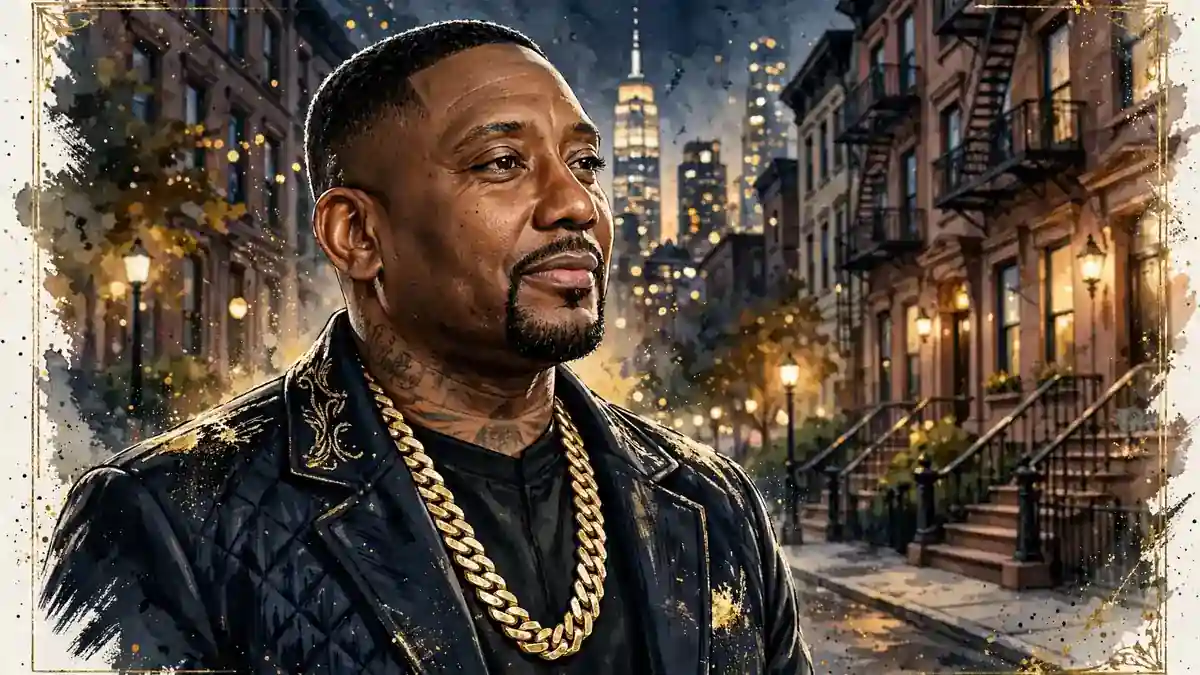
Maino‘s net worth is estimated at $1 million to $3 million as of November 2026. The Brooklyn rapper built that fortune the hard way: a decade in prison, a self-started label, a platinum single with T-Pain, and — seventeen years after his breakout — a second act as one of New York hip-hop’s loudest podcast voices.
Maino: Quick Facts
| Estimated net worth | $2 million (range: $1 million–$3 million) |
|---|---|
| Profession | Rapper, radio personality, podcast host, label owner |
| Nationality | American |
| Born | August 30, 1973 (age 53) |
| Height | 5 ft 9 in (1.75 m) — some profiles list 6 ft 1 in |
| Primary income sources | Music royalties and streaming, live shows, podcasting, Hustle Hard Entertainment, radio and media appearances |
| Active years | 2003–present |
| Last reviewed | November 2026 |
- Early Life and Background
- Education
- Career Journey
- Rise to Fame
- Main Sources of Income
- Salary and Earnings
- Businesses and Investments
- Brand Deals and Sponsorships
- Houses, Cars and Other Assets
- Awards and Achievements
- Net Worth Growth Over the Years
- Social Media Presence
- Personal Life
- Sources & Reporting
- Frequently Asked Questions
Early Life and Background
Jermaine Coleman was born on August 30, 1973, in Brooklyn, New York City, and grew up in the Bedford-Stuyvesant neighborhood — Bed-Stuy — during the crack epidemic years. Both of his parents struggled with drug addiction, and Coleman has spoken openly about raising himself and looking after a younger brother while still barely a teenager. The household offered little structure, and the streets filled the gap. That upbringing, harsh as it was, became the raw material for everything he later wrote: his best-known records are first-person accounts of the same blocks he grew up on, delivered in a raspy voice that sounds like it carries the neighborhood with it.
By his late teens Coleman was deep in street life. In the early 1990s he was involved in a drug-related kidnapping — the robbery of a drug dealer — that ended with a sentence of 5 to 15 years in prison. He served about ten years. It was, by every account including his own, the turning point of his life, though not in the way prison-reform stories usually go. He did not arrive with a plan. He arrived bored, isolated, and facing a decade of empty days.
Inside, he started rapping to pass the time. There was no studio, no beat machine, no audience — he wrote verses in his head, memorizing lines because there was little paper and less privacy. He listened to DJ Clue mixtapes smuggled in, studying the flows of Brooklyn’s finest: the Notorious B.I.G., Jay-Z, Lil’ Kim. The habit that began as a way to survive boredom became a discipline. By the time he walked out in 2003, he had a voice, a point of view, and ten years of material nobody else in rap could claim as lived experience.
That prison stretch explains a lot about Maino’s money story, and why his net worth sits where it does. He lost his entire twenties — the decade when most artists build catalogues, fan bases, and touring businesses — to a cell. He entered the music business at 30, an age when labels already consider rappers past their commercial peak. Everything after 2003 was catch-up, and the fact that he caught up at all is the core of his career. It also explains his spending pattern: he has never been photographed with the car collections or property portfolios that pad other rappers’ balance sheets, and his wealth, such as it is, comes from work done after 30 rather than from a long compounding catalogue.
Brooklyn noticed the homecoming. The borough later made August 16 officially Jermaine “Maino” Coleman Day, a civic recognition that says as much about his community work — visiting young people in detention, speaking at schools — as about his records. Few rappers get a day named after them by their home borough without a string of platinum albums behind them. Maino got one on the strength of a single platinum single and a reputation for showing up.
Education
There is no public record of Maino finishing high school or attending college, and no credible source lists a school, a degree, or formal training of any kind. That is not a gap we can fill with guesswork: the available biographies — including AllMusic and BMI — describe a childhood cut short by family addiction and street life, with no mention of schooling beyond the obvious fact that it ended early. His education, in the sense that matters to his career, happened in prison: ten years of reading, writing, and listening, done without a teacher.
What he learned there shows up in the work. His verses are structured like arguments — setup, evidence, punchline — and his radio and podcast work leans on the same skill: he can hold a room, push back on a guest, and land a point without notes. None of that came from a classroom. It came from a decade of having nothing but time and words.
For readers weighing the numbers, the education gap matters because it frames the business story. Maino did not enter the industry with connections from school or a family network. He built Hustle Hard Entertainment from nothing, negotiated his own way into a Universal deal in 2005 and an Atlantic deal in 2007, and kept the label running as an independent operation for more than twenty years. That is business education earned in the market, and it is the reason his income still flows from more than one stream in 2026.
Career Journey
Maino wasted no time after his release in 2003. Within months he had founded Hustle Hard Entertainment, his own independent label, and started working the New York mixtape circuit — the proving ground where a rapper either earned a street following or disappeared. His first airplay came through Hot 97’s DJ Kay Slay, the gatekeeper of New York street rap at the time, and a run of mixtapes built his name block by block. Real Recognize Real, released in 2005, was the first of what would become thirteen mixtapes, a catalogue that kept him visible through years when albums were scarce.
The mixtape grind paid off in June 2005, when Universal Motown Records offered him a recording contract. It was a major-label deal for a 31-year-old former prisoner with no radio hit — a measure of how loud his street buzz had become. The partnership did not last. His debut album was shelved, the relationship soured, and by 2007 Maino and Universal had split. He has described the split as a lesson in label politics: a debut album can sit on a shelf while the artist’s moment passes, and the artist has no say in it.
The rescue came through T.I., who helped connect Maino with Atlantic Records. On August 28, 2007, Maino signed himself and the Hustle Hard imprint to Atlantic. The deal mattered for two reasons. First, it put a major label’s marketing and radio muscle behind him. Second, it kept Hustle Hard alive as an imprint, so Maino owned a piece of the structure instead of signing away everything as a hired artist. That ownership instinct — keep the label, keep control — runs through every business decision he has made since.
His commercial debut single, “Hi Hater,” arrived in April 2008. Built on a sample of Brooklyn hip-hop pioneer Jimmy Spicer, it was a taunt aimed at doubters, and it worked as a street anthem first and a radio record second. BMI’s profile of Maino notes that it peaked at No. 8 on the Bubbling Under Hot 100 and No. 16 on Billboard’s Hot Rap Tracks, charting on three Billboard charts in all. The official remix stacked the deck further: T.I., Swizz Beatz, Plies, Jadakiss, and Fabolous all jumped on it. A remix with that roster is a statement — the industry’s established names were vouching for the new guy from Bed-Stuy.
The debut album, If Tomorrow Comes…, followed in 2009. Its second single, “All the Above” featuring T-Pain, did what “Hi Hater” had only promised: it reached No. 39 on the Billboard Hot 100, and the Recording Industry Association of America certified it platinum. The album itself entered the Billboard 200 at No. 25. For a debut from a 35-year-old with a prison record and a shelved album behind him, that was a genuine commercial result — not a blockbuster, but a real charting album with a platinum single that still earns royalties today.
The years after the debut were slower. An EP, Unstoppable, arrived exclusively on iTunes on February 2, 2010, with four new recordings. Then came the long build to a second album. On July 5, 2011, Maino announced The Day After Tomorrow, still pushed by Atlantic but distributed by E1 Music. It was released on February 28, 2012, after a delay from its original October 2011 date, with guest appearances from T.I., Meek Mill, Roscoe Dash, and Lloyd Banks. The lead single, “Let It Fly,” carried the campaign, but the album debuted at No. 94 on the Billboard 200 — a sharp fall from the debut’s No. 25, and a sign that major-label momentum had cooled.
Through Hustle Hard, Maino also formed the rap group the Black Flag Mafia — himself, Push!, Lucky Don, Twigg Martin, and Hustle Hard Mouse — and released their first mixtape, The Mafia, on October 9, 2012. A digital EP, King of Brooklyn, followed on February 4, 2014. From there, the major-label chapter effectively ended, and the independent chapter began: more mixtapes, more EPs, and a steady stream of solo tapes through the rest of the decade, including the first three volumes of his K.O.B. (King of Brooklyn) series and projects with the blunt, self-explanatory titles of a working independent rapper — Party & Pain, Jermaine, On Everything I Love.
The 2020s brought collaborations that kept his name in circulation. He teamed with Uncle Murda on Yellow Tape: King Kong & Godzilla in 2016 and with Jim Jones on The Lobby Boyz in 2022 — a full album with a fellow New York veteran, and a pairing that would matter again three years later. He released Die a Legend, then K.O.B. 4 in 2023, and two seven-track EPs in 2024, This Life Forever and Mainovation. A 2024 single, “What You Doin’ Wit Dat,” and a 2025 single, “Shaderoom,” showed he was still recording new material more than twenty years after his release.
Rise to Fame
Maino’s rise did not follow the usual script. There was no teenage discovery, no viral moment, no talent-show break. His fame arrived in his mid-thirties, built on a story that was impossible to manufacture: ten years in prison, a self-built label, and a voice that sounded like it had earned every line. The mixtape circuit made him a name in New York first, and “Hi Hater” made him a name everywhere else. The phrase itself entered the slang of the moment — a taunt you could aim at anyone doubting you — and that is the kind of cultural penetration money cannot buy and marketing cannot plan.
“All the Above” was the record that converted street fame into a measurable commercial asset. A No. 39 Hot 100 peak and a platinum certification from the RIAA gave Maino something most mixtape rappers never get: a royalty-bearing hit with a long tail. Platinum singles keep paying — streaming, radio, licensing, sync — long after the chart run ends. Seventeen years on, “All the Above” remains his most valuable single asset, and the reason his catalogue still generates income in 2026.
Television added a second layer of fame. Maino appeared on season 2 of Love & Hip Hop: New York, the VH1 reality series, where his on-screen relationship with singer Olivia Longott became a storyline. The appearance put him in front of an audience that had never bought a mixtape, and it kept his name in entertainment coverage between music releases. Reality TV is a mixed blessing for a rapper’s credibility, but as a fame engine it works — and Maino used it without letting it define him.
The third act of his fame is happening now, and it may be the most durable. In September 2025, Maino joined Jim Jones, Fabolous, and Dave East to launch Let’s Rap About It, a YouTube podcast built around unfiltered New York hip-hop conversation and distributed through Playmaker HQ on Apple Music, YouTube, and Spotify. The show hit the top 10 in Apple Music’s Music Commentary category, and its hosts’ public feuds — with 50 Cent and DJ Akademiks among them — have kept it in the headlines through late 2025 and into 2026. Maino himself told TMZ in December 2025 that the back-and-forth with 50 Cent had been good for business: “Numbers is up, podcast is up, engagement is up.” A rapper who was 52 years old and twenty-two years removed from his debut album had found a new audience by talking, not rapping — and the podcast now sits alongside music as a real income stream.
Radio has run alongside all of it. Maino has long been described as a radio personality as well as a rapper, and he has guest-hosted on New York radio, co-hosted with Angela Yee, and fronted his own show, New Maino. The voice that once wrote verses in a cell turned out to be a broadcasting voice too — direct, funny, unafraid of an argument. That skill is what makes the podcast work, and it is also what keeps him employable in media long after the major-label album cycle ended.
Main Sources of Income
Maino’s income has never come from one place, and that spread is the reason his finances held together after the major-label years ended. Music royalties sit at the center: album sales from two studio albums, a platinum single, thirteen mixtapes, and a streaming catalogue that still moves every month. “All the Above” is the anchor — a platinum record with T-Pain that generates streaming and radio royalties year after year — and “Hi Hater” still earns as a catalogue staple. His 2024 EPs, This Life Forever and Mainovation, plus the 2025 single “Shaderoom,” add fresh streaming revenue on top of the older catalogue.
Live performance is the second stream. Maino has toured and played shows steadily since 2003, from club dates to festival slots to the kind of legacy hip-hop bills where a 2008 hit still fills a room. Exact booking fees are not public, and we will not invent one, but a veteran New York rapper with a platinum record and a current podcast audience commands a real fee on the nostalgia and club circuit. Shows also sell merchandise, and Maino’s Hustle Hard brand has sold gear to his core audience for years.
Podcasting and media work are the fastest-growing stream. Let’s Rap About It, launched in September 2025 with Jim Jones, Fabolous, and Dave East, is distributed through Playmaker HQ and monetized across YouTube, Apple Music, and Spotify — advertising, sponsorship, and platform revenue, split four ways. The show’s top-10 Apple Music charting and its constant presence in hip-hop headlines give it bargaining power with advertisers that a solo music catalogue cannot match. Maino’s earlier radio work, including guest-hosting and his New Maino show, paid appearance and hosting fees and built the on-air reputation the podcast now cashes in.
Hustle Hard Entertainment is the fourth stream, and the one that says most about how Maino thinks about money. He has owned the label since 2003. It released his own music, the Black Flag Mafia project, and other artists’ work, which means Maino earns as an artist and as a label owner taking a share of other people’s releases. Label ownership is also why his Atlantic deal was structured the way it was: he signed the imprint, himself included. Owning the imprint is the difference between a paycheck and a business.
Television added a fifth stream in the 2010s. His season 2 run on Love & Hip Hop: New York paid a reality-TV appearance fee and, just as valuably, raised his booking fee and his profile with brands. He has also earned from interviews and appearances — the Drink Champs episode in January 2026, the Apt. 5H conversation about his unaired Suge Knight interview, and a steady run of podcast guest spots in 2025 and 2026 all carry appearance fees or, at minimum, keep his name in front of audiences that buy tickets and stream records.
What Maino does not have is the kind of income that inflates other rappers’ net worth figures: no fashion line, no liquor brand, no tech investment, no real-estate empire on the public record. His money comes from the work itself — records, shows, talk — and that is why the honest estimate is $1 million to $3 million rather than the $10 million some pages claim. A $10 million net worth would require assets or deals that no reporting supports, and we treat that figure as a debunked outlier.

Salary and Earnings
Maino has never had a salary in the conventional sense. Rappers are not paid a wage; they are paid in advances, royalties, show guarantees, and fees, and Maino’s career has run on all four. The honest way to describe his earnings is to separate the three eras of his career, because the money looked very different in each one.
The major-label era, 2007 to 2012, was the highest-earning stretch. The Atlantic deal in 2007 came with an advance — the size was never reported, and we will not guess at it — and If Tomorrow Comes… generated album sales, single sales, and radio royalties on the back of a No. 25 Billboard 200 debut and a platinum single. Platinum certification means at least one million units of “All the Above” were sold or streamed to the RIAA’s standard, and the royalties from a million-unit single, split with T-Pain, the producers, and the label, still amount to real money. The Day After Tomorrow, debuting at No. 94, earned far less, and its weaker sales are part of why the major-label chapter closed.
The independent era, 2012 to 2025, paid less per release but kept more of it in Maino’s pocket. Without a major label taking its share, streaming revenue, mixtape sales, and show guarantees flowed through Hustle Hard, which Maino owns. Thirteen mixtapes and a run of EPs do not produce blockbuster numbers individually, but a catalogue of that size, streamed steadily, produces a reliable monthly payout. The Lobby Boyz album with Jim Jones in 2022 and the K.O.B. series kept the catalogue growing, and the 2024 EPs added two more revenue-generating releases.
The media era, 2025 to now, is the newest and potentially the most stable. Let’s Rap About It pays through Playmaker HQ’s distribution deal, and a top-10 Apple Music podcast with four established hosts is a sellable advertising product. Maino’s own comment to TMZ — “numbers is up, podcast is up, engagement is up” — is the clearest public signal that the show is paying. Podcast income is steadier than music income: it arrives monthly, it does not depend on a hit record, and it grows with the audience rather than fading with it.
One outlet, CineNetWorth, estimated Maino’s annual income at roughly $500,000 from music, endorsements, and his podcast, but that figure is presented without a source and we treat it as an unverified claim rather than a fact. What the record does support is this: Maino earns a working musician’s income, in the low-to-mid six figures a year, from a mix of royalties, shows, and media — enough to sustain a $1 million to $3 million net worth over two decades, and nowhere near enough to support the $10 million figure that circulates on low-quality pages.
For comparison, the gap between Maino and his peers is instructive. Jay-Z, whose tapes Maino studied in prison, built a billion-dollar fortune on business ventures far beyond music. Swizz Beatz, who appeared on the “Hi Hater” remix, built wealth as a producer with a catalogue of hits for other artists. Maino’s career was narrower: one platinum single, two major-label albums, and a long independent grind. The money matches the shape of the career, and that shape is the honest story.
Businesses and Investments
Hustle Hard Entertainment is Maino’s business, and it has been since the day he left prison in 2003. He founded it before he had a record deal, a radio hit, or an audience, and it has released almost everything he has ever made: the early mixtapes, both studio albums through its imprint deals, the Black Flag Mafia project, the K.O.B. series, and the 2024 EPs. A label that survives twenty-three years under one owner, through a major-label deal and back to independence, is a business achievement in its own right. Most rapper-founded labels fold within five years. Hustle Hard is still releasing music in 2026.
The label’s value is hard to put a number on, and we will not try. It is a private company with no public filings, no reported sale, and no outside valuation. What can be said is that it gives Maino two things a hired artist does not have: a share of other artists’ releases on the imprint, and control of his own masters and release schedule. Control of the masters matters most — it means the royalties from “All the Above” and “Hi Hater” flow through a company he owns, not one that owns him.
Beyond the label, there is little on the public record. Maino has not announced a fashion line, a spirits brand, a restaurant, or a tech investment, and no property records or business filings tie him to a portfolio of companies. That absence is itself information: rappers who build $10 million fortunes almost always do it with a business outside music, and Maino’s public record shows no such business. His investments, as far as anyone can verify, are his catalogue, his label, and his name — and he has reinvested in all three, most recently by putting his name behind a podcast that could out-earn his music.
The podcast is, in business terms, the smartest move of his later career. Let’s Rap About It turns his reputation into a recurring revenue product with four hosts sharing the workload and the audience. It also gives him a strong negotiating position: when 50 Cent said he wanted to buy half the show, Maino answered that he was the person to see about that. Whether or not a sale ever happens, the fact that a buyer was publicly interested tells you the show has a value the market can see.
Brand Deals and Sponsorships
Maino has never been a brand-deal rapper in the way sneaker and liquor endorsements define some careers, and the record reflects that. No major endorsement deal — no sneaker contract, no spirits partnership, no fashion campaign — is documented in reputable reporting about him. His brand value has always been authenticity and Brooklyn credibility, and those qualities sell records and tickets more readily than they sell sneakers.
What he does have is the modern version of brand work: podcast sponsorship and platform distribution. Let’s Rap About It runs through Playmaker HQ, a sports and culture media company that sells advertising against its shows, and the podcast’s top-10 Apple Music ranking makes it an attractive buy for advertisers targeting hip-hop audiences. That is sponsorship income, even if it arrives as a revenue share rather than a logo on a jacket.
He has also monetized his name through media appearances that carry fees — radio guest-hosting, the New Maino show, reality television — and through the Hustle Hard brand itself, which has sold merchandise to his core audience for years. None of these is a headline endorsement deal, and none of them needs to be. Added together, they form a steady layer of income on top of music royalties, and they explain why his earnings have held up in years when he released no album at all.

Houses, Cars and Other Assets
Maino owns property in New York, including a home in Brooklyn, according to CineNetWorth’s 2025 profile — but the report names no address, no purchase price, and no public record, so we treat the claim as plausible and unconfirmed rather than as a documented asset. No property record, mortgage filing, or listing ties a specific Brooklyn home to Jermaine Coleman in the sources we checked, and we will not invent one. What is safe to say is that he has lived in Brooklyn throughout his career and has spoken about investing in the borough, including the community work that earned him Maino Day.
Cars are the same story. Unlike rappers who build their public image around vehicle collections, Maino has no documented fleet, no viral garage tour, and no reported luxury car purchases. TheMost10’s claim that his assets include “luxury cars” appears in a table with no source, alongside the unsupported $10 million figure, and we do not repeat it as fact. His most valuable assets are not things you can photograph: the master rights and publishing on his catalogue, the platinum certification on “All the Above,” and the Hustle Hard label itself.
That is a useful corrective to how net worth gets discussed in this niche. A rapper’s wealth is often presented as a pile of visible things — houses, cars, jewelry — but for an independent artist like Maino, the real assets are invisible and contractual: royalty streams, a label, a catalogue of thirteen mixtapes and two albums, and a podcast with a distribution deal. Those assets are worth $1 million to $3 million in total, on the evidence available. They are not worth $10 million, and the pages that say otherwise are counting things that do not exist.
Awards and Achievements
Maino has no Grammy nomination and no major industry award on his record, and the honest version of his achievements is not a trophy shelf — it is a set of chart and civic milestones that most rappers never reach. The headline achievement is the RIAA platinum certification for “All the Above” featuring T-Pain, a million-unit single that peaked at No. 39 on the Billboard Hot 100. Platinum records are the currency of this business, and one platinum single is more than most artists who release music for twenty years ever earn.
The chart record around it is solid: “Hi Hater” charted on three Billboard charts, peaking at No. 8 on the Bubbling Under Hot 100 and No. 16 on Hot Rap Tracks, per BMI. If Tomorrow Comes… entered the Billboard 200 at No. 25 in 2009. The Day After Tomorrow reached No. 94 in 2012. Those are not blockbuster numbers, but they are real chart positions earned without a teenage fan base or a viral moment — earned, instead, by a 35-year-old former prisoner with a mixtape following.
The civic achievement is Maino Day. Brooklyn’s official recognition of August 16 as Jermaine “Maino” Coleman Day is an honor most platinum-selling rappers never receive, and it was given for community work as much as for music — his visits to young people in detention, including Rikers Island, and his public advocacy for incarcerated youth. The podcast achievement is the most recent: Let’s Rap About It reached the top 10 in Apple Music’s Music Commentary category, a chart position that puts a show launched by four veterans in their forties and fifties ahead of hundreds of younger competitors.
Longevity is the achievement that ties the rest together. Maino has released music in every decade since his release — mixtapes in the 2000s, albums in 2009 and 2012, the K.O.B. series through the late 2010s, EPs in 2024, a single in 2025 — and he is still a working media personality in 2026. Twenty-three years after leaving prison, he has not faded, retired, or become a nostalgia act. He changed formats instead, from mixtapes to albums to podcasts, and the audience followed.
Net Worth Growth Over the Years
Maino’s net worth has grown slowly and unevenly, which is what you would expect from a career that started at 30 with no catalogue and no label advance. The table below uses the figures reported by the outlets that track him, with our notes on what drove each step. These are estimates, not audited balances, and the ranges reflect the disagreement between sources.
| Year | Estimated net worth | What moved it |
|---|---|---|
| 2003 | Close to zero | Released from prison after ten years; founded Hustle Hard with no capital and no catalogue |
| 2005 | Under $500,000 | Mixtape buzz and a Universal Motown deal; debut album shelved, limiting income |
| 2009 | About $1 million | Atlantic deal, “Hi Hater,” and a No. 25 Billboard 200 debut; “All the Above” goes platinum |
| 2012 | About $1 million | Second album debuts at No. 94; major-label momentum cools, independent income begins |
| 2016 | $1 million–$2 million | Steady mixtape and catalogue royalties; Yellow Tape collaboration with Uncle Murda |
| 2021 | About $2 million | Catalogue streaming growth; Wealthy Persons and CelebsMoney both report $2 million |
| 2024 | $2 million–$3 million | Two new EPs, continued streaming, radio and media fees; SuperstarsBiography and CineNetWorth report $3 million |
| 2026 | $1 million–$3 million | Podcast income from Let’s Rap About It offsets slower music releases; range reflects source disagreement |
The pattern is flat growth with a late lift, not a steep climb. The platinum single in 2009 set the floor at about $1 million. The independent years added catalogue value slowly. The podcast years, 2025 and 2026, are the first time since 2009 that a new income stream has arrived at scale — and they are the reason the top of the range has moved to $3 million in the most recent estimates. If the podcast keeps growing, the range should tighten upward. If it fades, the floor is the catalogue, which will keep paying for years.
One figure deserves a specific warning. TheMost10 publishes a table claiming Maino’s net worth reached $10 million in 2026, with $8.5 million in 2023 and $9 million in 2024, and attributes the growth to “real estate investments” and “business ventures.” No property record, business filing, deal announcement, or reputable outlet supports any of it. A $10 million net worth would require roughly five times the documented earning power of his catalogue and career, and we count the figure as unsupported. Readers who see it elsewhere should treat it as a content-farm number, not a fact.
Social Media Presence
Maino’s social media presence is built around his Hustle Hard identity — his handles use the Hustle Hard name across Instagram, X, and YouTube — and it serves a different purpose than a younger artist’s feed. He does not post to go viral. He posts to promote music, to push podcast episodes, and to argue, in public, with the people his podcast argues with. The feuds with 50 Cent and DJ Akademiks that filled hip-hop headlines in late 2025 played out partly on social media, and the engagement they generated fed directly back into the podcast’s numbers.
His streaming presence is modest by superstar standards and healthy by independent-artist standards. His Spotify artist page carries his full catalogue — the two albums, the EPs, the singles, and the collaborations — and his monthly listeners sit in the hundreds of thousands rather than the millions. That is the honest scale of a catalogue artist: the numbers are not spectacular, but they are steady, and steady is what pays a mortgage. His YouTube presence is anchored by the Let’s Rap About It channel, where full podcast episodes and clips reach the show’s audience, and by his music videos, including the “All the Above” video that still draws views seventeen years after release.
The social media lesson of Maino’s career is that reach and revenue are not the same thing. He will never have the follower counts of the artists he came up alongside, but his audience is concentrated, loyal, and New York-centered — the kind of audience that buys show tickets, streams a new EP on release day, and watches a two-hour podcast. For an artist at his stage, that audience is worth more than a larger, thinner one.
Personal Life
Maino has never married, and no publicly confirmed spouse exists. That much is consistent across every biography that covers him. Beyond that, the record is thinner and more contradictory than readers might expect, and the contradictions are worth naming. Several biography sites list a relationship with Maggie Carrie, a model and singer, and report that the pair later split — one page notes that Carrie herself announced the breakup after their relationship was featured on Love & Hip Hop: New York. Other pages list his marital status as “in a relationship” with no named partner, and still others say he is single. We report what is verifiable: he is not married, he was previously in a public relationship with Maggie Carrie that has ended, and he keeps his current private life private.
He has no publicly confirmed children. Some biography pages list “none” under children; others leave the field blank. No interview, announcement, or reputable report names a child of Jermaine Coleman, and the Drink Champs introduction in January 2026 that described him as “a father” and “a soon-to-be husband” is the kind of podcast hype that should not be treated as a biographical fact without confirmation. Until Maino confirms it himself, we list children as none publicly confirmed.
His earlier public relationships include a short-lived relationship with Keyshia Cole around 2009 and a storyline relationship with Olivia Longott during Love & Hip Hop: New York season 2. Both were brief and both were, at least in part, television. What has lasted is his connection to Brooklyn: he still lives and works there, he invests his time in the borough’s young people, and the borough returned the favor with a day in his name.
Maino’s legal history is part of his public record and he has never hidden it. The ten-year prison sentence for a drug-related kidnapping in the early 1990s is the founding fact of his career, and he discusses it openly in interviews. Two later incidents ended in his favor: in October 2014, an assault allegation by performer Mellanie Monroe was disproved by video evidence and Maino was cleared of all charges; and in the 2016 Irving Plaza shooting, he was cleared of any responsibility, with an NYPD chief saying so publicly. Both clearances matter to the money story, because a conviction in either case would have ended the career — and the income — outright.
Sources & Reporting
Celebrity Net Worth — the $1 million estimate for Maino, updated January 22, 2025; the low end of our range and the most conservative published figure.
TheCityCeleb — the $2 million estimate, plus biographical detail on the Breakfast Club guest appearances, the 2024 single “What You Doin’ Wit Dat,” and the disputed height listing of 1.75 m.
CineNetWorth — the $3 million estimate for 2025 and the Brooklyn property claim, plus the unverified $500,000 annual income figure we flag rather than repeat as fact.
Billboard — chart positions for “All the Above” (No. 39 Hot 100), “Hi Hater,” and both studio albums (No. 25 and No. 94 on the Billboard 200), as reported in the chart record.
AllMusic — career biography, the Bed-Stuy upbringing, the prison years, the Atlantic signing, and the full discography through the 2024 EPs.
BMI — the 2009 “Maino Spins Grit into Gold” profile: the 10-year sentence, the 2003 release, the Hustle Hard founding, and the “Hi Hater” chart peaks.
Wikipedia — birth date, label history, discography, the Black Flag Mafia and Lobby Boyz projects, and the 2014 and 2016 legal clearances.
HotNewHipHop — the September 2025 launch of Let’s Rap About It, the 50 Cent and DJ Akademiks feuds, and Maino’s December 2025 TMZ comments on the podcast’s growth.
Reporting window: career reporting from BMI (2009) through HotNewHipHop and podcast coverage in late 2025 and 2026; net worth estimates checked November 2026. Where sources disagreed — most importantly on the net worth figure itself and on Maino’s height — we published the range and named who says what, rather than picking the most flattering number.
Frequently Asked Questions
What is Maino’s net worth in 2026?
Maino’s net worth is estimated at $1 million to $3 million as of November 2026, anchored on $2 million. Celebrity Net Worth lists $1 million, several biography outlets list $2 million, and CineNetWorth lists around $3 million for 2025. The $10 million figure on some low-quality pages is unsupported by any reporting and should be ignored.
What is Maino’s real name?
Maino’s real name is Jermaine Coleman. He was born Jermaine Coleman on August 30, 1973, in Brooklyn, New York City, and performs under the stage name Maino.
How old is Maino?
Maino is 53 years old as of November 2026. He was born on August 30, 1973, which makes him one of the older working rappers in New York hip-hop — and, since September 2025, one of its most visible podcast hosts.
Why did Maino go to prison?
In the early 1990s, Maino was involved in a drug-related kidnapping — the robbery of a drug dealer — and received a sentence of 5 to 15 years. He served about ten years and was released in 2003. He began rapping in prison to pass the time, and founded his label, Hustle Hard Entertainment, within months of his release.
What is Maino’s biggest song?
“All the Above” featuring T-Pain is Maino’s biggest song. Released in 2009, it reached No. 39 on the Billboard Hot 100 and was certified platinum by the RIAA. His breakout single, “Hi Hater” (2008), charted on three Billboard charts and gave him his first national attention.
How tall is Maino?
Maino’s height is reported as 5 ft 9 in (1.75 m) by most biography sites, though some profiles list him at 6 ft 1 in. The 5 ft 9 in figure is the more widely repeated one, and we list it with the dispute noted.
Is Maino married?
No, Maino has never married and has no publicly confirmed spouse. He was previously in a public relationship with model and singer Maggie Carrie, which has ended, and he keeps his current private life out of the press. He has no publicly confirmed children.
Is Maino still making music?
Yes. Maino released two seven-track EPs in 2024, This Life Forever and Mainovation, and the single “Shaderoom” in 2025. Since September 2025 he has also co-hosted the podcast Let’s Rap About It with Jim Jones, Fabolous, and Dave East, which reached the top 10 in Apple Music’s Music Commentary category.
Final Thoughts
Maino’s net worth — $1 million to $3 million, anchored on $2 million — is the honest size of a career that started a decade late and was built without a safety net. He lost his twenties to prison, lost his first major-label album to a shelf, and still ended up with a platinum single, a label that has lasted twenty-three years, and a podcast that put him back at the center of New York hip-hop at 53. That is not a fortune by the standards of the billionaires he once studied on smuggled mixtapes. It is a working fortune, earned twice over — once in the studio, once in the booth — and it is still growing, because the podcast pays every month and the catalogue pays every month too. The pages that claim $10 million are selling a fantasy. The real story is better: a man who started with nothing, twice, and built something that lasts.
Published on November 13, 2026. Last reviewed November 2026. Found an error? See our corrections policy.