
Tom Petty‘s net worth is estimated at $95 million as of November 2026. That is the figure he carried at his death on October 2, 2017 — the widely reported estimate of a fortune built across four decades of hit records, sold-out tours and a song catalog that still earns. His final tour alone grossed $64.7 million, his Malibu estate sold for $11.2 million in October 2025, and his family spent two years in court before settling control of the catalog in December 2019. No official valuation of the estate has ever been published, so the number below is the best-documented estimate of what he was worth when he died — and the record of what has happened to that wealth since.
Tom Petty: Quick Facts
| Estimated net worth | $95 million at death (October 2017) (range: $90 million – $100 million; estate’s current value not publicly disclosed) |
|---|---|
| Profession | Singer, songwriter, guitarist, bandleader |
| Nationality | American |
| Born | October 20, 1950 (age 66 at death) |
| Height | 5 feet 9 inches (1.75 m) |
| Primary income sources | Record sales, touring, songwriting royalties, publishing catalog |
| Active years | 1970–2017 |
| Last reviewed | November 2026 |
- Early Life and Background
- Education
- Career Journey
- Rise to Fame
- Main Sources of Income
- Salary and Earnings
- Businesses and Investments
- Brand Deals and Sponsorships
- Houses, Cars and Other Assets
- Awards and Achievements
- Net Worth Growth Over the Years
- Social Media Presence
- Personal Life
- Sources & Reporting
- Frequently Asked Questions
Early Life and Background
Thomas Earl Petty was born on October 20, 1950, in Gainesville, Florida, the first of two sons of Kitty Petty, who worked in a local tax office, and Earl Petty, a traveling salesman who also worked in a grocery store. His younger brother Bruce was seven years his junior. The household was strict, and Petty later spoke openly about a father who was often physically and verbally abusive — a childhood he described as the reason he left home as soon as music gave him a way out.
Two moments in Gainesville set the course. In the summer of 1961, when Petty was ten, his aunt took him to meet Elvis Presley, who was in nearby Ocala filming Follow That Dream. Petty watched the singer trade jokes with the crew and decided on the spot that he wanted that life. Three years later, he watched the Beatles on The Ed Sullivan Show and the ambition turned into a plan: he wanted a band, and he wanted to write the songs.
He got his first guitar not long after, and by his mid-teens he was playing in local groups around Gainesville. The town’s small club circuit gave him something no classroom did — a stage, a crowd, and a reason to practice. He joined a band called the Epics, which became Mudcrutch in 1970, and the lineup that would define his career began to assemble around him: guitarist Mike Campbell and keyboardist Benmont Tench were both Gainesville musicians Petty had known for years. The three of them would stay together, with interruptions, for the rest of his life.
Education
Petty attended Gainesville High School and left at 17 to play music full time. He never went to college, and he never hid it. The decision was practical rather than rebellious: Mudcrutch was gigging, the band needed him, and the classroom had nothing he wanted. What he learned about the music business came the hard way instead — from bad early contracts, a label bankruptcy fight, and a decade of touring. That education shows up in the money story of his life more than any diploma would have: the man who filed for bankruptcy to escape a record deal he did not agree to, and who later fought his own label over a one-dollar album price increase, understood contracts because he had been burned by them early.
Career Journey
Mudcrutch moved to Los Angeles in 1974 and signed with Shelter Records, the label run by Leon Russell and Denny Cordell. The band’s first single, “Depot Street,” went nowhere, and Shelter dropped them in 1975. The band split. Shelter kept Petty as a solo artist, and he used the opening to rebuild: Campbell and Tench came back, bassist Ron Blair and drummer Stan Lynch joined, and in 1976 the group became Tom Petty and the Heartbreakers.
The self-titled debut arrived in November 1976 on Shelter, with “Breakdown” and “American Girl” on it. American radio ignored it at first. Britain did not — the band toured the UK, found an audience, and “Breakdown” eventually cracked the US Top 40 in 1978 on the strength of the touring. The second album, You’re Gonna Get It!, reached the US Top 40 in 1978, and the third, Damn the Torpedoes (1979), did what the first two could not: it went platinum fast, sold close to two million copies, and put “Don’t Do Me Like That,” “Refugee” and “Here Comes My Girl” on American radio for good.
The success arrived in the middle of a legal mess. Shelter Records was sold to MCA in 1979, and Petty refused to be transferred to a label he had not chosen. He filed for bankruptcy — a deliberate legal move to break the contract — and the fight ended with him signing to MCA’s Backstreet Records on his own terms. It was the first of several times he would use the law, rather than just the charts, to protect his income. In 1981 he fought MCA again, this time over the list price of Hard Promises: the label wanted $9.98, a dollar above the standard price of the day, and Petty refused to let his fans pay it. The album came out at $8.98.
The 1980s kept the band on the road and on the radio: Hard Promises (1981), Long After Dark (1982), Southern Accents (1985) and Let Me Up (I’ve Had Enough) (1987). In 1986 the Heartbreakers toured as Bob Dylan’s backing band, a run that put Petty on stage nightly with the songwriter he had idolized since the Ed Sullivan broadcast. Then came the two projects that changed his earning power for good: the Traveling Wilburys and his first true solo album.
The Wilburys began as a casual session in 1988 — Petty, Dylan, George Harrison, Roy Orbison and Jeff Lynne, recording under joke aliases (Petty was “Charlie T. Wilbury Jr.”). Traveling Wilburys Vol. 1 became a multi-platinum hit on the strength of “Handle with Care” and “End of the Line.” Lynne then produced Petty’s Full Moon Fever (1989), the solo record that delivered “Free Fallin’,” “I Won’t Back Down” and “Runnin’ Down a Dream” and sold more than five million copies in the United States alone. A second Wilburys album followed in 1990, and Into the Great Wide Open (1991) gave the Heartbreakers “Learning to Fly.”
Petty moved to Warner Bros. in the early 1990s, and Wildflowers (1994), produced by Rick Rubin, became his most acclaimed solo record — more than three million US copies, with “You Don’t Know How It Feels” winning a Grammy. The 1993 Greatest Hits compilation quietly became his biggest seller of all, passing ten million US copies and earning diamond certification from the RIAA. The band kept recording into the 2000s and 2010s — Echo (1999), The Last DJ (2002), Mojo (2010) — and Hypnotic Eye (2014) gave the Heartbreakers their first-ever No. 1 debut on the Billboard 200, 38 years into their career.
He also worked on screen. Petty played the villain in the 1987 film Made in Heaven, appeared in Kevin Costner’s The Postman (1997), and voiced the character Lucky on the animated series King of the Hill from 2004 to 2009. From 2005 he hosted Tom Petty’s Buried Treasure, a weekly radio show on SiriusXM built around his own record collection.
Rise to Fame
Petty’s rise was slower than the overnight stories suggest, and that is part of why the money lasted. The debut album took two years to find its audience, and the band earned its following one tour at a time rather than on a single hit. Damn the Torpedoes in 1979 was the commercial break — a platinum album with three singles in heavy rotation — but the fame that paid best came a decade later, when Full Moon Fever turned him from a rock-radio fixture into a songwriter whose songs every American knew by heart. “Free Fallin'” became the kind of record that never stops earning: radio play, film placements, covers, streaming.
The 2002 induction into the Rock and Roll Hall of Fame, in the band’s first year of eligibility, sealed the legacy status. The Super Bowl XLII halftime show in February 2008 put him in front of the largest television audience of his life — the NFL does not pay halftime performers, so the value was exposure rather than a fee, and it showed in the catalog: his songs spiked on the charts the week after. By the 2010s the Heartbreakers were a heritage act that could still fill arenas and stadiums, and the 40th anniversary tour of 2017 was booked as a victory lap. It became a farewell instead.
Main Sources of Income
Four streams carried the $95 million, and they stayed in roughly the same order for forty years: touring, record sales, songwriting royalties, and the publishing catalog. Petty never built a business empire outside music — no restaurant chain, no clothing line, no tequila brand — so the fortune is unusually clean to trace. It is a musician’s fortune, earned in the places musicians actually earn.
Touring came first. Pollstar, the concert-industry trade publication, tracked the Heartbreakers from 1985 onward: 6.5 million tickets sold in that window, a career touring gross of $366.4 million in actual dollars — $469.4 million adjusted to 2017 dollars. The band’s best year on the road before the end was 1995, when it grossed $27.5 million, worth about $44 million in 2017 money. The final tour beat it: the 40th anniversary run grossed $64.7 million across 2017, ranking 20th among worldwide tours that year, with an average ticket price of $93.29 and an average of 18,242 tickets a night. Gross is not take-home — promoters, venues, crew and band salaries all come out first — but across four decades of near-constant touring, the road was the largest single contributor to his wealth.
Record sales came second. Petty sold more than 80 million records worldwide, solo and with the Heartbreakers, according to uDiscover Music and the band’s own label history. The Greatest Hits compilation alone passed ten million US copies. Full Moon Fever passed five million in the US; Wildflowers passed three million; Damn the Torpedoes sold close to two million. The Traveling Wilburys’ first album added several million more. Those are RIAA-certified numbers, not estimates, and they paid twice: once in royalties at the time, and again every time a new format or a new generation rediscovered the songs.
Songwriting royalties came third, and they never stopped. Petty wrote or co-wrote nearly everything he recorded, which meant he collected the songwriter’s share as well as the performer’s. “Free Fallin’,” “American Girl,” “Refugee,” “Learning to Fly,” “I Won’t Back Down” and “Mary Jane’s Last Dance” are among the most-licensed rock songs in American film and television, and each placement pays. The catalog’s durability is the reason the estate could sign a new worldwide publishing administration deal in 2024, seven years after his death — the songs were still earning enough to be worth fighting over.
The catalog itself is the fourth stream, and the one that keeps growing. The estate did not sell the catalog; it signed an administration deal with Warner Chappell Music in July 2024 covering the vast majority of songs Petty wrote, including his Heartbreakers and solo work, his Mudcrutch songs and his Wilburys contributions. The terms were not disclosed. Billboard confirmed one telling detail: the deal does not include “American Girl” or the band’s first album. Before Warner Chappell, the catalog was administered by Wixen Music Publishing, which had gone after an Arizona politician for using “I Won’t Back Down” without permission.
Salary and Earnings
Petty never drew a salary in the conventional sense, so the honest way to read his earnings is tour by tour and album by album. The numbers below are grosses and certified sales — the money the work generated — not his personal take-home, which was always smaller after the band, the crew, the label and the tax bill.
| Year / project | Figure | What it means |
|---|---|---|
| 1979 — Damn the Torpedoes | Close to 2 million copies | Breakthrough album; first platinum run |
| 1989 — Full Moon Fever | 5 million+ US copies | Biggest solo album; three hit singles |
| 1993 — Greatest Hits | 10 million+ US copies | Diamond certification; his best seller |
| 1994 — Wildflowers | 3 million+ US copies | Grammy-winning solo record |
| 1995 tour | $27.5 million gross | Best touring year to that point ($44M in 2017 dollars) |
| 2017 farewell tour | $64.7 million gross | 53 shows; 693,192 tickets; $93.29 average ticket |
| Career touring, 1985–2017 | $366.4 million gross | 6.5 million tickets; $469.4M in 2017 dollars |
| Career record sales | 80 million+ worldwide | 13 Heartbreakers albums, 3 solo albums, Wilburys |
One figure competitors routinely get wrong is the idea that Petty was paid for the Super Bowl. He was not — the NFL does not pay halftime acts, and the value of the 2008 show was the surge in catalog sales and streams that followed. Another is the treatment of tour grosses as personal income: on the 2017 tour, the $64.7 million gross was split across a 53-show production with a full band, crew, staging and promoters before Petty’s share was calculated. The $95 million net worth already reflects those deductions; it is the residue of forty years of grosses, not a sum of them.
Businesses and Investments
Petty’s business life was the music business, and he ran it like a man who had been burned early. The 1979 bankruptcy filing that freed him from the Shelter-to-MCA transfer was not a sign of financial trouble — it was a tactic, and it worked. The $8.98 price fight over Hard Promises in 1981 was the same instinct: he treated the fan’s wallet as part of the deal, and he was willing to fight his own label in public to protect it. Both episodes cost him short-term goodwill with executives and earned him long-term control of his career.
He never diversified the way other rock stars of his generation did. There is no Petty-branded liquor, no restaurant group, no fashion line in the record. His investments, as far as the public record shows, were his catalog, his real estate, and his band. He kept the Heartbreakers together for four decades — the same core of Campbell and Tench from Gainesville to the Hollywood Bowl — which meant he was not paying to rebuild a touring machine every few years. He also kept control of his songs: he wrote them, and the publishing income stayed in the family rather than flowing to outside writers.
The one business decision with the longest tail came after his death. The estate’s 2024 Warner Chappell administration deal, covering more than forty years of songs, put the catalog with the world’s largest publisher for licensing into film, television, advertising and streaming. The estate’s statement at the time said the deal would “open the door to new licensing opportunities” and introduce the music to a new generation. The Petty Country tribute album, released in June 2024 through Big Machine Records in partnership with the estate, showed what that machinery looks like in practice: country stars recording his songs, with the estate sharing in the result.
Posthumous releases have been steady earners too. An American Treasure, a box set of unreleased material, arrived in 2018; Wildflowers & All the Rest, the long-delayed 25th anniversary edition of his best solo album, followed in 2020. Both were delayed by the family legal fight — the Wildflowers box set in particular was held up while the estate was in dispute — and both sold well once released, a reminder that the catalog’s value was never in doubt, only its management.
Brand Deals and Sponsorships
If Petty had a brand strategy, it was refusal. He did not do endorsement deals, did not lend his face to products, and guarded his songs against uses he disliked. When George W. Bush’s 2000 presidential campaign used “I Won’t Back Down” at rallies, Petty objected and the campaign stopped using it. His publisher later pursued an Arizona politician for the same song. The stance cost him easy money and bought him something he valued more: control over where his music showed up.
That does not mean his music stayed out of commerce. His songs have appeared in films from Silence of the Lambs (“American Girl”) to Jerry Maguire (“Free Fallin'”), in television, and in advertising — all through licensed placements that pay the songwriter. The distinction matters for the money story: Petty earned from licensing his work, not from selling his image. The 2024 Warner Chappell deal is the institutional version of the same approach — a publisher whose job is to place the songs, while the estate keeps the final say.
Houses, Cars and Other Assets
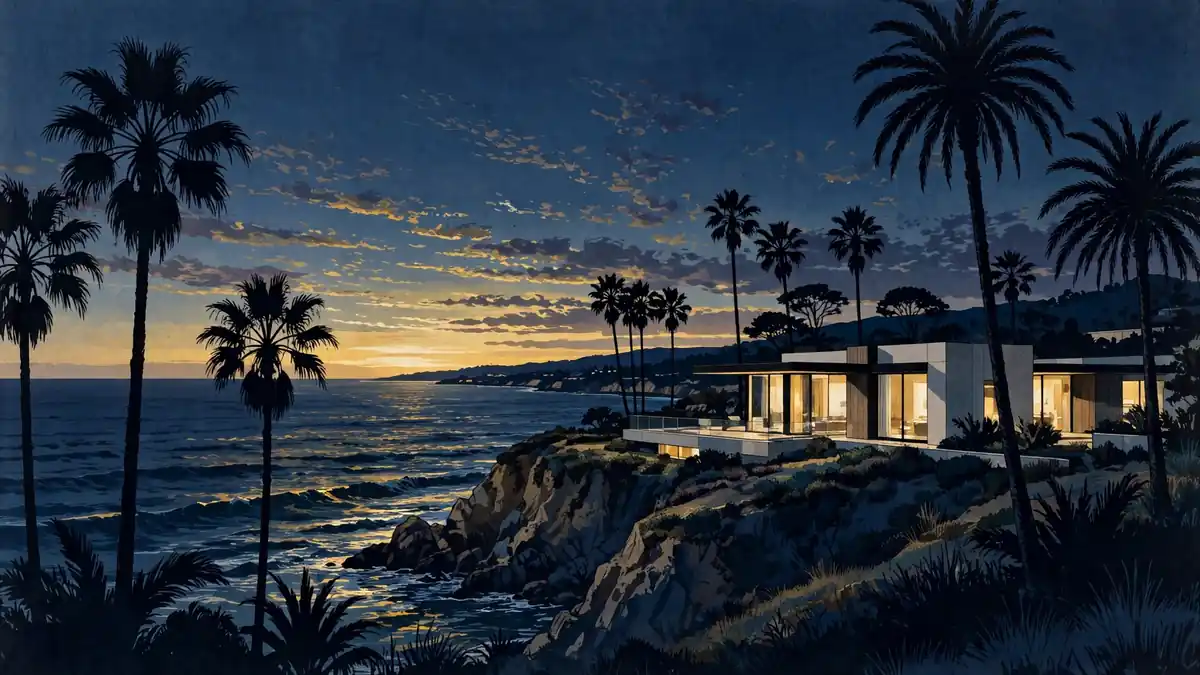
Real estate was the most visible part of Petty’s wealth, and the property record since his death has been unusually well documented — because the estate has sold nearly all of it. The headline property was the Malibu estate on Pacific Coast Highway: 2.6 acres with a 5,300-square-foot main house, a guest house and a recording studio, bought in 1998 for $3.8 million. The estate listed it in July 2024 for $19 million and sold it in October 2025 for $11.2 million, according to Homes.com and Compass records — a sharp discount from the asking price, and still nearly triple what Petty paid.
The second Malibu property did better against its asking price. The oceanfront home on Escondido Beach, bought in 2010 for $6.8 million, was listed by the estate in December 2022 at $9.85 million and sold a month later for $10.3 million. A Lake Sherwood home bought in 2007 for $4.4 million sold in 2019 for $4 million — one of the few properties that lost money.
The Encino house has the longest story. Petty and his first wife Jane built it after an arsonist set fire to their earlier home on the same lot on May 17, 1987, while the family was at breakfast; the fire caused about $1 million in damage and destroyed everything except the recording studio. The rebuilt house, finished in 1989, went to Jane in the 1996 divorce. She lost it to foreclosure in 2015. It sold for $2.6 million in 2017 and $4.5 million in 2018, then Selena Gomez bought it in March 2020 for $4.895 million, according to the Los Angeles Times — and used its kitchen as the set for her cooking series Selena + Chef. Gomez listed it in May 2026 for $6.495 million and sold it in September 2026 for $5.399 million.
His cars were never publicly catalogued the way his guitars were, and no reliable source has published a valuation of a vehicle collection — so we will not invent one. What is documented is the guitar collection he played on stage and in the studio for forty years, including the Rickenbacker 12-strings and vintage Fenders and Gibsons heard on the records. Instruments of that provenance carry real value, but no auction or estate filing has put a public number on them, and they are best understood as working tools that happened to be worth a great deal.
Awards and Achievements
Petty won three Grammy Awards from 18 nominations: Best Rock Performance by a Duo or Group with Vocal for the Traveling Wilburys’ first album in 1989, Best Male Rock Vocal Performance for “You Don’t Know How It Feels” in 1995, and a second duo-or-group rock performance win in 2009. The nominations ran from the late 1970s to the 2010s, a span few rock acts match.
Tom Petty and the Heartbreakers were inducted into the Rock and Roll Hall of Fame in 2002, their first year of eligibility. He received a star on the Hollywood Walk of Fame, and in 2017 — the year he died — the band was honored with a Grammy Museum exhibit and a career-spanning 40th anniversary tour that sold out arenas across the country. The commercial milestones sit alongside the formal ones: 15 top-ten albums across his career, per Warner Chappell; a diamond-certified greatest-hits album; more than 80 million records sold; and a farewell tour that ranked among the 20 highest-grossing in the world in its year.
Net Worth Growth Over the Years
The table below traces the fortune in stages. The 2017 figure is the documented estimate; the earlier figures are our estimates, built from album sales, tour grosses and the career timeline, and labeled as such. No tax return or probate filing has ever been published, so treat the early rows as informed approximations, not audited facts.
| Period | Estimated net worth | What drove it |
|---|---|---|
| 1976–1978 | Under $1 million | Debut album; slow US start, UK touring |
| 1979–1981 | ~$2 million | Damn the Torpedoes goes platinum |
| 1989–1991 | ~$25 million | Full Moon Fever (5M+ copies); Wilburys |
| 1994–1996 | ~$40 million | Wildflowers; Greatest Hits passes 10M |
| 2002–2008 | ~$60 million | Hall of Fame; Super Bowl halftime; steady touring |
| 2014–2017 | ~$80 million | Hypnotic Eye No. 1 debut; 40th anniversary tour |
| October 2017 (at death) | $95 million | Celebrity Net Worth estimate; widely reported |
| 2017–2026 (estate) | Not publicly disclosed | Catalog deal, posthumous releases, property sales |
How does $95 million compare with his peers? Our own profiles put Bob Dylan — Petty’s Wilburys bandmate and the man he backed on tour in 1986 — at $500 million, after Dylan sold his catalog outright. Prince, whose estate also spent years in court, stands at $156 million in our estimate, and Barry Gibb at $140 million. Petty sits below them, and the reason is structural: he never sold his catalog, he never built a business outside music, and his fortune was built on touring and royalties rather than a single nine-figure transaction. The estate’s choice since 2017 — administration deals and licensed releases rather than a sale — suggests the family intends to keep it that way.
Social Media Presence
Petty died before the social-media era reached its current scale, and his accounts are now run by the estate under the Tom Petty Legacy banner. The official website, tompetty.com, and the @tompetty accounts on Instagram, X and YouTube carry posthumous releases, archive footage, anniversary posts and merchandise — the 2024 Petty Country tribute and the Warner Chappell deal were both announced through those channels. The accounts function as the estate’s storefront rather than a personal feed: no new performances, but a steady flow of catalog news that keeps the songs in front of listeners who were children when the records were made. We do not publish follower counts here because they change daily and say nothing about the fortune; the point that matters is that the estate treats the accounts as a working asset, not a memorial page.
Personal Life
Petty married Jane Benyo in 1974, when Mudcrutch was still a Gainesville bar band. They had two daughters, Adria and Annakim Violette, and divorced in 1996 after a long and difficult separation. Petty later spoke about heroin addiction in the mid-1990s and the depression that followed the divorce; he got clean and rarely discussed it afterward, except to say that the music had kept him working through it. He married Dana York in 2001, and they were together until his death.
The last week of his life was spent on stage. The 40th anniversary tour closed with three sold-out nights at the Hollywood Bowl, the last on September 25, 2017. He performed the entire tour with a fractured hip, a fact his family and bandmates only confirmed afterward. On the morning of October 1 he was found unconscious and in cardiac arrest at his Malibu home; he was taken to UCLA Medical Center in Santa Monica and died at 8:40 p.m. on October 2, at 66. In January 2018 the Los Angeles County Medical Examiner ruled the death an accidental overdose, listing fentanyl, oxycodone and several other prescribed medications in his system — drugs he had been taking for the hip, for a knee problem, and for emphysema, according to the coroner’s report.
What followed was the fight over the estate. Petty had named Dana the sole directing trustee of his trust, while the trust’s terms gave his daughters “equal participation” in decisions about his music. In April 2019 Dana asked a Los Angeles court to put the catalog under a professional manager; in May 2019 Adria and Annakim sued her for $5 million, saying she was ignoring their father’s wish for equal control. Rolling Stone reported in December 2019 that the three had reached a settlement and dismissed all litigation, and the family formed Tom Petty Legacy, LLC — Dana, Adria and Annakim on equal standing, advised by Red Light Management — to run the catalog together. The dispute had delayed releases, including the Wildflowers anniversary box set, and its settlement cleared the way for the posthumous projects that followed. Forbes noted at the time that no official report on the estate’s value had ever been released — the $95 million figure was an estimate, and the family was not sharing the real number.
Sources & Reporting
Celebrity Net Worth — the $95 million estimate at death, the real-estate record (Malibu estate bought 1998 for $3.8 million; Escondido Beach home bought 2010 for $6.8 million, sold January 2023 for $10.3 million; Lake Sherwood home sold 2019 for $4 million; Encino fire and rebuild). Reporting window: profile updated through 2024.
Forbes — via Grunge’s reporting, the $95 million figure described as an estimate and the observation that no official estate valuation had been released as of 2019. Reporting window: 2019.
Pollstar — career touring data: 6.5 million tickets sold since 1985, $366.4 million career gross ($469.4 million in 2017 dollars), 1995 tour gross of $27.5 million, and the projection of a $70 million-plus final-tour total. Reporting window: October 2017.
Best Classic Bands — 2017 tour year-end ranking (20th worldwide, $64.7 million) and the final-concert record: 56 concerts, closing September 25, 2017 at the Hollywood Bowl. Reporting window: 2017–2018.
uDiscover Music — more than 80 million albums sold; Greatest Hits certified 10× platinum. Reporting window: artist profile, current.
Rolling Stone — the December 2019 estate settlement and the family’s joint statement; Dana York Petty as directing trustee. Reporting window: December 2019.
Billboard — the July 2024 Warner Chappell administration deal, including the exclusion of “American Girl” and the debut album, and the earlier Wixen administration. Reporting window: July 2024.
Warner Music Group — the official July 1, 2024 announcement of the worldwide administration deal; 15 top-ten albums; the Petty Country tribute context. Reporting window: July 2024.
Variety — the May 2019 $5 million lawsuit by the daughters and Dana Petty’s response through her attorney. Reporting window: May 2019.
Consequence — the December 2019 settlement and the formation of Tom Petty Legacy, LLC with equal standing for all three women. Reporting window: December 2019.
Los Angeles Times — Selena Gomez’s March 2020 purchase of the Encino house for $4.895 million. Reporting window: 2020.
Realtor.com — the Encino house’s 2020 sale details and history, including the 1989 rebuild. Reporting window: 2020, updated 2025.
Homes.com and Compass — the Malibu estate’s October 2025 sale at $11.2 million, listed at $15.495 million after an earlier $19 million ask. Reporting window: October 2025.
Digital Music News — the December 2019 heirs’ settlement and the July 2024 Warner Chappell deal. Reporting window: 2019 and 2024.
Wikipedia — biographical dates (born October 20, 1950, Gainesville; died October 2, 2017), discography counts, Grammy record (3 wins, 18 nominations), Hall of Fame induction 2002. Cross-checked against the outlets above. Reporting window: current.
Figures are estimates built from public reporting, not audited financial statements. Where sources conflict or the record is silent — above all the estate’s current value — this article says so rather than filling the gap.
Frequently Asked Questions
What was Tom Petty’s net worth when he died?
Tom Petty’s net worth was estimated at $95 million when he died on October 2, 2017, at age 66. The figure comes from Celebrity Net Worth and is the number most outlets have repeated since. No official valuation of his estate has ever been published — Forbes noted in 2019 that no probate filing or estate report had been released — so $95 million is the best-documented estimate, not a confirmed total.
Who inherited Tom Petty’s money?
His widow, Dana York Petty, and his two daughters from his first marriage, Adria Petty and Annakim Violette. Petty named Dana sole directing trustee of his trust, while the trust gave his daughters equal participation in decisions about his music. The three fought over that arrangement in court in 2019 — the daughters sued Dana for $5 million — then settled in December 2019 and formed Tom Petty Legacy, LLC, with all three on equal standing over the estate and catalog.
How did Tom Petty die?
Petty died on October 2, 2017, at UCLA Medical Center in Santa Monica, a day after being found unconscious and in cardiac arrest at his Malibu home. He was 66. In January 2018 the Los Angeles County Medical Examiner ruled it an accidental drug overdose, listing fentanyl, oxycodone and other prescribed medications in his system. He had been taking them for a fractured hip — an injury he carried through his entire final tour — as well as knee trouble and emphysema.
How much money did Tom Petty make from touring?
Pollstar puts his career touring gross from 1985 to 2017 at $366.4 million in actual dollars, or $469.4 million adjusted to 2017 dollars, across 6.5 million tickets sold. His final tour, the 40th anniversary run in 2017, grossed $64.7 million over 53 shows. Those are grosses, not take-home pay — promoters, venues, crew and band salaries came out first — but touring was the largest single contributor to his fortune.
How many records did Tom Petty sell?
More than 80 million records worldwide, solo and with the Heartbreakers, according to uDiscover Music and label histories. His biggest seller was the 1993 Greatest Hits compilation, certified diamond by the RIAA for more than ten million US copies. Full Moon Fever passed five million in the US and Wildflowers passed three million.
What was Tom Petty’s biggest-selling album?
Tom Petty and the Heartbreakers’ Greatest Hits (1993), which passed ten million copies in the United States and earned diamond certification from the RIAA. It outsold every studio album he made, including Full Moon Fever (five million-plus) and Wildflowers (three million-plus), because it collected “American Girl,” “Free Fallin’,” “Refugee” and “Mary Jane’s Last Dance” on a single record.
Did Tom Petty sell his music catalog?
No. The estate has never sold the catalog. In July 2024 it signed a worldwide administration deal with Warner Chappell Music covering the vast majority of songs Petty wrote — his Heartbreakers and solo work, plus Mudcrutch and Traveling Wilburys songs. An administration deal means Warner Chappell handles licensing and collection; the estate keeps ownership. The terms were not disclosed, and Billboard confirmed the deal excludes “American Girl” and the band’s first album.
What happened to Tom Petty’s houses?
The estate has sold nearly all of them. The Malibu estate Petty bought in 1998 for $3.8 million sold in October 2025 for $11.2 million. The oceanfront Escondido Beach home he bought in 2010 for $6.8 million sold in January 2023 for $10.3 million. A Lake Sherwood home bought in 2007 for $4.4 million sold in 2019 for $4 million. The Encino house he rebuilt after a 1987 arson fire went to his first wife in the divorce; Selena Gomez bought it in 2020 for $4.895 million and sold it in September 2026 for $5.399 million.
Final Thoughts
Tom Petty’s $95 million was not the fortune of a man who chased money. He filed for bankruptcy to keep his label, fought his own record company over a dollar on an album price, turned down endorsement money, and kept the same band together for forty years. The money came from the work itself: 80 million records, 6.5 million concert tickets, and a shelf of songs that radio, film and television have never stopped playing.
What has happened since his death is the second half of the story. The estate’s value was never officially disclosed, the family spent two years in court over who controlled it, and the catalog is now managed jointly by the three women he left behind — through an administration deal, not a sale. The Malibu properties are gone, sold for $11.2 million and $10.3 million. The songs remain, and they are the reason the number still matters: a catalog that earns for decades is worth more than any single check, and Petty’s is still earning.
Published on November 6, 2026. Last reviewed November 2026. Found an error? See our corrections policy.