
Jason Williams‘s net worth is estimated at $20 million to $35 million as of November 2026. The point guard the basketball world knows as “White Chocolate” banked $55,663,447 in NBA salary across 12 seasons, won a championship as the Miami Heat’s starting point guard in 2006, and turned one of the most entertaining styles in league history into a fortune that has held up for 15 years after his last game.
Jason Williams: Quick Facts
| Estimated net worth | $20 million (range: $20 million to $35 million) |
|---|---|
| Profession | Former NBA point guard |
| Nationality | American |
| Born | November 18, 1975 (age 50) |
| Height | 6 ft 1 in (1.85 m) |
| Primary income sources | NBA salaries, endorsements (Nike, AND1), appearances and exhibition play |
| Active years | 1998–2011 |
| Last reviewed | November 2026 |
- Early Life and Background
- Education
- Career Journey
- Rise to Fame
- Main Sources of Income
- Salary and Earnings
- Businesses and Investments
- Brand Deals and Sponsorships
- Houses, Cars and Other Assets
- Awards and Achievements
- Net Worth Growth Over the Years
- Social Media Presence
- Personal Life
- Sources & Reporting
- Frequently Asked Questions
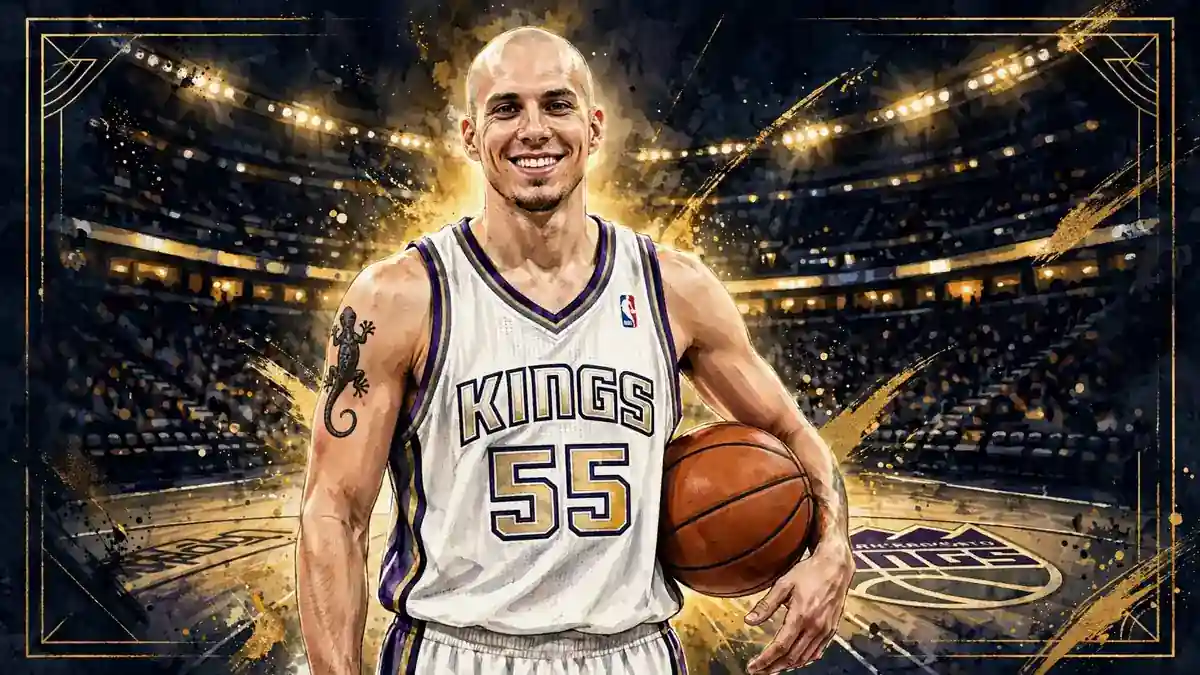
First, the identity check — because this keyword traps people. This article is about Jason Chandler Williams, born November 18, 1975, in Belle, West Virginia: the “White Chocolate” point guard drafted seventh overall in 1998, a 2006 NBA champion with the Miami Heat. He is not Jayson Williams, the former New Jersey Nets forward born in 1968 whose name is spelled with a “y” — a different man with a different career, a different legal history, and a different fortune. A surprising share of the low-quality pages ranking for this keyword mix the two men together, crediting Jason with Jayson’s 1996 draft, Jayson’s teams, and invented nine-figure earnings. Every figure below was checked against Jason Williams’s own record: Sacramento, Memphis, Miami, Orlando, 1998 to 2011.
Early Life and Background
Jason Chandler Williams was born on November 18, 1975, in Belle, West Virginia, a small town on the Kanawha River about 15 miles southeast of Charleston. Belle is the kind of place where everybody knows whose kid you are, and Williams grew up with a gym key in his pocket — his father worked at DuPont High School, so the school gym was effectively his second home. He spent late nights there working on ball-handling, sometimes with ankle weights on his wrists and leather gloves on his hands to sharpen his control. That lonely gym work explains a lot about what came later: the handles were not an accident of talent alone; they were drilled, hour after hour, when nobody was watching.
At DuPont High School in nearby Dupont City, Williams played for the Panthers and became the only player in school history to record 1,000 career points and 500 assists. In 1994 he led DuPont to the West Virginia state championship game, where the Panthers lost to Martinsburg. His high-school teammate was Randy Moss, the future NFL Hall of Fame receiver, and the two remain linked in basketball lore — a small-town West Virginia high school that produced two of the most electrifying athletes of their generation at the same time. Moss was a two-time West Virginia State Basketball Player of the Year; Williams was the passer who found him. Years later, the pair appeared together in a Nike advertising campaign, a detail that matters financially because it was one of Williams’s first endorsement paydays and a sign of how early brands saw his appeal.
The nickname that would define his career came much later, but its roots were in those DuPont years. In high school he was already known for playground flair — no-look dishes, deep threes, passes thrown before the cutter had even turned. Teammates called him “Super Cracker” in those days, a high-school tag that never travelled. The name that stuck would be coined by a Kings public-relations assistant in his rookie season, and it would follow him for the rest of his life.
Williams’s upbringing also shaped the financial story in a quieter way. He did not come from money, and his career earnings arrived in a sport where a single bad knee or a single suspension can end the cheques. That context matters when judging the $20 million estimate: a player who earned $55.66 million gross over 12 seasons, paid taxes and agent fees on all of it, and has not drawn an NBA salary since 2011, keeping $20 million-plus 15 years later is a story of restraint as much as of income. There is no record of the bankruptcies, lawsuits, or spending blowouts that erased the fortunes of several of his contemporaries.
Education
Williams’s college path was short, winding, and decisive — three schools in four years, and only 20 games at the one that made him famous. He first committed to Providence College, then changed course when Providence coach Rick Barnes left for Clemson. He enrolled at Marshall University in Huntington, West Virginia, to play for Billy Donovan, redshirting his first season before averaging 13.4 points and 6.4 assists per game as a freshman in 1995–96.
When Donovan accepted the head-coaching job at the University of Florida in the summer of 1996, Williams followed him to Gainesville. NCAA transfer rules forced him to sit out the 1996–97 season, and a quirk of the rules at the time cost him a further year of eligibility. He finally took the floor as Florida’s starting point guard in 1997–98 and was electric: through 20 games he averaged 17.1 points, 6.7 assists, and 2.8 steals per game. On December 3, 1997, he set a Florida single-game record with 17 assists against Duquesne, and he led the Gators to an 86–78 upset of Kentucky in Lexington — the kind of road win that makes scouts stop doubting a 6-foot-1 guard from West Virginia.
It ended abruptly. In February 1998, Florida suspended Williams for the rest of the season for cannabis use — his third suspension for the same infraction, after two earlier ones. He never played another college game. Rather than return to Florida, he declared for the 1998 NBA draft, betting that his 20 games of film were enough. The Sacramento Kings agreed, taking him seventh overall and accepting the risk that other teams had passed on. That decision — a 20-game college sample, a suspension on the record, and a top-seven pick anyway — tells you how rare his talent looked to professional evaluators. It also set the pattern of his career: brilliance that forced teams to live with the complications, and complications that eventually forced teams to move on.
One detail from Gainesville matters to the rest of this story: it was at Florida in 1997 that Williams met Denika Kisty, a javelin thrower on the Gators track and field team who would become his wife. The relationship began on campus, years before the money, and it has lasted through every trade, retirement, and comeback since.
Career Journey
Williams’s NBA career ran 12 seasons, four franchises, and two retirements. The numbers at the end — 788 regular-season games, 8,266 points, 4,611 assists, 933 steals, one championship — describe a very good starting point guard. The journey between the numbers describes something rarer: a player whose style changed how a position was watched on television.
Sacramento Kings, 1998–2001. The lockout shortened his rookie season to 50 games, and Williams started all 50 of them, averaging 12.8 points and 6.0 assists. The Kings had rebuilt around newcomers — Williams, Chris Webber, Vlade Divac, and Peja Stojaković — and the group turned a perennial loser into a playoff team in a single season, pushing the defending Western Conference champion Utah Jazz to five games in the first round. Williams finished second to Vince Carter in Rookie of the Year voting and made the NBA All-Rookie First Team. He also gave the league its first real look at what he could do with a basketball: elbow passes, look-away dishes, cross-court lasers thrown off the wrong foot. Sacramento’s arena started selling out for the show as much as the result.
The Sacramento years were also where the complications surfaced. The NBA suspended Williams for five games in 2000 for a violation of the league’s anti-drug program, and he drew a $15,000 fine in 2001 after an incident involving a racial slur directed at a fan. His shot selection and turnovers frustrated coaches even as his highlights filled the nightly reels. By 2001 the Kings had decided they wanted a steadier hand at the position. In June 2001 Sacramento traded Williams and Nick Anderson to the Vancouver Grizzlies — weeks before the franchise moved to Memphis — for Mike Bibby and Brent Price. It was a basketball trade, not a salary dump: Bibby was the reliable floor general the Kings wanted, and Williams was the entertainer they were willing to lose.
Memphis Grizzlies, 2001–2005. Memphis was the longest uninterrupted stretch of Williams’s career and, by the numbers, his best. On November 30, 2001, he scored a career-high 38 points with 11 assists in a 102–85 win over the Houston Rockets. In October 2001 Memphis signed him to a long-term extension that anchored his prime years, and in 2002 general manager Jerry West hired Hubie Brown out of retirement to coach the team. Brown’s first season produced a franchise-record 28-win improvement, and the Grizzlies reached the postseason for the first time in franchise history. Williams’s per-game averages in Memphis — 14.8 points and 8.0 assists in 2001–02, his best statistical season — show a player who had learned to run a team rather than simply perform with the ball. He left Memphis as the franchise’s all-time assists leader with 2,069, a record that stood until Mike Conley passed it years later.
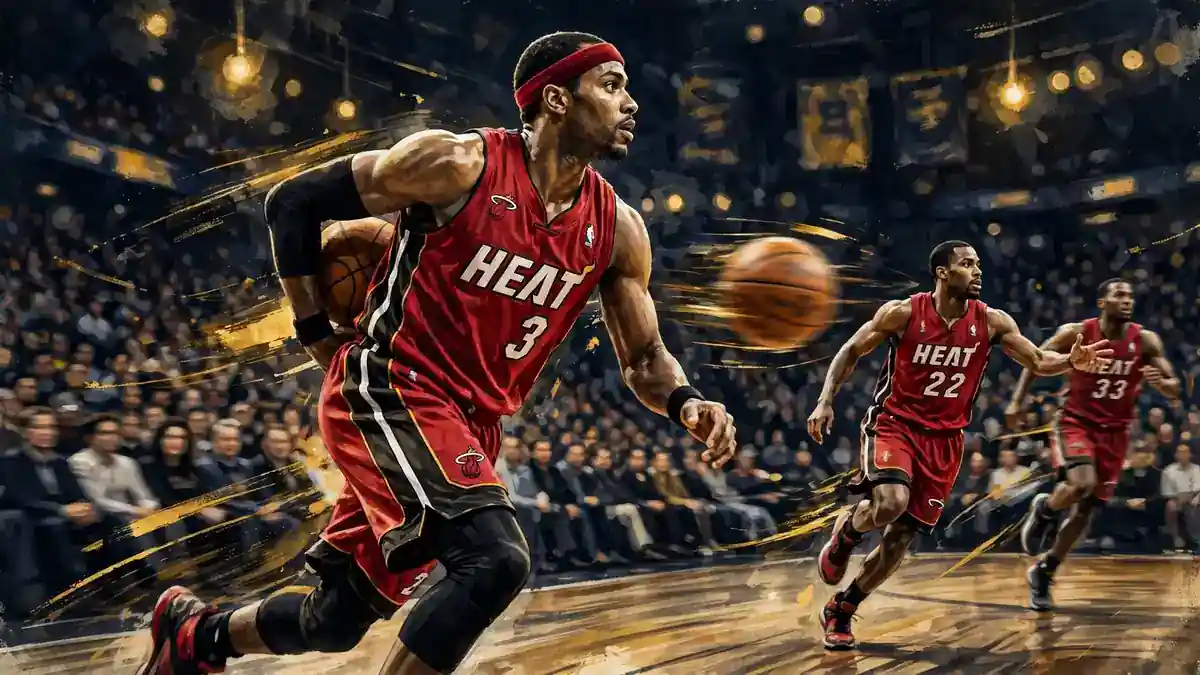
Miami Heat, 2005–2008. On August 2, 2005, Williams and teammate James Posey were two of 13 players in the biggest trade in NBA history, a five-team deal that sent them to Miami for Eddie Jones. It was the move that completed his career. In 2005–06, despite a knee injury limiting him to 59 games, Williams started at point guard, finished second only to Dwyane Wade in minutes per game, and ranked as the Heat’s third-leading scorer at 12.3 points per game with 4.9 assists. He was one of three Heat players to make more than 100 three-pointers that season. In the playoffs he scored in double figures 11 times, including 21 points on 10-of-11 shooting in Game 6 of the Eastern Conference Finals against Detroit — the game that closed out the Pistons. Miami then beat the Dallas Mavericks in the NBA Finals. Williams had his ring, and he had earned it as a starter, not a passenger.
The two seasons after the title were a slow fade. In 2006–07 he played 61 games, averaging 10.9 points and 5.3 assists, and Miami was swept by Chicago in the first round. In 2007–08 he played 67 games and averaged 8.8 points. The knees were going, the burst was fading, and the Heat were rebuilding around Wade.
Retirement, comeback, and the end, 2008–2011. In the summer of 2008 Williams signed a one-year deal with the Los Angeles Clippers. On September 26, 2008 — before playing a game for them — he announced his retirement, citing persistent injuries after 10 NBA seasons. He was 32. Five months later, in February 2009, he announced he would attempt a comeback. On August 19, 2009, he signed with the Orlando Magic, reuniting with Stan Van Gundy, and played two seasons as a veteran backup, undergoing arthroscopic knee surgery in 2010. On February 7, 2011, he signed a two-year deal with the Memphis Grizzlies — the rest of that season fully guaranteed, with a player option for the second year — returning to the franchise where he had been the assists leader. He played his final games there and announced his retirement on April 18, 2011. He was 35, and the second retirement stuck.
Across the whole career, the line reads: 788 games, 649 starts, 10.5 points, 5.9 assists, and 2.3 rebounds per game, shooting 39.8 percent from the field, 32.7 percent from three, and 81.3 percent from the line. The shooting percentages were never elite — Williams took hard shots, early in the clock, from places coaches hated. The assists and the wins are the better measure: four franchises, and every one of them made the playoffs with him running the point.
Rise to Fame
Williams became famous fast, and the fame was about style before it was about winning. In his rookie season a Kings media-relations assistant named Stephanie Shepherd gave him the nickname “White Chocolate”: his game, she said, looked like schoolyard streetball, full of flash and creativity that NBA point guards simply did not attempt. The name stuck instantly and followed him for the rest of his career. It was also a marketing gift. In an era when the league was selling personality as much as basketball, a white point guard who played like a playground legend was a story every broadcast wanted to tell, and Williams’s highlights — the elbow pass against the Lakers, the no-look feeds in transition — ran on loop on sports television for years.
The fame had a second engine: the Kings themselves. Sacramento in 1999 and 2000 was the most entertaining team in basketball, a fast-breaking, back-cutting, no-look-passing outfit that turned a small-market franchise into a national television draw. Williams was its symbol. His jersey, number 55, became one of the league’s best sellers among guards who had never made an All-Star team — and that is the honest measure of his celebrity. Williams never made an All-Star team and never made an All-NBA team. His fame was not built on awards; it was built on the fact that people who did not care about Sacramento basketball still wanted to watch him play.
The 2006 championship changed the story’s ending. Before Miami, Williams risked being remembered as a novelty act — brilliant, unreliable, ultimately unrewarded. After Miami, he was a champion point guard whose style had been validated at the highest level. He started every playoff game of that title run. The ring did not make him a Hall of Famer — Basketball-Reference confirms he is not in the Hall of Fame — but it removed the one criticism that could have defined him, and it is the single achievement that separates his career from other beloved entertainers who never won anything.
His influence has outlasted his playing days in a specific way. Modern point guards — the passers who throw skip passes off the dribble, who play with pace and improvisation — operate in a league that Williams helped make room for. In a 2026 interview on “The OGs Show” with his former Miami teammates Udonis Haslem and Mike Miller, reported by Basketball Network, Williams argued that today’s young players lack creativity because they train on prescribed drills rather than figuring the game out alone in an empty gym, as he did in Belle. You can disagree with the diagnosis and still see the point: his game was self-taught, and the league has spent two decades trying to systematise what he did by instinct. Allen Iverson was the era’s other great individualist guard, and the two men are still discussed together whenever the conversation turns to the players who made late-1990s basketball appointment viewing — Iverson with scoring, Williams with passing.
Main Sources of Income
Williams’s money came from one dominant source and two supporting ones. The split matters because it explains both the size of the fortune and its limits.
NBA salaries — about $55.66 million gross, the foundation. Basketball-Reference puts his career earnings at $55,663,447, and that figure is the spine of every honest estimate of his wealth. It arrived in three waves: a rookie-scale deal in Sacramento, a long-term extension in Memphis that carried him through his prime, and a two-year Heat deal that paid him like a championship starter, followed by veteran-minimum contracts in Orlando and Memphis. His peak single-season salary was $8,937,500 in 2008. No single contract made him rich; the accumulation of 12 seasons of starter-level pay did. The full season-by-season breakdown is in the salary section below.
Endorsements — real, but modest next to the salary. Williams’s marketability peaked early, when the “White Chocolate” novelty was fresh. He appeared in Nike advertising alongside Randy Moss, and in November 2003 AND1 signed him to a six-year endorsement agreement — a natural fit, since AND1 built its brand on streetball style and Williams was the NBA player who most looked like an AND1 mixtape come to life. Adidas was also listed among his brand partners in later reporting. No dollar figure for any of these deals has ever been published, and this article will not invent one. The honest statement is that endorsement income was a meaningful supplement in the early 2000s and a small one after it: Williams was a cult star, not a global one, and his deals reflected that. He never had a signature shoe, never fronted a national campaign on his own, and never earned endorsement money on the scale of the era’s superstars.
Post-career income — appearances, exhibitions, and basketball work. Since retiring in 2011, Williams has earned from the basketball afterlife that former stars inhabit: exhibition games, pro-am leagues, The Basketball Tournament, a USA Legends tour of China alongside Tracy McGrady, clinics, and paid appearances. He has also stayed visible through long-form interviews — “All The Smoke” in 2023 and “The OGs Show” in 2026 — which keep his name in circulation and his appearance value alive. None of this is NBA money, and none of it is documented in public figures. It is best understood as a steady, modest income that slows the draw on his savings rather than a second fortune. Unlike some retired players, Williams has no verified broadcasting contract, no front-office role, and no coaching job on the record — claims that he served as an NBA assistant coach circulate on low-quality sites and have no support in reliable reporting, so this article does not repeat them.
What he did not have also shapes the estimate. There is no verified business empire, no restaurant chain, no media company, and no real-estate portfolio with public records attached to his name. The wealth here is a retired athlete’s wealth: a large pile of salary, carefully kept, rather than a pile that kept growing through business. That is why the range tops out at $35 million rather than $80 million or $100 million, figures that appear on content-farm pages and collapse the moment you check them — they mix Jason Williams with Jayson Williams, invent Atlanta Hawks contracts he never signed, and count 14- and 15-year careers he never had.
Salary and Earnings
The salary record is the most solid ground in this whole article, because Basketball-Reference publishes it and the contract trackers agree on the total: $55,663,447 across 12 seasons. His highest-paid season was 2008, at $8,937,500 with Miami, and he earned $8,250,000 the season before. Those two seasons — the back end of his Heat deal — paid him more than his entire rookie contract.
The contract-by-contract picture, as summarised by NBA contract trackers, runs to six deals. The rookie contract, four years and about $7.9 million, covered 1998 to 2002 across Sacramento and Memphis. The Memphis extension, four years and about $26.13 million, covered 2002 to 2006 and carried him from the Grizzlies to the Heat. The Heat extension, two years and about $17.19 million, covered 2006 to 2008 and included his two highest-paid seasons. Then came the veteran years: one year and about $1.26 million with the Clippers in 2008–09, a deal he never played under because he retired before the season; one year and about $1.31 million with Orlando in 2009–10; and a final one-year deal of about $1.87 million split between Orlando and Memphis in 2010–11. The six deals add to $55.66 million, matching Basketball-Reference to the dollar.
| Contract | Years | Value | Team(s) |
|---|---|---|---|
| Rookie deal | 1998–2002 | ~$7.9 million | Kings / Grizzlies |
| Memphis extension | 2002–2006 | ~$26.13 million | Grizzlies / Heat |
| Heat extension | 2006–2008 | ~$17.19 million | Heat |
| Clippers deal (retired before playing) | 2008–09 | ~$1.26 million | Clippers |
| Magic deal | 2009–10 | ~$1.31 million | Magic |
| Final deal | 2010–11 | ~$1.87 million | Magic / Grizzlies |
| Career total (Basketball-Reference) | 1998–2011 | $55,663,447 | — |
Two reporting notes keep this section honest. First, Celebrity Net Worth describes the October 2001 Memphis deal as a six-year extension, while the contract trackers split the same pay window into the four-year extension above; the two accounts describe the same money in different shapes, and the $55,663,447 total is the figure both sides of that description agree on. Second, the Clippers contract deserves a footnote: Williams signed it, then retired, then un-retired a year later for Orlando. Whether he collected any of that $1.26 million is not a matter of public record, and the tracker total counts it as signed value. Either way, the difference is small against a $55 million career.
What $55.66 million gross becomes after tax is the question that decides the net-worth range, and it is where honest reporting has to stop pretending to know. Williams played in California, Florida, Tennessee, and Texas, so his tax picture changed with every trade. Agent fees on NBA deals run to a few percent. He earned most of the money before 2009 and has lived off it since. A player who banks roughly $55 million gross, pays tax and fees on it, spends at a professional athlete’s level for a decade, and then lives 15 years without an NBA salary, landing at $20 million in retained wealth, is a believable outcome — and it is the outcome the most-cited public estimate reports. The higher $30–$35 million figures in some recent trackers would require either lower lifetime spending or better investment returns than the public record shows. Both are possible; neither is documented. That is why this article publishes the range and anchors on the lower, better-sourced figure.
For scale, Williams’s career earnings sit well below the era’s superstars — LeBron James has earned many times that sum in salary alone — and well above the journeymen who washed out after a rookie deal. He was paid like what he was: a starting point guard on good teams for a decade, never a max player, never a minimum player until the very end. The money matches the career, which is exactly what you would expect from a clean record.
Businesses and Investments
This is the thinnest section of the article, and the thinness is itself a finding. Unlike the modern stars who announce venture funds and tequila brands, Williams’s post-playing business record is small, local, and mostly undocumented in figures — and the reporting says so plainly rather than filling the gap with invention.
The one investment that appears in reporting is a minority stake in the Orlando Solar Bears, a minor-league hockey team, reported by SoapCentral. It is a single-source claim, and no stake size, purchase price, or current value has been published. It fits the pattern of a Florida-based former athlete putting money into a local sports property, and it is included here as reported rather than confirmed. If the stake exists, it is a small, illiquid holding — the kind of asset that adds colour to a portfolio, not millions to a net-worth estimate.
His charitable work is better documented. In 2003 Williams founded the We Will Foundation alongside Dr. Bob Wallace of the UT Medical Group, a Memphis charity effort tied to his Grizzlies years. Foundations of this kind are usually cost centres rather than income sources, but they matter to the financial picture in a different way: they show where a player’s money went during his peak earning years, and they explain why a $55 million career does not automatically produce a $40 million net worth.
What about property and private investments? No property record, business filing, or investment announcement tied to Jason Williams has surfaced in reliable reporting. Some recent net-worth pages credit him with real-estate portfolios, tech startups, and private-equity stakes worth tens of millions. None of those pages names a property, a company, or a source. The claims read as template text copied between content farms — several of them also credit him with Atlanta Hawks seasons he never played — and this article does not repeat them. The honest statement is that Williams’s known investments are a reported minor-league hockey stake and a charity foundation, and the rest of his wealth is best understood as retained salary, not business income.
That restraint is also the most useful lesson in the article for readers comparing athletes. Williams’s career is a case study in how a very good, not supermax, NBA career converts into lasting wealth: the salary was large, the endorsement money was moderate, the business income was small, and the outcome depends almost entirely on how much of the salary survived. At $20 million, the answer is “a lot of it did.”
Brand Deals and Sponsorships
Williams’s endorsement career had a clear arc: a fast start, a streetball peak, and a quiet fade as his on-court role shrank. The deals that are documented are three, and the money on all three is unpublished.
The first was Nike. Williams appeared in Nike advertising with Randy Moss, his old DuPont High teammate — two small-town West Virginia athletes, one in basketball and one in football, selling the idea that greatness could come from anywhere. The campaign ran early in Williams’s career, when the “White Chocolate” story was new and Nike could use him as a symbol of playground creativity. It was a supporting role in a Nike campaign, not a signature line, and it paid accordingly.
The second, and the most important, was AND1. In November 2003 the streetball brand signed Williams to a six-year endorsement agreement, as reported by Celebrity Net Worth. The logic was obvious on both sides: AND1 sold the playground game — the mixtapes, the handles, the improvisation — and Williams was the only NBA starter who actually played that way in real games. For AND1, he was credibility. For Williams, it was a deal that matched his identity rather than asking him to be someone else. The length of the deal — six years — also tells you how seriously AND1 took it; this was not a one-season poster arrangement. What it paid is not public, and estimates that put a number on it are guessing.
The third name in the mix is Adidas, listed among his brand partners in later reporting by HitNews and SoapCentral. The details — dates, scope, value — are not documented, and it may have been a smaller or shorter arrangement than the AND1 deal. It is included for completeness, not as a major income line.
Two things about the endorsement picture are worth stating plainly. First, Williams never had a signature shoe, and in basketball economics that is the line between a famous player and a rich endorser. Signature shoes pay royalties; supporting roles pay fees. Second, his endorsement peak came before the social-media era. A player with his highlight reel in 2025 would have millions of followers and a dozen brand partnerships; in 2003, the same highlights earned him one good AND1 deal and a Nike cameo. Timing cost him real money, and it is one reason his net worth is $20 million rather than $50 million.
Houses, Cars and Other Assets
There is no verified public record of a Jason Williams house purchase, car collection, or luxury asset, and this section will not invent one. That absence is normal for a player of his era and profile: Williams retired before the age when athletes routinely posted their homes on social media, and his property dealings — if any were notable — never made the real-estate press the way a superstar’s purchases do. He has been reported as living a Florida-based family life after retirement, which fits a player whose wife is a Florida graduate and whose children grew up around the state, but no address, purchase price, or property record has been published that this article can verify.
The same honesty applies to cars. Content-farm pages credit Williams with fleets of luxury vehicles. None of them names a car, a year, or a source. During his playing career he was photographed with the usual athlete vehicles of the era, and that is the full extent of what can be said without inventing detail. A car collection is not a meaningful part of a $20 million net worth in any case: vehicles lose value, and the serious money in a retired athlete’s life sits in savings, investments, and property, not in a garage.
What can be said with confidence is what the assets are not. There is no reported mansion, no reported private jet, no reported yacht, and no reported art collection. The lifestyle evidence points the other way: a player who retired to family life in Florida, plays pro-am basketball for fun, and gives long interviews about the game rather than about his possessions. The $20 million estimate is consistent with that picture — a comfortable, private, post-career life, not a display of wealth.
Awards and Achievements
Williams’s trophy case is short, and the shortness is part of the story. He won the award that matters most and almost nothing else — a career shaped by entertainment value rather than individual honours.
- NBA champion, 2006 — starting point guard for the Miami Heat’s first championship, beating the Dallas Mavericks in the Finals.
- NBA All-Rookie First Team, 1999 — after starting all 50 games of the lockout-shortened season and averaging 12.8 points and 6.0 assists.
- Second in Rookie of the Year voting, 1999 — behind Vince Carter.
- Memphis Grizzlies all-time assists leader at retirement — 2,069 assists, a record later passed by Mike Conley.
- Miami Heat Top 25 players of all time, 2007 — named by the franchise a year after the title.
- Florida Gators single-game assists record — 17 assists against Duquesne on December 3, 1997.
- Career-high 38 points — November 30, 2001, against the Houston Rockets, with 11 assists.
He never made an All-Star team, never made an All-NBA team, and never won an individual award beyond the rookie honours. Basketball-Reference confirms he is not in the Hall of Fame. That is not a criticism; it is the context that makes the $20 million figure make sense. All-Star selections drive max contracts and global endorsements, and Williams had neither. What he had instead was a championship, a decade as a starter, and a style that people still talk about — a different kind of achievement, and one that paid less than the awards would have.
The comparison that puts his career in perspective is Michael Jordan, the standard against which every guard of that era was measured and found wanting: six championships, five MVP awards, and a business empire that made him a billionaire. Williams’s career is the opposite pole of the same era — one ring, no MVP votes of consequence, and wealth built from salary rather than from business. Both men are remembered. Only one of them got rich from basketball in the way the modern game allows.
Net Worth Growth Over the Years
No year-by-year net-worth record for Williams exists in public reporting, so the table below is a NetWorthCraft reconstruction built from his cumulative salary — the money in, minus the tax, fees, and living costs that every player pays. It is labelled as an estimate at every step, and the ranges widen where the record thins. Readers should treat it as a shape, not a bank statement.
| Period | Estimated net worth | What drove it |
|---|---|---|
| 1998 (rookie season) | $1 million – $2 million | Rookie-scale salary; first NBA paycheques |
| 2002 (Memphis extension signed) | $8 million – $12 million | Four-plus seasons of starter pay; AND1 deal from 2003 |
| 2006 (championship season) | $15 million – $20 million | Peak salary years begin; $8.25M in 2006–07 |
| 2011 (retirement) | $18 million – $25 million | $55.66M career salary complete; no new NBA income |
| 2026 (today) | $20 million – $35 million | Retained wealth plus appearances; anchored at $20M per Celebrity Net Worth |
The shape of the table is the point. Williams’s wealth grew fastest between 2002 and 2008, when his salary averaged over $7 million a season, and it has been roughly flat since retirement — the pattern of a player living off accumulated wealth rather than adding to it through business. The $30–$35 million top of today’s range would mean his post-retirement investments performed well; the $20 million anchor means they performed modestly. Either way, the fortune has survived 15 years without an NBA salary, which is the real achievement. Plenty of players who earned more have less to show for it now.
Social Media Presence
Williams keeps a low public profile online, and that is a deliberate choice rather than an absence of interest. Unlike current players, whose brand value is measured in followers, Williams retired in 2011 — the year Instagram launched — and never built a social-media business around his name. No verified official account of his is widely documented as a primary public channel, and this article does not link to fan-run or unverified accounts, which change hands and mislead readers.
Where he does surface is in long-form conversation: podcast and interview appearances that travel widely on video platforms. His 2023 appearance on “All The Smoke” with Matt Barnes and Stephen Jackson ran for a full episode and covered Belle, the nickname, the suspension, and the championship. His 2026 appearance on “The OGs Show” with Udonis Haslem and Mike Miller produced the widely quoted remarks about creativity and training. Clips from both appearances circulate heavily, and they function as his public presence now — a retired player talking about the game, rather than a retired player selling a lifestyle.
He also still plays. The Shadow League reported in 2016 that Williams, then 40, was still dropping dimes in the Orlando Summer Pro-Am League and The Basketball Tournament, and preparing for a USA Legends tour of China with Tracy McGrady. He told the outlet he worked out three times a week, played about four times a week, and was travelling with his kids — “I go home and see my kids and my wife and I’m OK. All of this stuff is secondary to me.” That is the most revealing quote in the post-career record: the game is still a joy, and the family is the priority. It also explains the net-worth picture. A man who plays pro-am basketball for fun at 40 is not a man chasing a comeback paycheque.
Personal Life
Williams married Denika Kisty in September 2003. Kisty, a native of Brentwood, Pennsylvania, was a javelin thrower at the University of Florida, where she earned All-American honours and was ranked as high as 10th in the United States in 1999. The two met on campus in 1997, when Williams was the Gators’ starting point guard and Kisty was on the track team. Their relationship predates his NBA money by a year, and it has lasted through every trade and both retirements — a stability that is rare in the world this article covers and worth noting without romanticising it.
They have three children: a son, Jaxon, born in 2000, and two daughters, Mia and Nina. Jaxon followed his father into basketball and has drawn the inevitable “White Chocolate Jr.” comparisons. Mia has made her own name in softball, playing for the Florida Gators before transferring to Texas Tech, where she has set single-season home-run marks. The family keeps a low profile: no reality television, no public social-media presence as a unit, and few interviews about their private life. Williams has said the simple version himself — he goes home, sees his kids and his wife, and he is OK.
His father worked at DuPont High School, and the gym-keys childhood in Belle still frames how he talks about the game. In the “All The Smoke” interview he described Belle plainly: a small place, not much there now, but the greatest thing in the world when he was growing up. That is the tone of his whole post-career life — a man from a small West Virginia town who saw the world, won a championship, banked $55 million, and came home to a quiet life with the family he started in college.
Sources & Reporting
Celebrity Net Worth — the $20 million net-worth estimate (updated October 23, 2026), the $55 million career-salary figure, the six-year Memphis extension of October 2001, and the November 2003 AND1 six-year endorsement agreement. Reporting window: profile updated October 2026.
Basketball-Reference — career salary total of $55,663,447, peak salary of $8,937,500 in 2008, career totals (8,266 points, 4,611 assists, 933 steals in 788 games), and confirmation that Williams is not in the Hall of Fame. Career record 1998–2011.
Wikipedia — biographical spine: born November 18, 1975, in Belle, West Virginia; DuPont High School; Marshall 1995–96 and Florida 1997–98; 17.1 points and 6.7 assists in 20 Florida games; February 1998 suspension; seventh overall pick in the 1998 draft; team history and the 2006 championship detail. Page last updated November 2026.
HitNews — the $20 million anchor with the $30–$35 million higher range, the $55.66 million career-salary total, and the Nike, AND1, and Adidas endorsement list. Published 2026.
Basketball Network — Williams’s 2026 “The OGs Show” interview on creativity and training, and his statement that he values his 2006 ring over the bigger contracts. Reporting window: 2025–2026.
The Shadow League — post-retirement exhibition play, The Basketball Tournament, the Orlando Summer Pro-Am League, and the USA Legends China tour with Tracy McGrady (2016).
Players Bio — family detail (wife Denika Kisty, married 2003; children Jaxon, Mia, and Nina), the We Will Foundation founded in 2003, and the 2010 arthroscopic knee surgery. Profile updated November 2026.
Soap Central — the reported minority stake in the Orlando Solar Bears and the $20 million estimate for 2025. Single-source claim, labelled as reported in the article.
OnlyGators — retirement announcement of April 18, 2011, Memphis all-time assists record of 2,069, and career averages. Published April 2011.
Land of Basketball — season-by-season statistics, jersey numbers, and the 2006 championship record. Career record 1998–2011.
Reporting note: several low-quality pages ranking for this keyword were excluded as sources after checking them: one credits Williams with a 1996 draft, Atlanta Hawks seasons, and $80–$100 million fortunes, all of which belong to Jayson Williams or to no one at all. Where sources disagreed on the net worth, this article publishes the range and names who says what, per NetWorthCraft’s verification protocol.
Frequently Asked Questions
What is Jason Williams’s net worth in 2026?
Jason Williams’s net worth is estimated at $20 million to $35 million as of November 2026. Celebrity Net Worth, the most-cited public estimate, puts him at $20 million, while other recent trackers place him as high as $30–$35 million. We anchor on $20 million because it is the best-sourced figure; his finances are private and no audited statement exists.
How much did Jason Williams earn in NBA salary?
Basketball-Reference lists his career NBA earnings at $55,663,447 across 12 seasons from 1998 to 2011. His highest-paid season was 2008, when he earned $8,937,500 with the Miami Heat. The money came in six contracts, the largest being his Memphis extension and his two-year Heat deal.
Why is Jason Williams called White Chocolate?
A Sacramento Kings media-relations assistant named Stephanie Shepherd coined the nickname during his rookie season. She said his game looked like schoolyard streetball — flashy, creative, and unlike anything NBA point guards usually attempted. The name stuck for his whole career, and it became a marketing asset, including a six-year AND1 endorsement deal in 2003.
Which teams did Jason Williams play for?
Four NBA franchises: the Sacramento Kings (1998–2001), the Memphis Grizzlies (2001–2005), the Miami Heat (2005–2008), and the Orlando Magic (2009–2011), with a final return to Memphis in 2011. He also signed with the Los Angeles Clippers in 2008 but retired before playing a game for them, then came back with Orlando a year later.
Did Jason Williams win an NBA championship?
Yes. Williams won his only NBA championship in 2006 as the starting point guard for the Miami Heat, who beat the Dallas Mavericks in the Finals. He averaged 12.3 points and 4.9 assists that season, scored 21 points on 10-of-11 shooting in Game 6 of the Eastern Conference Finals against Detroit, and started every playoff game of the title run.
Who is Jason Williams’s wife?
Jason Williams is married to Denika Kisty, a former University of Florida javelin thrower who earned All-American honours. They met on campus in 1997 and married in September 2003. They have three children: a son, Jaxon, and two daughters, Mia and Nina.
How old is Jason Williams and how tall is he?
Jason Williams was born on November 18, 1975, in Belle, West Virginia, which makes him 50 years old as of November 2026. He is listed at 6 feet 1 inch tall and played at around 190 pounds — a modest frame for a point guard, and part of why his passing and ball-handling stood out so much.
What is Jason Williams doing now?
Williams lives a quiet family life in Florida and stays connected to basketball through exhibition and pro-am play, including The Basketball Tournament and the Orlando Summer Pro-Am League, plus long-form interviews such as “All The Smoke” (2023) and “The OGs Show” (2026). He holds no verified NBA coaching or broadcasting job, despite claims to that effect on low-quality sites.
Final Thoughts
Jason Williams’s fortune is a clean story in a niche full of messy ones. He earned $55,663,447 in documented NBA salary, won a championship as a starter, signed one good endorsement deal that fit his identity, and kept enough of it to be worth an estimated $20 million 15 years after his last game. The range up to $35 million reflects the higher estimates in recent trackers; the anchor at $20 million reflects the best-sourced figure and the absence of any verified business empire behind it.
The number that matters most is not the net worth but the salary total, because it is the only figure nobody has to estimate. Everything else — the endorsements, the investments, the post-career income — is smaller, quieter, and less documented than the highlight reels suggest. Williams was never a max player and never a global endorser. He was a brilliant, flawed, unforgettable point guard who got paid like a starter for a decade, won the ring that validates a career, and went home to Belle’s values with his family. For a player whose fame was built on improvisation, the finances turned out to be remarkably disciplined — and that discipline is why the $20 million is still there.
Published on 2026-11-23. Last reviewed November 2026. Found an error? See our corrections policy.